 2394
2394
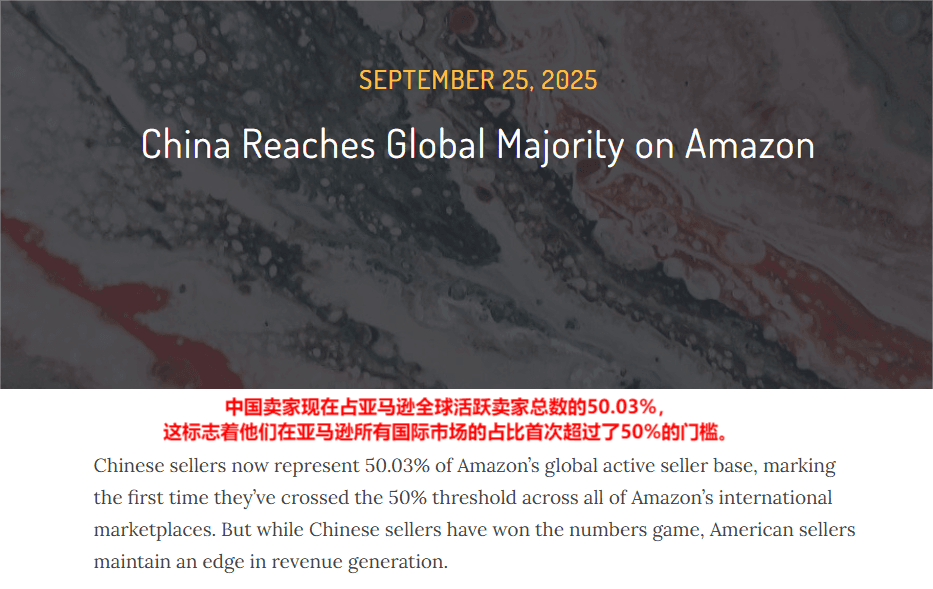
تشهد سوق أمازون العالمية نقطة تحول تاريخية. تظهر أحدث البيانات أن نسبة البائعين الصينيين من إجمالي البائعين النشطين عالميًا على أمازون قد وصلت إلى50.03%، متجاوزة لأول مرة حاجز النصف.
باستثناء اليابان، يحتّل البائعون الصينيون موقعًا رائدًا عدديًا في جميع الأسواق الرئيسية لأمازون.

المصدر:Marketplace Pulse
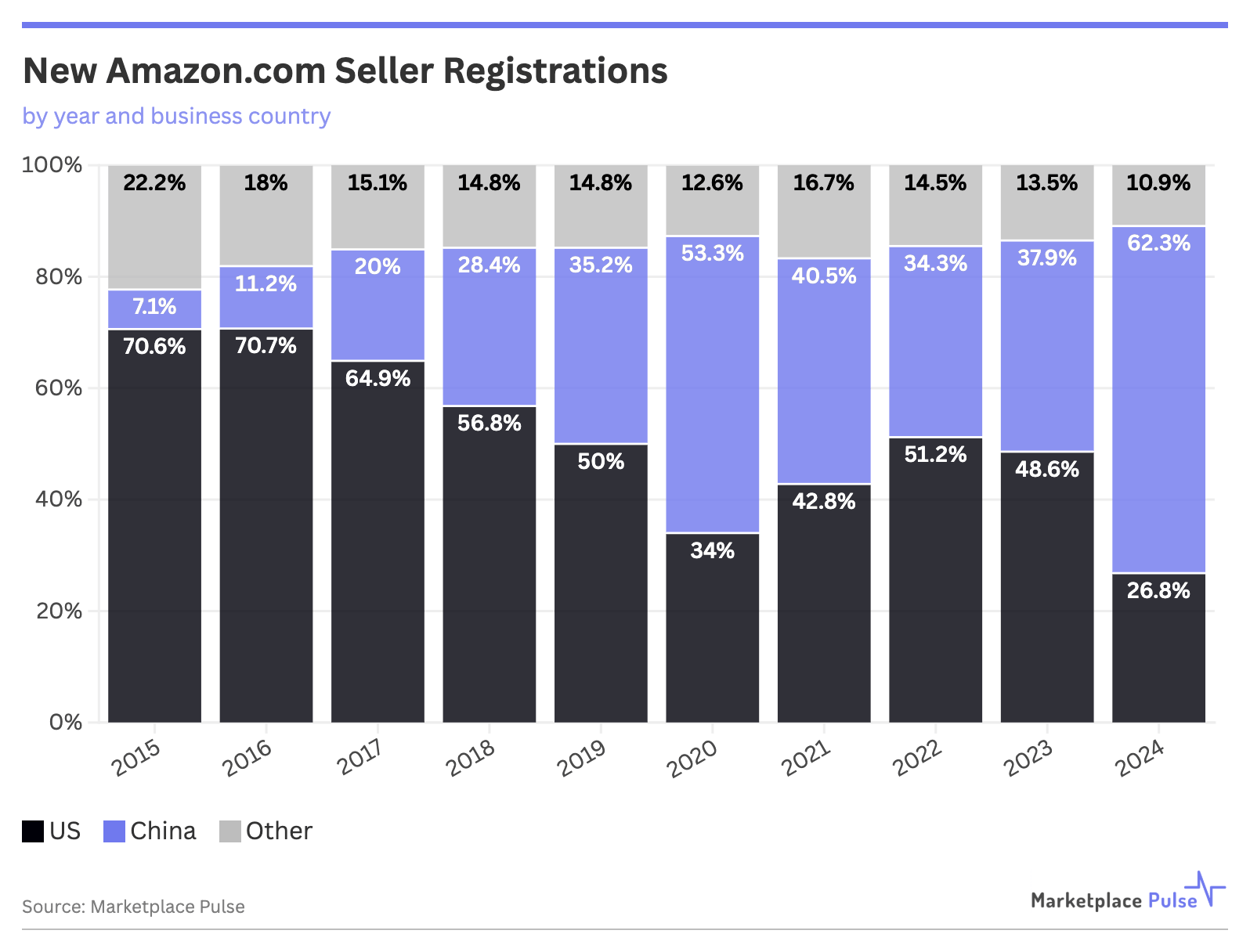
وراء هذه البيانات توسع ثابت للبائعين الصينيين على مدى عشر سنوات. بالعودة إلىفي عام 2015، كانت نسبة التسجيل الجديد للبائعين الصينيين على أمازون الولايات المتحدة 7.1% فقط، بينما كان البائعون الأمريكيون يسيطرون على السوق بنسبة 70.6%.
اليوم، تغير هذا المشهد تمامًا,في عام 2024، ارتفعت نسبة البائعين الصينيين بين المسجلين الجدد إلى 62.3%، بينما انخفضت نسبة البائعين الأمريكيين إلى 26.8%.
المصدر:Marketplace Pulse
صعود البائعين الصينيين: من الضعف إلى نصف الكعكة
يمكن وصف مسار تطور البائعين الصينيين على منصة أمازون بأنه رحلة انتقامية. منمن نسبة التسجيل الجديد الضئيلة 7.1% في 2015 إلى احتلال نصف السوق اليوم، أعاد البائعون الصينيون كتابة مشهد بائعي أمازون العالمي في عشر سنوات.
تُظهر بيانات Marketplace Pulse أن البائعين الصينيين ليسوا فقط متميزين في السوق الأمريكية، بل أصبحوا أكبر مجموعة بائعين عددًا في العديد من الأسواق الرئيسية لأمازون حول العالم.
استراتيجية الاختراق العالمي للبائعين الصينيين تجعلهم أقوياء أيضًا في أسواق مثل أوروبا وأستراليا والشرق الأوسط.
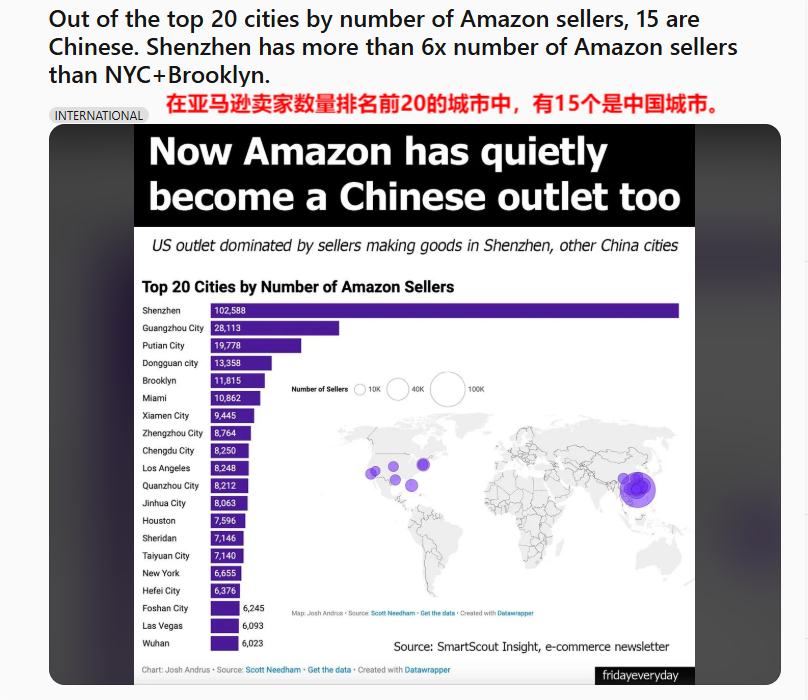
فقطفي قائمة أفضلمدينة من حيث عدد بائعي أمازون، المدن الصينيةلقدشغلت15مقعدًا.من بينها،تعتبر شنتشن، بأعداد بائعيها المذهلة، المدينة الأعلى تركيزًا لبائعي أمازون عالميًا، حيث يتجاوز حجم بائعيها مجموع نيويورك وبروكلين بمقدار6 مرات.
المصدر:reddit
مفارقة الحجم والربح: لماذا كثرة دون قوة؟
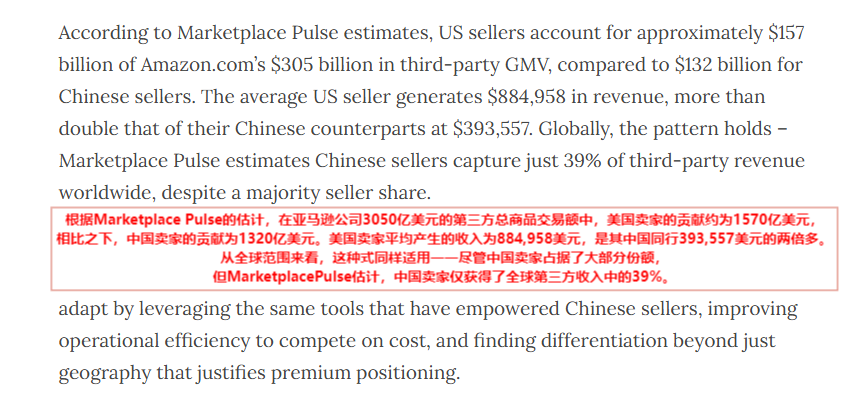
ومع ذلك، هناك ظاهرة مثيرة للتأمل وهي أن الميزة العددية للبائعين الصينيين لم تترجم إلى ميزة في الإيرادات. وفقًا للتقديرات، بائعي الطرف الثالث في موقع أمازون بالولايات المتحدةتبلغ قيمة GMV حوالي 305 مليار دولار أمريكي، حيث يساهم البائعون الأمريكيون بحوالي 157 مليار دولار، بينما يساهم البائعون الصينيون بحوالي 132 مليار دولار.
يصل متوسط الإيرادات السنوية للبائعين الأمريكيين إلى885,000 دولار أمريكي، وهو أكثر من ضعف 394,000 دولار أمريكي للبائعين الصينيين.
تكشف هذه البيانات عن التحديات الأساسية التي يواجهها البائعون الصينيون حاليًا.——"عدم التوازن بين الحجم والربح"
على المستوى العالمي، على الرغم من أن البائعين الصينيين يمثلون الحصة الأكبر من حيث العدد، إلا أنهم يشكلون فقط حوالي39%. في الفئات ذات السعر المرتفع أو القيمة العالية، لا يزال البائعون من الولايات المتحدة والمناطق الأخرى يتمتعون بميزة واضحة.
مصدر الصورة:Marketplace Pulse
طريق الاختراق: من بيع المنتجات إلى بناء العلامة التجارية
في مواجهة هذه التحديات، أصبح مسار التحول والترقية للبائعين الصينيين واضحًا. أمازوناستراتيجية عام 2025 تركز على ثلاثة محاور رئيسية: "دعم الابتكار، توسيع الفرص، والتمكين المحلي"، مما يوفر الدعم لتحول البائعين الصينيين.
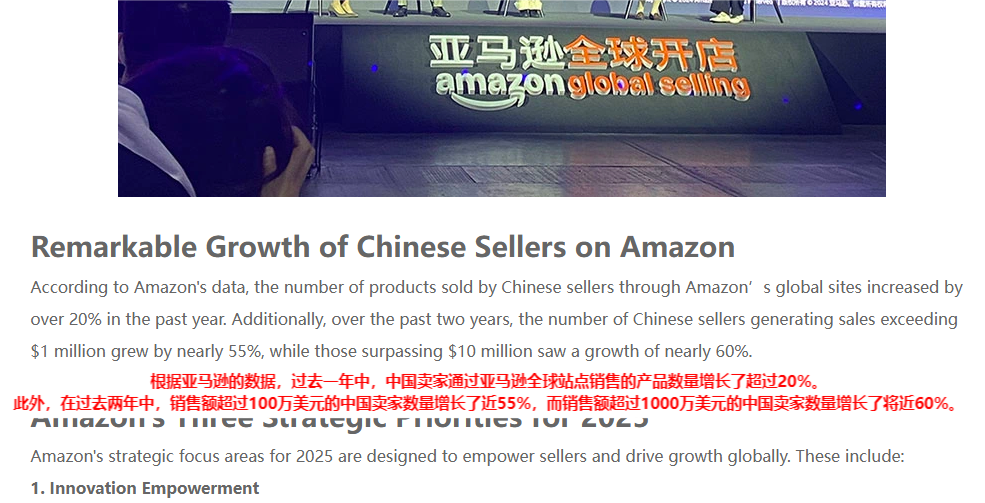
بناء العلامة التجارية يصبح اختراقًا رئيسيًا. تظهر البيانات، قرابة55% من البائعين الصينيين على منصة أمازون يحققون مبيعات تزيد عن مليون دولار أمريكي، و60% يحققون أكثر من 10 ملايين دولار أمريكي.
وراء هذه النتيجة يكمن البناء المنهجي للقدرات التشغيلية العالمية للشركات الصينية.——بما في ذلك استخدام متجر أمازون العالمي لتحقيق التآزر متعدد الأسواق، والاستفادة من أدوات الذكاء الاصطناعي الخاصة بالمنصة لاتخاذ قرارات اختيار المنتجات والتسعير والإعلانات المدفوعة بالبيانات.
مصدر الصورة:forestshipping
مدير التوسع الإقليمي لمنطقة جنوب الصين الكبرى في أمازون للبيع العالميأشارت سكارليت فو خلال إحدى القمم الأخيرة إلى أن مبيعات التجارة الإلكترونية عبر الحدود العالمية من المتوقع أن تحقق نموًا بعشرة أضعاف خلال العقد القادم، بمعدل نمو يبلغ 3.18 ضعف معدل نمو التجارة الإلكترونية العالمية للبيع بالتجزئة.
بالنسبة للتجار الصينيين، هذه اللعبة قد بدأت للتو. اختراق النسبة الكمية.50% مجرد نقطة بداية، والتحدي الحقيقي يكمن في كيفية تحويل ميزة الحجم إلى ميزة العلامة التجارية وميزة الربح.
الصناعة التحويلية الصينيةإن "ربح سلسلة التوريد" يتحول إلى "ربح العلامة التجارية"، والعقد القادم سيشهد التحول النوعي للبائعين الصينيين من "بيع المنتجات" إلى "بناء العلامات التجارية".