
 2518
2518
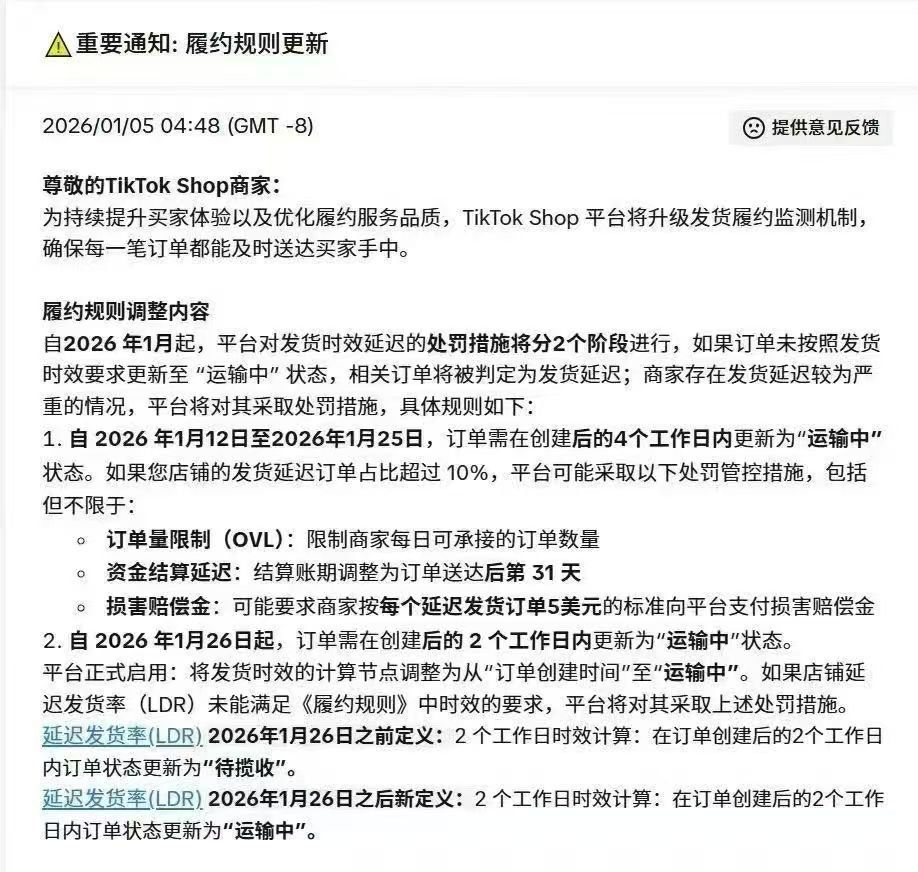
في الآونة الأخيرة،أعلنت TikTok Shop عن ترقية آلية مراقبة تنفيذ الشحن، وتخطط اعتبارًا من 26 يناير لتقليل متطلبات وقت الشحن من 4 أيام عمل حاليًا إلى يومي عمل.
هذا التغيير هو إشارة رئيسية لتحول المنصة من الاعتماد على تدفق الزوار إلى التشغيل الدقيق.

مصدر الصورة:Google
تفسير اللائحة الجديدة: من السرعة إلى الدقة، بناء نظام تنفيذ موحد
إن ترقية قواعد تنفيذ الشحن من TikTok Shop ليست مجرد تعديل زمني بسيط، بل هي تحسين منهجي لتجربة المعاملات ونظام السمعة على المنصة بأكملها. تخطط اللائحة الجديدة للتنفيذ على مرحلتين، من خلال تحديد نقاط زمنية واضحة للتنفيذ وآليات عقوبات، بهدف تحسين موثوقية الخدمة على جميع أنحاء المنصة.
وفقًا لمتطلبات المنصة، المرحلة الأولى (الطلبات من 12 يناير إلى 25 يناير) يجب تحديث حالتها إلى "قيد الشحن" خلال 4 أيام عمل من الإنشاء؛ بينما المرحلة الثانية (اعتبارًا من 26 يناير) تشدد إلى يومي عمل.
في الوقت نفسه، ستتبنى المنصة معدل التأخير في الشحن الجديد (منطق حساب LDR) لمراقبة الطلبات التي لم يتم تحديث حالتها خلال الوقت المحدد.
لضمان تنفيذ اللائحة الجديدة بفعالية، رافقت المنصة إجراءات رقابية مناسبة:إذا تجاوزت نسبة طلبات الشحن المتأخرة للمتجر10%، فسيواجه عقوبات متعددة تشمل تقييد حجم الطلبات، وتأخير تسوية الأموال (التسوية بعد 31 يومًا من وصول البضاعة)، وغرامة قدرها 5 دولارات لكل طلب.
مصدر الصورة:TikTok Shop
تأثير على البائعين
تأثير هذه اللائحة الجديدة على مجتمع البائعين مباشر وعميق.
من ناحية، ستزداد تكاليف التشغيل وضغوط الامتثال بشكل ملحوظ.متطلبات الشحن خلال يومين تعني أن البائعين بحاجة إلى تحسين شامل لإدارة المستودعات الحالية، ومعالجة الطلبات، وعمليات الربط اللوجستي. خاصة بالنسبة للتجار الذين يعتمدون على موردين خارجيين أو يستخدمون نموذج الشحن بالنيابة، ستواجه استقرار سلسلة التوريد اختبارًا أكثر صرامة.
من ناحية أخرى، قد يعيد هذا التغيير تشكيل المشهد التنافسي داخل المنصة.البائعون الذين يمكنهم الاستجابة بسرعة، ويمتلكون قدرات تخزين ولوجستية مستقرة، أو لديهم مستودعات خارجية، سيبنيون حواجز تنافسية جديدة بفضل كفاءة التنفيذ. أما البائعون ذوو القدرة المحدودة على التكيف فقد يواجهون ضغطًا على مساحة نموهم.

مصدر الصورة:Google
استراتيجيات البائعين في التعامل
في مواجهة هذا التحدي، يحتاج البائعون إلى تعديل استراتيجياتهم التشغيلية من الجوانب التالية:
تحسين سلسلة التوريد هو المهمة الأساسية.يوصى بإدخال أو ترقية نظام إدارة الطلبات(OMS),تحقيق التوصيل الفوري للبيانات مع شركات الخدمات اللوجستية,ضمان التزامن والتحديث الفوري لحالة الطلبات。في الوقت نفسه,بناءً على تحليل بيانات المبيعات,توزيع المخزون بشكل معقول,والنظر في وضع المنتجات الأكثر مبيعًا مسبقًا في مراكز التخزين القريبة من السوق المستهدف。
إنشاء آلية استجابة مرنة بنفس القدر من الأهمية。وضع خطط للتعامل مع التأخير اللوجستي المفاجئ,بما في ذلك قنوات الخدمات اللوجستية البديلة وخطط التواصل مع العملاء,لتقليل مخاطر فشل التنفيذ بسبب العوامل الخارجية。
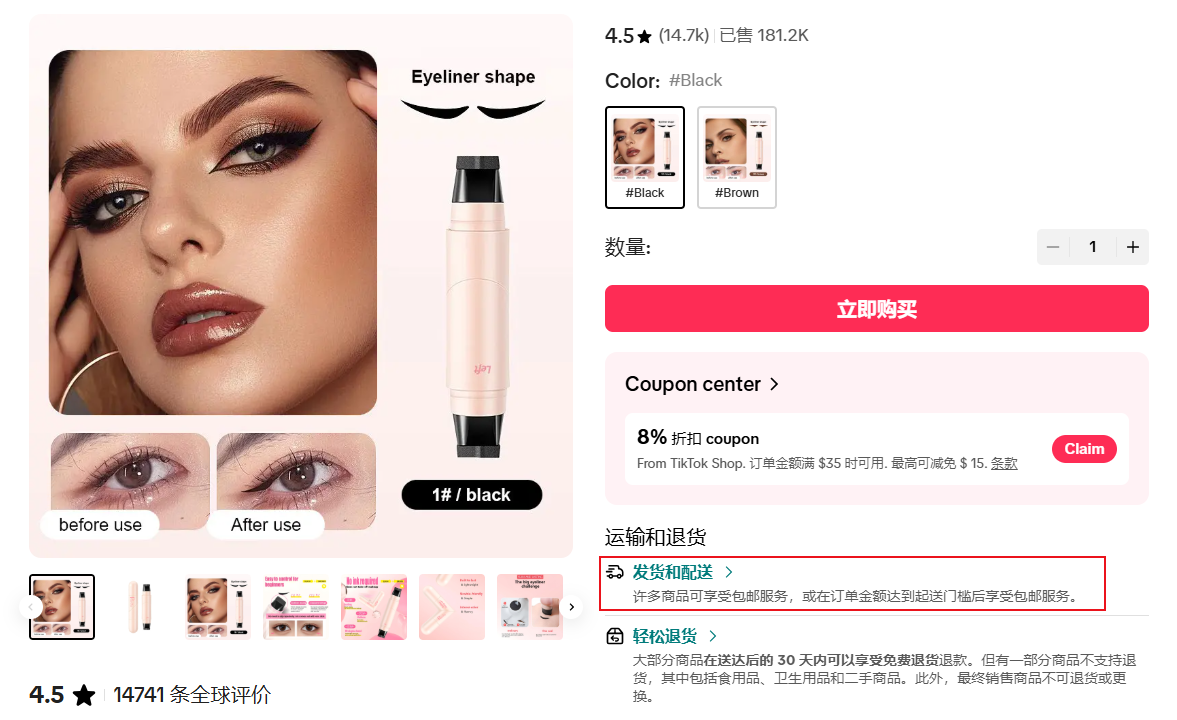
لتحويل“القدرة على الوفاء”تحويل إلى ميزة تنافسية يستحق الاهتمام أيضًا。يمكن للبائعين وضع علامة واضحة على وقت الشحن في صفحة المتجر,واستخدام علامات التنفيذ السريع للمنصة للحصول على دعم حركة المرور,تحويل ضغط الامتثال إلى فرصة لبناء ثقة المستهلك。
مصدر الصورة:TikTok Shop
خاتمة
مع دخول صناعة التجارة الإلكترونية عصر المنافسة على المخزون الحالي,أصبحت العمليات الدقيقة اتجاهًا رئيسيًا لتطوير المنصات。TikTok Shop هذا الارتفاع في معايير تنفيذ الشحن,هو اختبار لقدرة التجار على الخدمة,وأيضًا علامة مهمة على نضوج المنصة。
بالنسبة للبائعين,التكيف مع قواعد المنصة الجديدة,بالإضافة إلى الحاجة إلى تعديل استراتيجيات التشغيل,يتطلب أيضًا تحسينًا منهجيًا لقدرات سلسلة التوريد。
فقط تلك الشركات التي تستطيع الاستجابة للتغيرات في الوقت المناسب وتحسين عمليات التشغيل,يمكنها الفوز بمساحة للتنمية المستدامة في بيئة التجارة الإلكترونية المتزايدة التنظيم。