
 2027
2027أعلنت أمازون مؤخرًا عن تعديل سياسة هام:اعتبارًا منفي الفترة من 12 فبراير إلى 31 مايو 2026، سيتم تنفيذ إصلاح قواعد مشاركة مراجعات المنتجات المتغيرة على مراحل。
وهذا يعني أن البائعين الذين يعتمدون على مشاركة المراجعات لرفع تقييماتهم ومبيعاتهم قد يواجهونمعضلة "العودة إلى نقطة الصفر بين ليلة وضحاها" - منتج كان لديه تقييم 4.8 نجوم وأكثر من 2000 مراجعة، قد يستيقظ ليجد 200 مراجعة فقط أو أقل.
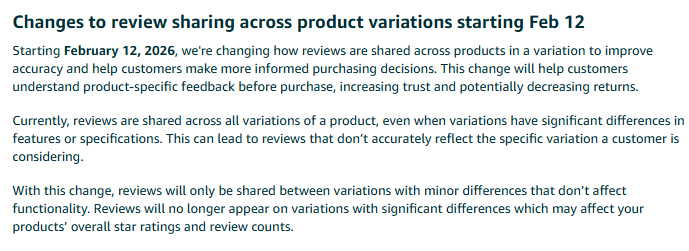
المصدر:amazon seller central
جوهر القاعدة الجديدة: فقطالمتغيرات "المتشابهة حقًا" يمكنها مشاركة المراجعات
وفقًا لآلية المراجعات الحالية لأمازون، فإن المتغيرات الفرعية المختلفة تحت نفس المتغير الرئيسي,بغض النظر عن وجود اختلافات واضحة في الوظائف والمواصفات,عادةً ما يتم عرض مراجعاتها وتقييماتها النجمية بشكل مدمج.
وهذا يؤدي إلى أن المستهلكين أثناء التصفح قد يرونتقييمًا عاليًا 4.8 نجوم بناءً على مراجعات طراز عالي المواصفات، بينما الطلب الفعلي هو على نسخة أخرى أقل في الوظائف، مما يسبب فجوة في التوقعات ويؤدي إلى مراجعات سلبية وإرجاع.
في الوقت نفسه، قد تؤدي المراجعة السيئة لمتغير فرعي ضعيف الأداء إلى"جر" التقييم العام للمتغيرات الأخرى عالية الجودة إلى الأسفل.
القاعدة الجديدة تغير هذا الوضع تمامًا.
في المستقبل، سيُسمح فقط للمتغيرات التي لا توجد اختلافات جوهرية في الوظائف وتجربة المستخدم والمواصفات الأساسية بمشاركة المراجعات.
ببساطة، في الماضي، قد يرى المشتري4.4نجوم، وآلاف المراجعات لـ"كمبيوتر محمول"، ولكن في الواقع، قد تأتي هذه المراجعات من طرازات فرعية بذاكرة وتكوينات مختلفة، مما يسبب تضليلاً.
بعد تطبيق القاعدة الجديدة، سيتم فصل مراجعات المتغيرات ذات الاختلافات الكبيرة في الوظائف"فصل" وعرضها بشكل مستقل، لضمان أن التقييمات التي يراها المستهلك تتوافق بشكل كبير مع المنتج المحدد الذي ينوي شراءه.
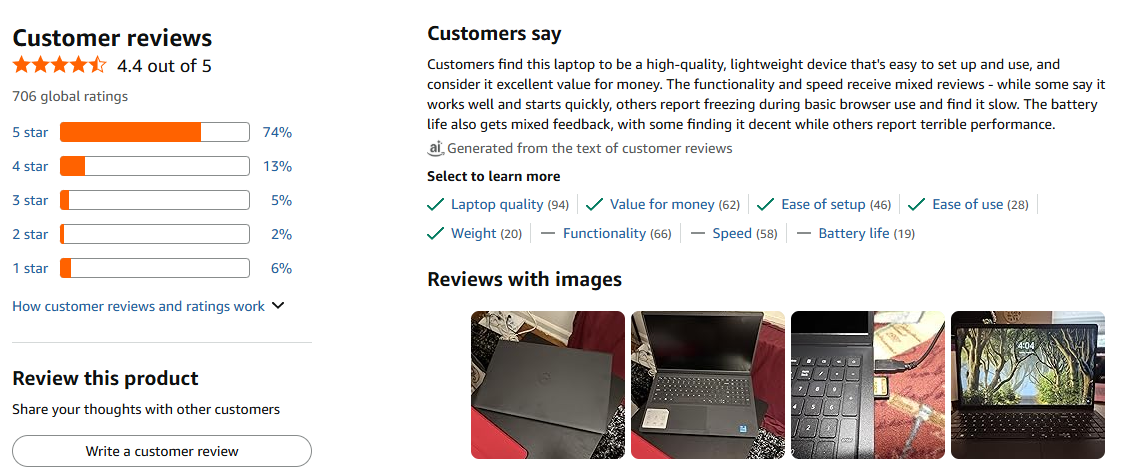
المصدر:amazon
ما الذي يمكن مشاركته؟ وما الذي يجب فصله؟
وفقًا للتوضيح الرسمي من أمازون، فإن الحالات التالية عادةً ما تظل تشارك التقييمات:
اختلاف المظهر: مثل نفس النمطتيشيرت بألوان مختلفة، حقائب قماشية بطباعات مختلفة.
المقاس/تغير المقاس: مثل رفوف من ثلاث طبقات وخمس طبقات، أغطية سرير وأكياس وسائد بأحجام مختلفة (بشرط أن تكون الوظيفة متطابقة).
الكمية/اختلاف العبوة: مثل نفس الشامبو بحجم 250 مل و500 مل، أو مناديل التنظيف بعبوات 10 قطع و50 قطعة.
تمييز ثانوي للرائحة: مثل منظف الأرضيات بنكهة الليمون والنوع عديم الرائحة، لكن الوظيفة الأساسية للمنتج لا تعتمد على الرائحة.
ملحقات متوافقة مع موديلات متعددة: نفس حامل الهاتف متوافق معموديلات iPhone أو Samsung؛ إصدارات مختلفة من غطاء العدسة لربط الكاميرا.
تعديل بسيط في السطح: مثل الإصدارات ذات السطح غير اللامع واللامع لنفس زجاجة الحفظ الحراري.
أما الحالات التالية، فبسبب تأثيرها على الوظيفة الأساسية أو تجربة المستخدم، فمن المحتمل جدًا أن يتم تقسيم التقييمات وعرضها بشكل منفصل:
اختلاف الأداء والمواصفات: مثل حواسيب محمولة بذاكرة مختلفة، ومثاقب بقدرة مختلفة.
الأجهزة المنزلية التي يرتبط حجمها بالوظيفة الأساسية: مثل آلات صنع الوافل بعدد مختلف من الوافل، ومكيفات هواء بسعة تبريد مختلفة. تشير المنصة بشكل خاص إلى أن تغيير الحجم إذا أدى إلى تغيير المعايير الأساسية مثل القدرة والسعة، فإنه يعتبر اختلافًا وظيفيًا.
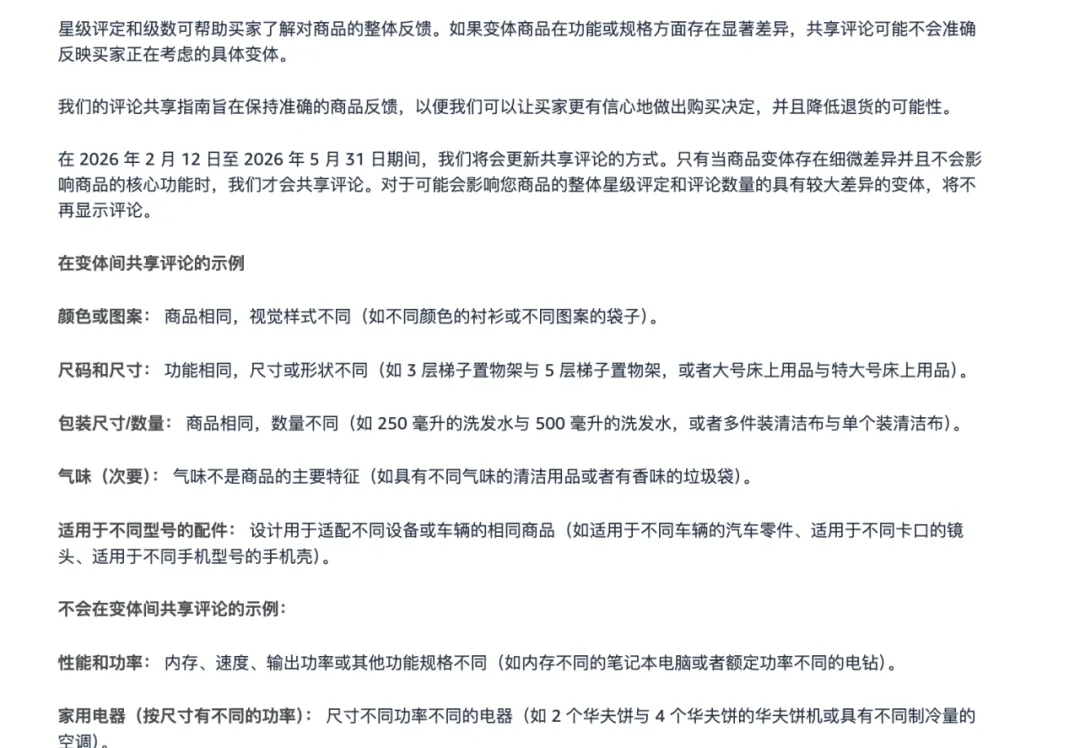
مصدر الصورة:amazon
الهدف الأساسي للمنصة واستراتيجيات البائعين للتعامل مع التغييرات
أعلنت أمازون أن الهدف الأساسي من هذا الإصلاح هو تحسين دقة ومصداقية التقييمات، ومساعدة المستهلكين على اتخاذ قرارات شراء أكثر استنارة، وعلى المدى الطويل يساعد في تقليل التقييمات السلبية والإرجاعات الناتجة عن عدم تطابق المنتج مع التوقعات، مما يخلق بيئة تسوق أكثر صحة.
في مواجهة التغييرات السياسية التي لا رجعة فيها، يجب على البائعين التعديل بنشاط وتحويل التحديات إلى فرص:
الفحص الذاتي الفوري وتصحيح المتغيرات الحالية:مراجعة شاملة لجميع مجموعات المتغيرات في المتجر، وتحديد أي منها قد يتم تقسيمها وفقًا للوائح الجديدة. تصحيح إعدادات خصائص المتغيرات الخاطئة فورًا لضمان التصنيف الدقيق.
تحسين صفحات تفاصيل المنتج:توضيح الاختلافات الوظيفية الأساسية بين المتغيرات المختلفة بشكل واضح وبارز في العنوان والنقاط الرئيسية والوصف، وتوجيه المستهلكين بنشاط لاختيار المناسب لتجنب الالتباس.
متابعة إشعارات المنصة والتخطيط المسبق:ستقوم أمازون قبل تطبيق القواعد بفترة لا تقل عنإخطار البائعين المتأثرين عبر البريد الإلكتروني خلال 30 يومًا. يجب متابعتها عن كثب، وبناءً على محتوى الإخطار، تعديل استراتيجيات الإعلان وخطط المخزون واتجاهات تحسين الصفحة مسبقًا.
التحول إلى التشغيل المتقن والمتوافق مع القوانين:تجبر اللوائح الجديدة البائعين على التركيز أكثر على جودة المنتج الفردي وتجربة المستخدم والتسويق الدقيق. بناء نظام قوي من التقييمات الحقيقية الإيجابية أصبح أهم من أي وقت مضى.

مصدر الصورة: الإنترنت
خاتمة
إن تشديد قواعد مراجعة المتغيرات من قبل أمازون هذه المرة هو خطوة أخرى مهمة للمنصة لتحسين تجربة التسوق باستمرار ودفع الامتثال البيئي. لقد استعادت جزءًا من"أرباح المراجعات"، لكنها أشارت أيضًا إلى اتجاه التشغيل الذي يركز أكثر على المنتج نفسه والملاحظات الحقيقية. لم يتبق الكثير من الوقت للمرونة للبائعين. فقط البائعون الذين يتكيفون بنشاط ويعدلون بسرعة يمكنهم تعزيز موقعهم وتحقيق القدرة التنافسية المستدامة في ظل القواعد الجديدة.