 3400
3400
Cuando quedarse en casa se vuelve rutina, limpiarnaturalmentese convierte en una carga para muchos。
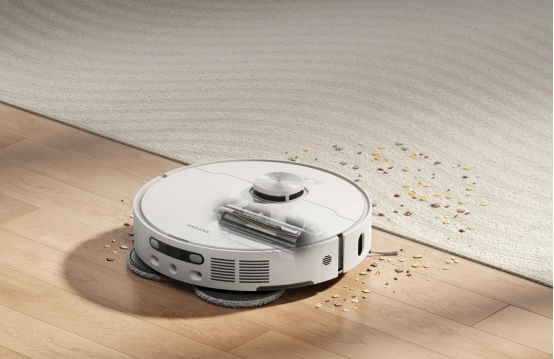
Querer holgazanear, la limpieza manual duele la espalda y consume tiempo; querer liberarse con electrodomésticos, el mercado de aspiradoras robóticas es abrumador. Los modelos de alto precio tienen funciones atractivas, pero el umbral de precio hace quelas familias comunesduden en comprarlos; los modelos baratos parecen accesibles, pero siempre preocupa que en uso realpuedanfallar……
Fuente de imagen:Google
Esta“situación de no ser ni lo uno ni lo otro”del mercado, hace que las empresas de electrodomésticos de limpieza en Chinanumerosasestén indecisas.
Sin embargo, mirando al extranjero, la actitud de los consumidores europeos y americanos es completamente diferente:Aprecian especialmente los dispositivos inteligentes con fuerte succión y larga duración de batería, dispuestos a pagar un sobreprecio por las funciones principales. Entre el frío y el calor, buscar oro en el extranjeroseha convertido en un consenso para muchas marcas nacionales para romper el estancamiento.
Quizás alguien preguntará: ¿Solo porque el extranjero está dispuesto a pagar, vale la pena apostar fuerte por este segmento de mercado?
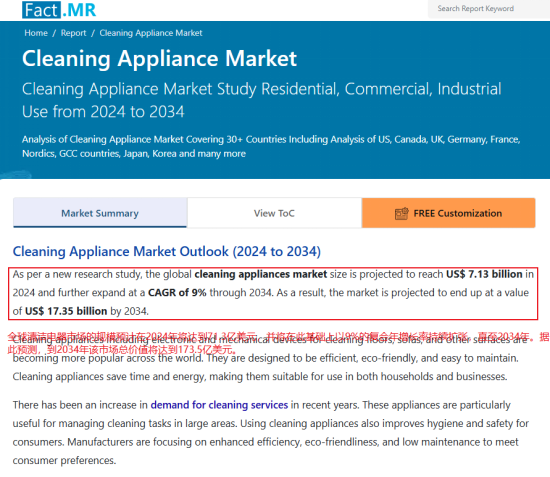
Primero echemos un vistazo a un grupo de datos dede Fact.MRencuestadatos:
electrodomésticos de limpieza globalesdeEl tamaño del mercado en2024añovaloraciónes de71.3mil millones de dólares,se pronostica que en elen 2034, el valor total del mercado alcanzará los 173.5 mil millones de dólares, y durante los próximos años, con una9%detasa de crecimiento anual compuestamantener una expansión continua.
Fuente de la imagen:Fact.MR
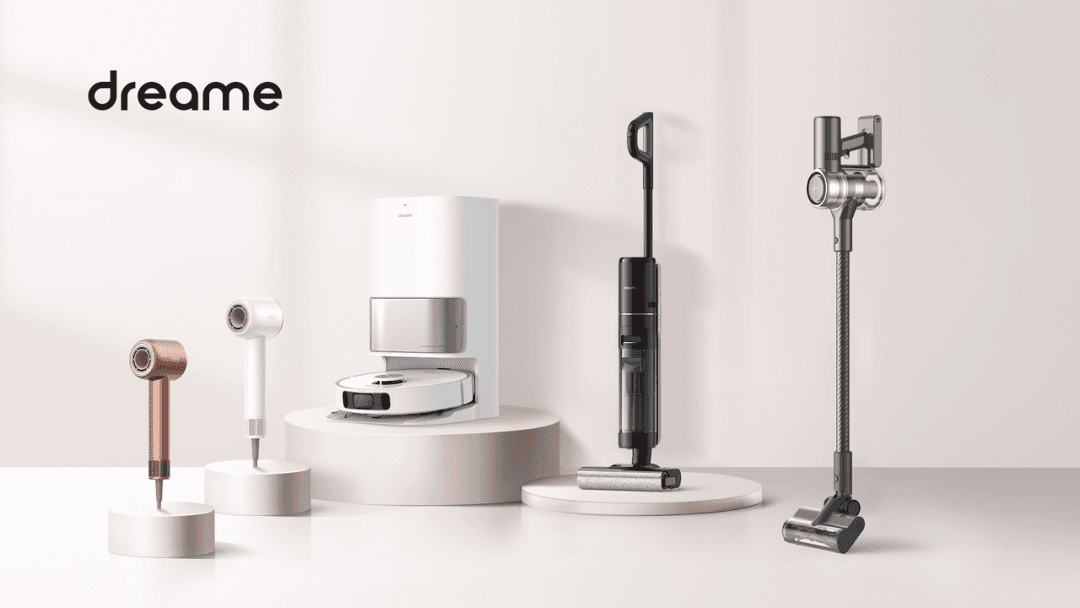
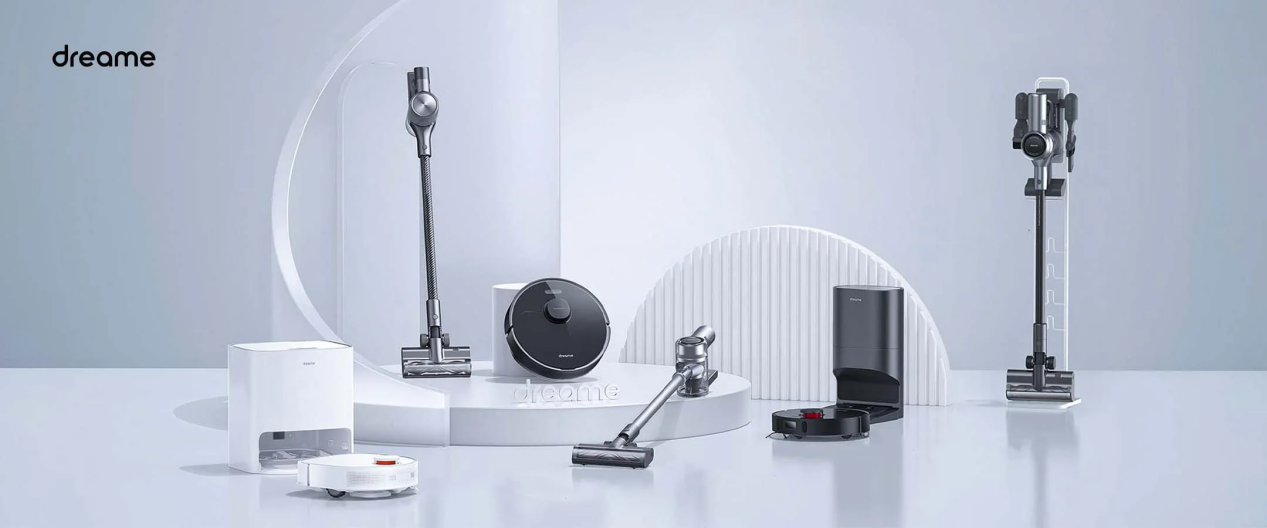
Estos datos reales son suficientes para disipar las dudas, y en el país no faltan casos típicos de grandes vendedores en el extranjero. De lo que vamos a hablar hoy esDreame (Zhuimi), es el destacado entre las marcas de electrodomésticos de limpieza para la exportación.
A continuación, veamos juntos cómo pasó de ser una fábrica subcontratada de Xiaomi a convertirse en un¿“top”?
Fuente de la imagen:Google
Desde la subcontratación para Xiaomi hasta los electrodomésticos de limpieza“top”
Según información pública, la historia de Zhuimi Technology comenzó en2017, su fundador y equipo central provienen de la Universidad de Tsinghua, con un gen de “control técnico”, enfocados en la investigación de motores digitales de alta velocidad y algoritmos inteligentes.
En la etapa inicial de emprendimiento, Zhuimi Technology se unió a la cadena ecológica de Xiaomi, entrando en el sector de limpieza inteligente del hogar con un modelo de subcontratación, produciendo para Xiaomi aspiradoras robot, aspiradoras y otros productos bajo su marca, y aprovechando la cadena de suministro y los canales maduros para completar rápidamente la implementación técnica y la validación del mercado.
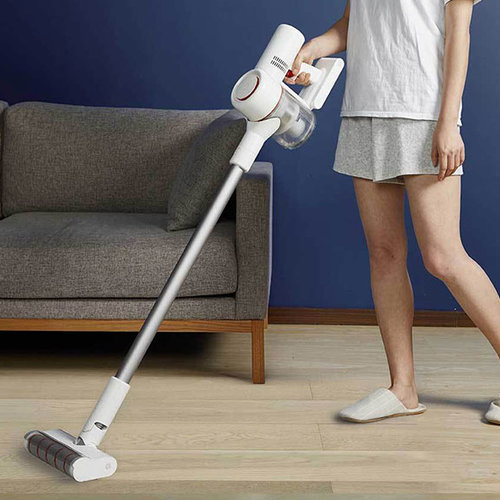
El primer producto en cuya investigación y desarrollo participóDespués del lanzamiento de la aspiradora inalámbrica V9 en la plataforma de crowdfunding Xiaomi,soloen 6 días, las ventas superaron los 15 millones de yuanes.
Fuente de la imagen:Google
Sin embargo, la ambición de Dreame no se detiene aquí. EnEn 2018, la empresa ya había iniciado su estrategia de expansión internacional, abandonando activamente la competencia de bajo precio, dirigiendo su mirada a los mercados de alta gama como Europa y Estados Unidos, compitiendo con marcas internacionales de primera línea con su fortaleza tecnológica y gradualmente destacándose en los mercados extranjeros.
Con el desarrollo del negocio, el fundador, Sr. Yu, se dio cuenta gradualmente de que el modelo OEM tiene margenes de beneficio reducidos y depende del cliente,EnEn 2020, decidió resueltamente separarse de Xiaomi, lanzando oficialmente su propia marca Dreame, iniciando completamente la globalización de su marca propia.
Después de eso,La marca Dreame ha seguido aumentando su inversión en los mercados extranjeros.
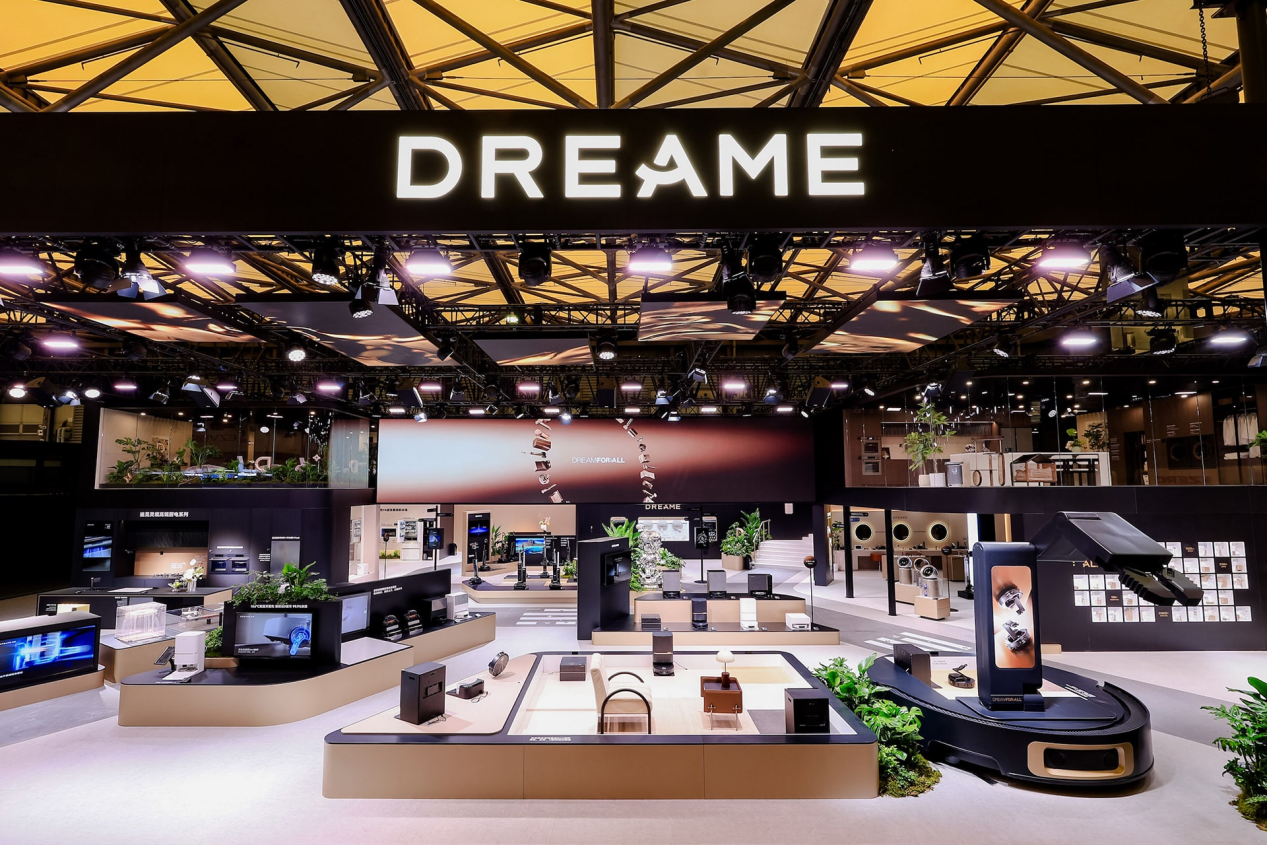
Por un lado, colabora profundamente con Amazon, AliExpress,eBay y otras plataformas de comercio electrónico globales principales; por otro lado, expande activamente los canales offline, estableciendo relaciones de cooperación a largo plazo con minoristas locales, construyendo una red de ventas global sincronizada online y offline.
Fuente de la imagen:Google
EnEn 2024, los ingresos totales anuales de Dreame Technology alcanzaron aproximadamente 15 mil millones de yuanes, de los cuales los ingresos en el extranjero superaron los 8 mil millones. La lista Hurun Global Unicornios publicada ese mismo año también mostró que la valoración de la empresa había alcanzado los 20 mil millones de yuanes.
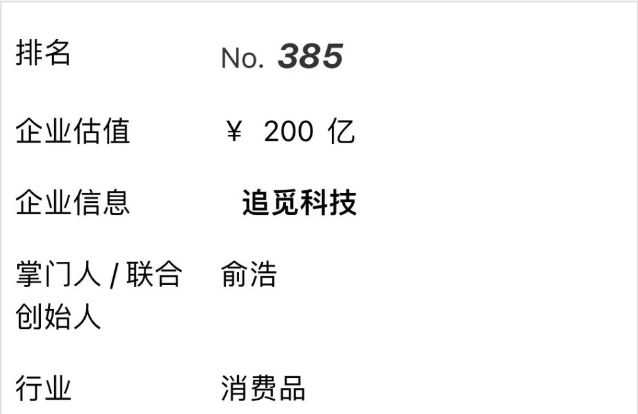
Fuente de la imagen:Lista Hurun Global Unicornios 2024
EnEn la conferencia de lanzamiento de nuevos productos de escenarios completos celebrada en 2025, Dreame Technology también reveló que los ingresos operativos del primer semestre de 2025 ya habían superado el nivel anual completo de 2024.
Esto significa que en el primer semestre del año pasado, los ingresos de Dreame Technology ya habían superado los 10 mil millones de yuanes, y se espera que el año completo alcanceel hito de los 30 mil millones de yuanes en ingresos, convirtiéndose en el vendedor principal indiscutible en el ámbito de la limpieza inteligente.(Datos provenientes dedonews)
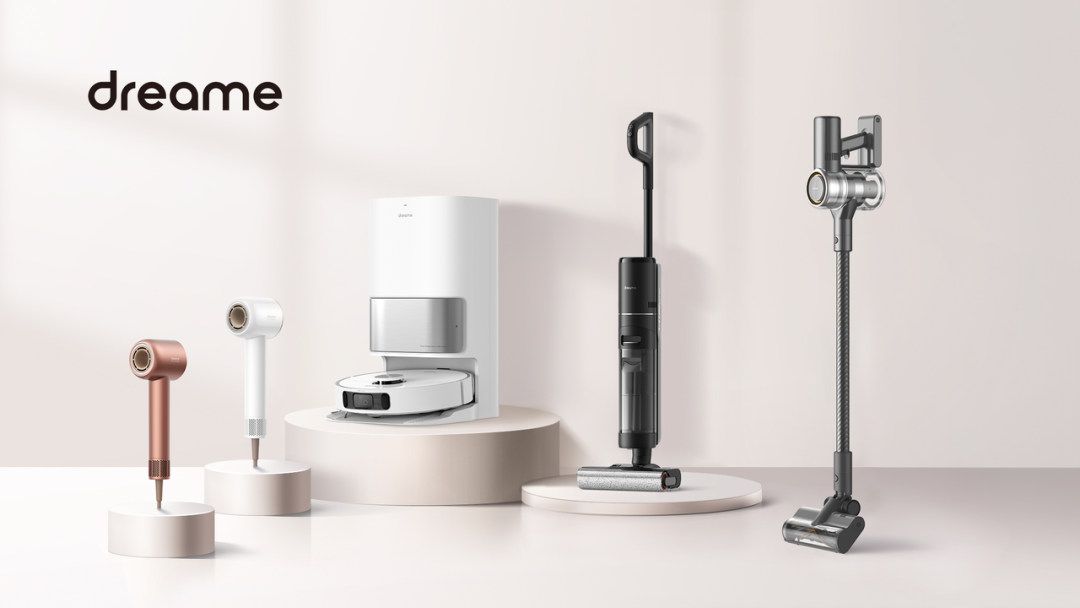
Fuente de la imagen:Google
Primero«Hacerse conocido en TikTok», luego hablar de ventas
Para las marcas nacionales, el paso más difícil de salir al extranjero a menudo no es el producto en sí, sino cómo hacer que los consumidores extranjeros te conozcan, te recuerden y estén dispuestos a probarte.
Después de todo, en un maduroextranjeroen el mercado, desde el principio eres un“forastero”, para establecer confianza, hay que empezar por ser visto.YLa popularización de las redes sociales proporciona precisamente a las marcas una ruta eficiente para romper el hielo.
A través deAprovechandoTikToky otras redes sociales popularesla ventaja de tráfico de la plataforma, puede hacer quetumarca más rápidomenteser visto, conocido y generar interés por usuarios desconocidos, luego a través del productoventajasconvertirse paso a paso en pedidos reales。
El protagonista de hoyla marca Dreame,naturalmentetampocoPerderse esta tendencia, mediante la planificaciónplataformas como TikTok, abriendo paso a paso la puerta al corazón de los consumidores extranjeros.
EnTikToken,La marca Dreame estableció su propia cuenta de marca @dreame.usa, actualmente tiene 303,600 seguidores, con 1.7 millones de 'me gusta', un rendimiento muy bueno.
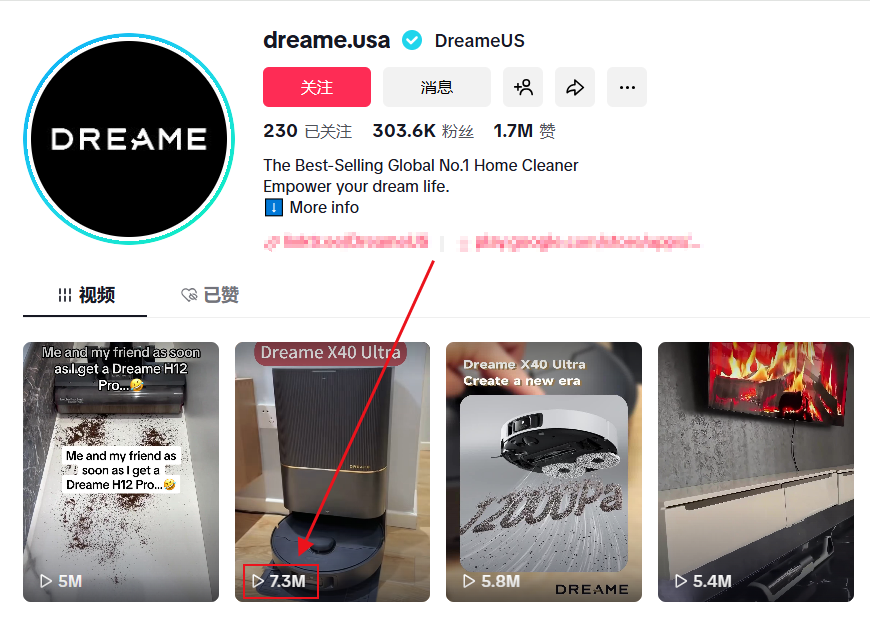
Fuente de la imagen:TikTok
A diferencia de las marcas tradicionales de electrodomésticos que dependen de la exhibición de parámetros como método de marketing,La cuenta @dreame.usa se enfoca más en construir confianza del usuario con contenido de pruebas reales. Al mostrar el rendimiento de limpieza del producto en escenarios reales, permite que los usuarios sientan intuitivamente la potencia del producto.
Por ejemplo, uno de los videos documenta todo el proceso de la aspiradora desde la apertura de la caja, llenado de agua hasta la limpieza inteligente de toda la casa. Tanto las manchas difíciles como los residuos finos se manejan fácilmente, toda la operación es eficiente y relajante.
En tan soloun video de 41 segundos, las reproducciones alcanzaron los 7.3 millones y los 'me gusta' fueron 89,500. Estos resultados son suficientes para demostrar que los usuarios extranjeros realmente valoran el contenido auténtico y envolvente.
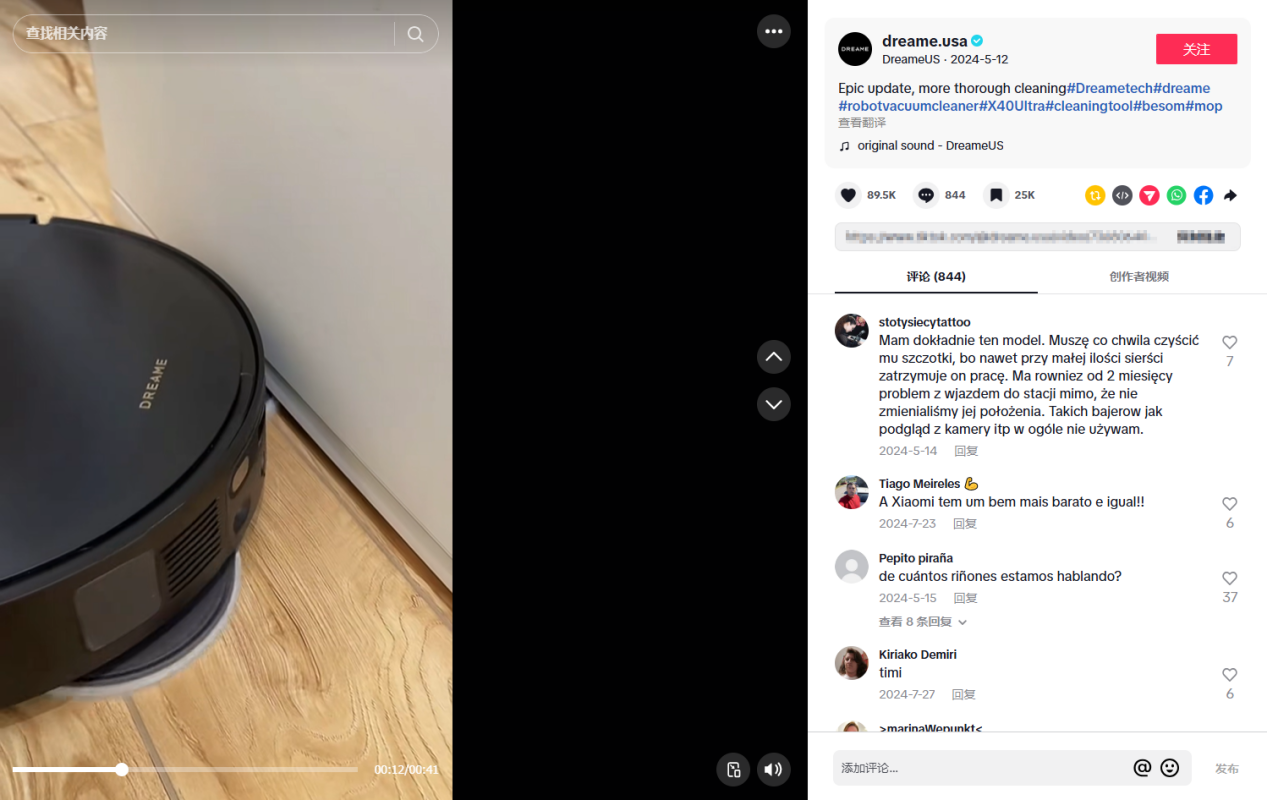
Fuente de la imagen:TikTok
3116 creadores de contenido, juntos lo convirtieron en un éxito viral.
Administrar bien su propia cuenta es solo el primer paso.
Dreame también colabora de manera muy sistemática con creadores de TikTok, utilizando el enfoque de 'persona + contenido' para amplificar la voz de la comunicación e insertar la marca en la visión de más círculos verticales.
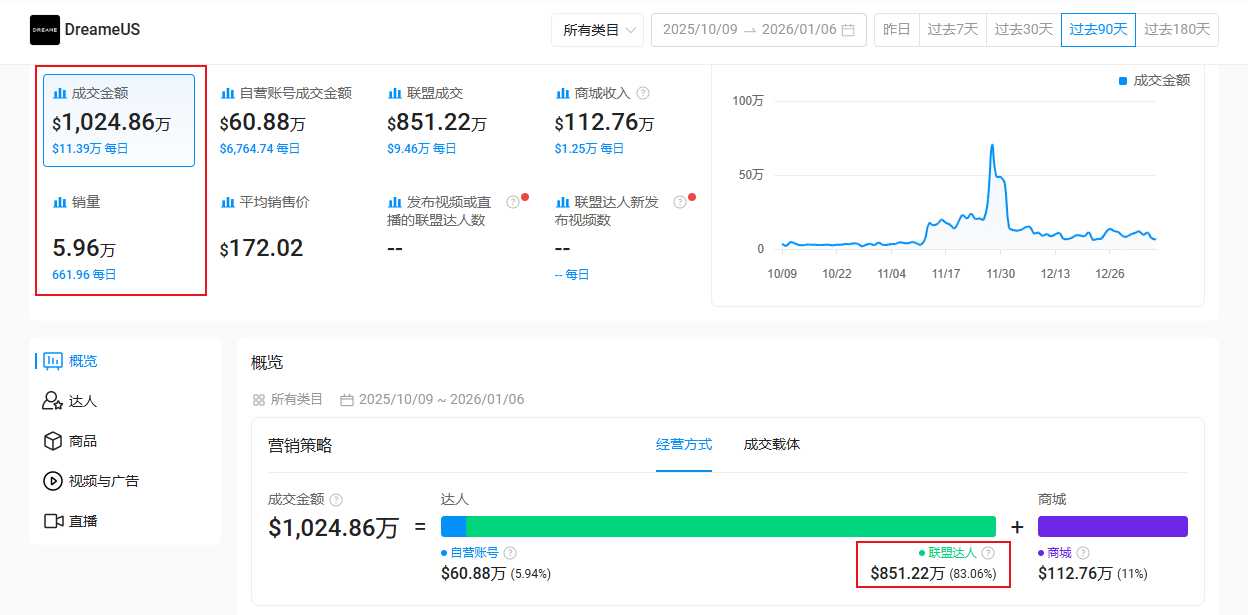
Desdelos datos de Kalodata, el rendimiento de Dreame en la tienda local estadounidense DreameUS es muy valioso como referencia:
En los últimos tres meses, se han vendido aproximadamente59,600 artículos, con un valor total de transacciones de aproximadamente 10,248,600 dólares.
De los cuales, el valor de transacciones generado a través del canal de afiliados es de aproximadamente8,512,200 dólares, que representa el 83.06% de las ventas totales, siendo la fuente principal absoluta.
Fuente de la imagen:kalodata
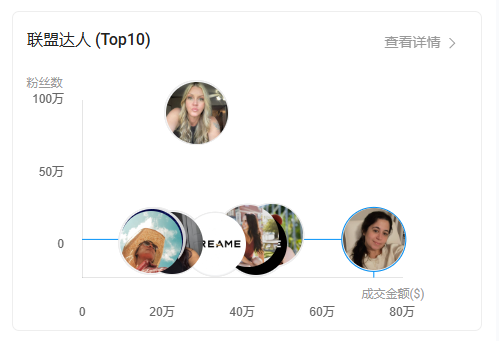
En tan soloEn 3 meses, la marca Dreame colaboró con 3.116 influencers, produciendo un total de 11.363 videos de ventas, llegando a los usuarios objetivo de múltiples dimensiones a través de este método de 'red amplia'.
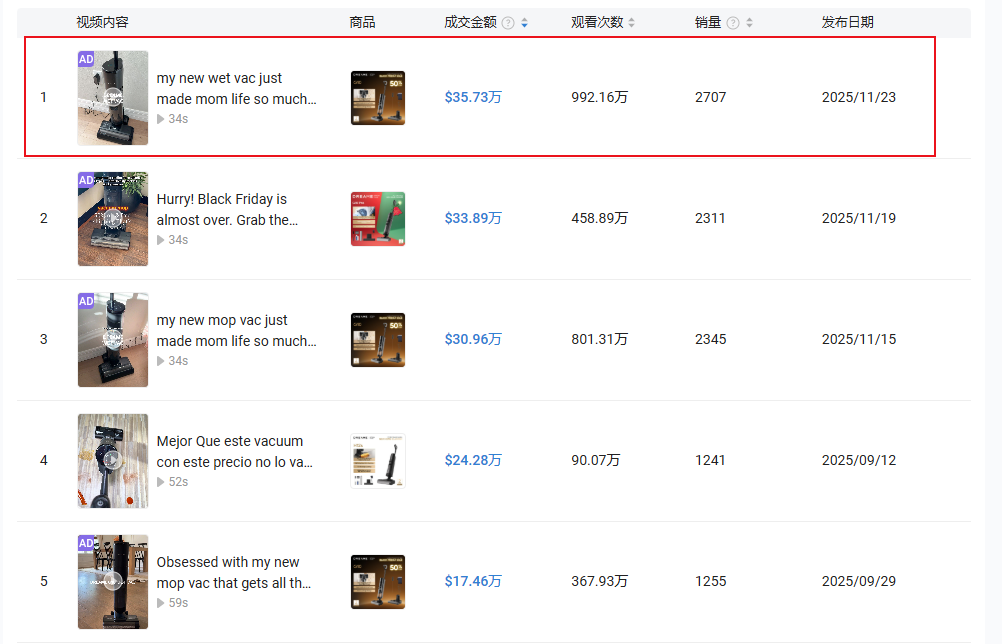
Entre los muchos influencers, el que tuvo el mejor desempeño en ventas es el que tiene35.900 seguidores, el influencer @hannahbentley.
Fuente de la imagen:kalodata
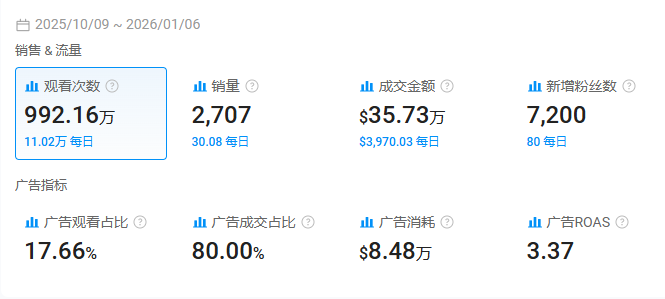
En uno de sus videos, no apareció su rostro en todo momento, la cámara siempre se centró enla aspiradora inalámbrica de Dreame, mostrando el proceso de limpieza de manchas difíciles como huevos, jamón, leche condensada de chocolate, etc.
Hasta ahora, este video ha obtenido9.921.600 reproducciones, a punto de superar los 10 millones, generando un total de 2.707 pedidos, con un monto de transacción de 357.300 dólares.
Por lo tanto, la exhibición experiencial que integra el producto en escenas de la vida real puede estimular el deseo de compra de los usuarios potenciales, logrando una conversión fluida desde el descubrimiento hasta la compra.
Fuente de la imagen:kalodata
Desde la fabricación para el extranjero hasta la resonancia de marca
El camino de desarrollo de Dreame ofrece al menos tres lecciones para las empresas chinas que están considerando expandirse al extranjero:
· Confiar únicamente en las ventajas de la cadena de suministro y la competencia de bajo precio ya no es suficiente para ganar a largo plazo. El verdadero foso es la solidez técnica combinada con una comprensión a largo plazo de las necesidades del usuario.
· El camino de 'primero fabricar para otros, luego crear una marca' es factible, pero la clave está en si uno se atreve a salir de la 'zona de seguridad' del cliente en el momento adecuado para construir su propio nombre.
· En la era de la globalización, las marcas no solo deben llevar sus productos a los hogares de los usuarios, sino también entrar en su mente a través de las redes sociales y el ecosistema de contenido, generando identificación a nivel emocional.
Actualmente, ya sea en electrodomésticos de limpieza inteligente o en el ámbito más amplio del hogar inteligente, la curva de crecimiento global sigue siendo pronunciada, y todavía hay espacio suficiente para los recién llegados.
Las verdaderas oportunidades pertenecen a aquellos jugadores que dominan la fuerza dura de la fabricación china y están dispuestos a cultivar la narrativa de marca y las capacidades de marketing digital.
Este camino no es fácil, pero comocasos como el de Dreame ya han demostrado:
Una marca china impulsada tanto por la tecnología como por la sinceridad, tiene plena capacidad para ganar verdadero aplauso en el escenario global.