
 2665
2665La Administración Tributaria de México (SAT) ha publicado recientemente una nueva política fiscal, decidiendo que a partir del 1 de enero del próximo año, se aplicará un impuesto al valor agregado (IVA) del 16% a todas las empresas extranjeras que vendan productos a través de plataformas de comercio electrónico.
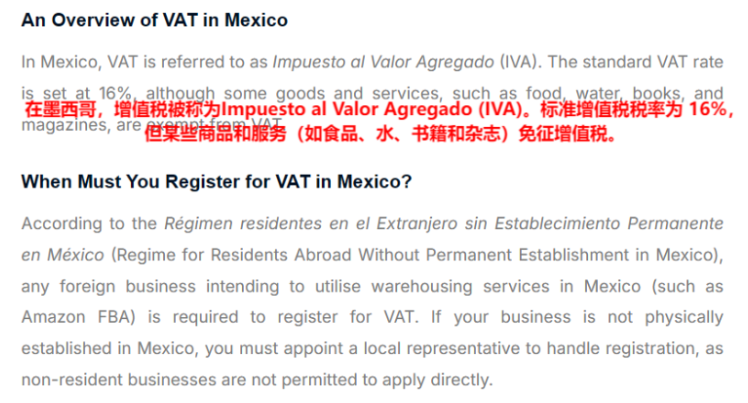
México impone IVA a productos importados Fuente: tbaglobal
La implementación de esta política significa que un gran número de vendedores de comercio electrónico transfronterizo se enfrentarán a nuevos requisitos de cumplimiento fiscal. Esto supone sin duda un desafío considerable para muchos vendedores que dependen de servicios de almacenamiento local como Amazon FBA.
Nueva carga fiscal: Presión de cumplimiento para vendedores transfronterizos
Según la nueva política, todos los vendedores extranjeros que utilicen servicios de almacenamiento en territorio mexicano deben registrarse para el IVA ante la Administración Tributaria de México. Esto incluye a vendedores de plataformas como Amazon FBA, Temu, especialmente aquellos vendedores transfronterizos que no tienen una entidad legal establecida en México. Ya sea que elijan enviar productos a través de almacenes de Amazon o utilizar servicios de almacenamiento local de otras plataformas, los vendedores deben cumplir con esta nueva regulación.
Para cumplir, los vendedores transfronterizos deben registrarse para el IVA en México y obtener un número de identificación fiscal (RFC). Si el vendedor no tiene una empresa constituida en México, debe realizar este registro a través de un agente local. Una vez completado el registro, el vendedor puede obtener el número de IVA y presentar declaraciones mensuales de IVA ante la autoridad fiscal mexicana según lo estipulado, garantizando el cumplimiento.
La implementación de esta política no solo aumenta la carga fiscal de los vendedores, sino que también les genera mayores costos de cumplimiento. Especialmente para aquellos vendedores más pequeños o con operaciones menos maduras, esta nueva regulación podría aumentar significativamente la dificultad y el costo de sus operaciones. Además, el proceso de cumplimiento fiscal se vuelve más engorroso, ya que los vendedores deben presentar declaraciones periódicamente y asumir las responsabilidades legales correspondientes.
Respuesta de las plataformas transfronterizas: Ofrecen apoyo pero con requisitos estrictos
Ante los cambios en la nueva política fiscal de México, varias plataformas de comercio electrónico transfronterizo han implementado medidas correspondientes para ayudar a los vendedores a adaptarse a los nuevos requisitos.Amazon, Shein y Temu, entre otras plataformas principales de comercio electrónico, han establecido regulaciones claras sobre el cumplimiento fiscal de los vendedores y han ofrecido diferentes medidas de apoyo.
Tomando como ejemplo aAmazon, la plataforma exige que todos los vendedores que utilicen el servicio de almacenamiento FBA proporcionen un número de IVA (RFC) válido. Si el vendedor no proporciona un RFC válido, Amazon retendrá un 20% de impuesto sobre la renta y un 16% de IVA. Los vendedores que proporcionen un RFC solo estarán sujetos al 16% de IVA. Para garantizar el cumplimiento, los vendedores deben cargar su número de identificación fiscal a tiempo y cumplir con los requisitos de declaración fiscal mensual.
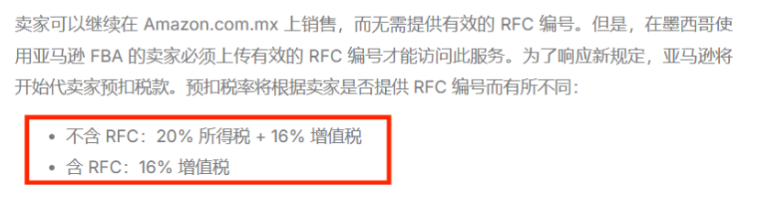
Política de retención de impuestos de Amazon Fuente: tbaglobal
Shein, por su parte, ofrece reglas más flexibles. La plataforma decide si retener impuestos según si el vendedor proporciona un RFC. Los vendedores que no proporcionen un RFC verán retenidos los impuestos correspondientes por la plataforma. En cambio, los vendedores que proporcionen un RFC pagarán los impuestos directamente a la autoridad fiscal mexicana, sin que la plataforma realice la retención.
Temu tiene requisitos más estrictos: cualquier vendedor que venda para el mercado mexicano debe proporcionar un RFC válido; de lo contrario, la plataforma suspenderá los envíos y verificará periódicamente el estado de registro fiscal del vendedor. Si el vendedor no pasa la verificación, su inventario será suspendido hasta que se resuelva su problema de registro fiscal.

Fuente: de Internet
Aunque estas plataformas ofrecen servicios como la retención de impuestos, aliviando parte de la carga de los vendedores, estos aún deben presentar declaraciones mensuales de IVA ante la autoridad fiscal mexicana. Esto significa que los vendedores no solo deben depender del servicio de retención de la plataforma, sino también monitorear de cerca su propio estado de cumplimiento fiscal para asegurarse de presentar las declaraciones a tiempo.
Ante la nueva política, los vendedores deben planificar con anticipación
Para los vendedores transfronterizos, el entorno fiscal futuro podría volverse más complejo. Además de México, otros mercados también podrían implementar políticas fiscales similares, por lo que los vendedores deben monitorear de cerca las dinámicas fiscales a nivel global y prepararse para afrontarlas.
Solo bajo la premisa del cumplimiento fiscal, los vendedores pueden mantener operaciones estables a largo plazo y evitar riesgos operativos derivados de cambios en las políticas.