 2078
2078Con el endurecimiento de las políticas arancelarias de Estados Unidos, muchos vendedores transfronterizos han comenzado a dirigir su atención hacia mercados emergentes para diversificar riesgos y buscar nuevos puntos de crecimiento. En este contexto, Arabia Saudita, gracias a su rápida expansión en el comercio electrónico, se ha convertido en el centro de atención de los vendedores globales.
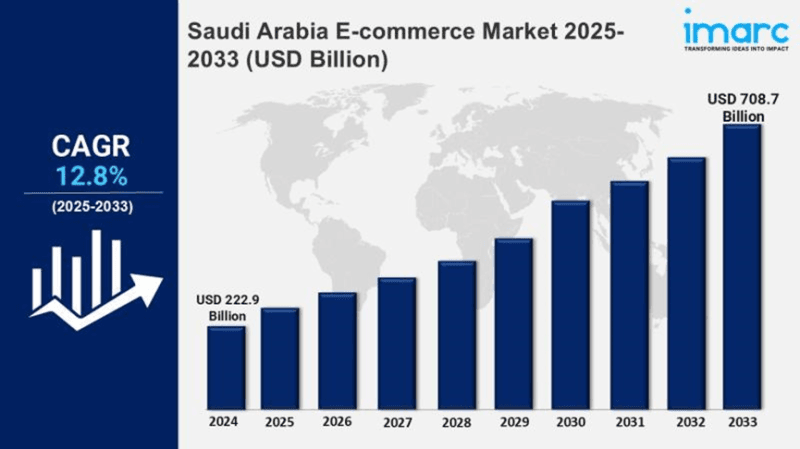
Según el último informe de imarc, se prevé que el mercado de comercio electrónico de Arabia Saudita supere los 700 mil millones de dólares para 2033, lo que demuestra un enorme potencial de desarrollo. Esto ofrece nuevas oportunidades para los vendedores, pero también plantea mayores exigencias para el desarrollo de las plataformas de comercio electrónico.

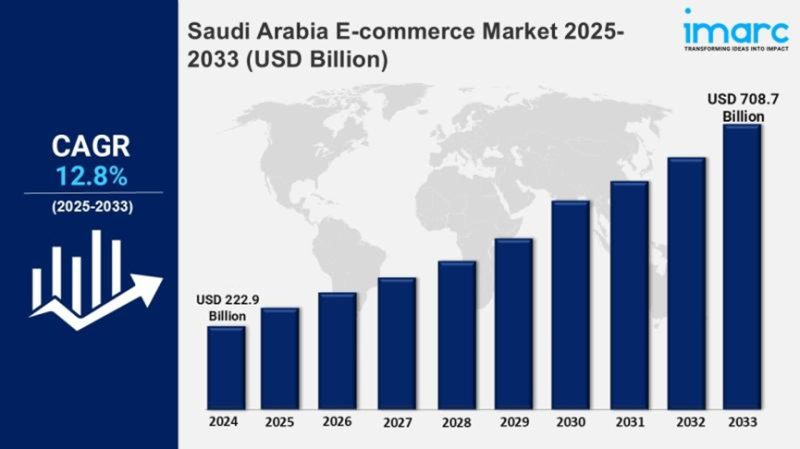
Fuente: imarc
Motores del crecimiento del mercado de comercio electrónico en Arabia Saudita
El rápido crecimiento del mercado de comercio electrónico en Arabia Saudita no es casualidad, sino el resultado de la interacción de múltiples factores.
La popularización de Internet y los teléfonos inteligentes ha sentado una base sólida para el desarrollo del comercio electrónico. Con la mejora continua de la infraestructura de red, cada vez más consumidores sauditas se están acostumbrando a comprar en línea, disfrutando de la conveniencia y la diversidad de opciones que ofrecen las plataformas de comercio electrónico.
En segundo lugar, el gobierno saudita está impulsando activamente la diversificación económica, y en la "Visión 2030 de Arabia Saudita" se plantea claramente el desarrollo de la economía digital. Esta estrategia incluye la optimización del sistema logístico y la mejora del sistema de pagos digitales, con el objetivo de crear un ecosistema de comercio electrónico más eficiente y seguro.
Además, el cambio en el comportamiento del consumidor es también un factor clave que impulsa la expansión del mercado. La población joven de Arabia Saudita representa un alto porcentaje, tiene una mayor aceptación de los estilos de vida digitales y es más propensa a comprar productos a través de canales en línea. Las plataformas de comercio electrónico, al ofrecer precios competitivos y una amplia variedad de productos, estimulan aún más la demanda de consumo, lo que hace que el tamaño del mercado continúe expandiéndose.


Fuente: Google
¿Qué impacto y oportunidades tiene para los vendedores?
Para los vendedores transfronterizos, el rápido crecimiento del mercado de comercio electrónico en Arabia Saudita es sin duda una gran oportunidad. La expansión del tamaño del mercado significa más clientes potenciales y oportunidades de venta, especialmente en un contexto donde los mercados de Estados Unidos y Europa están saturados, mercados emergentes como Arabia Saudita pueden ofrecer nuevos espacios de crecimiento para los vendedores.
Sin embargo, las oportunidades suelen ir acompañadas de desafíos. Aunque el mercado saudita tiene un enorme potencial, los vendedores aún deben enfrentar problemas como la baja eficiencia en la entrega logística y la infraestructura insuficiente en las zonas rurales. Además, los consumidores sauditas aún tienen dudas sobre la seguridad de los pagos en línea, lo que plantea mayores exigencias a las soluciones de pago de los vendedores.
Para afianzarse en el mercado saudita, los vendedores deben adoptar estrategias específicas.
Por ejemplo, optimizar la colaboración logística, eligiendo almacenamiento local o asociándose con proveedores de servicios de entrega eficientes para mejorar la experiencia de entrega de la última milla. Al mismo tiempo, ofrecer métodos de pago diversificados, incluido el pago contra reembolso (COD) y las billeteras digitales populares localmente, para aumentar la confianza de los consumidores. Además, comprender en profundidad la cultura y los hábitos de consumo locales, y realizar una operación localizada, es también clave para mejorar la competitividad en el mercado.


Fuente: Google
Conclusión
El rápido crecimiento del mercado de comercio electrónico en Arabia Saudita refleja la vibrante vitalidad de la economía digital del país y también ofrece nuevas oportunidades de desarrollo para los vendedores globales. Aunque aún enfrenta desafíos como la logística y los pagos, impulsado por el apoyo de las políticas gubernamentales y la demanda del mercado, se espera que este mercado logre un crecimiento de mayor calidad en los próximos años.
Para los vendedores, aprovechar las oportunidades del mercado saudita requiere ajustar las estrategias de manera flexible, centrarse en la operación localizada y enfrentar activamente los desafíos del mercado. Para las plataformas de comercio electrónico, mejorar las capacidades técnicas y los niveles de servicio será clave para ganar la competencia.
En general, el hecho de que el tamaño del mercado de comercio electrónico en Arabia Saudita esté a punto de superar los 700 mil millones de dólares no es el final, sino un nuevo punto de partida, y todavía hay un amplio espacio de desarrollo por explorar en el futuro.