 2783
2783TikTok Shop ha anunciado recientemente dos importantes actualizaciones de políticas que entrarán en vigor a partir de julio de 2025: la primera es la imposición de una tarifa de servicio para los pedidos de "envío por parte del vendedor", y la segunda es el lanzamiento oficial del programa promocional de "cofinanciación" liderado por la plataforma.
De estos cambios se desprende que TikTok Shop está regulando aún más el sistema logístico y mejorando la experiencia de cumplimiento, al mismo tiempo que aumenta el apoyo de tráfico a productos y tiendas de alta calidad.

Fuente: Internet
Los vendedores pagarán por los envíos, y las formas de cumplimiento podrían diversificarse
A partir de las 00:00 del 15 de julio, TikTok cobrará una tarifa de servicio de 0,50 libras esterlinas (impuestos incluidos) por cada pedido de "envío por parte del vendedor".
En comparación con el uso gratuito anterior de este modo predeterminado de envío por parte del vendedor, esto significa que los vendedores se enfrentarán a una elección explícita de costos en cuanto a la forma de cumplimiento. Los vendedores que utilicen la logística oficial de TikTok (FBT) o la logística de socios de la plataforma no se verán afectados por esta tarifa, ya que los costos relacionados ya están incluidos en las tarifas de servicio.
La plataforma está claramente guiando a los vendedores hacia un sistema logístico estandarizado. Para muchos pequeños y medianos comerciantes que dependen de almacenes en el extranjero de terceros o del envío directo, esta tarifa de servicio aparentemente pequeña puede acumularse y reducir significativamente los márgenes de beneficio. Para los vendedores que ya están integrados en FBT, esto significa una estructura de costos más clara y un mayor apoyo de la plataforma.
Si los vendedores necesitan reevaluar su estrategia de cumplimiento se ha convertido en una decisión urgente.

Fuente: Internet
Lanzamiento de promociones de cofinanciación, una palanca de crecimiento "semigestionada"
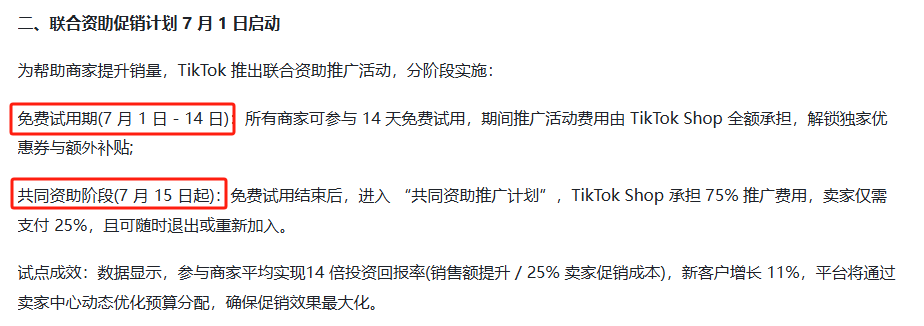
El "Programa de Promoción de Cofinanciación" lanzado simultáneamente por TikTok Shop entrará en una fase de prueba gratuita a partir del 1 de julio, y después de 14 días pasará a una etapa de cofinanciación entre la plataforma y los comerciantes. A través de formas como el marketing de afiliados y los subsidios de cupones de TikTok Shop, puede ayudar a los comerciantes a impulsar rápidamente el tráfico de contenido y fomentar el crecimiento de pedidos.
Durante el período gratuito, los costos de promoción son asumidos completamente por la plataforma; al entrar en la fase formal, la plataforma asume el 75% y el vendedor solo paga el 25%. Para los pequeños y medianos comerciantes con presupuestos limitados pero que desean aumentar las ventas, esta es una herramienta de apalancamiento poderosa para probar nuevos productos y aumentar las conversiones. No es difícil ver que TikTok está fortaleciendo la característica de "crecimiento liderado por la plataforma" en el ecosistema de comercio electrónico de contenido, apoyando a los vendedores con fuerte voluntad y mecanismos maduros.
Fuente: Internet
Señales detrás de los cambios de política
Desde las tarifas hasta los subsidios, esta ronda de acciones aparentemente contradictorias de TikTok Shop revela en realidad la dirección de la reestructuración estratégica de la plataforma para el ecosistema de comercio electrónico.
En el aspecto logístico, la plataforma espera que los vendedores adopten más su sistema de cumplimiento estandarizado y controlable; en el aspecto de marketing, la plataforma utiliza subsidios financieros para acelerar el proceso de los productos de alta calidad desde "listado" hasta "aumento de volumen".
En base a esto, aquellos que aún se aferren a métodos operativos de "listado y colocación" tendrán más dificultades para obtener apoyo del sistema en el futuro, mientras que los vendedores que puedan comprender rápidamente el ritmo de la plataforma y cooperar activamente en la asignación de recursos obtendrán una mayor capacidad de supervivencia y crecimiento.
Fuente: Internet
Recomendaciones para vendedores chinos
Para los comerciantes chinos que están planeando ingresar a TikTok Shop o que ya están operando en la plataforma, esta ronda de ajustes es tanto una advertencia como una oportunidad.
Lo principal es reorganizar la forma de cumplimiento y la estructura de costos, evaluar si es más rentable cambiar a FBT, y en segundo lugar, en la fase inicial de la política de cofinanciación, participar lo antes posible en la prueba gratuita para aprovechar los beneficios de tráfico. Al mismo tiempo, también se debe prestar atención al ritmo estratégico de apoyo de la plataforma, participar activamente en eventos oficiales y utilizar los recursos recomendados por el sistema para obtener un mayor peso de exposición.
Si los comerciantes transfronterizos chinos pueden aprovechar esta oportunidad, utilizar las políticas de manera razonable y optimizar la estructura de cumplimiento y promoción, podrían lograr un nuevo crecimiento en sus negocios a través de TikTok en julio.