
 2522
2522En los últimos diez años, las marcas chinas han crecido rápidamente en la ola del comercio electrónico global, pasando de la fabricación para la exportación a la construcción de marcas internacionales. Ahora, con el ajuste estructural del comercio electrónico global, está surgiendo una nueva oportunidad regional.
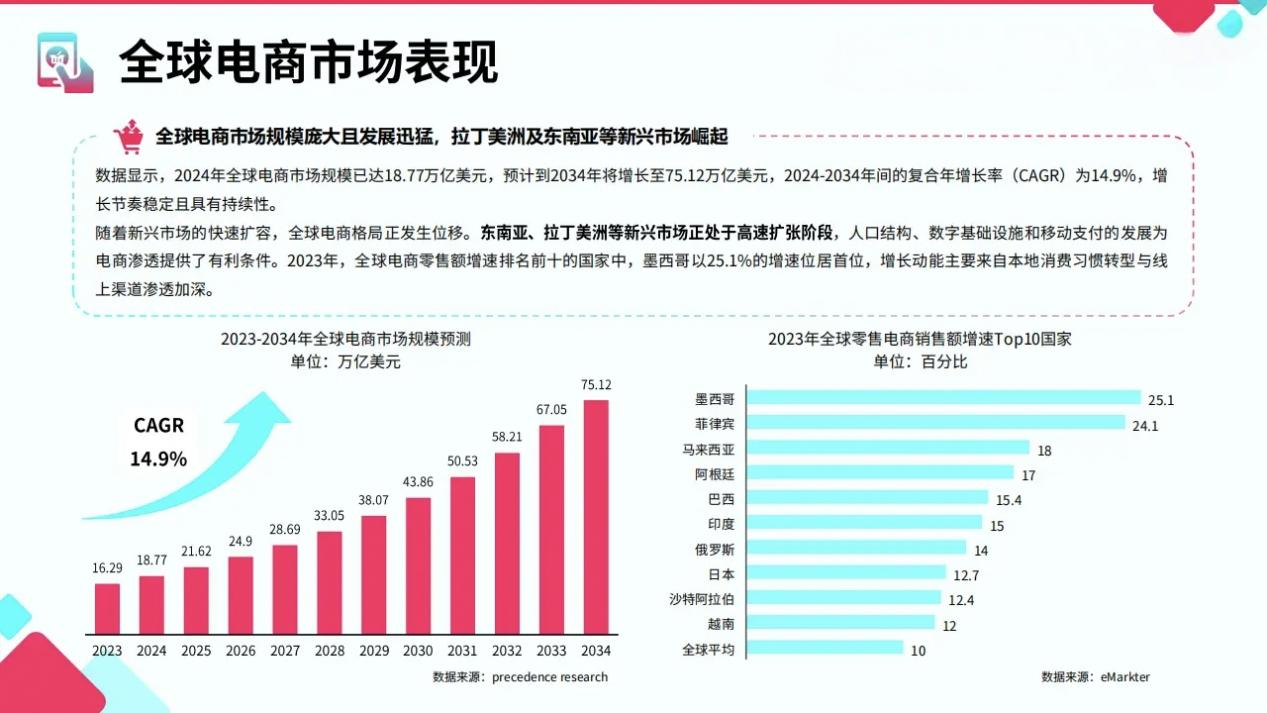
Según datos de Precedence Research, el tamaño del mercado global de comercio electrónico alcanzará los 18,77 billones de dólares en 2024, y se espera que crezca hasta 75,12 billones de dólares en 2034, con una tasa de crecimiento anual compuesta (CAGR) del 14,9% en la próxima década. En comparación con la desaceleración del crecimiento en América del Norte y Europa, la nueva ola de crecimiento se concentra más en mercados emergentes como América Latina y el Sudeste Asiático.
Estos mercados se encuentran en una etapa de aprovechamiento del bono demográfico y aceleración de la infraestructura digital, convirtiéndose en direcciones clave para que las marcas chinas se expandan en el extranjero.
Fuente: Dàshù Kuàjìng x ProBoost
«Informe de perspectivas del nuevo mercado de TikTok Shop 2025»
América Latina y el Sudeste Asiático se convierten en las regiones de más rápido crecimiento, y el entorno básico del comercio electrónico sigue mejorando
Entre los diez países con mayor crecimiento de ventas minoristas de comercio electrónico global en 2023, México ocupó el primer lugar con una tasa de crecimiento del 25,1%, seguido de Filipinas (24,1%), Malasia (18%), India (17%) y otros países de Asia y América Latina.
Estos datos envían una señal clara: la lógica de crecimiento incremental del comercio electrónico global está pasando de la competencia por el mercado existente a un cambio estructural.
Según los comentarios de varias empresas chinas que se expanden al extranjero, aunque la penetración en línea en los mercados emergentes es generalmente baja, el espacio de crecimiento es amplio y los usuarios tienen una alta aceptación de las plataformas de comercio electrónico y las nuevas marcas.
En mercados como México y Filipinas, la capacidad de localización de las principales plataformas de comercio electrónico se está fortaleciendo continuamente, y las infraestructuras logísticas y de pago de las plataformas están madurando gradualmente, proporcionando buenas condiciones para que las marcas transfronterizas se establezcan.


Fuente: Internet
TikTok se está convirtiendo en un importante punto de entrada para el consumo impulsado por contenido
En cuanto a los canales de contenido, la evolución de las redes sociales está reconfigurando el recorrido de compra de los usuarios.
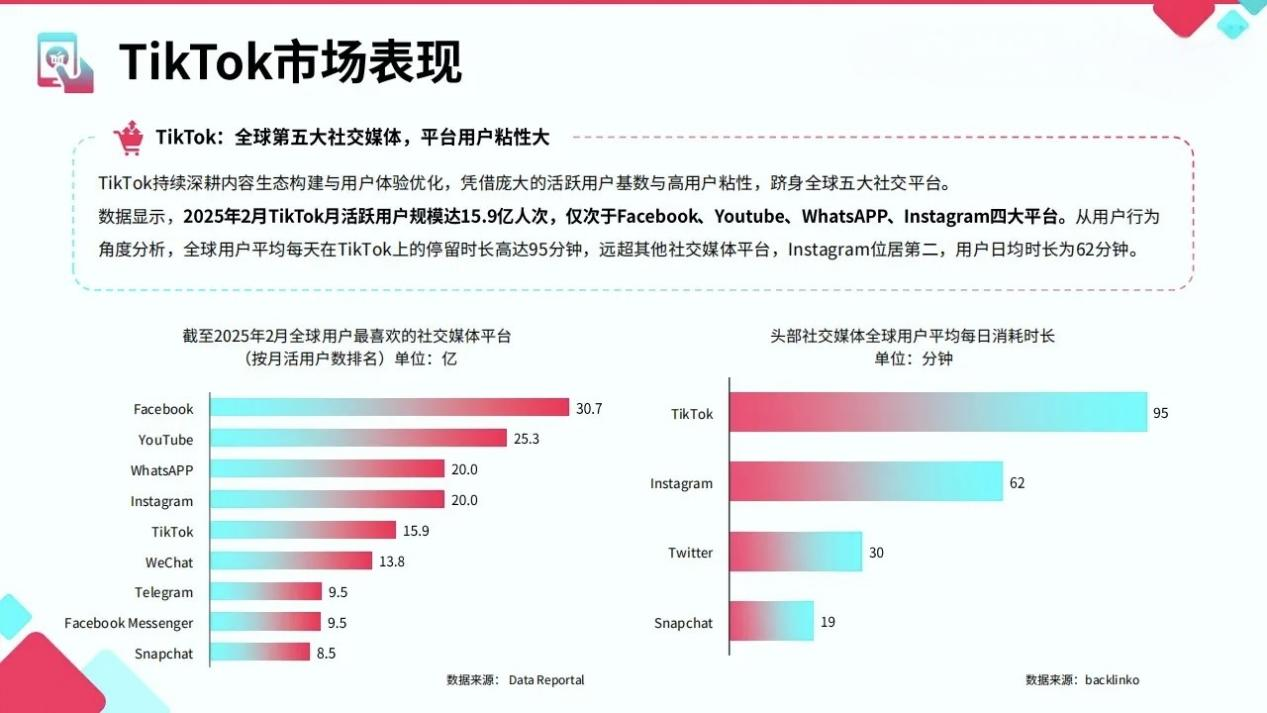
Según datos de DataReportal y Backlinko, hasta febrero de 2025, TikTok tenía 1590 millones de usuarios activos mensuales a nivel mundial, lo que lo convierte en la quinta plataforma social más grande del mundo; los usuarios pasan un promedio de 95 minutos al día en la plataforma, superando con creces a Instagram (62 minutos) y Twitter (30 minutos).
El alto nivel de engagement de TikTok lo convierte no solo en un canal de distribución de contenido, sino también en una nueva puerta de entrada para la conversión de comercio electrónico. En varios mercados emergentes, las marcas logran un ciclo cerrado de "descubrimiento-interacción-compra" a través de TikTok, acortando significativamente el proceso de decisión del usuario.
Algunas marcas chinas en mercados de América Latina y el Sudeste Asiático, mediante la colaboración con creadores locales (KOL), la publicación de videos cortos y la realización de transmisiones en vivo, han logrado una conversión de arranque en frío a bajo costo. Esta estrategia impulsada por contenido también se está convirtiendo en el núcleo de la nueva generación de estrategias de expansión internacional.
Fuente: Dàshù Kuàjìng x ProBoost
«Informe de perspectivas del nuevo mercado de TikTok Shop 2025»
La operación localizada se convierte en una capacidad clave para la internacionalización de marcas
Aunque el crecimiento en los mercados emergentes es notable, todavía existen grandes diferencias entre países en términos de cultura, pagos, logística y regulaciones. Las empresas que se expanden al extranjero deben evitar replicar simplemente la experiencia nacional y, en cambio, construir estrategias de localización detalladas en torno al mercado objetivo. Por ejemplo:
En México, el pago contra reembolso (COD) sigue siendo el método de pago predominante; las marcas deben integrar los sistemas de pago y cumplimiento locales para reducir las tasas de devolución y impago.
En Filipinas, el uso de plataformas de redes sociales es extremadamente alto; las marcas deben fortalecer la producción de contenido localizado y la gestión de comunidades de usuarios.
En Malasia, el entorno multilingüe y la diversidad religiosa requieren que el empaque de productos y el contenido de comunicación cumplan con las normas locales y la sensibilidad cultural.
A medida que el proceso de decisión del usuario depende cada vez más de la información de contenido y las evaluaciones sociales, la capacidad de contenido localizado, la capacidad de integración de canales y la capacidad de construcción de sistemas de servicio de las empresas que se expanden al extranjero se convertirán en barreras centrales.

Fuente: Internet
Conclusión: La nueva ronda de cambio estructural en la industria del comercio electrónico ya está tomando forma
Países emergentes como México, Filipinas y Malasia están asumiendo el próximo ciclo de crecimiento del mercado global de comercio electrónico. Y las nuevas plataformas sociales representadas por TikTok también se están convirtiendo en nuevas puertas de entrada para que las marcas conecten con los usuarios.
Para las empresas chinas que se expanden al extranjero, hoy en día la internacionalización ya no es solo operar en una sola plataforma o distribuir productos a bajo precio, sino una actualización integral en torno a la capacidad de localización, la construcción del sistema de contenido y la eficiencia colaborativa de toda la cadena.
En los próximos tres a cinco años, será una ventana crítica para que las marcas ganen presencia y participación en los mercados emergentes. Si una empresa puede tomar la iniciativa en la adaptación regional y profundizar en las operaciones determinará directamente su proceso de globalización y competitividad a largo plazo.