 1921
1921Hoy en día, con la competencia del comercio electrónico al rojo vivo, un“rezagado” está reescribiendo el panorama minorista global a un ritmo asombroso.
No es Amazon, ni Walmart, sino que, respaldado por el gigante de los videos cortosTikTok Shop de TikTok.
En apenas cinco años,TikTok Shop, desde su lanzamiento hasta su ascenso, se ha convertido en la plataforma de comercio electrónico de más rápido crecimiento en el mundo.
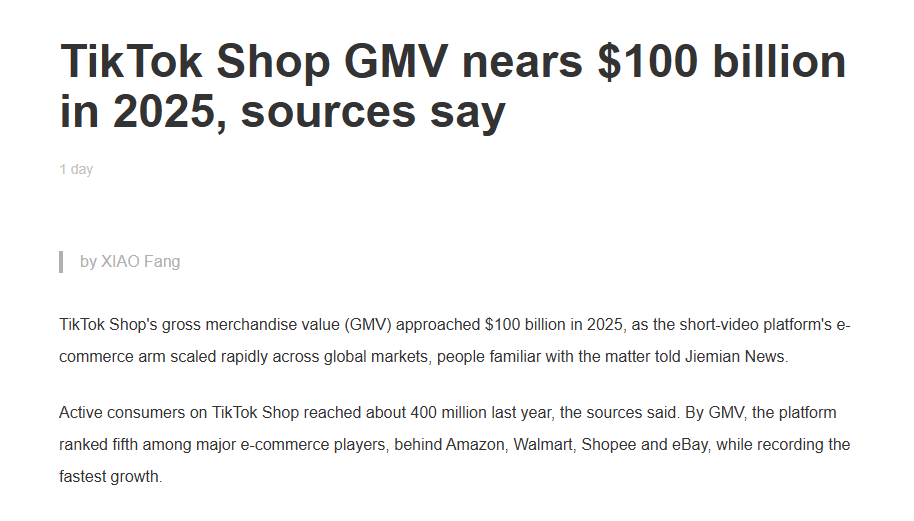
Los últimos datos muestran queen 2025, el número de compradores activos ha superado los 400 millones, el volumen total de transacciones anuales se acerca a los cien mil millones de dólares, logrando ingresar al top cinco del comercio electrónico global, solo detrás de Amazon, Walmart, Shopee y eBay.
Algunos expertos de la industria predicen que, a este ritmo,en 2026, el ranking de TikTok Shop seguirá ascendiendo.
Fuente de la imagen:jiemian
¿Por quéTikTok Shop puede correr tan rápido?
La respuesta está en dos palabras:contenido。
A diferencia del comercio electrónico tradicionalel modelo de búsqueda de “personas buscando productos”, TikTok Shop, apoyándose en el poderoso ecosistema de videos cortos y transmisiones en vivo de su plataforma matriz, ha creado la lógica del comercio electrónico por interés de “productos buscando personas”.
Los usuarios no vienen con un objetivo de compra claro, sino que son “sembrados” mientras navegan por videos cortos y ven transmisiones en vivo, y luego realizan un pedido con un solo clic.
Esta experiencia de ver y comprar al instante es especialmente popular entre los grupos de consumidores jóvenes.
Una encuesta realizada porTikTok Shop y Global Data muestra que más del 80% de los usuarios han descubierto nuevos productos en la plataforma, el 70% ha conocido nuevas marcas, y casi el 80% ha realizado compras en transmisiones en vivo.
“No estamos vendiendo productos, estamos compartiendo estilos de vida”, resume un fundador de una marca que comenzó con TikTok Shop.
El poder de contagio del contenido, junto con la base de confianza de la interacción social, hace que la recomendación de productos sea más natural y eficiente.

Fuente de la imagen:TikTok
No soloTikTok, el comercio electrónico global está girando hacia "contenido + social"
El auge de TikTok Shop no es casualidad; detrás hay un mercado de comercio social que se expande rápidamente.
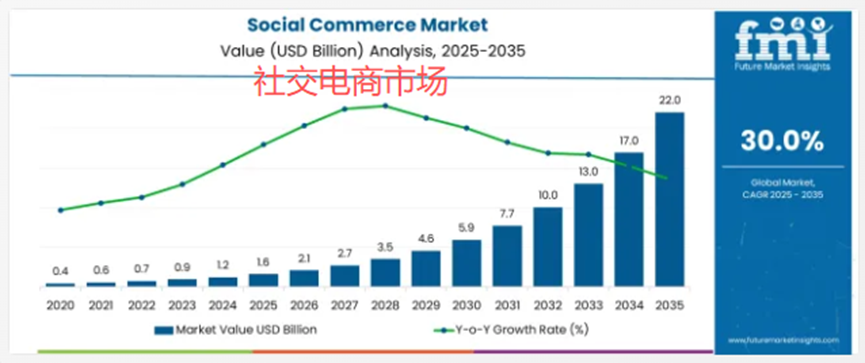
Segúnel análisis de Future Market Insight, a medida que la Generación Z se convierte en el principal consumidor, la forma de compra que integra videos cortos, transmisiones en vivo e interacción comunitaria se está volviendo mainstream. En 2025, el tamaño del mercado global de comercio social es de aproximadamente 1.6 mil millones de dólares, y se espera que se dispare a 22 mil millones de dólares para 2035, con una tasa de crecimiento anual compuesta del 30%.
Fuente de imagen:Future Market Insight
Otras plataformas también están siguiendo esta ola:
Amazon en2022 lanzó una función de compras con videos cortos similar a TikTok llamada "Inspire", y conectó los enlaces de compras con múltiples plataformas sociales;
Shopee sigue intensificando las funciones de transmisión en vivo y videos cortos;
Walmart lanzó la plataforma de creadoresWalmart Creator, que fomenta la venta a través de contenido;
eBay, por su parte, se asoció con Facebook para ampliar las oportunidades de venta en escenarios sociales.
Esto significa que el comercio electrónico de contenido ha pasado deser un "complemento" a convertirse en la fuerza central que redefine el comercio minorista.

Fuente de imagen:Amazon
La batalla futura: la competencia por el tráfico, el contenido y el ecosistema
El ascenso de TikTok Shop revela una tendencia clara: las dimensiones competitivas del comercio electrónico han cambiado.
Antes, las plataformas competían en cadena de suministro, logística y precio; hoy, quien logre captar la atención de los usuarios y construir confianza basada en contenido, tendrá la llave del crecimiento.
Para comerciantes y emprendedores, esto también significa la apertura de una nueva ronda de oportunidades. En el ecosistema del comercio electrónico de contenido, los creadores individuales, las marcas de nicho e incluso las pequeñas y medianas empresas tienen la oportunidad de llegar a consumidores globales con contenido viral y lograr un crecimiento rápido.
Por supuesto, los desafíos también llegan. La capacidad de creación de contenido, la operación localizada, la logística y el servicio transfronterizos, entre otros, son aspectos que requieren inversión continua. Pero es innegable que el mecanismo de recomendación de contenido basado en intereses está haciendo que el mercado de consumo global sea más plano, dinámico y explosivo.

Fuente de imagen: Internet
Mirando hacia atrás, aquella frase de Zhang Yiming"Los videos cortos son algo que traerá cambios al mundo", ahora ha resonado en el campo del comercio electrónico. TikTok Shop ha recorrido en pocos años el camino que a las plataformas tradicionales les tomó muchos años, basándose no solo en el tráfico, sino en una lógica comercial que reconstruye "personas, productos y escenarios".
La integración del contenido y el comercio electrónico sigue profundizándose, y la historia del comercio minorista global acaba de abrir un nuevo capítulo. Ya sea para plataformas, comerciantes o consumidores, una era de compras más vívida, instantánea y estrechamente conectada ha llegado.