 2013
2013
La recién concluida locura de compras de fin de año, el comercio electrónico estadounidense vuelve a presentar resultados sorprendentes.
Según informes, enDurante la temporada de vacaciones de dos meses del 1 de noviembre al 31 de diciembre de 2025, las ventas en línea en EE. UU. superaron el récord histórico, alcanzando257.800 millones de dólares (aproximadamente 1,8 billones de yuanes), superando con creces las expectativas previas del mercado.

Fuente de la imagen:forbes
En esta fiesta de consumo, varios puntos clave se destacaron especialmente.
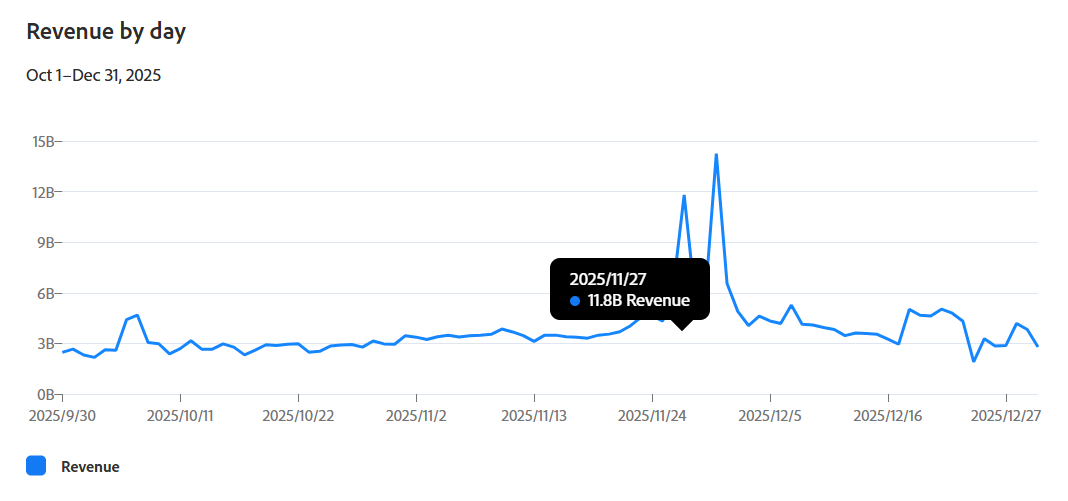
El día con el mayor volumen de transacciones de comercio electrónico del año ocurrió"Cyber Monday", con ingresos en un solo día de14.250 millones de dólares, un aumento interanual del7%. Le sigue el "Black Friday" con ventas de11.800 millones de dólares, con un incremento del9%。
Incluso el día de Acción de Gracias, las ventas en línea alcanzaron6.400 millones de dólares. Durante toda la temporada navideña,el promedio diario de ventas superó los4.000 millones de dólares durante 25 días, un aumento de7 días, lo que demuestra que el entusiasmo del consumo sigue en aumento.
Fuente de la imagen:adobe for business
¿Qué productos fueron los más populares?
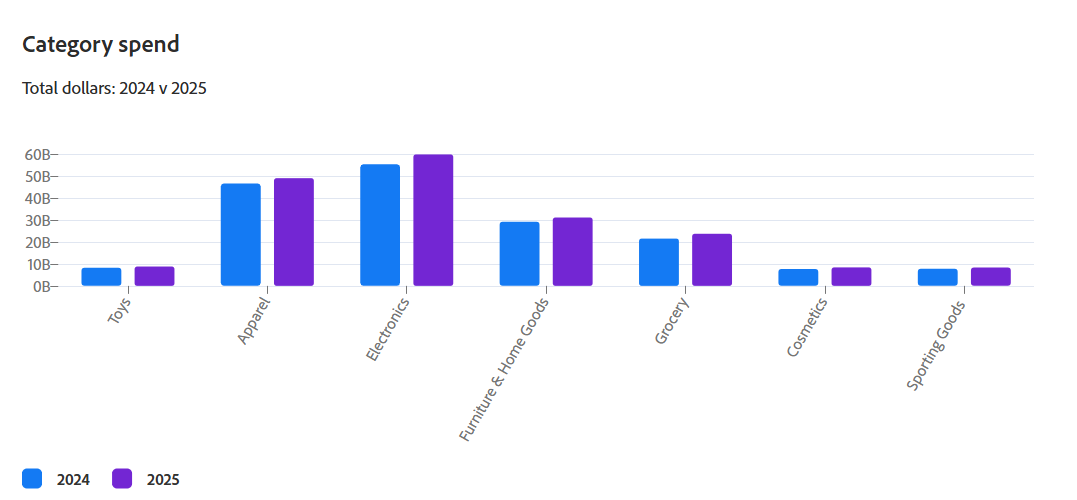
Los datos muestran que los productos electrónicos, la ropa y los muebles para el hogar se convirtieron en los impulsores del crecimiento“los tres caballos de batalla”, estas tres categorías contribuyeron conjuntamente con más del 54% de las ventas.
Entre ellos,las ventas de productos electrónicos fueron de aproximadamente59.8 mil millones de dólares, la ropa alrededor de 49 mil millones de dólares y los muebles alrededor de 31.1 mil millones de dólaresDurante la temporada navideña, los grandes descuentos en estas categorías fueron sin duda el motor principal que atrajo a los consumidores.
Además,las formas de pago convenientes, especialmenteel servicio de “compra ahora, paga después” (BNPL) se convirtió en un motor importante para impulsar el consumo. El volumen de transacciones realizadas a través de este método alcanzó los 20 mil millones de dólares, un aumento interanual de casi el 10%, lo que alivió significativamente la presión de pago inmediato de los consumidores y estimuló su poder adquisitivo.
Fuente de la imagen:adobe for business
Bajo el alto crecimiento,señales de “desaceleración”
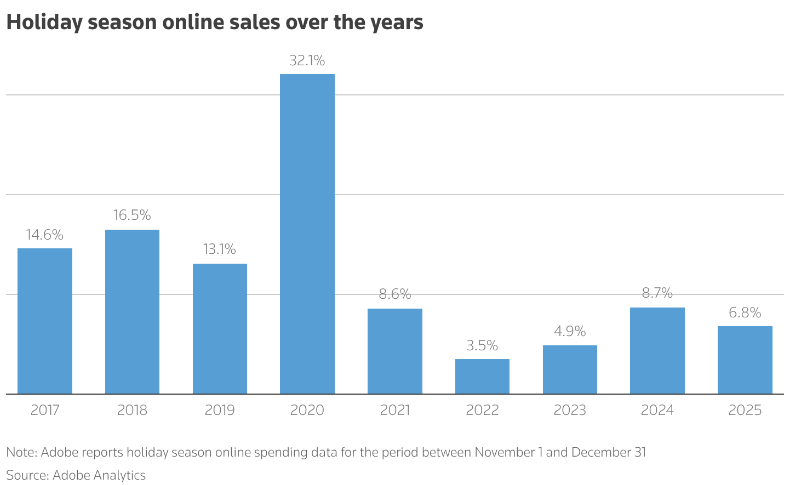
Aunque el total alcanzó un récord, un cambio sutil merece atención,La tasa de crecimiento interanual de las ventas en línea de la temporada navideña de 2025 fue del 6.8%, una desaceleración en comparación con el 8.7% del mismo período de 2024.
El análisis de la industria señala que la presión inflacionaria continua y los ajustes en la política arancelaria de Estados Unidos son las principales razones de la desaceleración del crecimiento.
El aumento generalizado de los precios ha reducido el poder adquisitivo de los consumidores, quienes son más cuidadosos al comprar.
Para hacer frente al aumento de los costos de importación, los gigantes minoristas, incluidos Target, Amazon y Walmart, han aumentado los precios de los productos en diversos grados, y los precios de algunos regalos navideños populares también han subido en consecuencia.
Esta“aumento de precios impulsado por los costos” y las fuertes promociones lanzadas por los minoristas para atraer clientescoexistiendo, conformanun panorama único del mercado de la temporada navideña de 2025:Los consumidores se mantienen cautelosos en medio de las expectativas, y el mercado muestra resiliencia ante los desafíos.
Fuente de la imagen: rtr
El frenesí termina, llega la ola de devoluciones
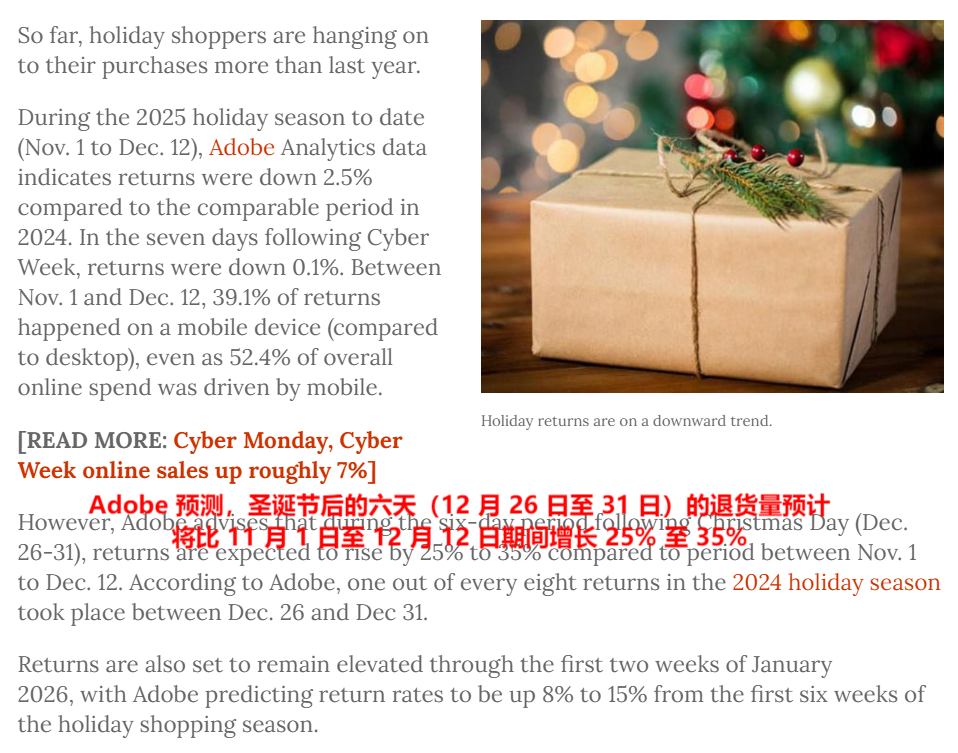
Sin embargo, el esplendor de las cifras de ventas no permite a los vendedores dormir tranquilos. A medida que la temporada de compras llega a su fin, un problema más acuciante emerge——una ola masiva de devoluciones.
Los datos históricos muestran que,Desde los últimos días de diciembre hasta enero del año siguiente es el período en que las solicitudes de devolución son más concentradas. Según las previsiones, dado que el crecimiento de las ventas navideñas de 2025 está impulsado más por el "aumento de precios" que por un "gran aumento en el volumen de ventas", los consumidores podrían optar por devolver los productos después de recibirlos debido a la presión económica o al arrepentimiento tras compras impulsivas. Especialmente los artículos que se dan como regalos, después de ser entregados en Navidad, es probable que formen un pico de devoluciones en enero.
El conveniente proceso de compras en línea y la atmósfera tensa creada por los descuentos por tiempo limitado, al estimular el consumo, también acortan objetivamente el tiempo de toma de decisiones de los consumidores, lo que genera más compras no planificadas, lo que a su vez aumenta la tasa de devoluciones.
¿Cómo responden los minoristas?
Ante el creciente desafío de las devoluciones, los principales minoristas ya están tomando medidas preventivas y adoptando medidas específicas:
Algunas plataformas de moda en línea cobran tarifas de devolución más altas a los clientes con una frecuencia excesiva de devoluciones.
Los minoristas con tiendas físicas, manteniendo la política de devolución gratuita, lanzan programas de recompensas de puntos para alentar a los clientes a canjear las devoluciones por puntos de membresía, promoviendo así el consumo repetido.
Algunas plataformas de comercio electrónico optan por acortar el período de ventana de devolución para los productos de grandes promociones, con el fin de reducir los costos operativos y los riesgos.
Fuente de la imagen: chainstoreage
En resumen, no importa cuán brillantes sean las cifras de ventas durante las grandes promociones, al final, lo que realmente importa son las ganancias que terminan en el bolsillo de los vendedores.
La abrumadora ola de devoluciones recuerda a toda la industria: las actividades promocionales solo pueden desempeñar un papel de"adornar lo que ya es bueno", y que la verdadera base para ganar mercado y clientes es ofrecer constantemente productos y servicios de alta calidad.
De lo contrario, por muy brillante que sea el crecimiento, puede ser solo algo efímero.