 2105
2105Gigantes del comercio electrónico latinoamericano se esfuerzan: apuntan a una escala de3374¡Cien millones! ¡Brasil inaugura la era dorada del comercio electrónico!
En los últimos años, el mercado de comercio electrónico de Brasil ha mostrado un fuerte impulso de crecimiento, convirtiéndose en una fuerza emergente ineludible en el ámbito global del comercio electrónico.
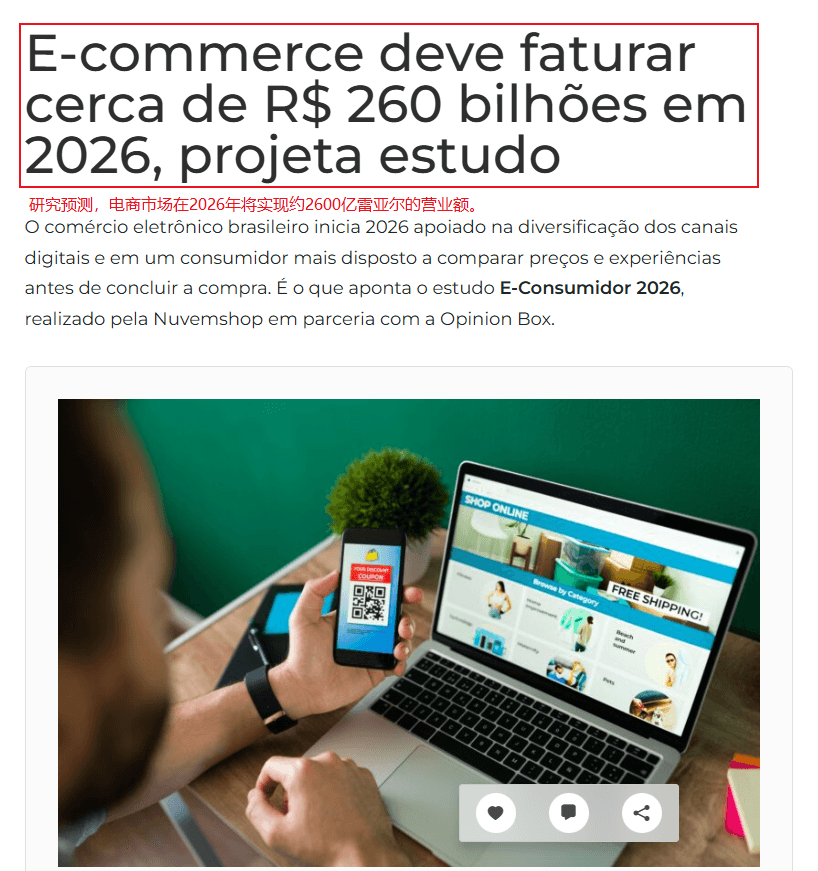
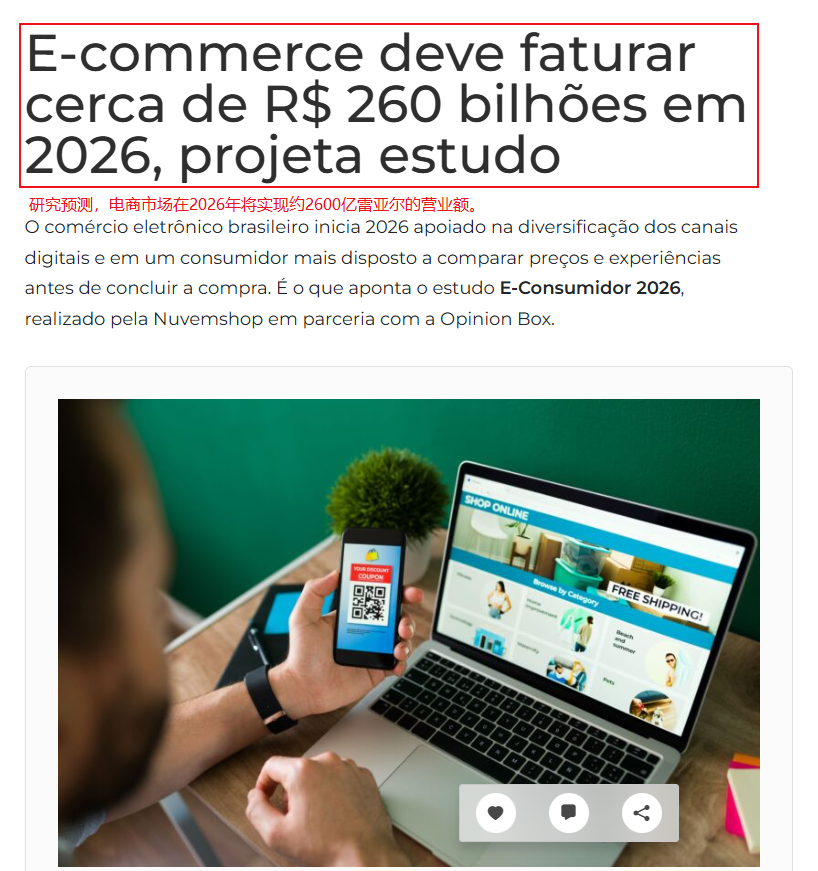
PorEstudio E-Consumidor2026 realizado en colaboración entre Nuvemshop y OpinionBoxseñala que:El comercio electrónico de Brasil en 2026mercadoalcanzarálogrará aproximadamente2600cien millones de reales (equivalente a aproximadamente3374cien millones de yuanes)de facturación。
Estos datos nosoloreflejan el enorme potencial del mercado brasileño y también ofrecen nuevas oportunidades de crecimiento para vendedores y plataformas de comercio electrónico a nivel mundial.
Fuente de la imagen:ecommercebrasil
El potencial del mercado de comercio electrónico de Brasil se sigue liberando
Como el mercado de consumo más grande de América Latina, Brasil tiene más de200 millones de habitantes, de los cuales la proporción de usuarios de internet es superior al 80%, y la penetración del comercio electrónico aumenta año tras año. Especialmente notable es que Brasil tiene una gran población joven con fuerte deseo de consumo, e incluso entre los grupos de bajos ingresos, el hábito de compras en línea se está extendiendo rápidamente.
Los datos muestran que más de la mitad de los residentes de favelas tienen experiencia en compras en línea, y la frecuencia de consumo continúa creciendo. Esta amplia base de usuarios proporciona un fuerte impulso para la expansión del mercado de comercio electrónico.
Al mismo tiempo, el comportamiento de compra de los consumidores brasileños también muestra nuevas tendencias,Los consumidores son más racionales al comprar, comparan precios, conveniencia y servicios adicionales de diferentes canales.
Entre ellos,El 70% de los consumidores finalmente elige realizar pedidos en plataformas de comercio electrónico, y el precio y la conveniencia se convierten en los dos factores que más les importan.;El 57% de los consumidores indica que priorizará los canales con precios más bajos.;YEl 55% de los consumidores valora la conveniencia del proceso de compra.
Además, las promociones como envío gratuito, reembolsos y recompensas por puntos se convierten en clave para atraer usuarios.
Fuente de la imagen:Google
Competencia de gigantes: la logística y la guerra de precios se convierten en el foco de la competencia
Ante el enorme potencial del mercado brasileño, los gigantes globales del comercio electrónico están intensificando sus esfuerzos, donde la logística y el precio se convierten en el campo de batalla central de la competencia.
Por ejemplo,Mercado Livre ha reducido significativamente los costos de envío en Brasil, bajando el umbral de envío gratuito de 79 reales a 19 reales, y ofrece a los vendedores locales un descuento de hasta el 40% en los costos logísticos.
Fuente de la imagen:Google
Amazon Brasil también siguió el ejemplo, lanzando un servicio de supermercado en línea e implementando envío gratuito para pedidos superiores a19 reales. Estas medidas muestran que reducir los costos logísticos es un medio efectivo para aumentar la disposición de compra de los consumidores.
Además de las plataformas de comercio electrónico tradicionales, las nuevas fuerzas también están surgiendo en el mercado brasileño.Shopee, aprovechando su experiencia exitosa en el sudeste asiático, se ha establecido rápidamente en Brasil y actualmente se ha convertido en una de las plataformas con mayor volumen de pedidos en el país, con una cuota de mercado del 11.6%.
Fuente de la imagen:Conversion
YTikTok Shop, después de ingresar a Brasil en mayo de 2025, en solo tres meses, su GMV mensual pasó de 1 millón de dólares a 46.1 millones de dólares, mostrando un poder de explosión asombroso.
El ascenso de estas plataformas,además deha intensificado la competencia del mercado y también ha proporcionado a los vendedores más opciones de canales de venta.
Fuente de la imagen:Momentum Works
Cómo deben responder los vendedores: de la guerra de precios a la guerra de valor
Para los vendedores transfronterizos, el mercado brasileño presenta tanto oportunidades como desafíos. Por un lado, los consumidores son muy sensibles al precio, y las estrategias de bajo costo siguen siendo una forma efectiva de atraer tráfico; por otro lado, depender únicamente de la competencia de precios bajos dificulta construir ventajas a largo plazo, por lo que los vendedores necesitan mejorar su competitividad en aspectos como el servicio, la experiencia y la construcción de marca.
En primer lugar, optimizar la experiencia logística es crucial. Debido a la vasta extensión territorial de Brasil y la infraestructura logística aún imperfecta, los tiempos de entrega y los costos de envío se convierten en factores clave que influyen en las decisiones de los consumidores. Los vendedores pueden considerar colaborar con proveedores de almacenamiento locales o elegir las soluciones logísticas que ofrecen las plataformas para acortar los tiempos de entrega y reducir los costos de envío.

Fuente de la imagen:Google
En segundo lugar, utilizar estrategias promocionales de manera flexible. Además de los descuentos por monto mínimo y los descuentos por tiempo limitado, los vendedores también pueden aumentar la fidelidad de los usuarios mediante obsequios, puntos de membresía, ventas combinadas, etc. Por ejemplo, para productos con alta tasa de recompra, lanzar servicios de suscripción o programas de lealtad puede mejorar efectivamente la retención de clientes.
Por último, prestar atención a la operación localizada. Los consumidores brasileños tienen una fuerte identificación con la cultura y el idioma local, por lo que los vendedores deben utilizar el portugués en las descripciones de productos, la comunicación con el servicio al cliente y los contenidos de marketing, y adaptarse a los hábitos de consumo locales. Por ejemplo, los brasileños prefieren los pagos a plazos; ofrecer métodos de pago flexibles puede aumentar significativamente la tasa de conversión.
Conclusión
En general, el mercado de comercio electrónico brasileñosiemprese encuentra en un período de rápido crecimiento。Para los vendedores, captar la demanda de los consumidores en cuanto a precio y conveniencia, optimizar la cadena de suministro y las estrategias de marketing es clave para afianzarse. Para las plataformas, cómo mantener ventajas en medio de cambios de políticas y competencia feroz determinará su posición futura en el mercado.
Aunque los desafíos no son pocos, el potencial del mercado brasileño no puede ignorarse. Con la mejora adicional de los pagos digitales, la infraestructura logística y el continuo aumento de la confianza del consumidor, Brasil tiene el potencial de convertirse en un polo importante en el panorama global del comercio electrónico.
Para los vendedores y plataformas con visión, ahora es el mejor momento para posicionarse.