
 2266
2266
Si todavía piensas que las redes sociales son solo para chatear y compartir fotos, es posible que ya te hayas perdido la última tendencia de riqueza.
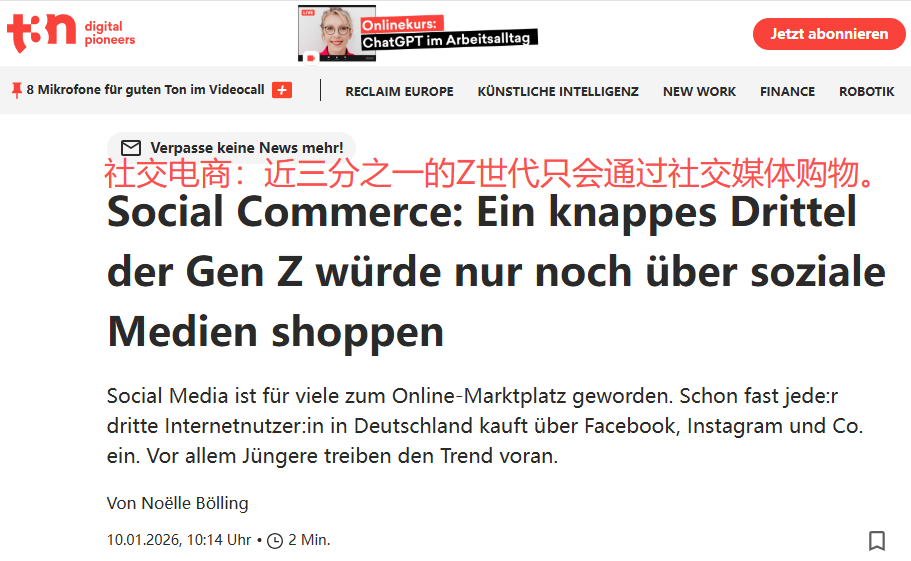
En Alemania, cada vez más jóvenes están llevando el carrito de compras"mudando" a Instagram, TikTok y Facebook — el comercio social está redefiniendo los hábitos de compra de los consumidores alemanes a una velocidad sin precedentes.

Fuente de la imagen:t3n.de
Cambio radical en los hábitos de consumo: casi la mitad de los jóvenes alemanes ya han realizado pedidos en plataformas sociales
Según la asociación digital alemanaBitkom, una encuesta reciente muestra que más de una cuarta parte de los internautas alemanes de 16 años o más han realizado compras en plataformas sociales.
Y enel grupo de jóvenes menores de 30 años, esta proporción se dispara al 48%, casi una de cada dos personas ha probado las compras sociales. Aún más sorprendente, el 29% de los jóvenes consumidores indicaron que en el futuro podrían realizar todas sus compras a través de redes sociales.
Esto significa que, en la vida de los jóvenes alemanes, los límites entre compras y redes sociales se están volviendo cada vez más difusos. Ya no se limitan a Amazon o las páginas web oficiales de las marcas, sino que prefieren, mientras naveganpor Instagram y ven videos de TikTok, descubrir buenos productos y realizar pedidos con un solo clic.
Fuente de la imagen:t3n.de
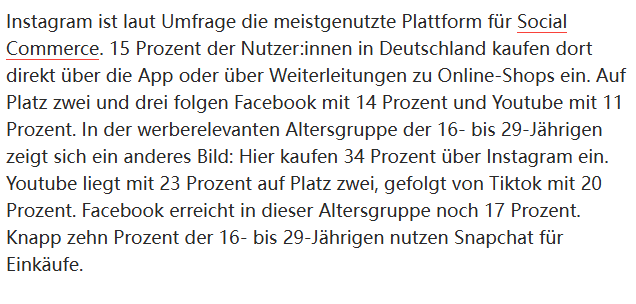
Entre las plataformas,Instagram lidera actualmente, aproximadamente el 15% de los consumidores alemanes compran directamente dentro de su aplicación o a través de enlaces; Facebook le sigue con un 14%, YouTube representa el 11% y TikTok el 8%.
A pesar de quela proporción de TikTok aún no es la más alta, su impulso de crecimiento y la alta concentración de usuarios jóvenes lo convierten en el escenario de compras sociales más destacado.
Fuente de la imagen:t3n.de
Las marcas ya actúan: más de la mitad de las empresas alemanas apuestan por la venta social
Ante el cambio en el comportamiento del consumidor, las marcas locales alemanas han reaccionado con rapidez.
La encuesta muestra que casi el 60% de las marcas alemanas ya gestionan una o más cuentas en redes sociales, de las cuales más del 30% invierte específicamente en publicidad para atraer tráfico, y ademásel 27% de las marcas ha habilitado funciones de transacción directamente en las plataformas sociales, permitiendo a los usuarios completar la compra sin necesidad de redirigirse.
La experta en comercio electrónico alemánNastassja Hofmann señala que las plataformas sociales, a través de enlaces integrados y sistemas de compra integrados, permiten a los usuarios descubrir y comprar productos fácilmente mientras navegan por contenido y comparten intereses.
Este tipo deLa experiencia de "ver y comprar" acorta enormemente el camino desde el deseo hasta el consumo, lo que se alinea especialmente con la necesidad de gratificación inmediata de la generación más joven.
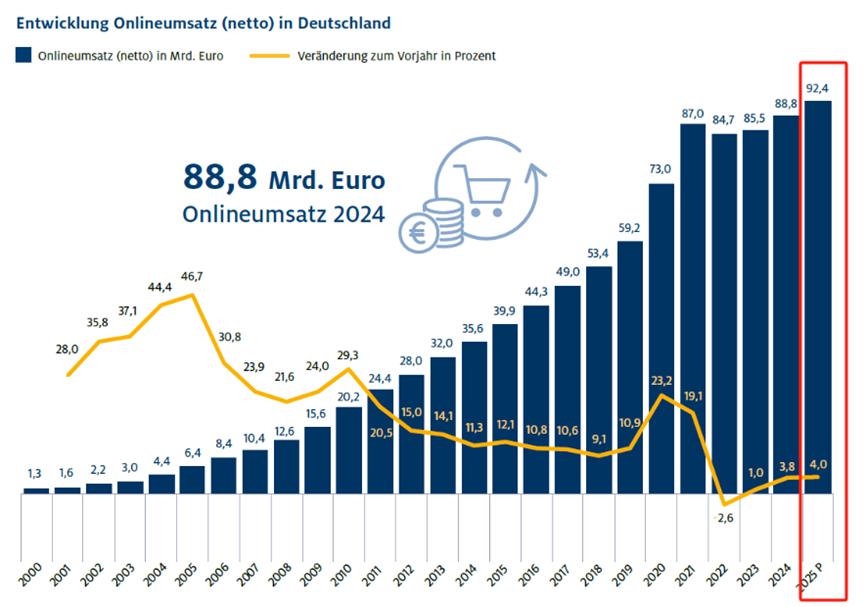
Al mismo tiempo, todo el mercado alemán de comercio electrónico también sigue creciendo de manera constante. La Asociación Alemana de Comercio Minorista (HDE, en su "Informe de Monitoreo del Mercado de Comercio Electrónico 2025", ha revisado al alza la previsión de ventas de este año a 92,4 mil millones de euros, un aumento interanual del 4%. El responsable de la asociación señaló que, incluso con un entorno de consumo general desafiante, el comercio minorista en línea sigue mostrando una fuerte resiliencia de crecimiento.
Fuente:DHE
Consejos para vendedores transfronterizos: sigan las tendencias y apuesten por los canales sociales.
Para los vendedores transfronterizos que están o planean ingresar al mercado alemán, este cambio envía una señal clara: depender únicamente de las plataformas de comercio electrónico tradicionales podría hacer que se pierdan una nueva ronda de oportunidades de crecimiento.
El comercio social integra contenido, interacción y consumo, adaptándose mejor a los hábitos de compra de los jóvenes, convirtiéndose en un mercado incremental que no se puede ignorar.
Se recomienda que los vendedores adopten las siguientes estrategias:
Elige la plataforma adecuada y enfócate en su operación:En Alemania, se puede priorizar la disposición.TikTok e Instagram, especialmente TikTok, están en un período de bonanza de tráfico, ideal para mostrar productos a través de contenido en formato de videos cortos, transmisiones en vivo, entre otros.
Localización de contenido y colaboración con influencers:Crear contenido que se adapte a la cultura y al idioma local, colaborando con creadores de influencia en Alemania para compartir experiencias auténticas que aumenten la confianza y la tasa de conversión.
Optimizar la experiencia de compra:Aprovechar al máximo las funciones de compra integradas en la plataforma, reducir los pasos de redirección y lograr una experiencia fluida."bucle cerrado de recomendación-compra"
Enfoque en el marketing de días festivos y temas de tendencia:Aprovechando fechas clave como Navidad y Black Friday, planifica contenido temático o transmisiones en vivo en plataformas sociales para atraer a jóvenes usuarios que buscan inspiración para regalos.

Fuente de la imagen: Internet
La esencia del comercio social esLa combinación de la "economía de la confianza" y el "consumo por interés". En Alemania e incluso a nivel mundial, esta tendencia apenas está comenzando.
Para los vendedores astutos, ahora es el momento clave para involucrarse y ganar la mente del consumidor. No te limites solo a los canales antiguos.Donde está la atención de los jóvenes, allí están las oportunidades de negocio.