
 1911
1911
En los últimos años, el comercio electrónico de videos cortos dependía principalmente dela forma tradicional de "filmación real + edición". Pero a medida que modelos de video de IA como Sora, Runway maduran rápidamente, esta reglatambién se ha roto.
Ahora cada vez más comerciantes comienzan a usarvideos de comercio electrónico generados por IA, no solo la eficiencia mejora enormemente, sino que los costos caen en picada, y el ritmo de todo el mercado ha cambiado.
Antes, un equipo profesional de contenido producía en un día30 videos ya se consideraba eficiente, ahora una persona con herramientas de IA puede producir cientos en masa en unas pocas horas.
La enorme brecha de productividad ha hecho que el modo tradicional manual pierda casi toda su competitividad.
Cuando los competidores pueden probar diez veces más ideas con una décima parte del costo, esta competencia ya se ha convertido enuna contienda de "algoritmos y poder computacional".

Desde“sensación de persona real” a “sensación de confianza”
“sensación de naturalidad”solíaser considerado el estándar de producción de contenido. Pero desdela publicación de videos de IAdatosver, los usuarioslo que realmente importa, no es“si es filmado por una persona real”, sinosi el contenido es creíble y el producto es confiable。
Además, desde las reglas de la plataforma, la plataformala creación de IA no está restringida, lo que siempre ha combatido son los contenidos de baja calidad, falsos o exagerados. Siempre que la calidad del contenido sea alta y los materiales/productos promocionados sean reales, el algoritmo igualmente dará tráfico.
Por ejemplo, recientemente enEste sitio independiente de ropa que está de moda en TikTok, enfocado principalmente en Europa y América, Sheenplace.

Segúnel análisis de datos de Pipiads,Este sitio independiente de ropauna sola tiendaha publicado un total de6393 anuncios, con un total de 77.9 millones de reproducciones.
Y duranteel Black Friday, su curva de tráfico casi se disparó verticalmente. Detrás de esto solo hay una explicación:La potencia computacional de IA al máximo, vertiendo instantáneamente cientos de materiales en el mercado.
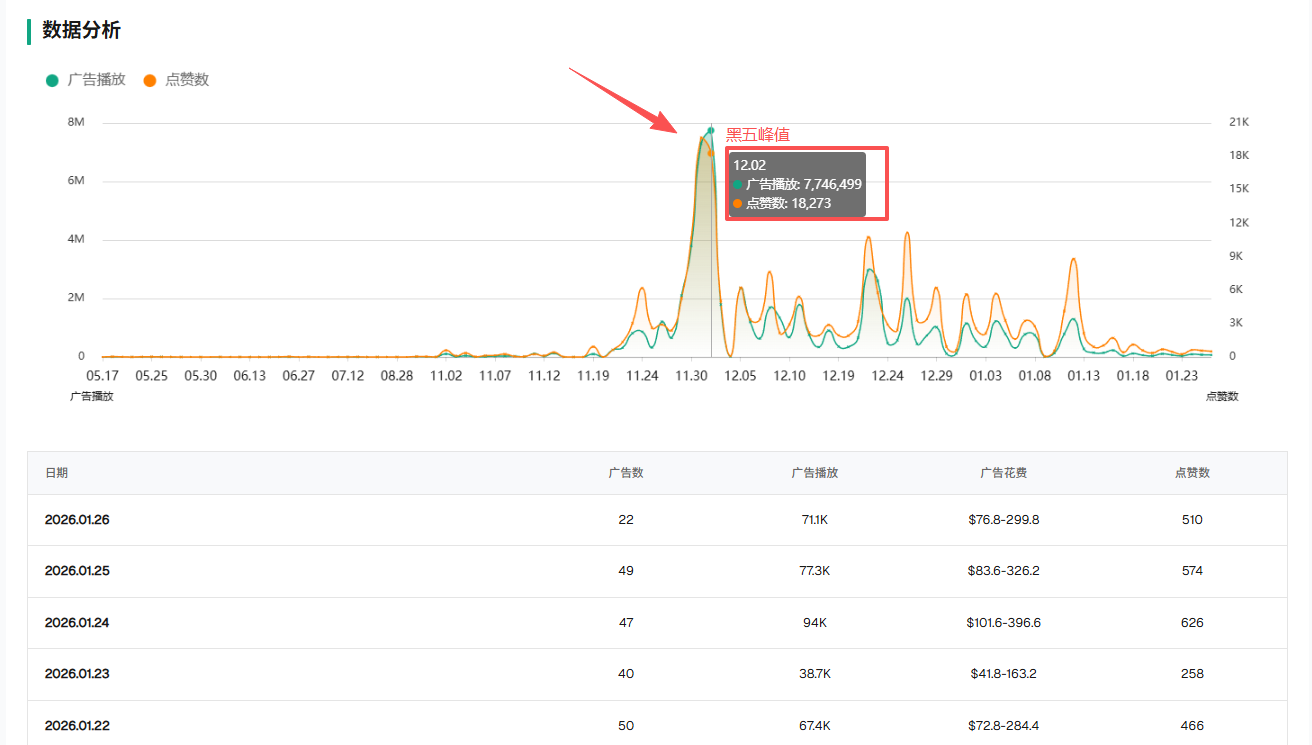
Fuente de datos:pipiads
Su estrategia central es un solo texto publicitario que se fragmenta en decenas de miles de videos.
Texto publicitario:"Wear the Viking Spirit. Conquer Winter with Rugged Style and Unstoppable Courage!"
Este único texto publicitario está asociado con2000 materiales de anuncios, con 59.3M de reproducciones.

Fuente de datos:pipiads
El contenido del video abandona por completo la filmación tradicional, utilizandoimágenes estáticas surrealistas generadas por IA: hombres musculosos de cabello plateado, líneas musculares exageradas, tatuajes celtas complejos, junto con efectos de paralaje dinámicos simples que hacen que la imagen "cobre vida".
Un solo video viral tiene2.7 millones de reproducciones, con un costo de producción de menos de 1 dólar.

Fuente de datos:pipiads
¿Dónde está la astucia de esta estrategia? No vende la ropa en sí, sino un boleto de entrada al"círculo de hombres duros".
La calidad visual de nivel cinematográfico capta la atención al instante, combinada conel llamado de "Join the Viking Tribe", que acierta precisamente en la necesidad de identidad del usuario objetivo.
Esto no es creación, es producción industrial. No necesitan ir a Escandinavia a buscar locaciones o modelos, solo necesitan un conjunto preciso de prompts para reducir al mínimo el costo de los materiales visuales.
Otro ejemplo, otra tienda de animela tienda de ropa de IP ComicsSoul, con datos igualmente impresionantes.

Fuente de datos:pipiads
Esta tienda ha publicado acumulativamente10,600 anuncios, con vistas recientes que alcanzan 2.7 millones. Según datos de Pipiads, su curva de tráfico muestra claros picos en forma de "diente de sierra" — mantienen pruebas de baja intensidad habitualmente, y explotan en momentos clave, lo que refleja la flexibilidad de la capacidad de producción de IA.
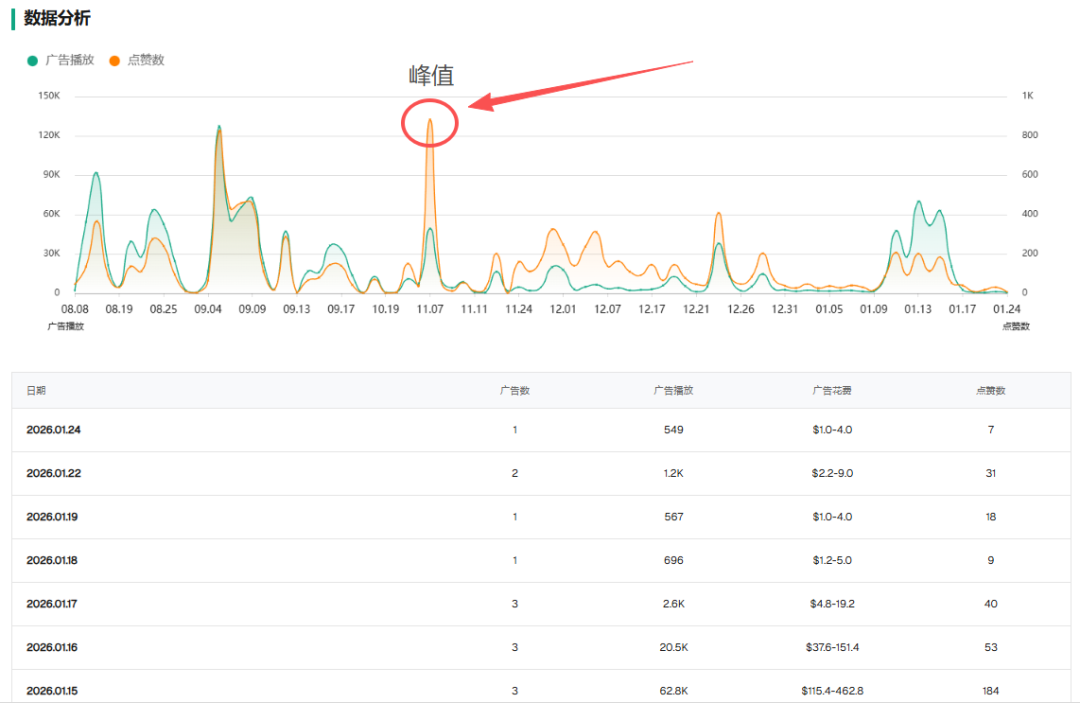
Fuente de datos:pipiads
Su estrategia central también es directa: un texto verificado, combinado con miles demateriales visuales de IA que bombardean repetidamente a los usuarios.
Un solo texto genera1.6 millones de vistas, cubriendo múltiples IP como la versión de Pikachu, Charizard, Goku de Dragon Ball, etc.
Lo realmente increíble es esevideo viral con 90.8K vistas, de solo 14 segundos:
· Sin apariciones reales, soloun "modelo invisible" mostrando la ropa
· El estampado de los pantalones de Dragon Ball usóel efecto de brillo "deslumbrante"
· En 15 segundos, cambia al ritmo entre estilos de 10 personajes como Goku, Vegeta, Broly, Buu, etc.

Este tipo de efecto visual, con la filmación tradicional requeriría muestras de ropa, iluminación, equipo de efectos especiales, costoso y lento.La IA se salta todo eso, convirtiendo la ropa en "obras de arte digitales". Los usuarios no pagan por el objeto físico, sino por la identificación con la IP y el choque emocional que provoca el espectáculo visual.
Videos de IA¿Qué cambios han traído a la lógica comercial?
Estos casos revelan una cruel realidad: la creación de contenido desde“arte”se convirtió en“ingeniería”。
Máxima producción diaria de un equipo tradicional30 videos, el director necesita 1-2 horas para escribir el guion, 4-6 horas para la iluminación y grabación, 2-4 horas para edición y efectos, totalizando 8-12 horas para producir uno. Mientras que el equipo de IA solo usa 30 minutos para escribir la estrategia de copywriting, y en 2 horas puede generar 200, mejorando la eficiencia en 66 veces.
La brecha más letal reside en la velocidad de prueba y error. Cuando estás revisando repetidamente un video, el oponente ya ha usadoGenera 50 versiones diferentes de IA y bombardea repetidamente a tus clientes potenciales. Lo más importante es que los datos de Pipiads muestran que el 99 % de estos anuncios de IA no son marcados por la plataforma. La plataforma solo rechaza la baja calidad, no la IA. Siempre que la iluminación y las sombras sean reales y los movimientos naturales, el algoritmo no puede distinguir si fue filmado por personas reales o generado por IA.

Lo que realmente cambia las reglas del juego es la reestructuración completa de la estructura del equipo.
Antes se necesitaba un director, un fotógrafo, un iluminador, un modelo, un editor, etc.Un equipo de más de 10 personas ahora solo necesita un estratega de copywriting que comprenda con precisión la psicología del usuario, un operador de IA que convierta la lógica empresarial en plantillas replicables, y un analista de datos que utilice Pipiads para rastrear el ROI y guiar la iteración. La productividad de 3 personas equivale a la de 30 personas tradicionales, con solo 1/10 del costo, y en momentos clave pueden explotar instantáneamente miles de materiales para ocupar las alturas del tráfico.
El comercio electrónico de videos cortos ha entrado en la era de la potencia informática.
preocuparseLa preocupación por la colisión de materiales de IA es en realidad innecesaria. Una plataforma verdaderamente eficiente puede generar automáticamente docenas de versiones con diferentes escenarios, tonos de piel y emociones basadas en el mismo producto. Más importante que un rostro perfecto es la voz localizada; un auténtico acento londinense o tejano puede acortar instantáneamente la distancia psicológica con el usuario. La IA reduce el costo de prueba y error a casi cero, y al final la competencia se reduce a quién puede ejecutar más rápido el proceso de producción estandarizado.
La velocidad es el nuevo foso. Ahora la victoria ya no depende del tamaño del equipo ni de la inversión en equipos, sino de quién puede transformar más rápido las percepciones de los usuarios en miles de materiales mediante métodos sistemáticos, ocupando la mente de los usuarios antes de que los competidores reaccionen.