 2755
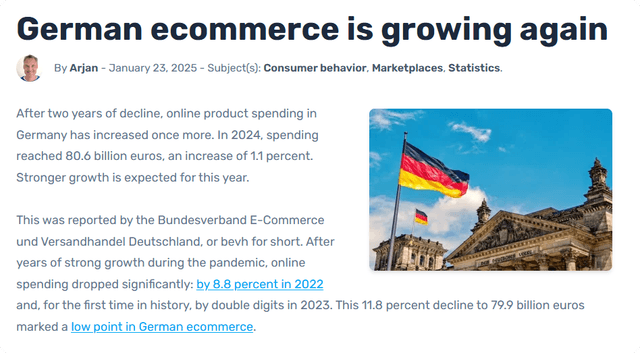
2755El mundo del comercio electrónico transfronterizo vuelve a agitarse. Recientemente, varios consumidores turcos descubrieron que la plataforma de comercio electrónico china de ultramarLa página local de TEMU ha sufrido un "cambio radical": los productos transfronterizos de bajo precio, que antes abundaban, desaparecieron de la noche a la mañana, dejando solo artículos de vendedores locales disponibles.
Hay información de mercado que indica,TEMU ha suspendido todas las ventas internacionales en Turquía, reduciendo su alcance comercial solo a vendedores locales turcos. Esta acción ha generado amplias especulaciones en la industria: ¿está TEMU enfrentando un "freno" regulatorio en Turquía? ¿Su expansión global se enfrenta por primera vez a un ajuste regional?

Fuente de la imagen: Internet
Opción transfronteriza"Desaparición", el modelo de plataforma "cambio de forma"
Recientemente, usuario turco inicia sesiónAl usar la aplicación o el sitio web de TEMU, se descubre que miles de productos de muy alta relación calidad-precio de mercados extranjeros como China han desaparecido colectivamente de la plataforma.
Ya sea buscar, navegar o intentar agregar al carrito, lo único que el usuario puede ver es la etiqueta."Productos locales con 'entrega dentro de Turquía'. Esto significa que TEMU, de ser una plataforma global de comercio electrónico centrada en envíos directos transfronterizos, se ha transformado instantáneamente en Turquía en una 'plataforma de comercio electrónico localizada'."
Anteriormente, gracias a sus precios extremadamente bajos y una amplia selección de productos transfronterizos, atrajo rápidamente a una gran cantidad de consumidores sensibles al precio, especialmente entre los jóvenes. Ahora, este atractivo central ha desaparecido repentinamente, dejando a muchos usuarios turcos confundidos.
Hasta la fecha.TEMU no ha declarado públicamente si este ajuste es una medida de respuesta a corto plazo o una transformación estratégica a largo plazo, ni ha revelado si y cuándo se reanudará el negocio transfronterizo.
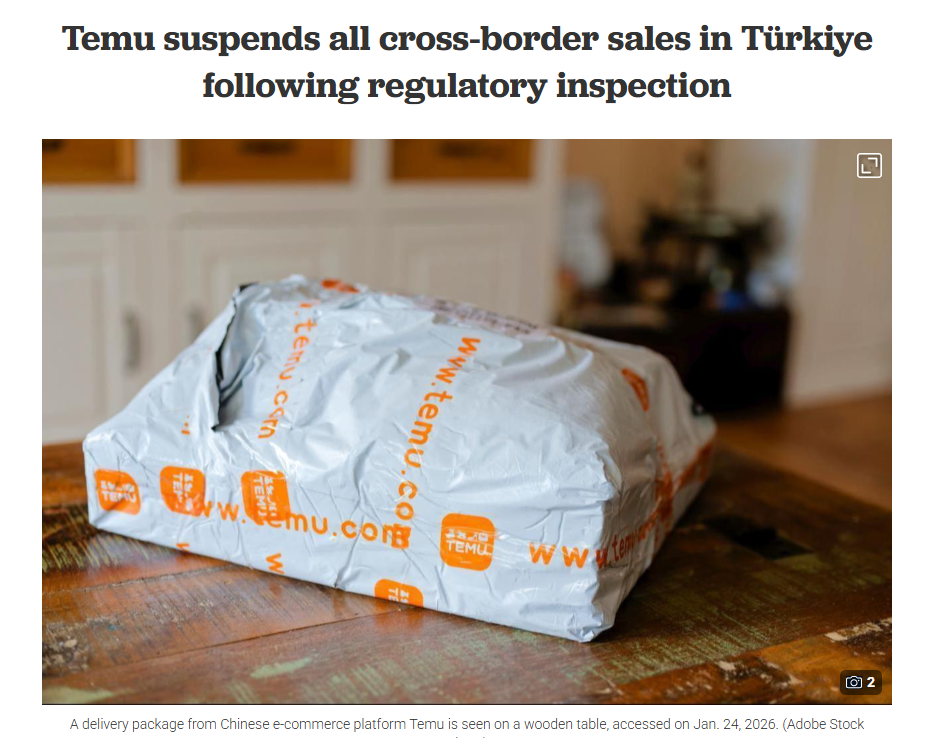
Fuente de la imagen:turkiyetoday
La inspección regulatoria podría ser el detonante clave.
Este cambio repentino en el modelo de negocio se considera estrechamente relacionado con las acciones de las autoridades reguladoras turcas.
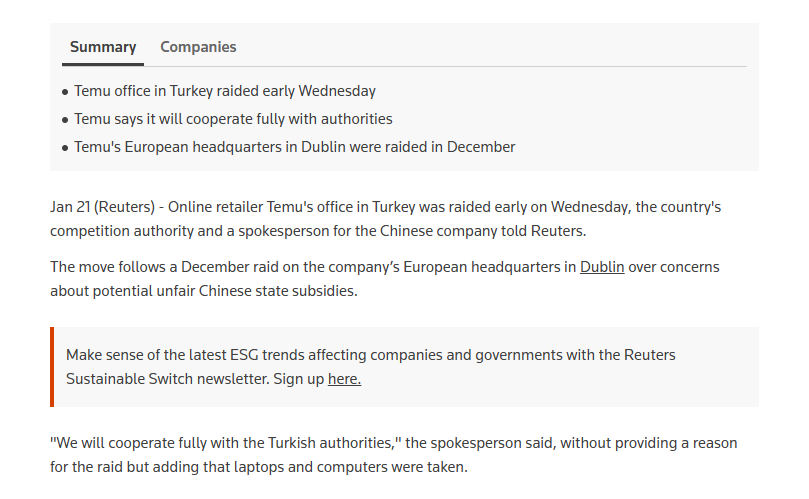
justo antes de que ocurriera este cambioEl 21 de enero, la Autoridad de Competencia de Turquía realizó una inspección in situ en la oficina de TEMU en Estambul.
TEMU posteriormente emitió un comunicado confirmando esta inspección y expresó que cooperará plenamente con las autoridades turcas pertinentes.
Aunque el regulador enfatizó que esta inspección no equivale a una investigación formal, la estrecha relación temporal sugiere fuertemente que...Este ajuste de negocio de TEMU probablemente sea para hacer frente de manera proactiva a los posibles requisitos de cumplimiento, o una reestructuración comercial realizada después de una inspección.
EstounoRefleja que el comercio electrónico transfronterizo, en su expansión global, se enfrenta a desafíos regulatorios localizados cada vez más complejos y específicos.
Fuente de la imagen:reuters
De la expansión global a la adaptación local
Desde su lanzamiento inicial en Norteamérica en septiembre de 2022, TEMU se ha expandido rápidamente en el mercado global gracias al gen de 'relación calidad-precio extrema' de su empresa matriz Pinduoduo y su modelo de cadena de suministro de fabricante directo al consumidor (M2C).
El precio de sus productos en comparación con Amazon,Las plataformas tradicionales como eBay tienen ventajas significativas y rápidamente atrajeron a una gran cantidad de consumidores sensibles al precio.
En 2023, TEMU aceleró su expansión global, ingresando sucesivamente a los mercados de Japón, Corea del Sur y el Sudeste Asiático. A principios de 2024, su alcance comercial ya cubría más de 50 países y regiones en todo el mundo, convirtiéndose en una nueva fuerza ineludible en el campo del comercio electrónico.
Según una plataforma de datos autorizadaSegún el ranking más reciente de Similarweb, el número de usuarios activos mensuales de TEMU ha alcanzado los 246 millones, ubicándose como la tercera aplicación de comercio electrónico a nivel mundial, solo detrás de Amazon y Shopee.
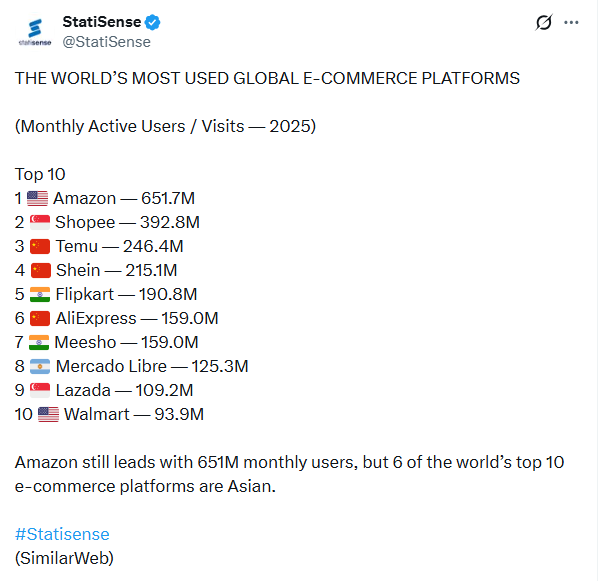
Fuente:x
¿Dirección futura: dolor a corto plazo o transformación a largo plazo?
Esta contracción del negocio en el mercado turco, paraLa globalización de TEMU ha hecho sonar una alarma.
Esto resalta que, mientras las plataformas de comercio electrónico emergentes se expanden internacionalmente a alta velocidad, deben prestar gran atención a las leyes y regulaciones, las políticas de competencia y la complejidad del ecosistema comercial local en los diferentes mercados.
en cuanto aEn cuanto a TEMU, su estrategia actual en Turquía podría afectar a corto plazo su atractivo principal basado en su amplia oferta de productos transfronterizos.
Pero a largo plazo, quizás esta sea también una oportunidad para profundizar su cadena de suministro local, integrarse en el mercado local y construir un modelo de negocio más sostenible. ¿Se trata de una medida temporal para evitar riesgos, o su estrategia global haciaUna señal del ajuste de "localización profunda" aún está por verse.
La competencia mundial del comercio electrónico ha entrado en una nueva etapa, y la estrategia de depender únicamente del tráfico transfronterizo y las ventajas de precios está enfrentando desafíos.
Cómo encontrar un equilibrio entre eficiencia, cumplimiento normativo y localización, seráLa cuestión clave que TEMU y todas las plataformas de comercio electrónico que salen al extranjero deben responder. El cambio en el mercado turco, quizás solo sea el comienzo.