El informe de Tuke sobre la expansión del comercio electrónico en el Sudeste Asiático 2024 analiza principalmente tres aspectos: la macroeconomía del Sudeste Asiático, la economía digital y los consumidores, proporcionando apoyo de datos y recomendaciones estratégicas para las empresas que se expanden en el Sudeste Asiático. El contenido principal es el siguiente:
1. Macroeconomía del Sudeste Asiático
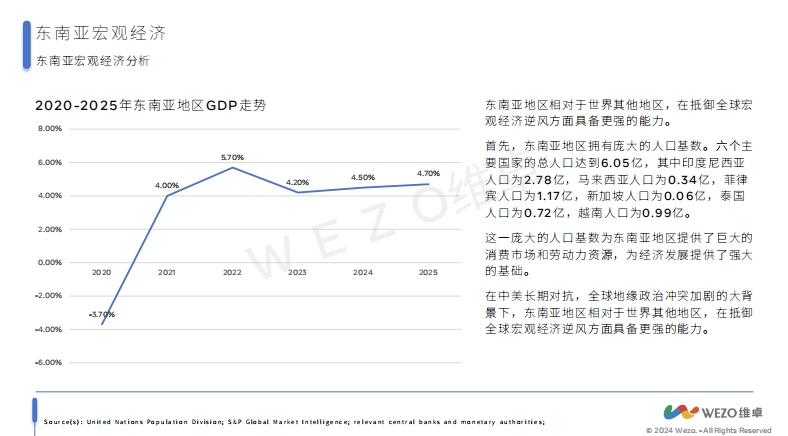
- Crecimiento económico: Entre 2020 y 2025, el PIB del Sudeste Asiático muestra una tendencia general de crecimiento, con una fuerte capacidad para resistir los vientos en contra de la macroeconomía global. La región cuenta con una gran base poblacional, lo que proporciona un mercado de consumo y recursos laborales.
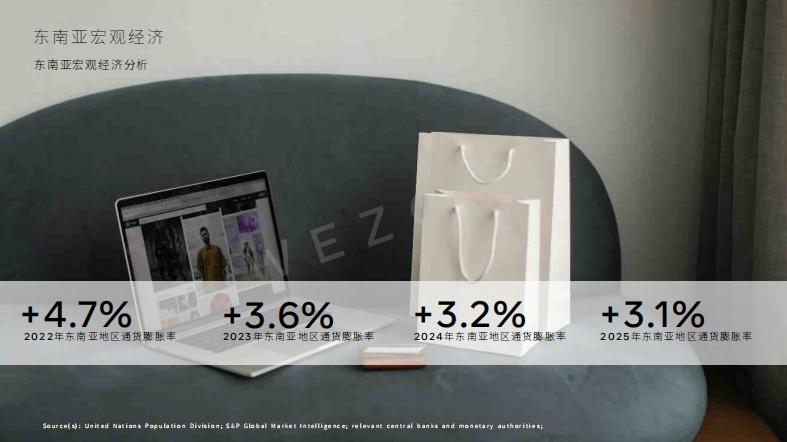
- Inflación: La tasa de inflación fluctuó entre 2022 y 2025.
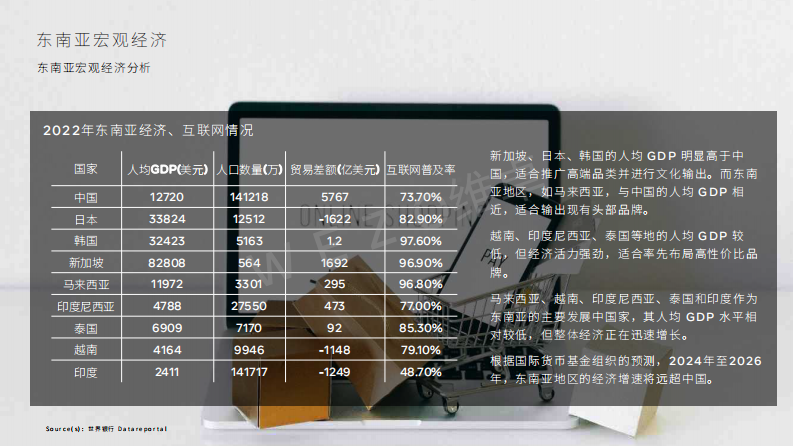
- PIB per cápita: El nivel de PIB per cápita varía entre países, siendo más alto en Singapur, Japón y Corea del Sur, similar en Malasia a China, y más bajo en Vietnam, Indonesia y Tailandia.
- Vitalidad económica: Aunque el PIB per cápita de las principales economías en desarrollo como Malasia, Vietnam, Indonesia, Tailandia e India es relativamente bajo, su crecimiento económico es rápido, y se espera que la tasa de crecimiento económico entre 2024 y 2026 supere con creces la de China.
- Políticas favorables: Desde que China se vio afectada por la pandemia en 2020, ha implementado una serie de políticas para apoyar el desarrollo del comercio electrónico transfronterizo.
2. Economía digital del Sudeste Asiático
- Penetración de Internet: En 2023, la proporción de usuarios de Internet en el Sudeste Asiático alcanzó el 70-80%, y los consumidores de Internet representaron el 50-60%.
- Tamaño de la economía digital: En 2023, el GMV de la economía digital del Sudeste Asiático alcanzó los 218 mil millones de dólares, con un crecimiento de dos dígitos tanto en el volumen total de transacciones de bienes como en los ingresos.
- Mercado de comercio electrónico: El tamaño del mercado de comercio electrónico se ha expandido continuamente entre 2019 y 2025, con una alta tasa de crecimiento de los ingresos de las plataformas de comercio electrónico entre 2021 y 2023.
- Tamaño del mercado por país: Para 2030, se espera que el mercado de comercio electrónico de Indonesia genere aproximadamente 160 mil millones de dólares en ventas minoristas en línea, representando más del 42% del mercado de comercio electrónico del Sudeste Asiático. Otros mercados emergentes incluyen Malasia, Filipinas, Tailandia y Vietnam.
- Principales plataformas de comercio electrónico: En 2023, Shopee fue el mercado en línea más visitado en el Sudeste Asiático, con 342.8 millones de visitas mensuales.
3. Consumidores del Sudeste Asiático
- Clasificación de consumidores: Se dividen en usuarios de alto valor (el 30% superior de los usuarios en línea) y usuarios de bajo valor (el 70% inferior de los usuarios en línea). Los usuarios de alto valor representan el 52% de los ingresos y contribuyen significativamente al gasto en la economía digital.
- Comportamiento de consumo
- Proporción de consumo: En 2023, el promedio de consumo en la economía digital de los grupos de alto valor fue del 73%, el gasto en tiendas físicas de los grupos de alto valor fue del 46% al 54%, el gasto en tiendas físicas de los grupos de bajo valor fue del 12%, y el gasto en línea fue del 9%.
- Frecuencia de compra: La frecuencia de compras en línea de los usuarios de alto valor es significativamente mayor que la de los usuarios comunes, y su frecuencia de compra en artículos diversos es mucho mayor que en juegos y comercio electrónico.
- Barreras de consumo: Los problemas de entrega son la principal barrera para las compras en línea, y los consumidores de bajo valor prefieren tocar los productos.
- Razones de consumo: Los consumidores valoran más el precio, seguido de la confianza en la plataforma y la experiencia de uso. La diversidad de productos, las recomendaciones, el tiempo de entrega y los métodos de pago también son factores a considerar.