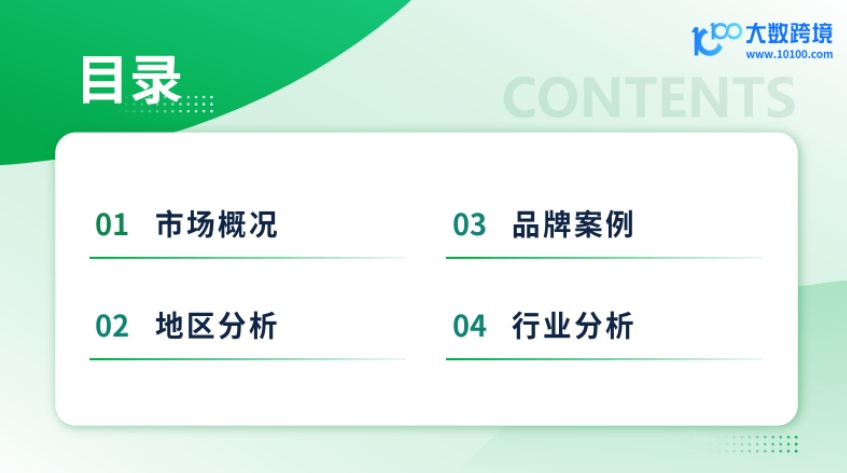
This document is the "2025 Portable Energy Storage Power Overseas Research Report" released by Dashu Cross-border, which provides a comprehensive analysis of the global portable energy storage power market. It covers market size, regional analysis, competitive landscape, application scenarios, consumer insights, and typical enterprise cases, providing a basis for decision-making for industry participants.
1. Industry Overview and Market Size: Against the backdrop of global energy transition, portable energy storage power has developed rapidly. The report predicts that the market size will continue to grow from 2023 - 2034. In the global market in 2023, China's production capacity accounts for more than 90%, dominating global production. The market size and growth vary in different regions, with the US, Europe, and Japan each having their own characteristics and driving factors.
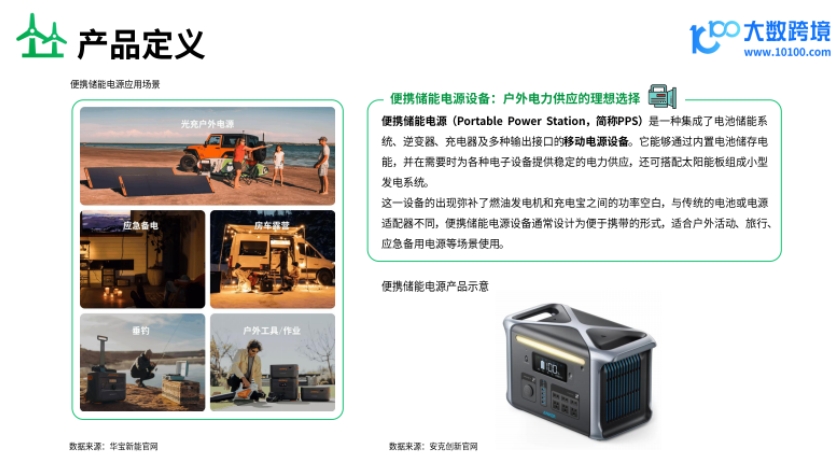
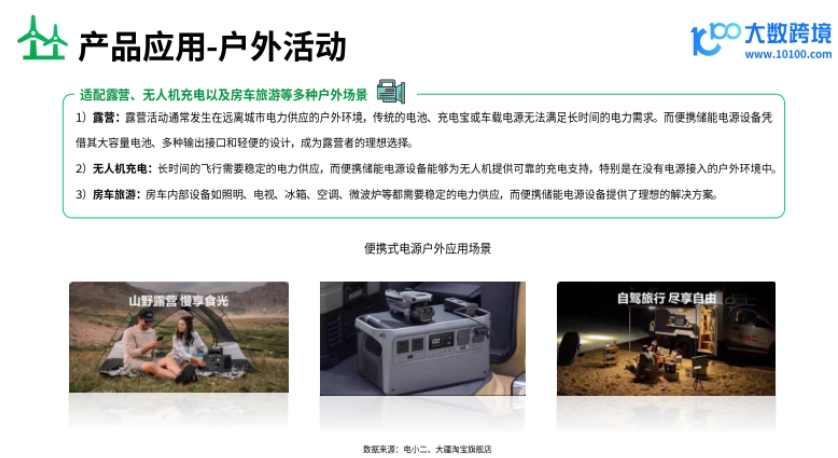
2. Market Demand and Application Scenarios: The application scenarios are wide-ranging, covering outdoor and emergency backup power, etc. Outdoor scenarios include camping, self-driving, photography, etc.; emergency backup power is used in situations such as power outages caused by natural disasters. Due to environmental, policy, and other factors, the demand for portable energy storage power varies in different regions. For example, Japan, which is prone to earthquakes, has a high demand for emergency use.
3. Market Competitive Landscape: On the supply side, production capacity is concentrated in China, with many Chinese brands and ODM/OEM manufacturers participating in global competition. Taking EcoFlow and Jackery as examples, they have gained high recognition and market share in the global market through technological innovation, marketing strategies, and comprehensive services, with obvious competitive advantages.
4. Consumer Analysis: In the online market, male consumers are the majority, and young and middle-aged people are the core consumer group. Product information is mainly obtained through online channels, and video is the preferred form of promotion. There are differences in usage scenarios among different age groups: young people use it more for outdoor leisure, while older groups pay more attention to emergency backup power.
5. Industry Development Trends and Challenges: Technological progress drives product performance improvement and cost reduction; market demand grows with increased environmental awareness and the rise of outdoor activities; policies support the development of renewable energy, which is beneficial to the industry. However, the industry faces challenges such as technological bottlenecks, intensified market competition, and fluctuations in raw material prices, which require joint efforts from the industry.