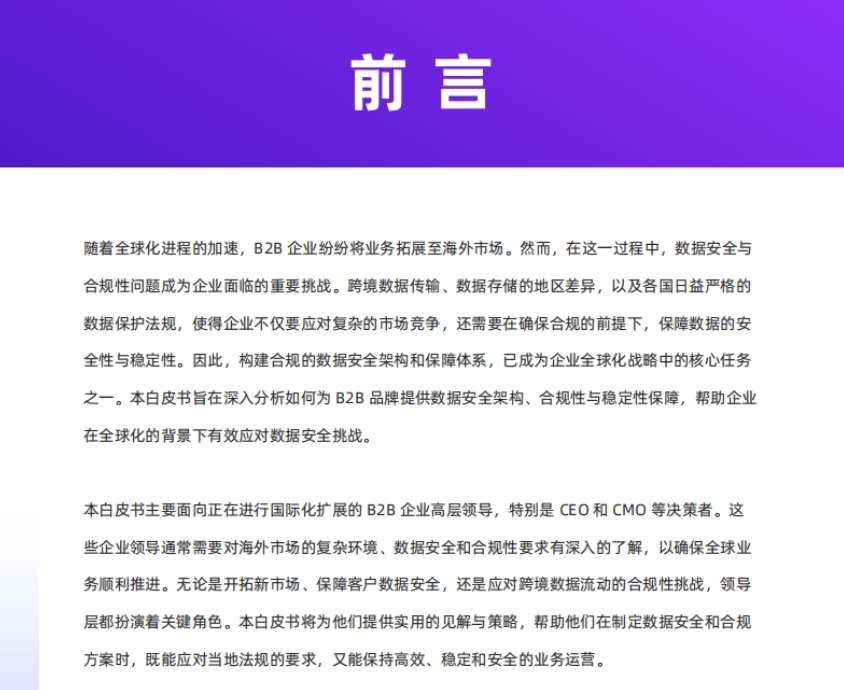
The "B2B Brand Global Expansion Data Security White Paper" is released by Jingshuo Technology, mainly targeting senior executives of B2B enterprises expanding internationally. It provides an in-depth analysis of how to offer data security architecture, compliance, and stability assurance for B2B brands, helping enterprises address data security challenges.
1. Main Challenges Faced by B2B Brands Going Global
- Data Security and Privacy Protection: Cross-border data flows are complex, with significant differences in data storage, processing, and transmission regulations across regions. For example, the EU's GDPR imposes strict requirements on cross-border data transfers, and data sovereignty issues present additional challenges.
- Product Stability and Technical Infrastructure: Global services require high availability, necessitating the adoption of globally distributed technical architectures with disaster recovery capabilities, as well as consideration of multi-language support and global network performance optimization.
2. International Data Security and Compliance Framework
- Data Protection Laws and Compliance Requirements: Different regions have their own data protection regulations, such as GDPR, CCPA, etc. Enterprises need to identify and comply with relevant regulations to ensure data processing activities are compliant.
- Cross-border Data Transfer and Data Sovereignty: Cross-border data transfers must comply with local regulations and data localization requirements. Standard contractual clauses and other tools can be used to ensure compliance.
- Cloud Service Providers and Compliance Certification: Choosing cloud service providers with compliance certifications is crucial. Attention should be paid to the geographic location of data centers and compliance qualification certifications.
3. Data Deployment and Security Architecture for Global Brands
- Product Data Deployment Architecture: Adopt a globally distributed data center architecture, provide privatized deployment solutions, and choose secure and efficient cloud platforms.
- High Availability and Disaster Recovery Design of Architecture: Implement multi-region architecture and load balancing strategies, design multi-level disaster recovery strategies to ensure data security and business continuity.
- Data Security Assurance: Build a multi-layered security protection system through data encryption, identity authentication, access control, and compliance audits.
4. Data Security Technology Solutions
- Data Encryption and Privacy Protection Measures: Encrypt data at rest and in transit, and implement strict identity authentication and access control strategies.
- Compliance Solutions for Cross-border Data Transfer: Use compliance mechanisms to ensure cross-border data transfer compliance, and analyze the feasibility and compliance of data repatriation to the home country.
- Risk Management and Emergency Response Mechanisms: Build a risk management framework and emergency response mechanism, monitor security vulnerabilities, and develop disaster recovery plans.
5. Main Entities of Global Expansion and Cloud Service Selection
- Selection of Global Entities and Cloud Platforms: Operate under a global multi-country legal entity model and choose leading global cloud service providers such as AWS, Tencent Cloud, etc.
- Security and Compliance Assurance of Cloud Platforms: Cloud service providers adopt multi-layered security protection mechanisms and provide compliance tools. Choosing cloud service providers with comprehensive compliance certifications ensures data security.
- Division of Data Security Responsibilities and Compliance Assurance: Jingshuo Technology and clients jointly assume data security responsibilities, signing data protection agreements to clarify the responsibilities and obligations of both parties.
6. Data Transparency and Security Culture to Enhance Customer Trust
- Establishing Data Transparency and Customer Trust: Enhance customer trust and brand transparency through transparent privacy policies and audit reports, as well as third-party audits and security certifications.
- Transparent Reporting of Security Incidents and Emergency Response: Adhere to the principles of rapid response and openness when handling security incidents, ensuring customers are informed of the process and solutions.