This "2025 Overseas Influencer Marketing Ecosystem Report" is released by NoxInfluencer. Based on its massive influencer database, it analyzes the current status and trends of global influencer marketing, providing references for cross-border brands going global.

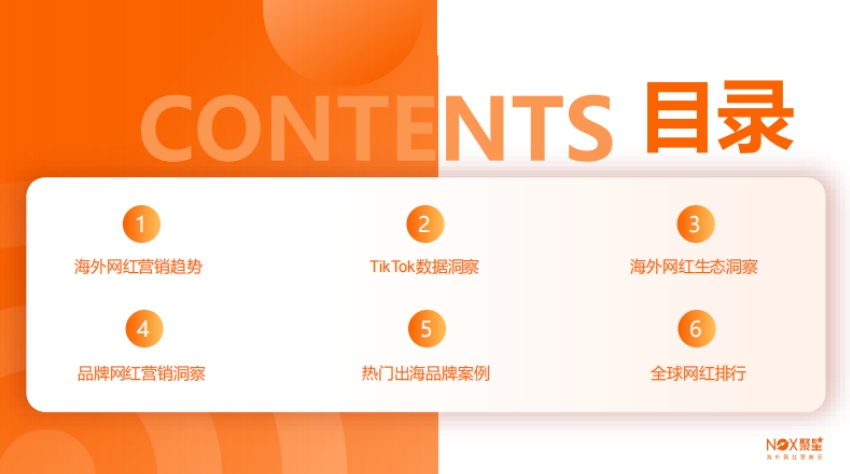
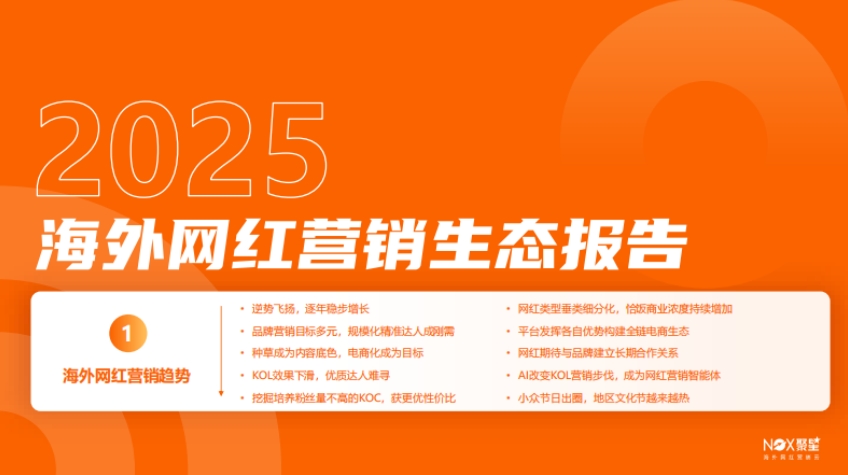
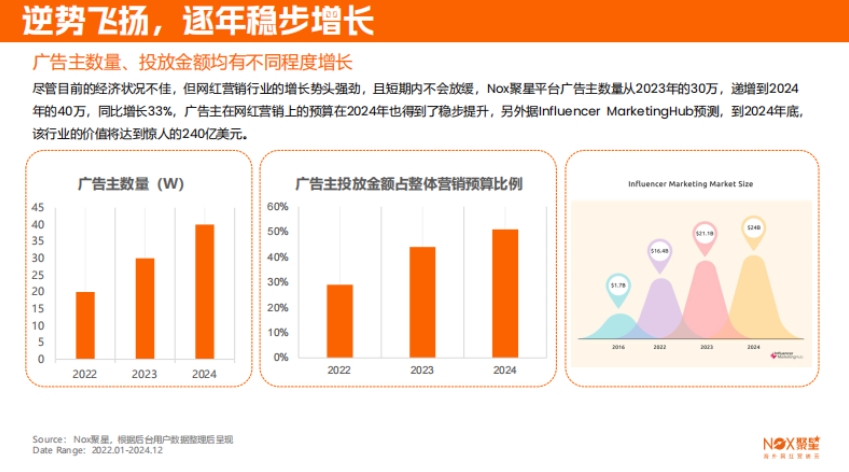
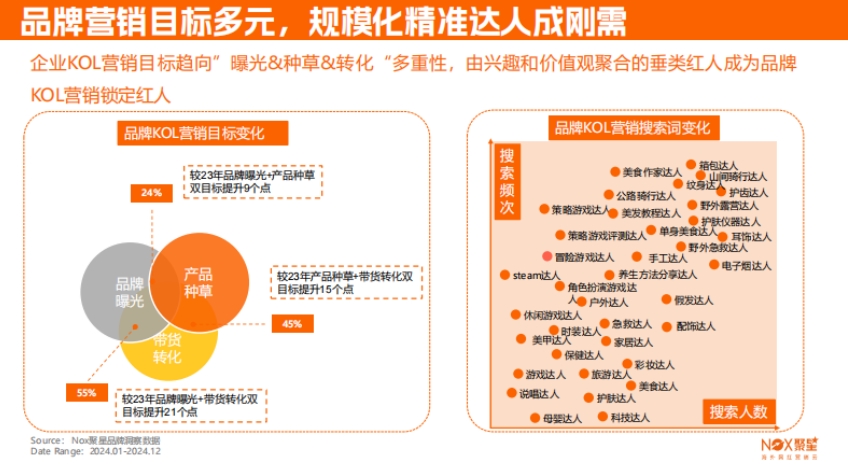
1. Industry Trends: Despite the unfavorable economic situation, the overseas influencer marketing industry is developing strongly, with both the number of advertisers and the amount of ad spend increasing. Brand marketing goals are becoming more diversified; brands not only seek exposure but also focus on seeding and conversion, making it increasingly important to accurately find suitable influencers. In terms of content, seeding has become mainstream, and major platforms are striving to build a complete chain from content seeding to e-commerce purchases. However, high-quality influencers are now harder to find, so many brands have started to cultivate KOCs with lower follower counts but higher cost-effectiveness.

2. Platform Insights: TikTok, YouTube, and Instagram each have their own characteristics. TikTok influencers who drive sales are mainly concentrated in Southeast Asia and North America, with many influencers in beauty, haircare, and 3C categories. Micro-influencers account for a high proportion and have strong sales capabilities. YouTube is the breeding ground for elite influencers and has greater influence in developed regions, making it suitable for in-depth content display. Instagram is ideal for precise marketing in fashion and beauty, with users preferring fast-spreading trending content.

3. Influencer Ecosystem: Regionally, Southeast Asia and North America have the largest number of influencers. By platform, TikTok influencers account for nearly half of the total across the three platforms. In terms of scale, micro-influencers are more prevalent on TikTok, while elite influencers are mostly on YouTube. As for types, pan-entertainment influencers have the highest proportion, with 3C and gaming categories being very popular. In addition, each platform has different popular tags and monetization models; Southeast Asian influencers have the highest connection rate, and it is easier to connect with influencers on TikTok.

4. Brand Marketing: Industries such as 3C, fashion apparel, and outdoor sports are the main forces in influencer marketing. When choosing influencers, brands tend to favor entertainment and fashion types, with mid-tier influencers being very popular. In terms of marketing timing, Q4 is the peak season, with high order volumes during holidays like Christmas and Black Friday. For content creativity, vertical KOLs are favored, reviews are a common form of collaboration, and barter is a frequently used cooperation method.

5. Success Stories: The report introduces influencer marketing strategies of several popular overseas brands such as Halara and Florasis. For example, Halara focuses on the US market, collaborating with a large number of influencers on TikTok to achieve high sales; Florasis promotes its products in Europe, America, and Southeast Asia by leveraging mid-tier beauty vertical influencers on TikTok.

6. Influencer and Brand Rankings: The report showcases influencer rankings for YouTube, Instagram, and TikTok, as well as brand influencer marketing rankings. Using data such as follower count, engagement rate, and views, it presents influential influencers and brands that attract attention on each platform.

2025 Overseas Influencer Marketing Ecosystem Report-12025 Overseas Influencer Marketing Ecosystem Report-22025 Overseas Influencer Marketing Ecosystem Report-32025 Overseas Influencer Marketing Ecosystem Report-42025 Overseas Influencer Marketing Ecosystem Report-5