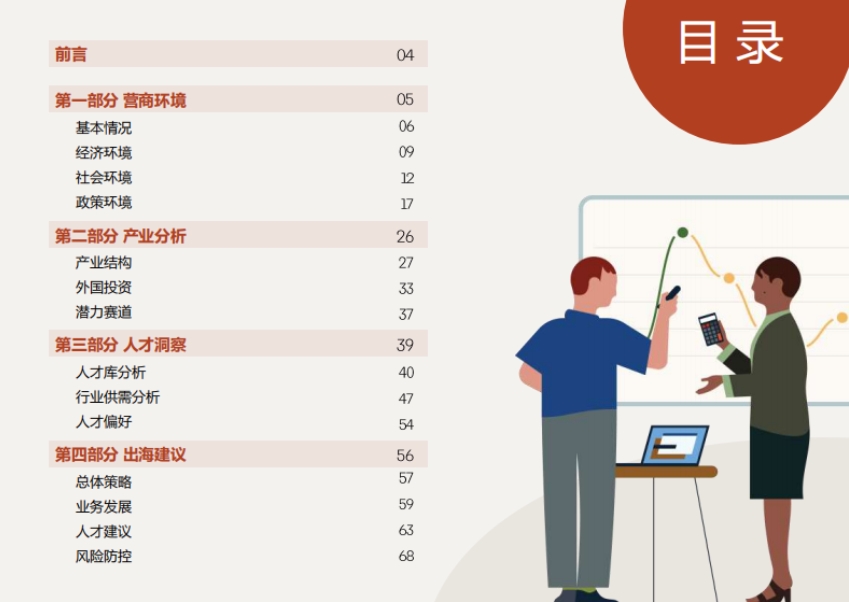
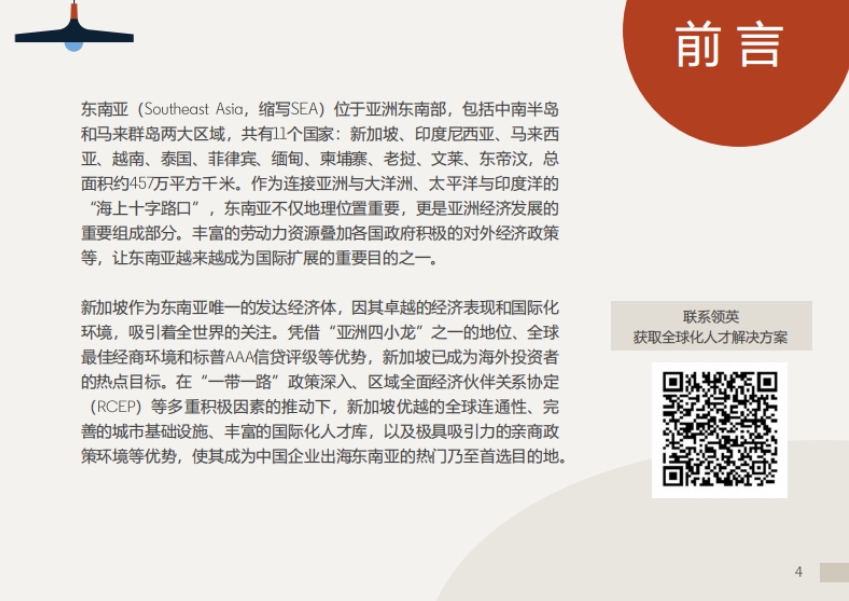
This document is LinkedIn's "2025 Southeast Asia Going Global Guide Report - Singapore Chapter," mainly providing reference for Chinese enterprises planning to conduct business in Singapore. The content covers Singapore's business environment, industries, talent, and other aspects, and offers suggestions for going global.

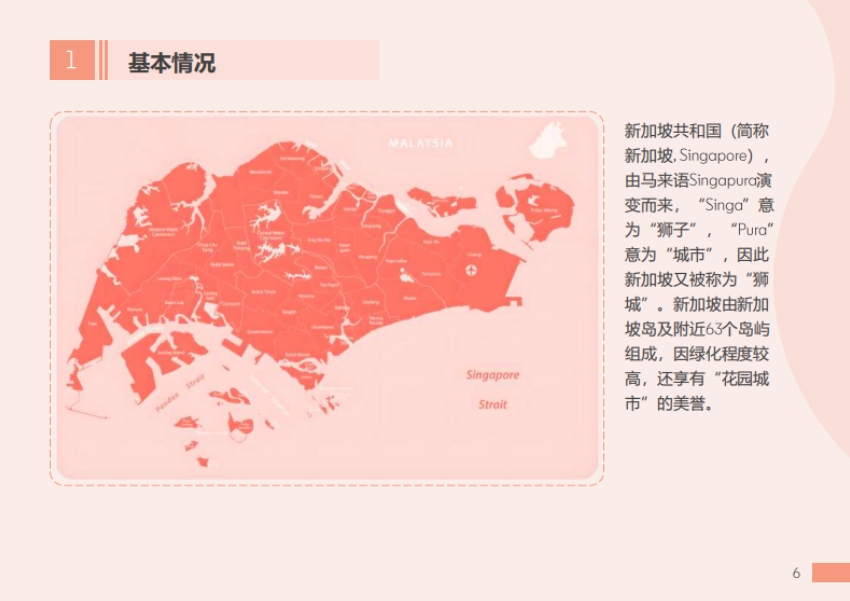
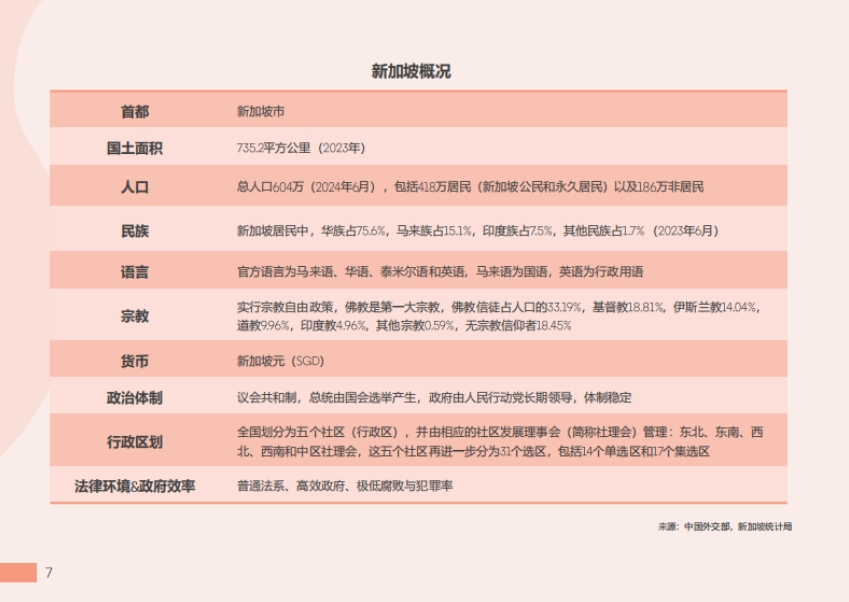
1. Singapore Business Environment: Singapore has a small land area but enjoys a superior geographical location, making it one of the most globally connected countries. It has a developed economy, high per capita GDP, a highly qualified workforce, and a government that values talent development. Its policy environment is friendly, trade policies are well-established, and tax policies are based on the territorial principle, along with various non-financial support policies. In addition, there are corresponding policies in regulation, labor, and digital economy.

2. Industrial Development Status: Manufacturing, trade, finance and insurance, and information and communication technology are Singapore's pillar industries. The electronics industry and precision engineering stand out in manufacturing; the trade industry continues to grow, relying on numerous free trade agreements; Singapore is a major global financial center; and the information and communication technology sector is developing rapidly, serving as a data center hub in the Asia-Pacific region. At the same time, Singapore is a popular destination for foreign investment in Southeast Asia, attracting many multinational companies to set up regional headquarters, and China-Singapore bilateral trade and investment is also important. Additionally, seven industry tracks, including electronic manufacturing and clean energy, have high growth potential.

3. Talent Market Characteristics: Singapore's professional workforce numbers over 4 million, mainly concentrated in information technology, manufacturing industrial energy, banking, finance, and insurance industries. The supply and demand for talent varies by industry, such as strong demand for IT talent, stable supply in some areas of manufacturing industrial energy, and difficulty recruiting technical talent in banking, finance, and insurance. Singaporean talent values salary and benefits, career development, etc., so companies need targeted strategies to attract and retain talent.

4. Suggestions for Chinese Enterprises Going Global: For Chinese enterprises developing in Singapore, the overall strategy should focus on high-growth industries, seize policy opportunities, utilize bilateral and multilateral trade agreements, and tap into local talent resources. In terms of business development, companies can set up regional headquarters and R&D centers, strengthen local cooperation, deepen the industrial chain, and leverage platforms like LinkedIn and chambers of commerce to expand business. In talent management, it is necessary to address challenges such as talent costs and cultural adaptation, and formulate reasonable talent strategies. At the same time, risks related to political policies, labor force, and cultural differences should be managed and controlled.

2025 Southeast Asia Going Global Guide Report - Singapore Chapter - 12025 Southeast Asia Going Global Guide Report - Singapore Chapter - 22025 Southeast Asia Going Global Guide Report - Singapore Chapter - 32025 Southeast Asia Going Global Guide Report - Singapore Chapter - 42025 Southeast Asia Going Global Guide Report - Singapore Chapter - 5