 2262
2262Die Frage bei der Internationalisierung ist längst nicht mehr, ob man sie angehen sollte, sondern wie man sie stabil und nachhaltig umsetzt.
Besonders für junge Marken, die gerade erst internationalisieren, liegt die größte Herausforderung oft nicht im Produkt selbst, sondern darin, mit begrenzten Ressourcen in einem fremden Auslandsmarkt schnell Nutzerbewusstsein und Vertrauen aufzubauen.
In diesem Prozess ist das Account-Matrix-Modell für immer mehr chinesische Marken zu einem unvermeidlichen Schritt geworden. Es geht nicht einfach darum, mehrere Accounts zu eröffnen, sondern um eine systematische Anordnung rund um Nutzer, Märkte und Inhalte.
Heute sprechen wir anhand von drei Marken, die sich im Ausland einen Namen gemacht haben, darüber, wie eine Internationalisierungs-Matrix tatsächlich umgesetzt werden sollte.

Quelle: Google
Matrix bedeutet nicht flächendeckende Präsenz, sondern Anpassung an die Gegebenheiten
Viele Anfänger tappen leicht in die Falle: Sie denken, je mehr Accounts, desto besser; je breiter der Markt, desto besser. Tatsächlich besteht der erste Schritt einer Internationalisierungs-Matrix jedoch darin, festzulegen, für wen und wo man sie betreibt.
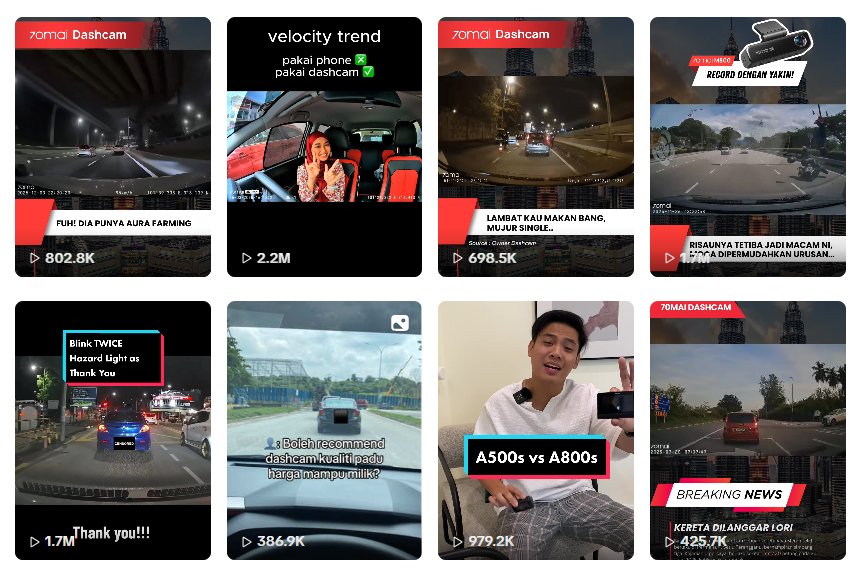
Nehmen wir als Beispiel die Smart-Car-Marke70mai: Ihre Präsenz aufTikTok ist sehr klar strukturiert: Für die Kernmärkte in Südostasien wie Malaysia, Thailand und die Philippinen wurden separate lokalisierte Accounts eingerichtet.
Der Account für Malaysia,@70maimy, hat fast 200.000 Follower und einen Content-Stil, der stark auf die lokale Zielgruppe abgestimmt ist. Es gibt sowohl hardcore Videos mit Parametererklärungen als auch reale Unfallszenen, die mit Dashcams aufgezeichnet wurden – so wird Produktvertrauen durch das Gesehene aufgebaut.
Quelle: TikTok
Diese länderspezifische Strategie nutzt im Kern lokalisierte Sprache, Szenarien und Inhalte, um auf die tatsächlichen Bedürfnisse der Nutzer in verschiedenen Märkten zu reagieren. Für Anfänger ist es besser, sich zunächst auf ein bis zwei Zielmärkte zu konzentrieren, die Inhalte tief und gründlich zu gestalten und dann schrittweise erfolgreiche Erfahrungen zu replizieren, anstatt gleichzeitig in einem Dutzend Ländern aktiv zu sein.
Der Kern der Matrix ist die Arbeitsteilung der Inhalte, nicht die bloße Vervielfältigung von Accounts
Der Wert eines Account-Matrix-Systems liegt nicht nur darin, mehr Nutzer abzudecken, sondern auch darin, verschiedene Account-Typen für unterschiedliche Funktionen im Content einzusetzen, um Synergien zu schaffen.
Bei der Outdoor-MarkeNaturehike aufTikTok sehen wir diese Logik der Arbeitsteilung deutlich.
Für den marokkanischen Markt fokussiert sich der Account@naturehike.morocc auf atemberaubende Naturlandschaften und immersive Outdoor-Erkundungen, um die Nutzer visuell zu begeistern.

Quelle: TikTok
Der Account für den britischen Markt,@naturehike_uk, betont hingegen stärker Produktleistungsanalysen und praktische Anleitungen – ein eher professioneller Ansatz.

Quelle: TikTok
Ersteres weckt Interesse, Letzteres schafft Vertrauen. Beide Accounts heißen zwarNaturehike, aber ihre Inhalte und Ziele sind völlig unterschiedlich. Das ist die wahre Bedeutung einer Matrix: nicht redundante Aufbauten, sondern durch Content-Differenzierung die gesamte Entscheidungskette des Nutzers abdecken – vom Kennenlernen bis zur Kaufentscheidung.
Für eine neu startende Marke kann man sich aus zwei Richtungen annähern. Einer Account fokussiert auf Interesse wecken, der andere auf Conversion. So ergänzen sich die Inhalte gegenseitig und vermeiden, dass sich Accounts gegenseitig Traffic abgraben.
Die Umsetzung der Matrix ist untrennbar mit den Plattformeigenschaften und der Traffic-Logik verbunden
Der Aufbau eines Account-Matrix-Systems kann nicht von den Eigenschaften der Plattform selbst losgelöst werden. Die Content-Logik, Nutzergewohnheiten und Conversion-Pfade verschiedener Plattformen sind unterschiedlich, daher muss auch die Matrix-Strategie entsprechend angepasst werden.
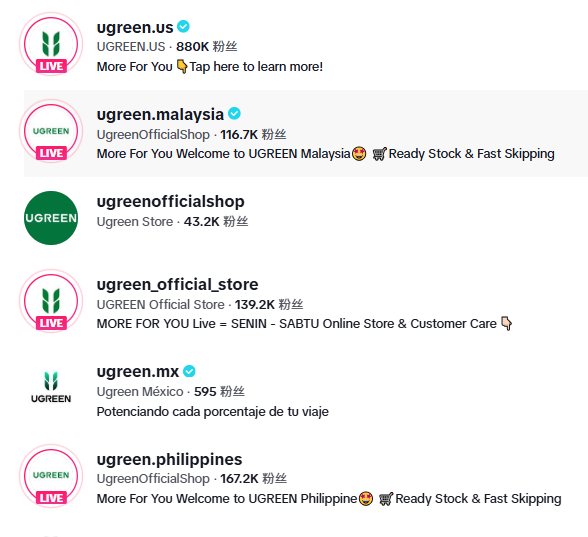
Im Fall der 3C-Marke UGREEN sehen wir eine klare zweidimensionale Matrix aus Region + Funktion aufTikTok.
Einerseits deckt sie mehrere Märkte ab, darunter die USA, Großbritannien, Mexiko, Malaysia und die Philippinen, und bildet so eine regionale Matrix. Andererseits wird in verschiedenen Märkten je nach Nutzergewohnheiten flexibel eine Kombination aus Inhalten und Livestreams eingesetzt.
Quelle: TikTok
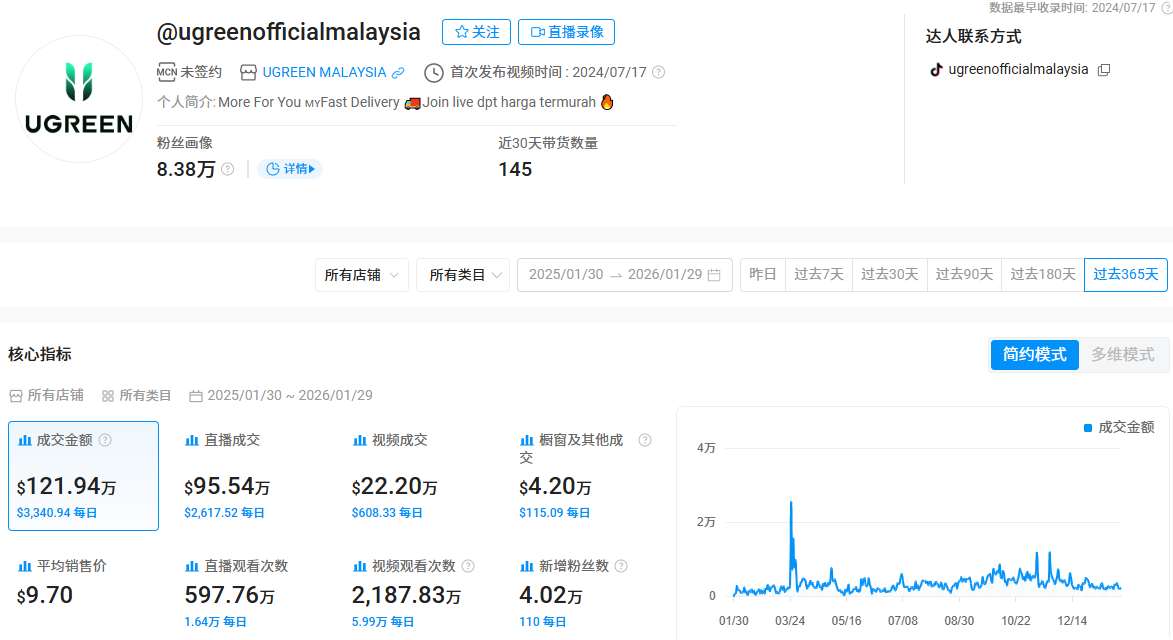
Im indonesischen Markt hat der offizielle UGREEN-Shop bereits einen Umsatz von über zehn Millionen US-Dollar erzielt – eine sehr beeindruckende Leistung. In Malaysia hingegen erzielte der Account@ugreenofficialmalaysia durch extrem lange Livestreams von über 15 Stunden täglich einen Umsatz von fast 1,22 Millionen US-Dollar, wobei der Anteil des Livestreamings bei 78 % lag – TikTok wurde so von einem Content- zu einem Conversion-Kanal.
Quelle: kalodata
Darüber hinaus setzt UGREEN in Märkten wie Indonesien verstärkt auf Kurzvideo-Werbeanzeigen, um qualitativ hochwertigen Inhalten Long-Tail-Traffic zu verleihen und die Conversion-Effizienz der Matrix weiter zu steigern.
Für Anfänger ist es nicht nötig, sofort eine plattformübergreifende Abdeckung anzustreben. Man kann zunächst ein Hauptmedium wählen, z. B.TikTok, innerhalb einer Region 2-3 Accounts aufbauen, die unterschiedliche Rollen wie Markenpräsentation, Produkterklärung und Nutzerinteraktion übernehmen, und nach und nach ein für die eigene Produktkategorie geeignetes Traffic-Modell entwickeln.
Fazit
Die Internationalisierungs-Matrix ist keine einfache Account-Liste, sondern ein umfassendes System rund um Nutzer, Content, Plattform und Organisation.
Von der regionalen Vertiefung von70mai über die Content-Arbeitsteilung von Naturehike bis zur Traffic-Kombination von UGREEN zeigen die Praktiken dieser Marken: Marken, die ihre Matrix gut umsetzen, sind oft nicht diejenigen, die am besten ausrollen, sondern diejenigen, die am besten zerlegen – sie zerlegen Nutzerbedürfnisse, Content-Funktionen und Plattform-Vorteile.
Das Zeitfenster für Überseemärkte ist noch offen, und die Akzeptanz chinesischer Marken bei den Nutzern steigt kontinuierlich. Für Marken, die sich auf den Weg ins Ausland machen oder gerade erst anfangen, ist die Matrix keine unerreichbare Spielwiese großer Konzerne, sondern ein pragmatischer Weg, den man Schritt für Schritt gehen kann.
Solange du bereit bist, Ruhe zu bewahren, die Nutzer zu verstehen und Inhalte zu verfeinern, wird dieses Zeitalter denen, die vorbereitet sind, noch genügend Raum lassen.