
 1989
1989In letzter Zeit ist es im australischen E-Commerce-Sektor alles andere als ruhig.
Die etablierte E-Commerce-Plattform Catch, die einst im lokalen Markt sehr erfolgreich war, hat überraschend angekündigt, ihre Türen zu schließen, was viele überraschte. Gleichzeitig liefern sich zwei globale Giganten – Amazon und Temu – einen erbitterten Kampf. Der eine setzt seit Jahren auf eine starke Lieferkette und ein Mitgliedschaftssystem, der andere erobert mit extrem niedrigen Preisen und aggressiven Subventionen schnell Marktanteile. Die Landschaft des australischen E-Commerce-Marktes wird grundlegend neu gezeichnet.
Wer wird also am Ende die Nase vorn haben: Amazon oder Temu? Und was wird aus den lokalen australischen E-Commerce-Unternehmen? Welche Geschäftslogik verbirgt sich hinter diesem E-Commerce-Krieg?

Catch kündigt Schließung an Quelle: Catch Marketplace
Wie attraktiv ist der australische E-Commerce-Markt wirklich?
Inmitten des zunehmenden Wettbewerbs auf dem globalen E-Commerce-Markt hat sich Australien zu einem "Geheimtipp" für große E-Commerce-Plattformen entwickelt.
Laut Daten von Statista wird der australische E-Commerce-Markt bis 2025 voraussichtlich ein Volumen von 42,22 Milliarden US-Dollar erreichen und bis 2029 auf 58,03 Milliarden US-Dollar anwachsen, mit einer durchschnittlichen jährlichen Wachstumsrate von etwa 8 %. Obwohl das Wachstum nicht so rasant ist wie in Südostasien oder Lateinamerika, besticht es durch Stabilität. Zudem haben australische Verbraucher eine vergleichsweise hohe Kaufkraft, sodass der Markt noch viel Potenzial bietet.
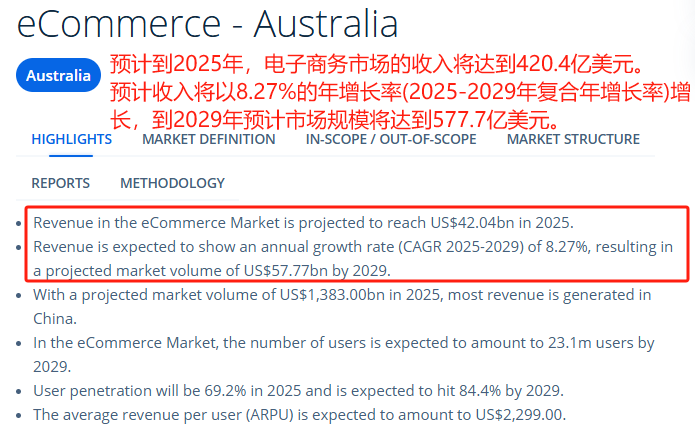
Die Einnahmen des australischen E-Commerce-Marktes wachsen weiter Quelle: Statista
Entscheidend ist, dass die australischen Verbraucher die Gewohnheit des "Online-Shoppings" verinnerlicht haben. Eine Umfrage von IAB zeigt, dass 83 % der 1000 befragten Australier mindestens einmal im Monat online einkaufen, und viele haben bereits feste Online-Konsummuster entwickelt. Dieser Markttrend zieht natürlich globale E-Commerce-Giganten an, die um einen Anteil an diesem Kuchen kämpfen.
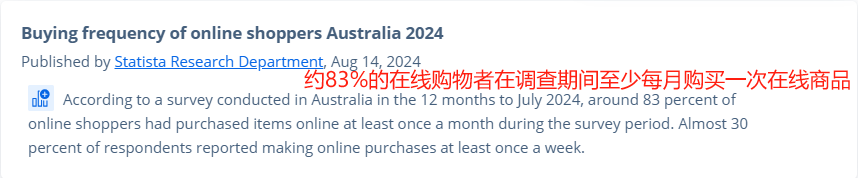
Australische Verbraucher "lieben Online-Shopping" Quelle: Statista
Amazon vs. Temu: Wer hat die Nase vorn?
Amazon: Der solide Branchenriese
Amazon ist noch nicht allzu lange im australischen Markt aktiv – der offizielle Start erfolgte erst 2017 –, aber dank seines globalen Lieferkettennetzwerks, des Prime-Mitgliedschaftsservice und seiner Markenstärke hat es sich schnell zu einem wichtigen Akteur im lokalen E-Commerce-Markt entwickelt. Derzeit hält Amazon etwa 10 % des australischen Marktes und könnte diesen Anteil bis 2030 auf 25 % steigern.
Amazons Stärken liegen in seiner großen Produktvielfalt, einer gut ausgebauten Lieferkette und dem äußerst wettbewerbsfähigen Lieferservice für Prime-Mitglieder. Im Vergleich zu anderen Plattformen sind Amazons Nutzer tendenziell "loyaler" – solange die Erfahrung gut ist, wechseln sie selten die Plattform.

Amazon ist bereits die größte E-Commerce-Plattform Australiens Quelle: News.com.au
Temu: Ein aufstrebender Star mit Wucht
Im Gegensatz dazu verfolgt Temu eine völlig andere Strategie. Als grenzüberschreitende E-Commerce-Plattform der Pinduoduo-Gruppe ist Temu erst seit kurzem im australischen Markt, aber innerhalb eines Jahres haben bereits über 3,8 Millionen australische Verbraucher bei Temu bestellt, und der Marktanteil liegt bei fast einem Fünftel. Laut Similarweb ist die Anzahl der eindeutigen Besucher von Temu in Australien im letzten Jahr um 72 % gestiegen, was es zur am schnellsten wachsenden E-Commerce-Plattform des Landes macht.
Temus Kernwettbewerbsvorteil ist "günstig". Dank der starken Lieferkette Chinas versendet Temu direkt ab Werk, umgeht Zwischenhändler und bietet so Waren zu Preisen an, die weit unter dem Marktdurchschnitt liegen. Gleichzeitig investiert Temu massiv in Marketing, schaltet zahlreiche Social-Media-Anzeigen und lockt mit Subventionen neue Nutzer an, was eine große Anzahl preisbewusster Käufer anzieht.
Allerdings stellt sich die Frage, ob Temus Modell langfristig tragfähig ist. Schließlich können Subventionsstrategien nicht ewig fortgeführt werden. Werden die Nutzer weiterhin kaufen, wenn die Subventionen nachlassen? Zudem sind die Logistikeffizienz und die Produktqualität von Temu weitere Herausforderungen. Um Amazon wirklich herauszufordern, muss Temu in diesen Bereichen kontinuierlich Verbesserungen vornehmen.
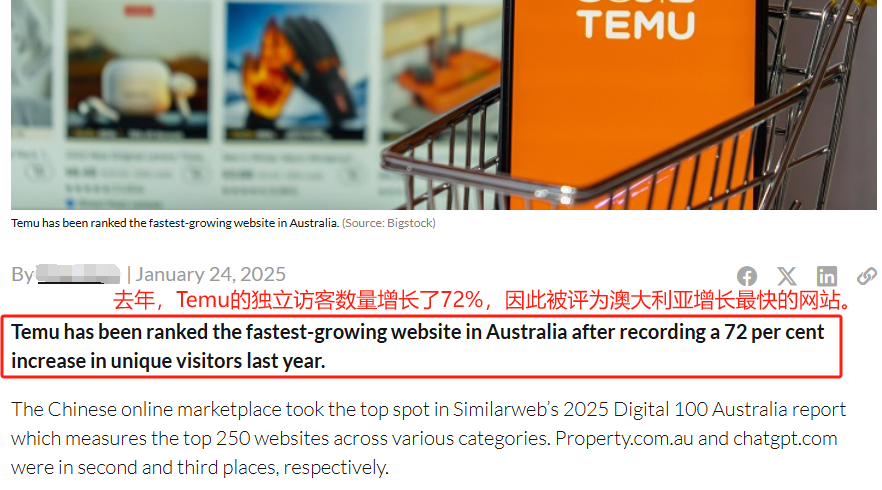
Temu wächst in Australien rasant Quelle: insideretail
Lokaler E-Commerce unter "enormem Druck": Wer wird überleben?
Der intensive Wettbewerb zwischen Temu und Amazon hat den Spielraum für lokale australische E-Commerce-Unternehmen direkt eingeschränkt. Der Fall von Catch ist ein Paradebeispiel. Diese bekannte australische E-Commerce-Plattform verzeichnete in den letzten dreieinhalb Jahren Verluste von über 350 Millionen australischen Dollar und kündigte schließlich an, am 30. April 2025 endgültig zu schließen.
Dies ist kein Einzelfall in Australien; ähnliche Situationen treten auch in anderen Ländern auf. In Südkorea beispielsweise führten die Auswirkungen von grenzüberschreitenden E-Commerce-Plattformen wie Temu und AliExpress bei Tmon und Wemakeprice zu Zahlungsausfällen, was zur Schließung von über 6000 Online-Shops führte. Man kann sagen, dass der Aufstieg des grenzüberschreitenden E-Commerce lokale Plattformen einem noch intensiveren Wettbewerb aussetzt.

Quelle: Internet
Der australische E-Commerce-Krieg hat gerade erst begonnen!
Derzeit steht der Wettbewerb im australischen E-Commerce noch am Anfang. In den kommenden Jahren wird der Kampf zwischen Amazon und Temu weitergehen. Kann Temu seine Niedrigpreisstrategie langfristig aufrechterhalten? Wird Amazon seine Taktik anpassen, um weitere Marktanteile zu gewinnen? Diese Fragen bleiben abzuwarten.
Für die Verbraucher ist dieser E-Commerce-Krieg zweifellos von Vorteil. Niedrigere Preise, bessere Dienstleistungen und schnellere Logistik können das Einkaufserlebnis verbessern. Für Händler ist dies sowohl eine Chance als auch eine Herausforderung – in einem wettbewerbsintensiven Markt den eigenen Weg zum Überleben zu finden, wird in den kommenden Jahren eine wichtige Frage sein.