 1924
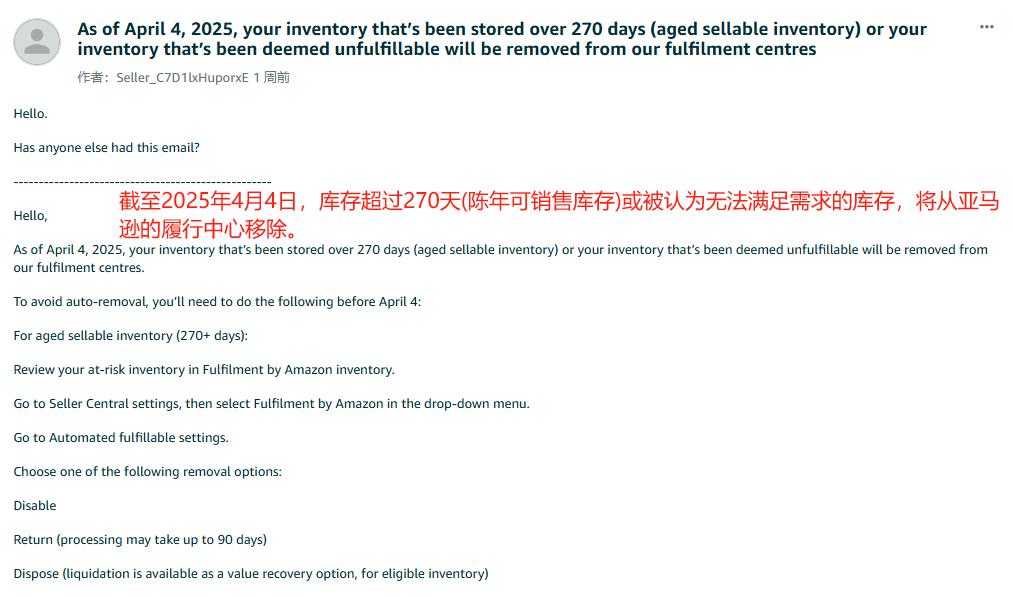
1924Kürzlich veröffentlichte Amazon Europe eine wichtige Ankündigung: Ab dem 4. April werden Lagerbestände, die länger als 270 Tage eingelagert sind, einschließlich verkäuflicher und unverkäuflicher Artikel, zwangsweise aus den Logistikzentren entfernt.
Quelle: Amazon Sellercentral
Diese Anpassung verkürzt den ursprünglichen automatischen Entfernungszyklus von 365 Tagen direkt. Das bedeutet, dass Verkäufer ihre Produkte innerhalb von 9 Monaten nach der Einlagerung verkaufen oder anderweitig verarbeiten müssen, andernfalls droht eine Zwangsentfernung oder hohe Zusatzgebühren.
Derzeit gilt diese Richtlinie nur für den europäischen Markt und wurde noch nicht auf andere Standorte ausgeweitet.
Quelle: Aus dem Internet
I. Mehrdimensionale Auswirkungen auf Verkäufer
1. Erheblicher Anstieg des Lagerverwaltungsdrucks
Die neue Regelung trifft Verkäufer von Saisonartikeln direkt. Kategorien wie Weihnachtsdekoration oder Winterbekleidung könnten bei schlechtem Absatz von der Zwangsentfernung bedroht sein. Daten zeigen, dass die Logistikkosten einiger Full-Management-Verkäufer während der US-Zollpolitik-Schwankungen im Jahr 2024 um über 30% gestiegen sind, was in Kombination mit den Lagerzuschlägen den Überlebensdruck für kleine und mittlere Verkäufer deutlich verschärft hat.
2. Erzwungene Aufwertung der Lieferkettenstrategie
Die Politikänderung von Amazon sendet ein klares Signal: Das grobe Modell der Bevorratung ist nicht mehr tragfähig. Verkäufer müssen ein dynamisches Lagerüberwachungssystem aufbauen und ihre Nachschubzyklen auf Basis von Verkaufsprognosen, Aktionsdaten usw. optimieren. Einige Verkäufer versuchen bereits, durch die Verteilung der Lagerbestände auf verschiedene Auslandslager die Logistikzeiten zu verkürzen oder nutzen den Amazon Haul-Kanal für günstige Preise, um den Abverkauf von Ladenhütern zu beschleunigen.
3. Multi-Plattform-Strategie wird zur Pflicht
Aufgrund der US-Zollpolitik und sich ändernder Plattformregeln beschleunigen Verkäufer die Risikostreuung. Daten aus dem Jahr 2024 zeigen, dass über 40% der grenzüberschreitenden E-Commerce-Unternehmen ihre Geschäfte auf mehr als 9 Plattformen ausgeweitet haben. Amazon bleibt zwar der Kernmarkt, aber der Auftragsanteil neuer Plattformen wie Temu und SHEIN steigt kontinuierlich.

Quelle: Aus dem Internet
II. Potenzielle Veränderungen auf dem Verbrauchermarkt
1. Möglicher struktureller Preisanstieg
Der Kostendruck durch die Lagerhaltung könnte Verkäufer dazu zwingen, die Preise zu erhöhen, insbesondere bei Artikeln mit geringem Warenwert. Eine Verbraucherumfrage der University of Michigan aus dem Jahr 2024 zeigt, dass über 60% der Befragten einen erneuten Inflationsanstieg befürchten. Während die Niedrigpreisstrategie von Amazon Haul preissensible Kunden anzieht, besteht ein deutlicher Unterschied in der Lieferzeit (1-2 Wochen) im Vergleich zum traditionellen Prime-Service, sodass Verbraucher zwischen Preis-Leistungs-Verhältnis und Komfort abwägen müssen.
2. Beschleunigte Produktaktualisierungen
Die Zwangsentfernung von Ladenhütern wird Verkäufer dazu anregen, die Produktneueinführungen zu beschleunigen, insbesondere in Kategorien wie Fast Fashion und Haushaltswaren. Das "Schnäppchenjagd"-Einkaufserlebnis von Amazon Haul ist genau darauf ausgelegt, die Nachfrage junger Verbraucher nach niedrigen Preisen und Neuheiten zu bedienen. Die Niedrigpreisstrategie könnte jedoch auch zu Qualitätskontroversen führen.
Quelle: Aus dem Internet
III. Auswege für Verkäufer
Lageroptimierung: Aufbau eines intelligenten Nachschubmodells, dynamische Anpassung der SKUs mithilfe des Amazon-Lagerleistungsindikators.
Kanaldiversifizierung: Risikominderung durch Kombination von eigenem Onlineshop und lokalem Versand aus Auslandslagern.
Markenbildung: Nutzung von Tools wie Amazon Brand Store und A/B-Tests zur Sammlung von Kundendaten und Steigerung der Produktdifferenzierung und Wettbewerbsfähigkeit.

Quelle: Amazon
IV. Fazit: Branchenbereinigung und Chancen durch die neuen Lagerregeln
Die neuen Lagerregeln von Amazon Europe sind sowohl ein "Großreinemachen" der übermäßigen Lagerbestände in der Branche als auch eine umfassende Prüfung der Betriebsfähigkeiten der Verkäufer. Kurzfristig werden einige kleine und mittlere Verkäufer Schmerzen erleiden, aber langfristig wird diese Anpassung die Branche in eine effizientere und nachhaltigere Richtung treiben.
Für Verkäufer ist es entscheidend, rechtzeitig Änderungen vorzunehmen, die Lagerbestände datengesteuert zu optimieren und durch Markenbildung die Preissetzungsmacht zu erhöhen, um im harten grenzüberschreitenden Wettbewerb zu bestehen.
(Hinweis: Die spezifischen Umsetzungsdaten und relevanten Regeln der neuen Lagerregeln entnehmen Sie bitte den neuesten Ankündigungen der Plattform.)