 2385
2385
If in the past ten years, projectors were just a trendy way to "decorate" the living room, a "supplementary form" of television, then now, with technological iterations and changes in consumer habits, projectors have completely entered the lives of the masses, and have even become the first choice for many young families to replace TVs.
In this track, most people's attention is focused on leading brands like XGIMI and JMGO. But just in the past year, a brand from Shenzhen—Magcubic—has quietly gone wild in the Tuke market. In 2024, with a shipment of 1.2 million units, it directly entered the global top ten in projector shipments, standing on the same list as old giants like Epson and XGIMI. On TikTok US, its best-selling product sold over 100,000 units in a single month, with a peak daily sales of 21,900 units.
Today, let's talk about the story behind this "dark horse" brand.
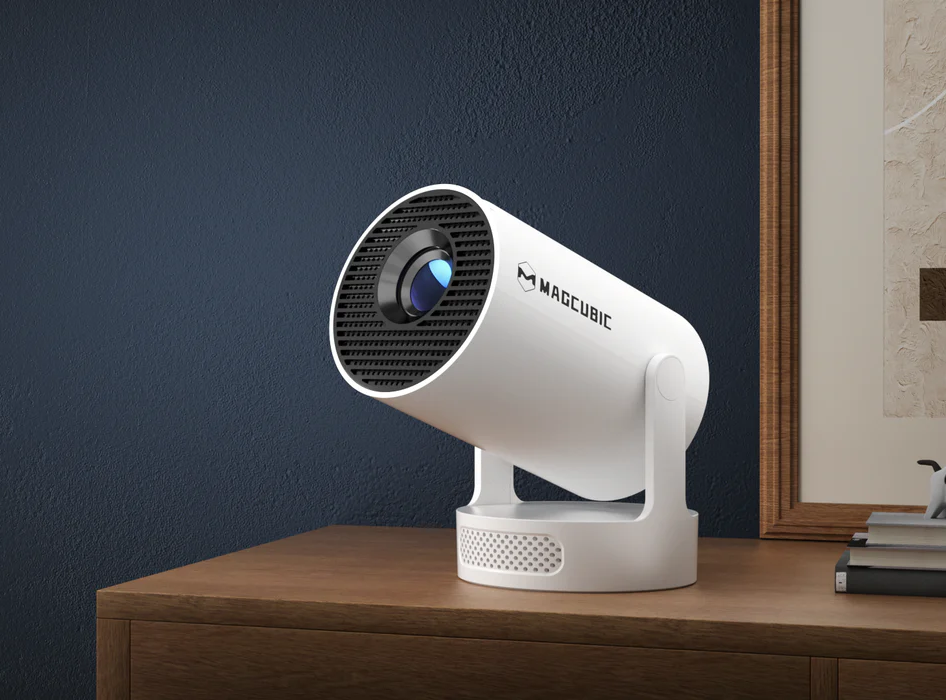
Image source: Magcubic
A Decade-Long Cross-Border Veteran's Counterattack
The founder of the Magcubic brand, Chen Yueyun, can be regarded as a "veteran" in the cross-border e-commerce industry.
As early as 2012, he founded the set-top box brand "Transpeed". With the help of Shenzhen's developed electronics industry chain, he quickly got the business up and running.
But the good times didn't last long. The set-top box track itself had a low threshold and soon fell into a brutal price war. Even more troublesome, Transpeed later encountered a trademark squatting crisis, and Chen Yueyun was forced to give up the brand he had run for ten years.
This was a heavy blow, but in retrospect, it was also the starting point for transformation.
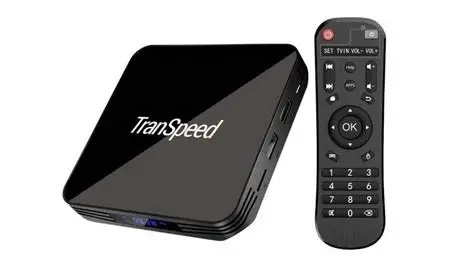
Image source: Internet
At that time, the global pandemic was in full swing, household entertainment demand surged, and the projector market ushered in an explosive turning point. Chen Yueyun keenly sensed the opportunity.
But the question in front of him was: how to do it?
At that time, the projector market was highly polarized. The high-end market was monopolized by brands using DLP (Digital Light Processing) technology, but the core patents for this technology were held by Texas Instruments in the US, so costs couldn't come down and prices stayed above 1,000 RMB for years. The low-end market mainly used LCD technology, which was cheap but only had 480P resolution, resulting in a poor user experience.
Chen Yueyun's team judged that the real mass market must be in the mid-to-low price range, with improved product experience. Since 2020, they have been betting on LCD technology, waiting for a technological breakthrough.
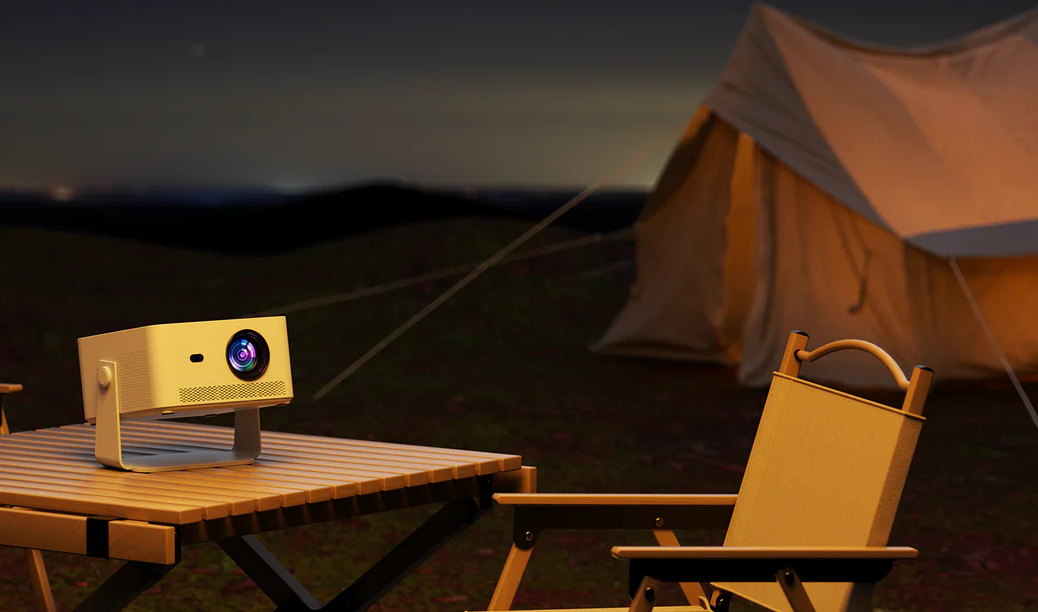
Image source: Magcubic
Seizing the Technology Turning Point, Entering the Global Top Ten in Half a Year
The opportunity appeared in 2023.
In recent years, domestic panel giants like BOE have continued to invest, LCD technology has undergone multiple iterations, "fully enclosed" optical engine technology has gradually matured, brightness has crossed the 1,000-lumen threshold, and display effects are no longer inferior to DLP products. According to RUNTO Technology, in 2024, 1LCD technology's share of global projector shipments has reached 67.9%, completely dominating the market.
Both technology and supply chain were in place.
In 2023, Chen Yueyun officially founded Magcubic. Thanks to long-term investment in 1LCD technology and deep synergy with Shenzhen's local supply chain, he successfully brought a projector with performance comparable to big brands to below 1,000 RMB (Tuke price about $60-100).
How aggressive is this pricing strategy? You know, at that time, DLP products of the same level in the Tuke market were generally priced around $500.
The "low price, high quality" combo worked immediately. On Double 11 in 2023, Magcubic's first "barrel machine" HY300 debuted on AliExpress, selling out 10,000 units on the first day, clearing 100,000 units of inventory that month, and sales exceeded $1 million. By 618 in 2024, with the help of AliExpress's "Billion Yuan Subsidy," monthly sales exceeded $6 million.
In just half a year, Magcubic entered the global top ten in projector shipments.
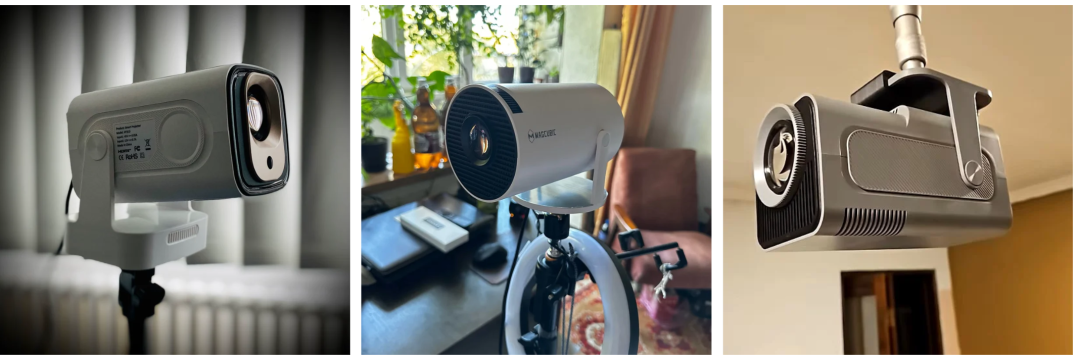
Image source: Magcubic
Omni-channel Marketing: TikTok Explodes, Independent Site Accumulates
With a good product, how do you sell it?
The approach of the Magcubic brand is: omni-channel layout, content seeding, and all-domain traffic diversion.
-TikTok
From public information and third-party research, it can be seen that the Magcubic brand invests a lot of effort in Tuke social media, especially TikTok.
Let's look at the data first. As shown below, this is the data for Magcubic brand's US local store Magcubic shop over the past year. In this year, they achieved nearly $6.3051 million in sales, about 43.4 million RMB.
Among them, sales brought by affiliate influencers accounted for 95.98% of the total, showing that influencer cooperation is currently the core growth engine for the Magcubic brand on TikTok.
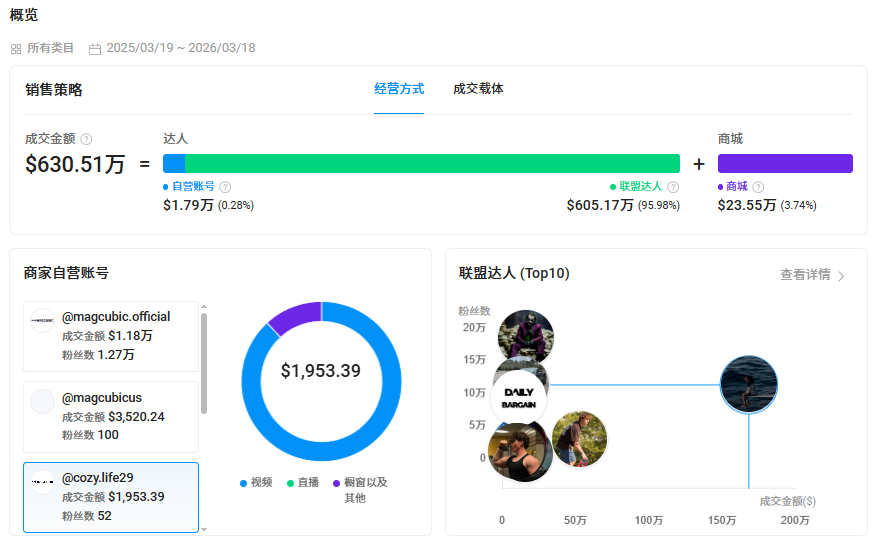
Image source: kalodata
In terms of influencer selection, the Magcubic brand's strategy is very clear: abandon top-tier influencers, focus on mid- and long-tail influencers, and achieve viral spread through massive volume.
For example, on the Magcubic shop's influencer sales list for the past year, the top influencer @tntdealss (113,200 followers) achieved cumulative sales of 53,100 units and sales of $1.6846 million, with a total video view count of 219 million.
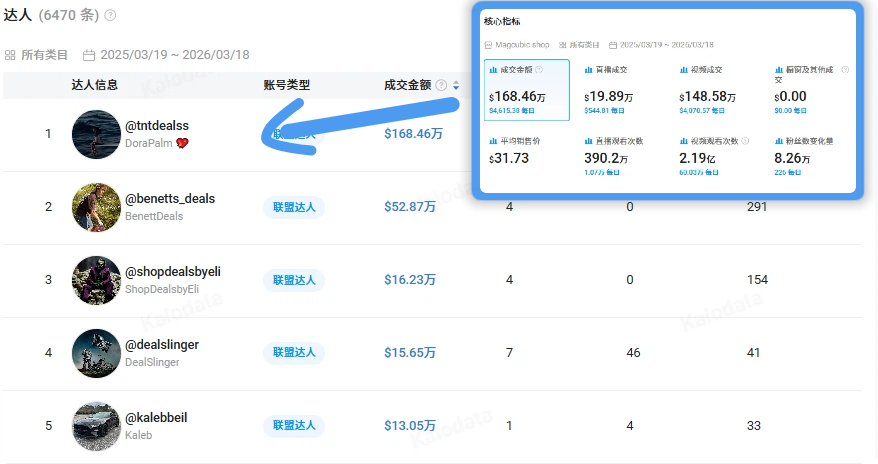
Image source: kalodata
From the content posted by these influencers, it can be roughly divided into two types.
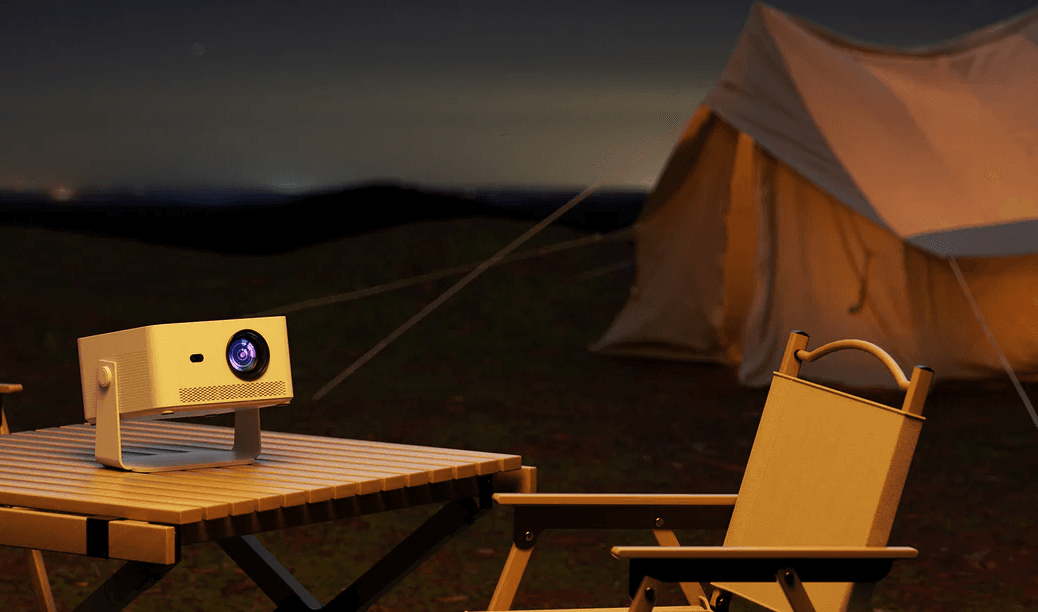
One is scenario-based lifestyle display. The core of this type of video is "dream building". Influencers use Magcubic projectors to watch movies, play games, and hold parties in bedrooms, on living room carpets, or in outdoor camping tents, conveying the product's portability and atmosphere through personal experience.
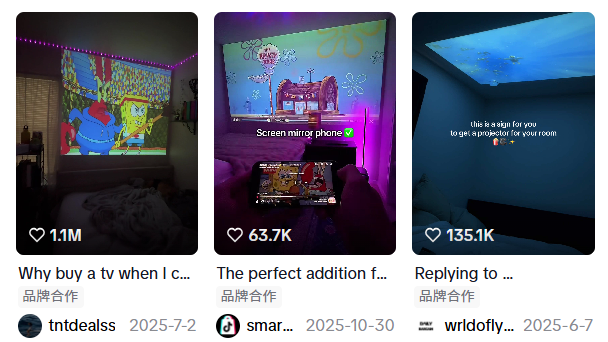
Image source: TikTok
TikTok influencer @benetts_deals is very good at this type of content. Almost all his brand collaboration videos are set in the bedroom, with a very natural and everyday style, as if casually recording his own relaxing moments.
A video he posted in April last year reached 43.1 million views, directly driving $277,100 in sales, which shows the effectiveness of this type of content.
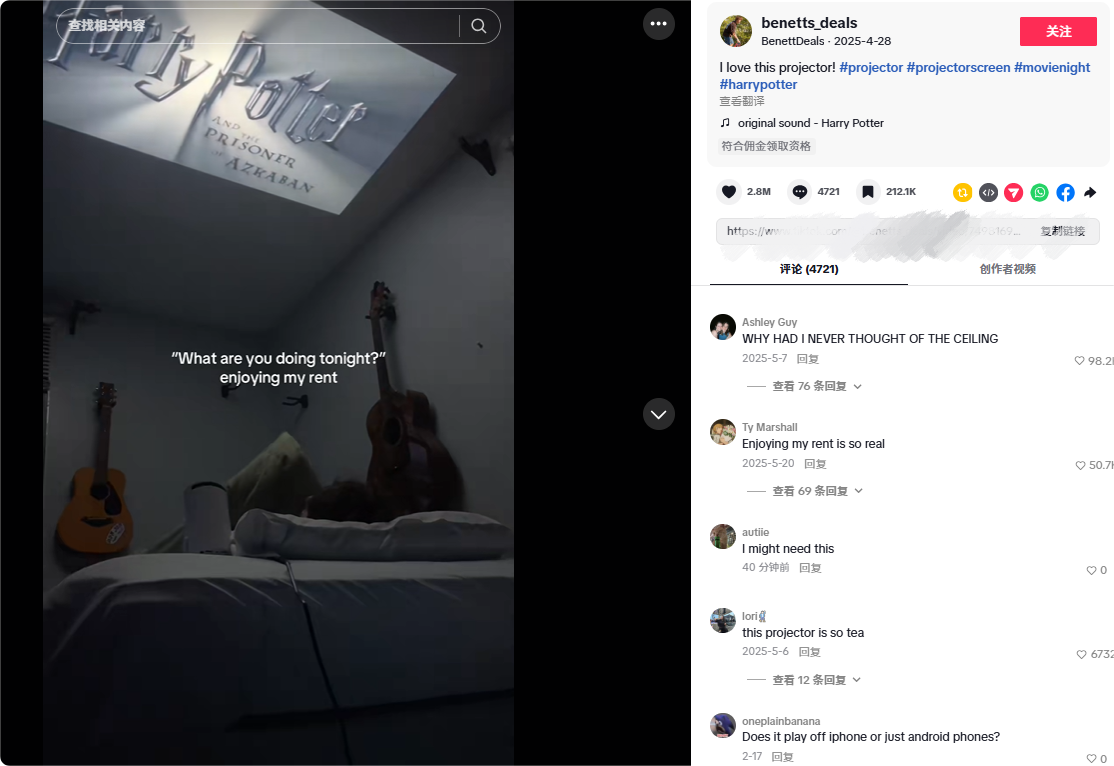
Image source: TikTok
The other type is spoken unboxing reviews. These videos are more geared toward tech enthusiasts and rational users, explaining parameters such as resolution, brightness, ports, and system through unboxing, comparison, and testing, providing rational arguments for "cost performance".
For example, TikTok influencer @tntdealss, mentioned earlier, has this type of content in her collaboration videos, and the data is quite good.
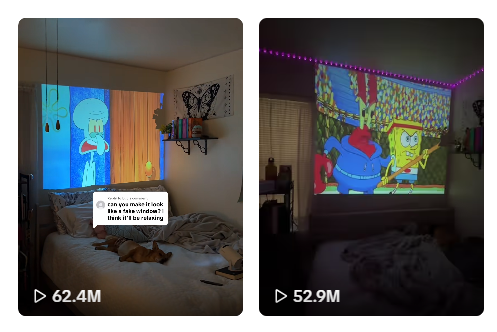
Image source: TikTok
In addition to efficient content production, the Magcubic brand also attaches great importance to advertising and traffic investment.
For videos with good data performance, they will increase the budget to push the content to more precise potential users. This combination of "organic traffic for data testing, paid ads to amplify effect" greatly improves the communication efficiency of viral videos.
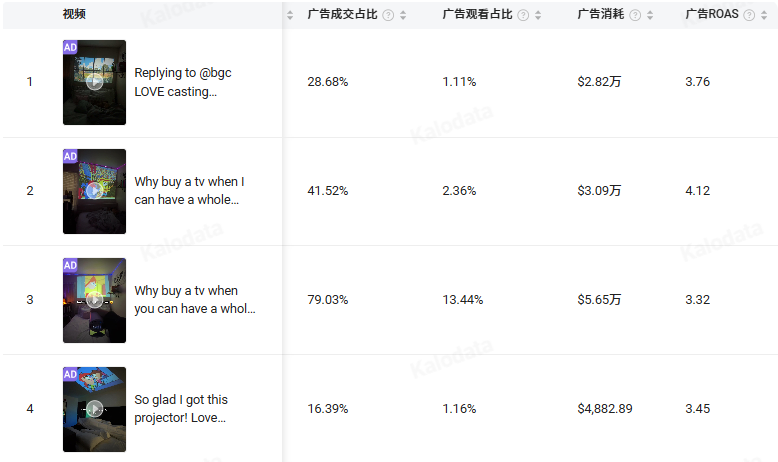
Image source: kalodata
-Independent Site
While traffic was exploding, the Magcubic brand was also building its own independent site.
According to Similarweb data, in February 2026, Magcubic's independent site had more than 190,000 monthly visits. In terms of traffic sources, organic search accounted for as much as 44.91%, direct visits 34.94%, and together they contributed nearly 80% of the traffic.
This also shows that the Magcubic independent site is a typical SEO-driven website, with search engines as its main traffic source. In contrast, paid search accounts for only 2.51%, indicating that traffic growth mainly relies on natural brand awareness rather than hard advertising. Only when an independent site reaches this level can a brand be considered truly established in the Tuke market.
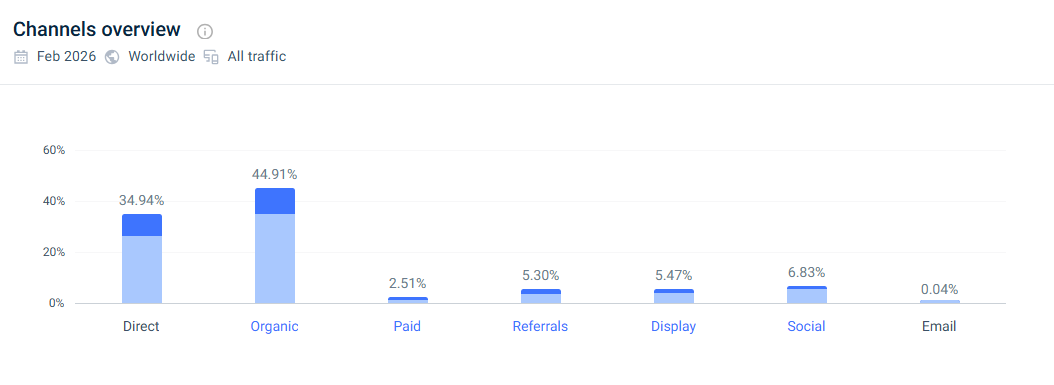
Image source: similarweb
Looking back at the trajectory of the Magcubic brand, it verifies a formula: technological micro-innovation × ultimate supply chain efficiency × platform ecosystem empowerment = global market restructuring.
But more importantly, it provides a good reference for domestic companies planning to go Tuke: today's Tuke market, especially the Gen Z-led consumer market, no longer blindly worships big brands and specs. They are more willing to pay for "scenarios" and "experiences".
For more domestic companies, rather than fighting on price in a red ocean, it's better to dive into the real-life scenarios of Tuke users and use products to respond to those unmet small needs. When Made in China starts telling the life stories of people around the world, the channel for going Tuke will naturally widen.