Este documento aborda principalmente los puntos clave y las estrategias en el desarrollo de procesos y fabricación (CMC) durante las distintas etapas, desde la investigación hasta la comercialización, en el proceso de "salida al extranjero" de los medicamentos innovadores chinos. El contenido específico es el siguiente:
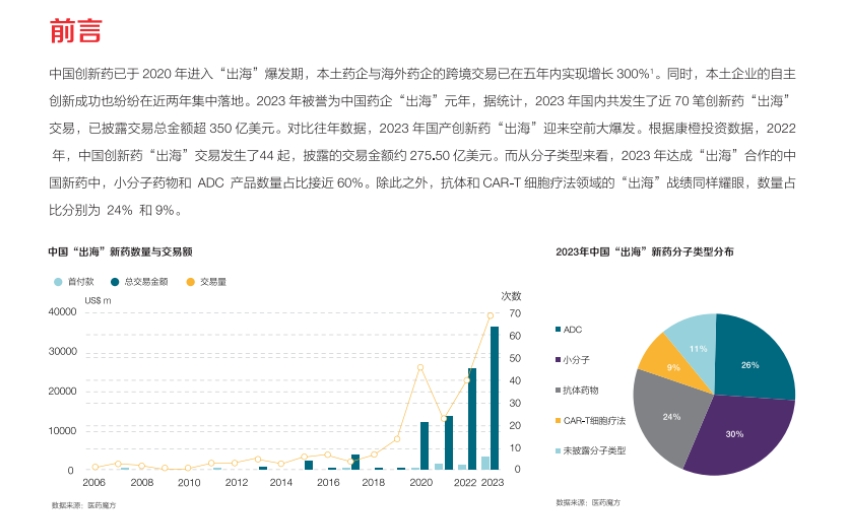
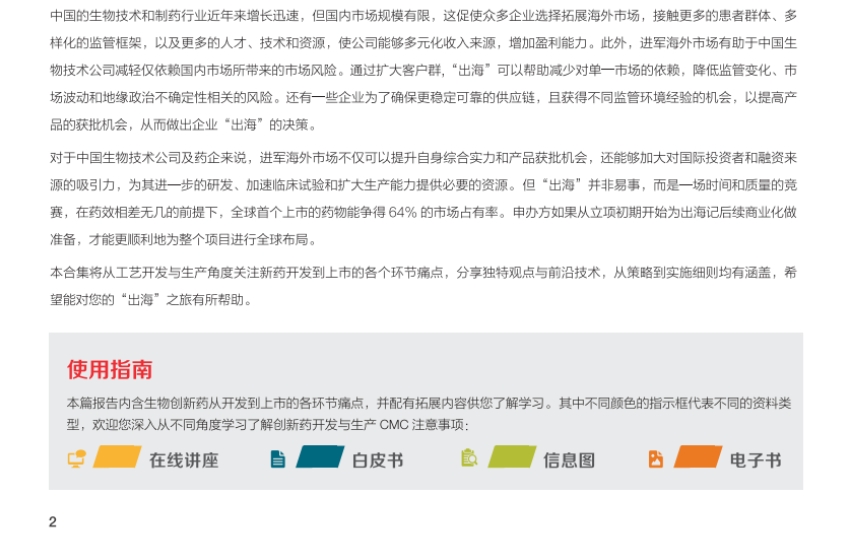
1. Situación actual de la "salida al extranjero" de los medicamentos innovadores chinos: A partir de 2020, los medicamentos innovadores chinos entraron en un período de auge de "salida al extranjero", siendo 2023 particularmente destacado, con un aumento significativo en el número y el valor de las transacciones. Los fármacos de molécula pequeña, los productos ADC, los anticuerpos y la terapia con células CAR-T son los principales tipos de moléculas que "salen al extranjero". Las empresas farmacéuticas chinas optan por "salir al extranjero" debido al tamaño limitado del mercado nacional, lo que les permite acceder a más pacientes, marcos regulatorios diversos, recursos de talento y tecnología, además de diversificar los ingresos y reducir los riesgos del mercado.
2. Estrategias de CMC en las distintas etapas, desde el desarrollo hasta la comercialización de nuevos fármacos
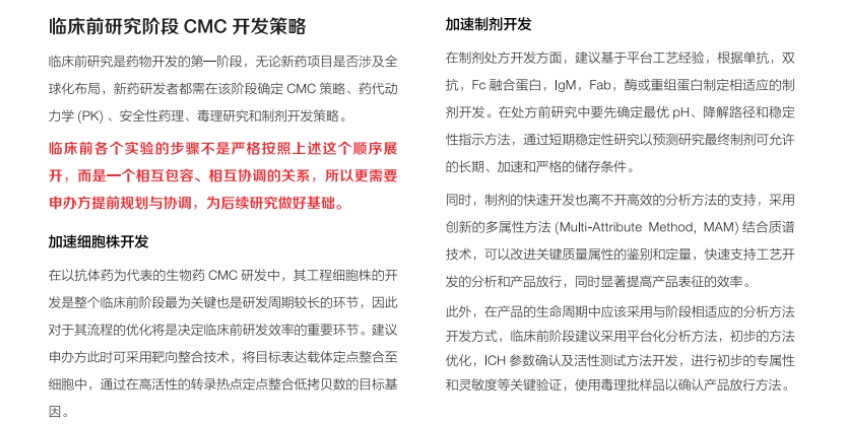
- Etapa de investigación preclínica: Es necesario determinar la estrategia de CMC, la farmacocinética, etc., siendo cruciales el desarrollo de líneas celulares y la formulación. Para el desarrollo de líneas celulares, se pueden emplear tecnologías de integración dirigida y sistemas de alto rendimiento; para el desarrollo de formulaciones, se debe basar en la experiencia de procesos de plataforma, determinar el pH óptimo, etc., con la ayuda de métodos analíticos innovadores.
- Etapa de presentación de solicitudes IND: Al presentar la solicitud de investigación clínica de un nuevo fármaco, se debe adoptar una perspectiva global, redactar materiales de presentación de CMC neutrales y evaluar exhaustivamente las diferencias en los requisitos de las distintas jurisdicciones. También es necesario establecer materiales completos para el primer ensayo en humanos (FIH) y acelerar la selección de formulaciones tempranas, por ejemplo, priorizando viales, formulaciones liofilizadas, etc.
- Etapa de investigación clínica: El ciclo de desarrollo de CMC en la etapa de investigación clínica es largo e incierto, por lo que se requiere una planificación anticipada. En las fases clínicas I-II, se debe evaluar razonablemente las necesidades de producción, considerar de manera prospectiva la capacidad de producción, definir claramente la selección de formulaciones y dosis, y adoptar métodos de producción flexibles; en la fase clínica III, se debe elaborar con antelación un plan de escalado del proceso y una estrategia de transferencia tecnológica.
- Etapa de producción a escala comercial: En la etapa de producción comercial, son importantes la validación de métodos analíticos, la caracterización del proceso y la validación del proceso. Antes de la validación de métodos analíticos, se debe evaluar la robustez; la caracterización del proceso debe basarse en métodos como modelos a escala reducida y diseño experimental; la validación del proceso requiere determinar el número de lotes y, finalmente, presentar la solicitud de aprobación regulatoria.
3. Consideraciones para la comercialización de nuevos fármacos en mercados específicos: Diferentes países y regiones tienen requisitos especiales para la comercialización de medicamentos. Por ejemplo, en la Unión Europea, se deben definir claramente las responsabilidades de la Persona Cualificada; en Estados Unidos, se debe prestar atención al formulario 356h y al registro y listado de empresas; tras el Brexit, el Reino Unido requiere una solicitud de autorización de comercialización independiente y la realización de pruebas de lotes; China tiene una revisión conjunta, con requisitos específicos para el principio activo, excipientes, lotes de validación, etc.
4. Resumen y recomendaciones: Las empresas de medicamentos innovadores que "salen al extranjero" deben tener una visión global desde la etapa de inicio del proyecto, establecer un sistema global de talento, así como sistemas de I+D, producción y comercialización. Las empresas emergentes pueden recurrir a instituciones profesionales de terceros. Thermo Fisher Patheon™ puede ofrecer soluciones de servicios farmacéuticos a los clientes.