 1906
1906Le aziende di borse e valigie che si espandono all'estero dovrebbero scegliere il settore B2B?
Molti potrebbero chiedersi: per l'espansione all'estero, non sarebbe più diretto scegliere il B2C?
In realtà, questa controversia è normale.
Perché nella nostra comprensione comune, prodotti di uso quotidiano come borse e valigie vengono acquistati direttamente online o nei negozi. Quindi si pensa istintivamente che la via della vendita diretta dal produttore sia più semplice.
Ma pensare così significa ignorare un punto: il mercato per queste aziende di borse e valigie è all'estero.
Che si espandano tramite TikTok o altri canali, il settore B2C non può evitare un problema: l'accumulo di scorte.

Proprio come articoli stagionali o ciclici come sciarpe e pantofole, quando il ciclo di domanda o la moda passa, le performance diventano molto scarse.
A questo punto, è necessario sviluppare nuovi prodotti di tendenza, entrando di nuovo in un ciclo di accumulo di scorte, immobilizzando ingenti capitali.
Se si incontrano repressioni improvvise come quelle nel mercato indonesiano di recente, è probabile che grandi quantità di merci e capitali vengano bloccati, senza possibilità di recupero.
Per questo motivo, molte aziende di borse e valigie in espansione all'estero stanno ora scegliendo di passare dal B2C al B2B.
Il settore B2C richiede spesso la creazione di magazzini all'estero, mentre il B2B no. In questo modo, in un contesto di frequenti imprevisti all'estero, si può trasformare un'attività passiva in attiva, ottenendo garanzie di certezza.
Di seguito, ci concentreremo su come le aziende di borse e valigie dovrebbero operare nel settore B2B per l'espansione all'estero!
Primo punto: creare un sito indipendente all'estero.
Per il settore B2B, i magazzini all'estero possono mancare, ma il sito indipendente è obbligatorio.
Il concetto di sito indipendente deriva dalla sua indipendenza dalle piattaforme, quindi la sua necessità è indiscutibile.
Senza un sito indipendente all'estero, le aziende di borse e valigie nel B2B non avrebbero una piattaforma per mostrare la fabbrica e la forza industriale, e non potrebbero esprimere le caratteristiche della fabbrica e la professionalità produttiva.
Soprattutto con clienti lontani all'estero, fare affidamento su promozioni orali "vuote e grandi" per guadagnare clienti non è realistico.
Quindi, il ruolo del sito indipendente all'estero è, da un lato, permettere ai partner di vedere meglio la tua forza e fidarsi di più, e dall'altro, facilitare il traffico tramite piattaforme come TikTok in seguito.
Altrimenti, anche se si attira traffico su vari social media, se i clienti non sanno dove si trova la tua fabbrica o come contattarti, che senso ha?
Inoltre, un sito indipendente, essendo separato dalla piattaforma, può evitare di essere influenzato da essa. Anche se la piattaforma ha problemi, tu puoi rimanere calmo.
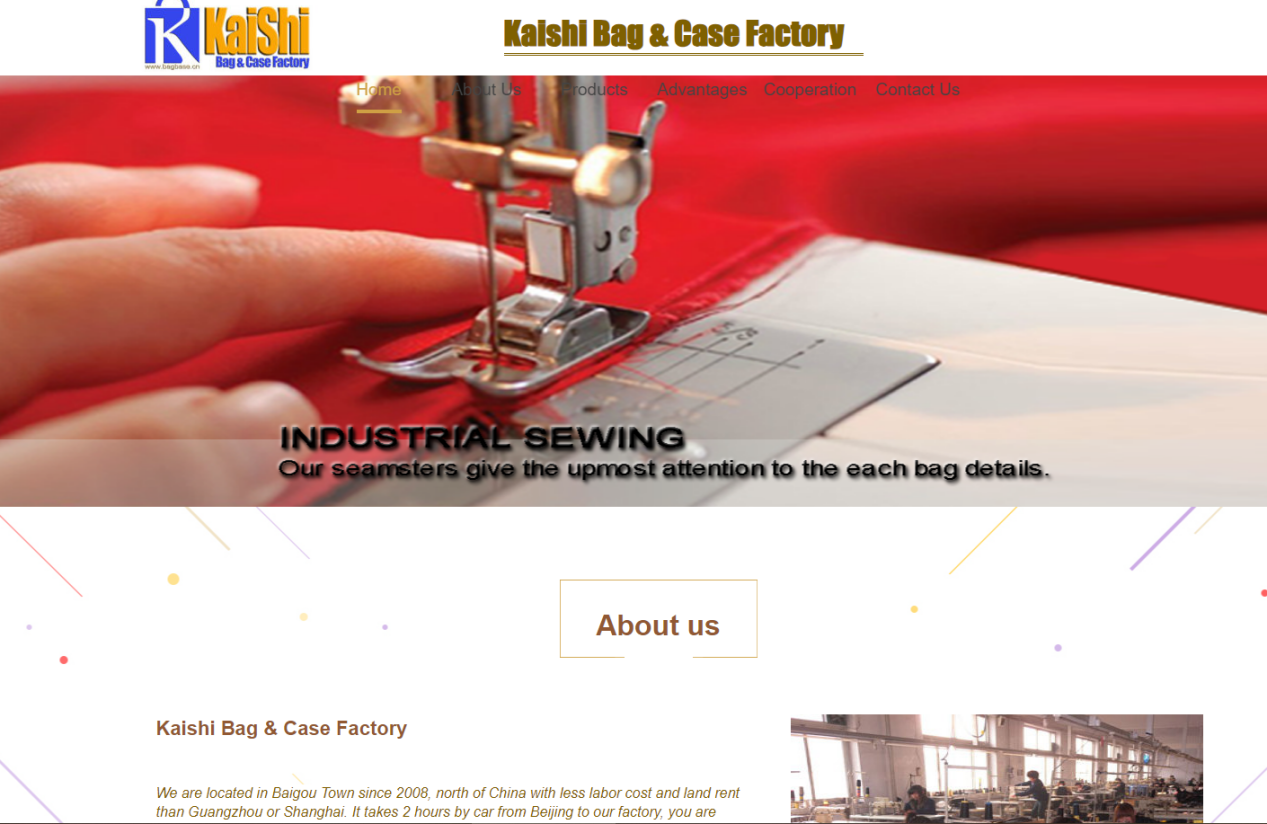
Screenshot del sito indipendente di un'azienda B2B di borse e valigie
Secondo punto: attirare traffico tramite piattaforme social estere come TikTok.
Nell'era digitale di oggi, attirare traffico tramite social media come TikTok è un metodo comune per le aziende in espansione all'estero.
I video pubblicitari per il settore B2B non devono essere particolarmente elaborati; basta promuovere le tecniche di fabbrica e la capacità produttiva.
Ad esempio, una fabbrica B2B di borse e valigie molto popolare su TikTok, @kaishibagfactory, realizza video sulle tecniche molto buoni.
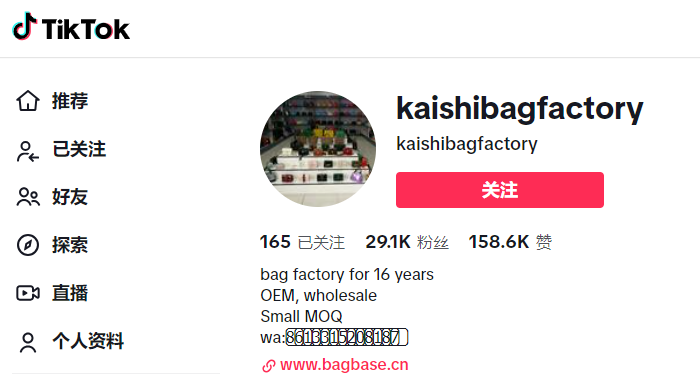
Questa fabbrica è specializzata in borse e valigie da 16 anni. Dopo essere entrata su TikTok, condivide ogni giorno video sulle tecniche di produzione, come mostrare la cucitura delle borse in dettaglio, scene di lavoro dei colleghi, esposizione di borse in fabbrica, ecc. Finora ha ottenuto oltre 29.000 follower e più di 150.000 like, con un video in evidenza che ha raggiunto ben 8 milioni di visualizzazioni!
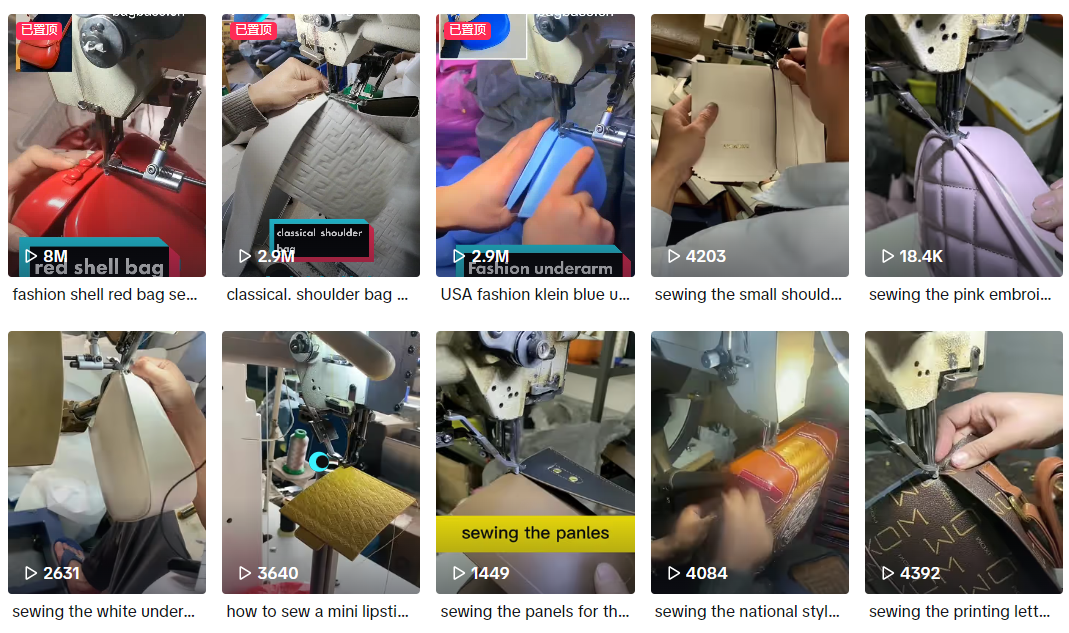
Come ha fatto @kaishibagfactory a riuscirci?
Dagli screenshot dei video si vede che le tecniche di ripresa non sono particolarmente difficili: si tratta di primi piani ravvicinati della cucitura del tessuto, abbinati a musica a tempo e testi pertinenti.
Oppure far mostrare a una collega carina della fabbrica l'effetto delle borse, video di unboxing, spiegazioni del capo, ecc. Lo sfondo è sempre in fabbrica, senza bisogno di troppe elaborazioni.
Ma è proprio questo contenuto semplice e autentico che ha portato un'enorme quantità di richieste e ordini. Basta inserire nella homepage i contatti e l'indirizzo del sito indipendente all'estero per attirare il pubblico attratto dai video, senza sprecare traffico.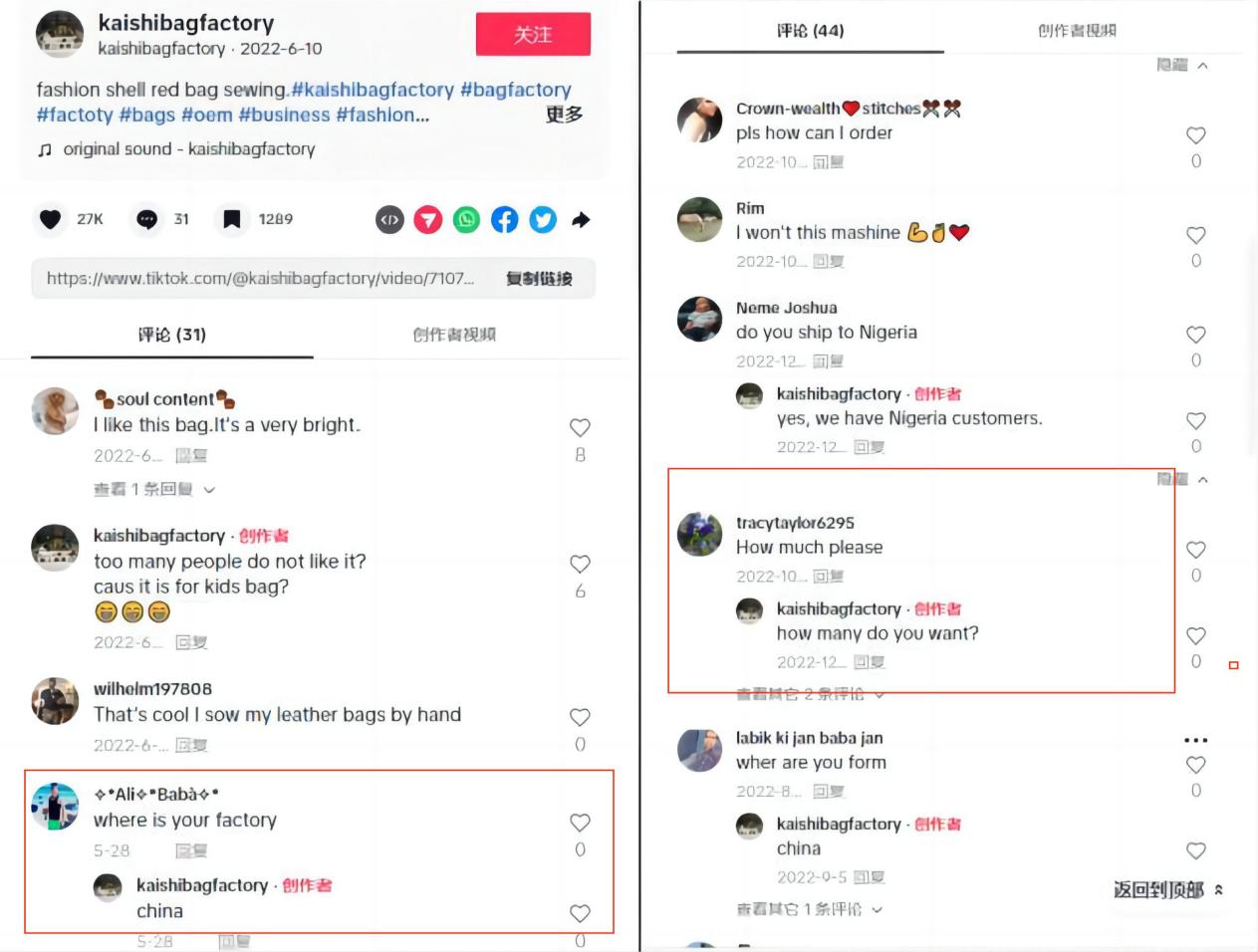
Immagine di richiesta di ordine
Basandoci sul successo di @kaishibagfactory, consigliamo anche alle aziende di borse e valigie orientate al B2B di adottare questa strategia, creando al contempo una matrice di social media come WeChat per attirare meglio traffico verso il sito indipendente, ottenendo così molte richieste e ordini.
Inoltre, questa strategia ha costi relativamente bassi, ideale per l'espansione all'estero di piccole e medie fabbriche. Se l'azienda non ha esperienza nella gestione degli account, può cercare l'aiuto di società di gestione TikTok.
Terzo punto: sviluppare una politica di agenzia completa e offrire servizi di consulenza.
Le aziende B2B, dovendo interfacciarsi con importatori e agenti all'estero, necessitano di una politica di agenzia completa. Inoltre, è importante avere un adeguato servizio di consulenza.
Qui vi racconto una storia vera di un amico del nostro circolo commerciale.
Questo amico è un commerciante con 12 anni di esperienza nell'e-commerce di borse e valigie (di seguito chiamato commerciante). Una volta ha incontrato un cliente americano alle prime armi nel business (di seguito chiamato cliente).
Il cliente vedeva il potenziale del mercato locale delle borse e valigie negli Stati Uniti e voleva creare un sito di marca indipendente, iniziando da zero nel settore. Ma non aveva esperienza in prodotto, operazioni, servizio o mercato, nessuna idea.
Tuttavia, il cliente apprezzava molto le tecniche e la qualità del commerciante.
Così, dopo molte discussioni e messe a fuoco, il commerciante ha deciso di aiutare il cliente a iniziare l'attività, supportandone la crescita con strategie e metodi personalizzati.
Dall'analisi del mercato al design del prodotto, fino alla creazione del marchio e agli standard: sacchetti anti-umidità, biglietti da visita del marchio, scatole individuali, fodere, cartone ondulato, e passo dopo passo fare marketing sul sito indipendente.
Questo amico commerciante ha aiutato il cliente a costruire l'intera bozza della catena di marketing del sito, e alla fine il cliente ha pagato in anticipo un acconto di 20.000 USD al commerciante, diventando un cliente a lungo termine, senza mai cambiare fornitore.

Quei 20.000 USD pagati in anticipo dal cliente nella storia, più che costi di materiali iniziali, erano un riconoscimento del servizio del commerciante.
Non tutti i nostri clienti sono esperti del settore; ci sono molti principianti innovativi. A volte, qualche parola in più o una maggiore dimostrazione di competenza nel settore possono portare a un'opportunità di ordine.
Per questo diciamo che i commercianti B2B, oltre a una politica di agenzia, devono offrire servizi di consulenza.
Spesso, il settore B2B non riguarda solo fare affari, ma anche fare da consulente, utilizzando il servizio per ottenere fidelizzazione o riacquisti, aiutando i clienti a migliorare la loro attività come consulenti, crescendo insieme a loro.
Come qualcuno ha detto: saper costruire fiducia attraverso il servizio e fidelizzare i clienti è il metodo scientifico per fare affari a lungo termine.
Conclusione
Dopo aver letto fin qui, pensi ancora che le aziende di borse e valigie in espansione all'estero possano solo scegliere il settore B2C?