In the world of cross-border e-commerce, the kitchenware category has always been regarded as a high-barrier, asset-heavy track. For a long time, this market has been firmly occupied by traditional brands and large retailers with decades of history. For new players to break through, it often means investing huge amounts of money in supply chain, channels, and marketing.
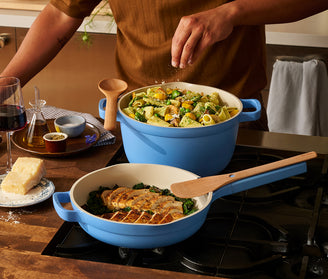
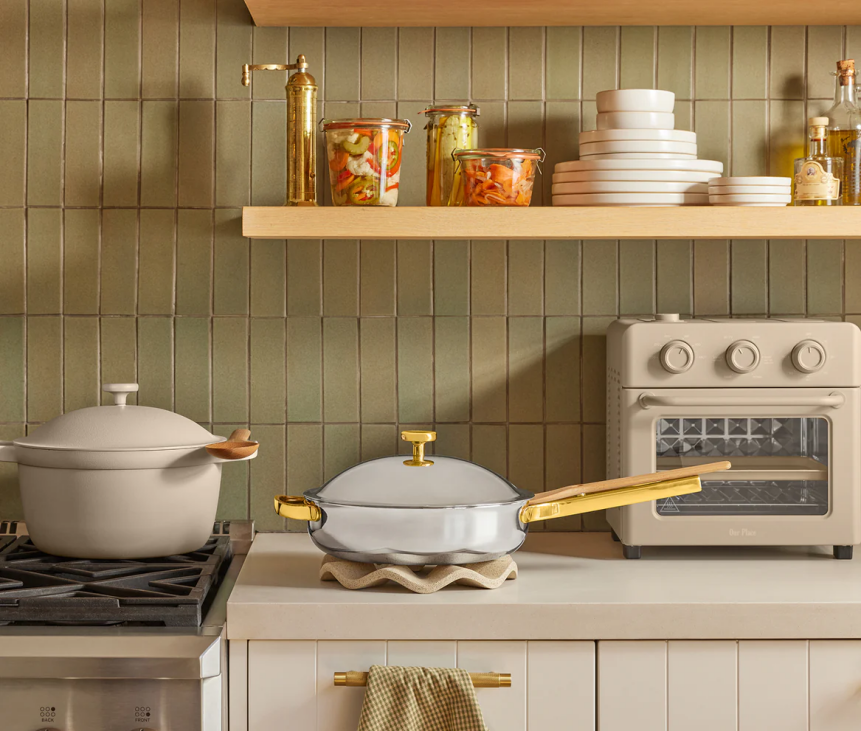
However, in such a market, a brand established in 2019—Our Place—managed to break out with its softly colored “Always Pan”, becoming a phenomenal dark horse in the DTC kitchenware field.

Image source:Our Place
Data shows that the brand’s annual sales are approaching $96.6 million, and in January 2026 alone, its monthly revenue exceeded $5.69 million, with an average monthly traffic of up to 2.32 million visits.
In the fiercely competitive North American market, the Our Place brand has proven with data that even in seemingly saturated traditional tracks, there is still a chance for new giants to emerge.
Image source:Our Place
Beyond the Pan: Our Place’s Brand Narrative
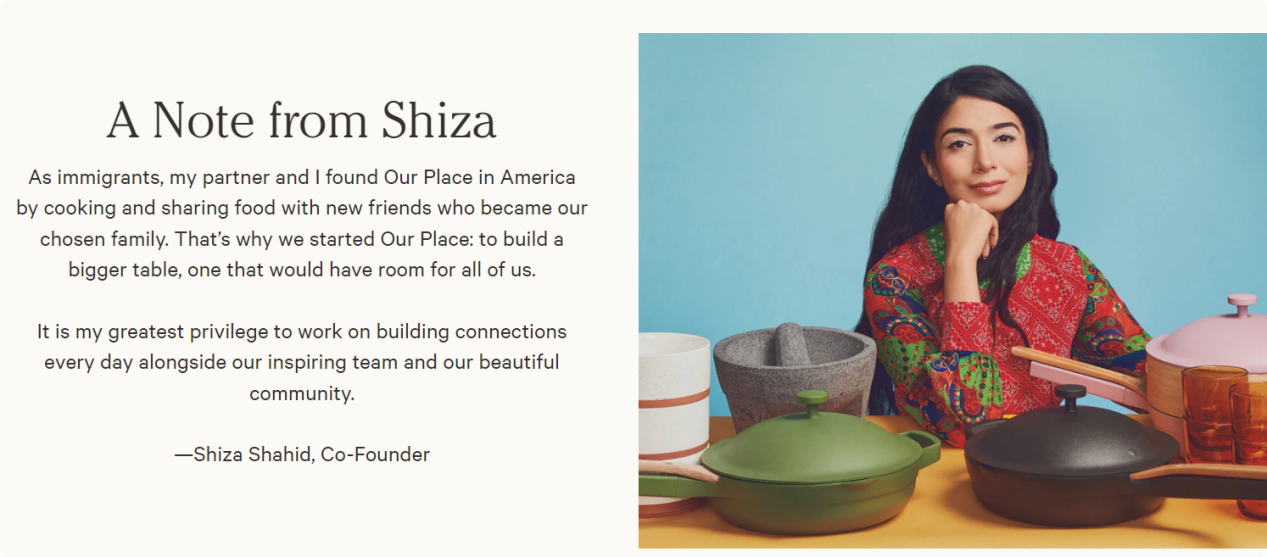
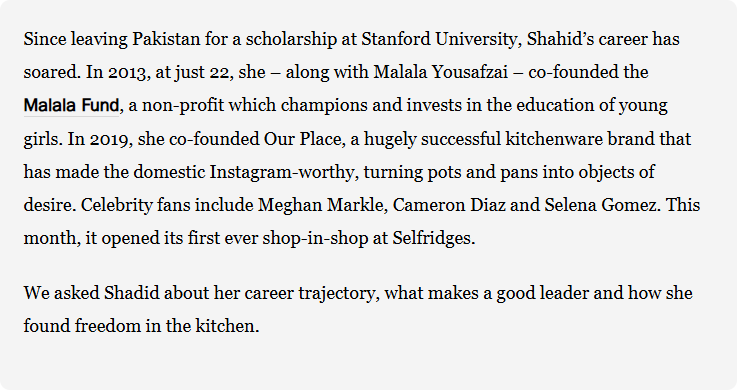
The Our Place brand was co-founded in Los Angeles in 2019 by Shiza Shahid and her husband, positioned as a DTC innovative kitchenware brand for modern, multicultural families, focusing on “connecting people through cooking.”
The founder Shiza herself went from Pakistan to Stanford for her studies, then worked at McKinsey, and co-founded the Malala Fund with Malala. She has long focused on community and cultural issues, and this sense of social mission was also brought into the creation of the kitchenware brand.

Image source:Our Place
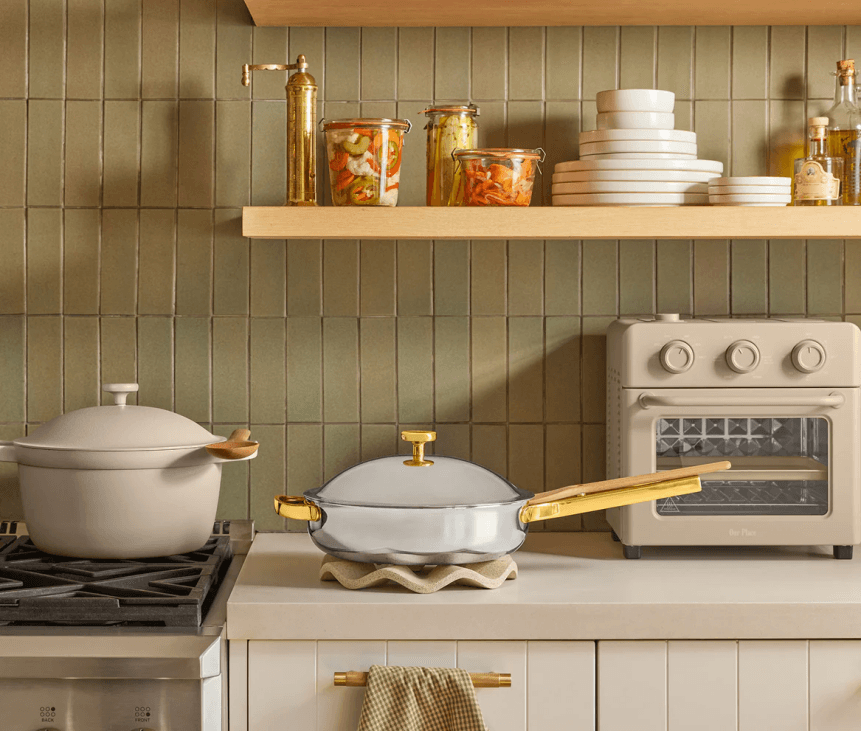
The brand’s early explosion point came from its signature product Always Pan. This multifunctional non-stick pan was designed from the outset to “reduce kitchen clutter”, claiming to replace frying pans, woks, steamers, and other traditional utensils. After launch, it helped the company achieve profitability within six months and sold out multiple times, with over 30 sell-out records and a waiting list of more than 30,000 people.
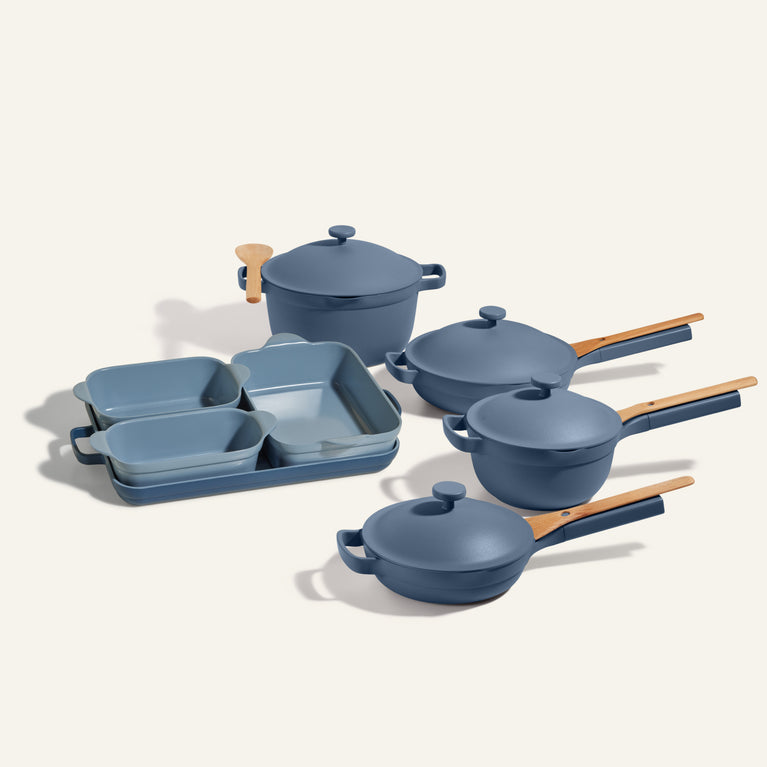
As the product’s topic continued to rise, Our Place received over 1,000 media reports. The brand quickly moved from niche circles to mainstream consumer groups, and gradually expanded to five major product series: Bakeware, Tableware, Appliances, Kitchen Tools, forming a relatively complete kitchen ecosystem.

Image source:Our Place
How to Build a Kingdom of Color
To understand why this brand has a chance to succeed in the “high-barrier, asset-heavy” kitchenware track, we must first look at the changes in the industry landscape.
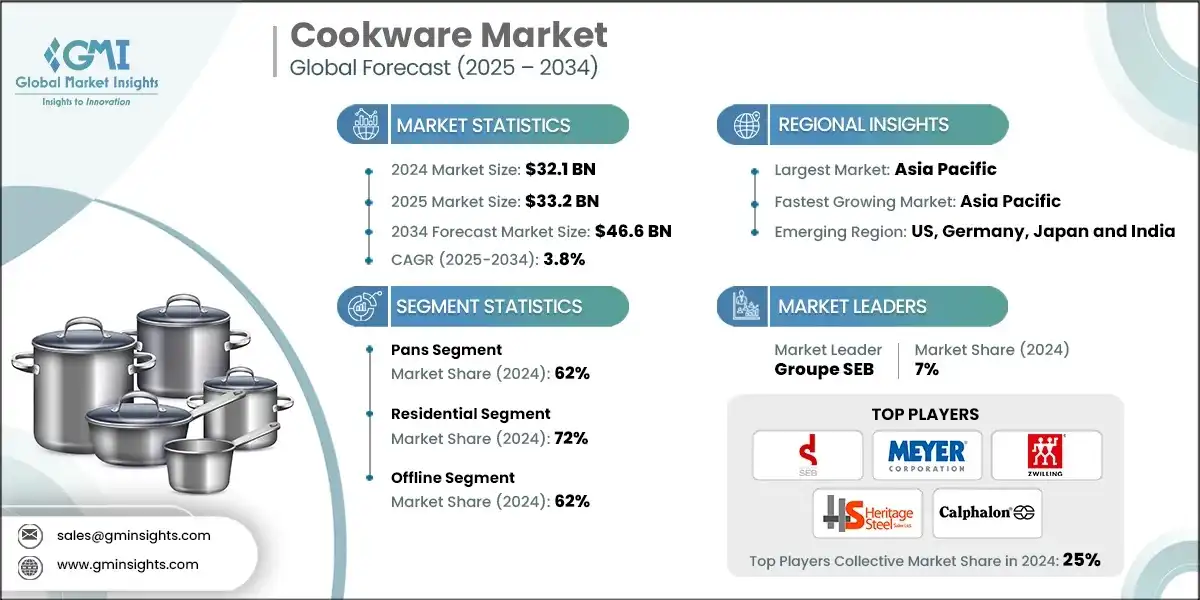
According to data, the global kitchenware market size in 2024 is about $32.1 billion, and is expected to grow from $33.2 billion in 2025 to $46.6 billion in 2034, with a compound annual growth rate of about 3.8%.
This means it is a huge, moderately growing but stable mature market, unlikely to see explosive growth in the short term, but consumption upgrades and increased brand concentration are still happening.

Image source:Global Market Insights
Among the driving factors, several are highly relevant to new DTC brands like Our Place:
First is increased frequency of home cooking, with rising health awareness, more consumers are willing to invest in safer, more durable, and aesthetically pleasing kitchenware; second is higher penetration of online channels, especially e-commerce and social commerce, consumers are willing to discover new brands through content and recommendations; third is environmentally friendly, sustainable materials and design are increasingly valued..
For brands, these trends all point in one direction: whoever can tell a better story about lifestyle and values will have a better chance to win mindshare in standardized products.
What Our Place has seized are precisely these structural opportunities. It does not simply position itself as a supplier of pots and pans, but as a “modern family kitchen solution”, entering the market through serialized products and unified visual language, targeting the demand for kitchen rituals and social value.
Image source:Our Place
Multi-platform Layout: From “Selling Goods” to “Co-creation”
In the process of Our Place’s brand popularity, multi-platform synergy played a crucial role.
It does not rely on a single channel, but has made a relatively complete layout, leveraging the path of “content seeding + social volume + DTC conversion” to drive growth.
1. TikTok
During the rise of short videos and live-streaming e-commerce, TikTok became one of the core battlegrounds for kitchenware category Tuke.
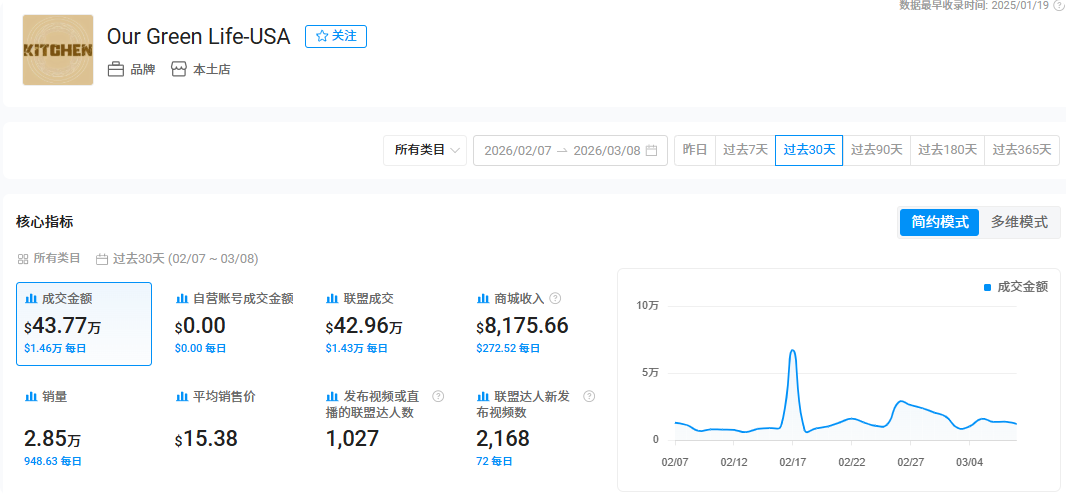
Data shows that the Our Place brand’s official TikTok Shop store had a transaction volume of about $437,700 in the past 30 days, of which the amount generated by affiliate creators reached $429,600, accounting for nearly all sales.
This directly shows that their strategy on TikTok is an affiliate distribution model centered on creators, rather than relying entirely on self-broadcast and brand accounts.

Image source:kalodata
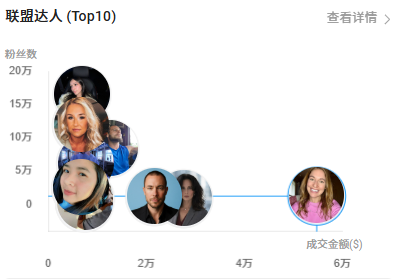
The key lies in a typical micro-niche creator alliance strategy, not blindly spending budgets to chase super-large top creators, but focusing on collaborating with creators who may not have huge fan bases but are highly vertical and trusted in product recommendation.
These creators usually have deep accumulation in specific fields, their fans are vertical and highly trusting, and their purchase intentions are clear, thus achieving higher conversion efficiency.

Image source:kalodata
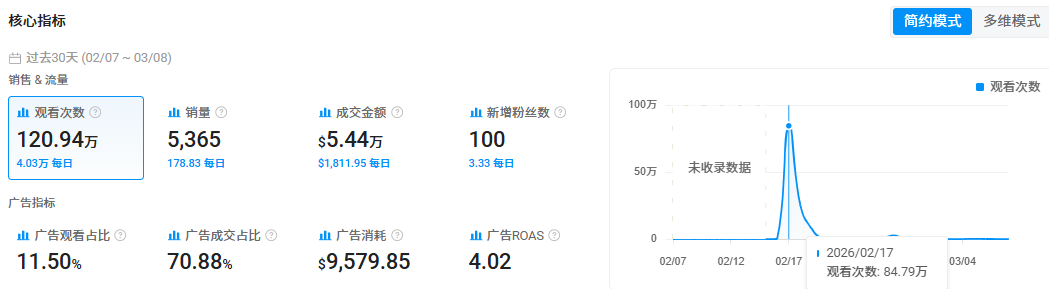
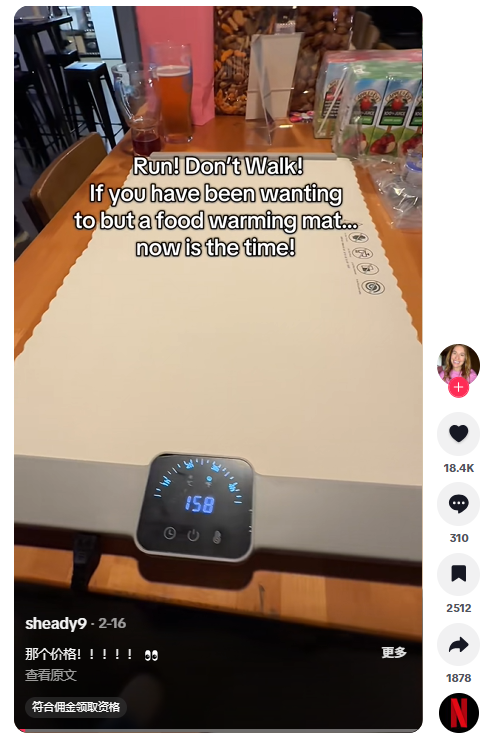
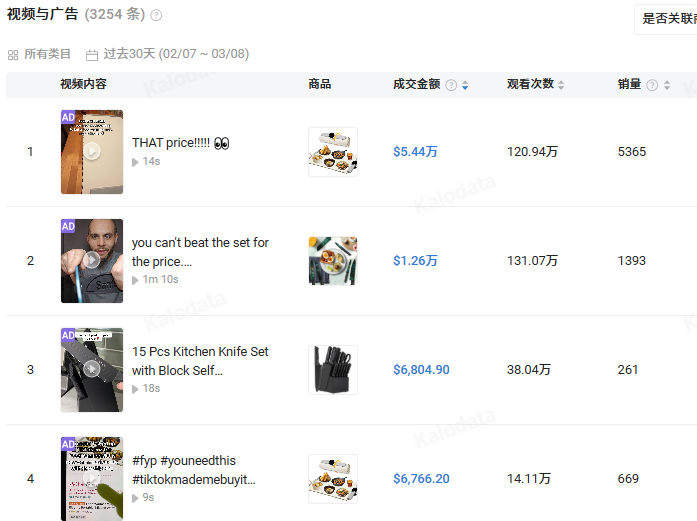
TikTok creator @sheady9 is a great example. Although she has only 12,100 followers, she generated nearly $54,800 in sales for the brand in just one month of collaboration with only three videos, bringing very good results for the brand.
Among them, the best converting video was a heat pad video she posted on February 16. With the support of advertising, the video surpassed 870,000 views the day after release, and has reached nearly 1.2 million views to date, directly driving $54,400 in sales, with a return on investment as high as 4.02.

Image source:kalodata
Image source:TikTok
From the delivery mechanism, the alliance model of “pay per transaction” can significantly improve ROI, while dispersing the risk of betting on a single big influencer, especially suitable for the relatively asset-light operation logic of DTC brands.
For kitchenware products with medium to high unit price and some repurchase but not extremely high frequency,once customer acquisition is established through creators with high trust, there is a greater chance to settle into the brand’s own channels for long-term operation.

Image source:kalodata
Correspondingly, the positioning of Our Place’s self-operated TikTok account is not strong sales, but more focused on content scenarios and brand image building.
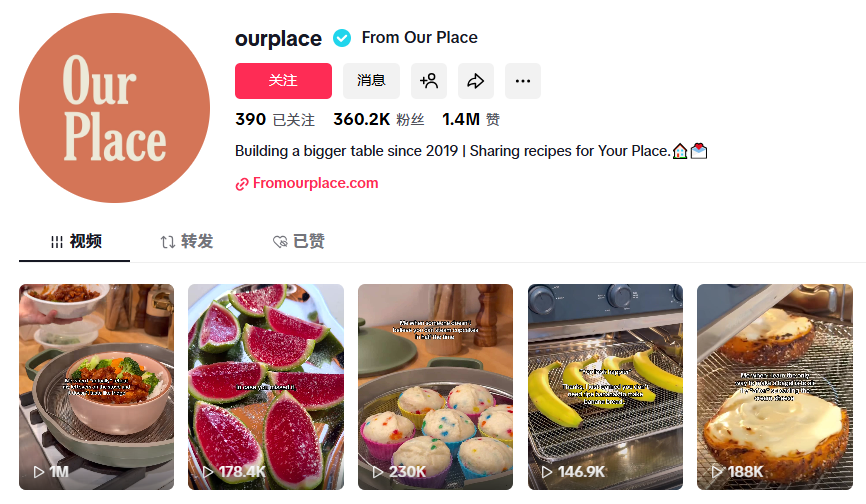
The brand’s official account has accumulated over 360,000 followers, with content focusing on food tutorials, home recipes, and kitchen life inspiration. Through vibrant food colors and atmospheric shots, it presents the texture and design of kitchenware, rather than repeatedly emphasizing promotional information.
This “soft seeding” approach forms a functional division with creators’ hard conversions: the brand’s self-operated account is responsible for storytelling and tagging, creators are responsible for sales conversion, and ultimately traffic and awareness are directed back to the independent site and long-term assets.

Image source:TikTok
2. Independent Site
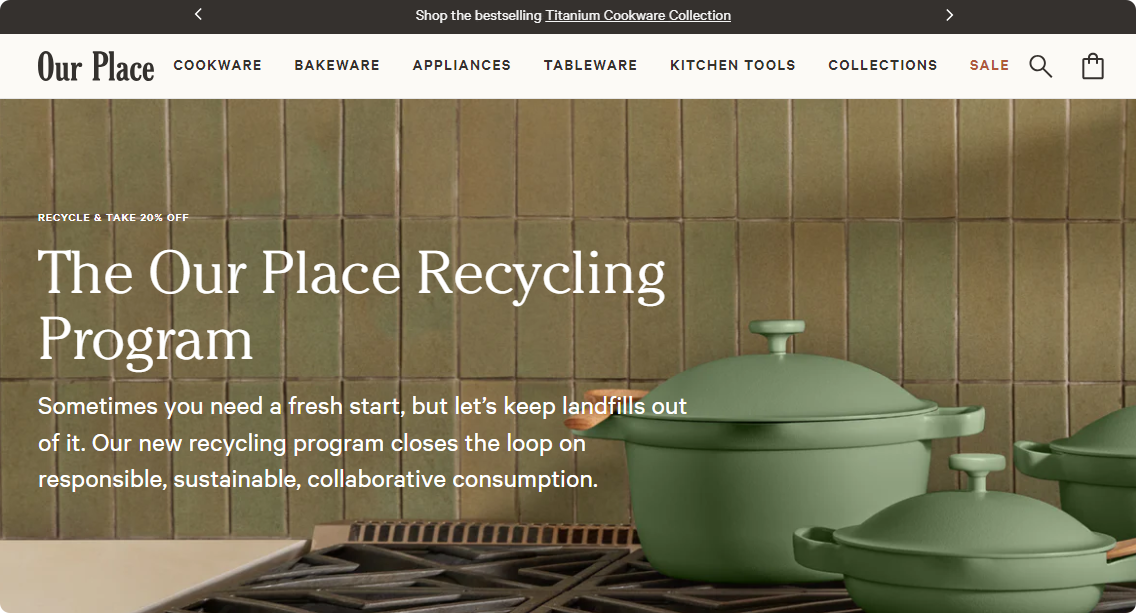
As the main battleground contributing 95% of sales, Our Place’s independent site is not just an ordering tool, but an immersive brand experience center.
The entire site continues the Morandi color palette aesthetic, and most notably, there is a special “Eco Recycling Program” section. Consumers can submit old product information through the official website, and the brand will arrange professional recycling. Participating users can also get a 20% discount on their next purchase.
This initiative cleverly combines sustainability concepts with user repurchase incentives, effectively improving customer loyalty and brand reputation.

Image source:Our Place
3. Offline Channels and Brand Image Extension
Although mainly DTC, Our Place is also actively exploring offline touchpoints.
According to public reports, the brand has opened a physical store in Los Angeles and entered high-end retail channels such as Selfridges in London, becoming the first kitchenware brand introduced by the mall.
This combination of “highly recognizable products + offline experience space” allows consumers to deepen their perception of its texture and design through actual touch and experience, while further consolidating the brand’s lifestyle label among target customers.

Image source:citizen-femme
Conclusion
Reviewing the path of Our Place, what we see is not only the success of a brand, but also a clear roadmap for the new generation of Chinese manufacturing going Tuke. It proves that in the fiercely competitive overseas market, latecomers still have a chance to break through, the key is whether they can shift from a simple “selling goods mindset” to a “brand mindset”.
The road to Tuke is not smooth, but the bigger the waves, the more valuable the fish. This vast blue ocean is worth every ambitious Chinese entrepreneur taking the leap.