"Hugo Cross-border: 2024 Cross-border E-commerce Industry Trend Report" mainly analyzes the development of the cross-border e-commerce industry in 2023 and predicts the industry trends for 2024. The report covers various aspects such as seller operations, cross-border platform changes, logistics status, market changes, and enterprise observations, providing comprehensive industry information for cross-border e-commerce practitioners.

1. Current Status of the Cross-border E-commerce Industry

- Seller Operating Conditions

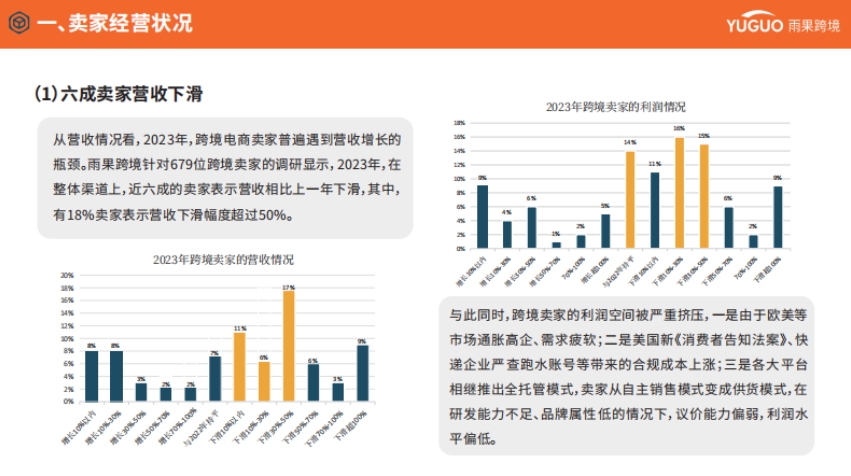
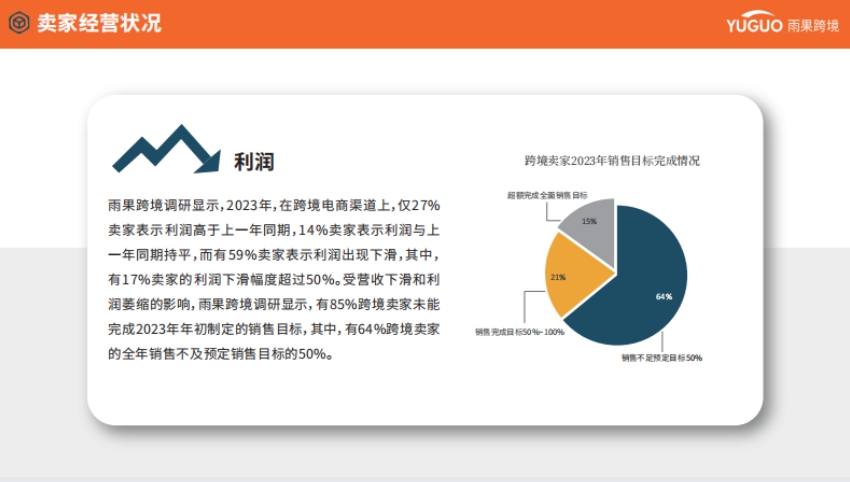
- Revenue and Profit Decline: Nearly 60% of sellers saw a decline in revenue in 2023, profit margins were squeezed, and most sellers did not meet their sales targets.

- Rising Costs: Although sellers have taken measures to reduce costs, factors such as increased platform fees and compliance costs have led to an overall rise in costs.

- Reduction in Staff Size: Affected by revenue and profit, most sellers have reduced their staff size.

- Poor Peak Season Performance: Consumption recovery in the European and American markets was slow, and platform price competition led to lower-than-expected year-end peak season performance for sellers.

- Widespread Application of AI Tools: Over 70% of sellers use AI tools to assist operations and improve efficiency.

- New Channel Deployment: Multi-platform deployment has become the norm for sellers, with a focus on developing new channels such as Temu.

- Increased Investment in Brand Building: Some sellers have increased investment in brand building to adapt to platform compliance and market competition.

- Platform Selection Considerations: When choosing platforms for going global, enterprises value market size the most.

- DTC Financing Market Sluggish: In 2023, DTC brand financing events decreased, mostly concentrated in startups and specific categories.

- Changes in Cross-border Platforms

- Amazon: Store audits have increased compliance costs, front-end function optimization benefits new sellers, several new logistics and warehousing fees have been added, and individual business registrations are no longer accepted.

- TikTok Shop: Launched a full consignment model, officially launched e-commerce services in the US, and resumed e-commerce business in Indonesia after a brief suspension.

- Pinduoduo Temu: Launched six major sites in Europe, leveraged Japanese and Korean sites to tap into the Asian market, and cooperated with shipping companies to launch sea freight services.

- Current Status of Cross-border E-commerce Logistics

- Sharp Drop in Sea Freight Prices: Beneficial for the export of large consumer goods, but the Red Sea crisis has pushed up short-term freight rates.

- Intensified Elimination of Small and Medium Freight Forwarders: Due to issues such as declining customer orders, the revenue of small and medium freight forwarders generally declined in 2023, and the industry has entered an elimination phase.

2. Cross-border E-commerce Industry Trends

- Intensified Competition: Due to inventory pressure, the impact of emerging platforms, differences in AI tool usage, and the influence of the full consignment model, industry competition will deepen.

- Latin American Market Gains Attention: Sellers and platforms will increase investment in the Latin American market, and its e-commerce sales are expected to grow rapidly.

- Rising Compliance Costs: Sellers need to pay attention to compliance issues, and compliance costs are expected to rise sharply in 2024.

- Development of the Full Consignment Model: Will accelerate the transformation of traditional foreign trade, more emerging platforms may adopt it, and it will lower the threshold for sellers to go global.

- Short Videos Boost Brand Globalization: Social media provides opportunities for brands to go global, and the short video boom will drive the emergence of new brands.

- Online and Offline Integration Trend: Some sellers have already started or plan to expand overseas offline channels to achieve omni-channel marketing.

3. Changes in the Cross-border E-commerce Market

- Declining Consumer Power in the US Market: Inflation data and consumer surveys show that US consumers are concerned about prices and may become more cautious in spending.

- European E-commerce Growth Rebounds: Growth in internet users and the proportion of e-commerce consumers are driving the expansion of the European e-commerce market.

- RCEP Boosts Korean E-commerce: Chinese products have a high market share in Korea's cross-border e-commerce market, and the implementation of RCEP will promote trade between the two countries and drive the development of Korean e-commerce.

- Southeast Asian E-commerce Faces Challenges and Opportunities: Policy barriers are rising, localization and compliance are urgent, but there are also opportunities for the B2B foreign trade market.

4. Cross-border E-commerce Enterprise Observations: Practitioners believe that brand globalization relies on capital and marketing, the rise of short videos is conducive to brand building; industry competition is intensifying, requiring both cost reduction and efficiency improvement; the full consignment model is mainstream, and branding is the key to countering competition; independent brands should be developed, labor efficiency improved, and AI tools embraced; TikTok Shop's US and Indonesian markets have development potential.

2024年跨境电商行业趋势报告-12024年跨境电商行业趋势报告-22024年跨境电商行业趋势报告-32024年跨境电商行业趋势报告-42024年跨境电商行业趋势报告-5