 31
In recent years, cases of domestic small home appliances going overseas and seeing order surges have emerged one after another, which has prompted many cross-border sellers to rush into the market.
However, mature categories such as humidifiers and vacuum cleaners already have high penetration rates, and price competition has become increasingly fierce. Sellers are also confused:Where exactly is the way out?
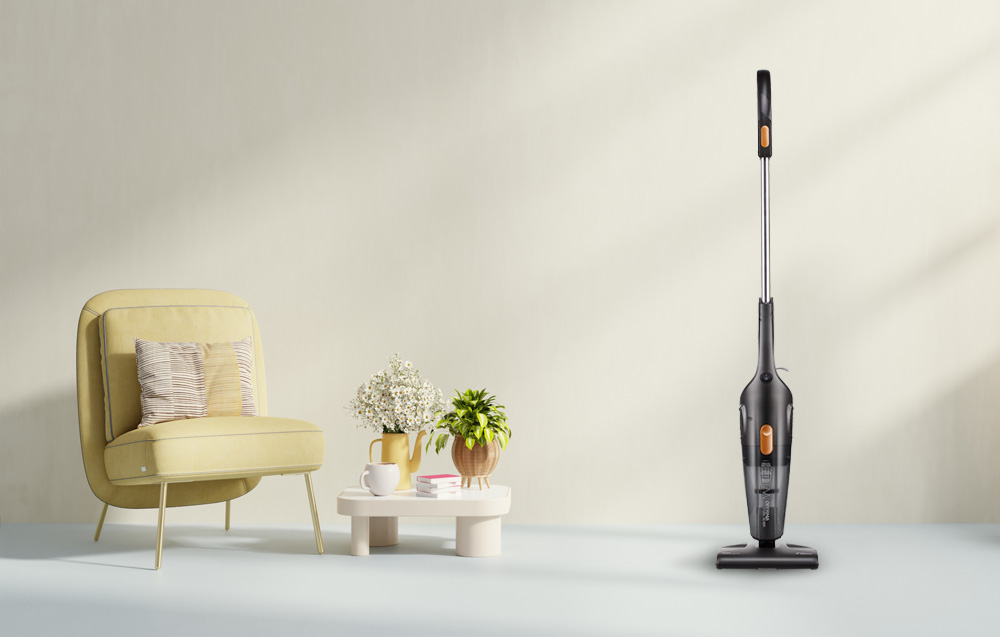
Image source: Google
In fact, new growth opportunities do not lie in “everyone buying one,” but in small details that big companies will not deeply explore, such as segmented scenarios, health needs, convenience for lazy people, and suitability for small apartments.
By implementing these fragmented needs one by one and letting small amounts add up, it is likewise possible to achieve considerable scale.
FromDeerma in Shunde, Foshan, Guangdong, is exactly such a home appliance export enterprise that discovers business opportunities in subtle scenarios and taps incremental growth from small needs.
According to the annual report disclosed by the Hong Kong Stock Exchange,In 2025, its full-year total revenue reached RMB 3.432 billion, or 34.32 hundred million yuan.
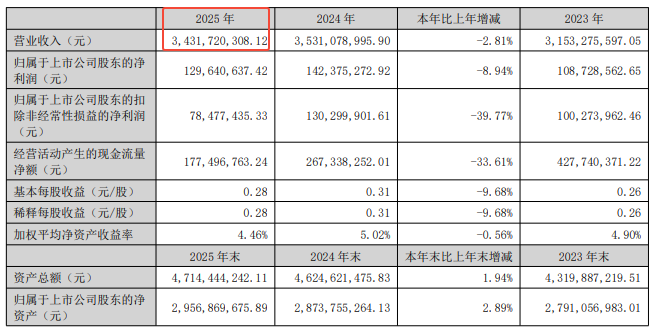
Image source: Shenzhen Stock Exchange
Let us break it down and see how Deerma, relying on small home appliances, built a big business with annual revenue at the level of several billion yuan?
E-commerce people entering manufacturing, avoiding several detours
When talking about Deerma’s entrepreneurial background, its advantages belong to the “alternative” group.
Most home appliance players follow the route of first doing OEM and then building their own brands. Although this model can build solid production and supply chain capabilities, its shortcomings are also obvious:Teams are often unfamiliar with the logic of e-commerce operations.
Deerma’s path is exactly the reverse. Founder Mr. Cai and his team initially did brand visual design; seeing limited growth space in the design business, they naturally entered the agency operation of home appliance e-commerce.
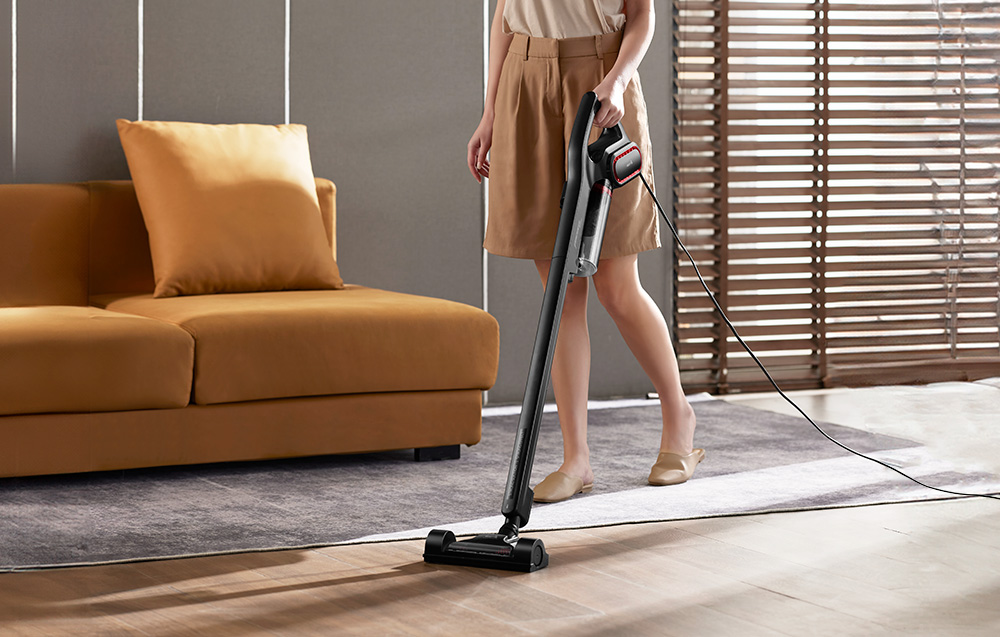
Image source: Google
In the process of operating online stores for home appliance brands, they thoroughly understood platform rules, traffic playbooks, and user needs; the GMV they handled once exceeded RMB 10 billion, and they gained a thorough understanding of e-commerce logic.
They did not start as a factory, nor were they purely engineer-driven developers; rather, a group of people who understood e-commerce entered manufacturing in reverse.
They are naturally familiar with online user feedback and good at defining products based on platform data. From the starting stage, they were already one step ahead.
Focus on segmented tracks ignored by big companies and tap incremental growth
In 2011, Deerma's own brand Deerma began to get off the ground. Leveraging the e-commerce experience accumulated from prior agency operations, it launched small home appliances for home cleaning and environmental categories, such as vacuum cleaners and humidifiers.
Choosing the home appliance track is inseparable from its deep roots in Shunde. Foshan's Shunde is a globally renowned home appliance industry cluster, with highly mature supporting supply chains for molds, injection molding, and assembly, laying a solid foundation for in-house R&D and production.
In terms of product selection, Deerma focuses on finding opportunities in “small needs.”
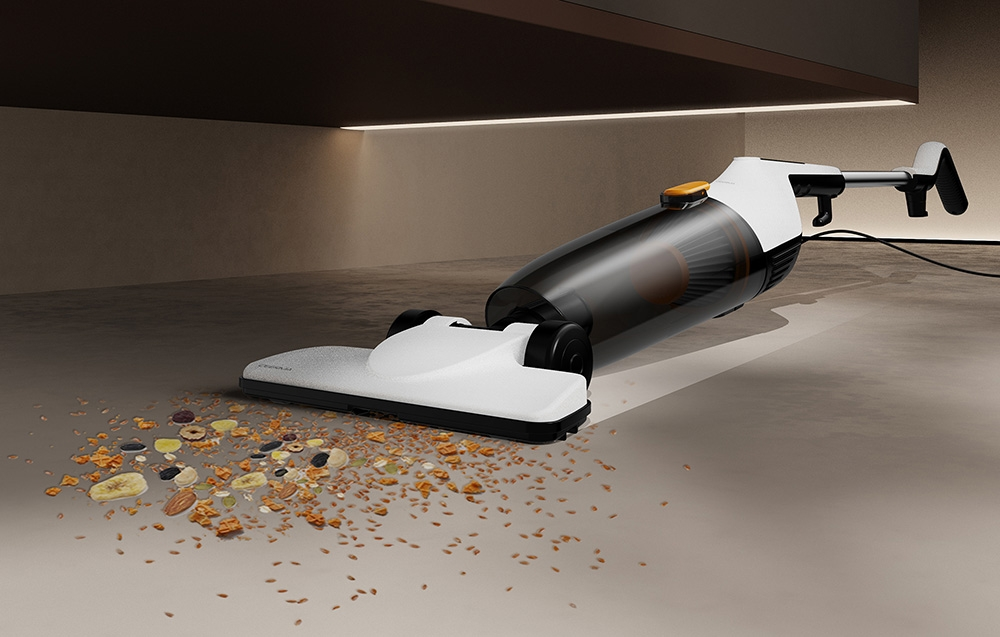
Image source: Google
Consumers are no longer satisfied only with traditional major appliances and standard vacuum cleaners; demand for niche items such as car vacuum cleaners, desktop humidifiers, foldable garment steamers, and portable fascia guns has gradually risen.
Deerma then targets such products and leverages its own advantages. It captures platform reviews, negative reviews, and search keywords to reverse-engineer new product development; relying on the Shunde supply chain, it achieves rapid small-batch prototyping to lower the trial-and-error cost of new products.
By capturing these niche categories ignored by traditional major manufacturers, it has achieved its own results step by step.
A multi-brand division-of-labor layout to jointly revitalize the small home appliance market
However, Deerma's growth does not rely only on a single own brand, but on the coordinated efforts of a multi-brand matrix.
Several key stages are clearly visible:
1. 2014-2018: Integrated R&D, production, and sales stage
During this stage, Deerma began building its own factories and production lines, shifting from pure brand trading to deep in-house R&D and production, connecting the local Shunde supply chain and moving away from its previous simple OEM model.
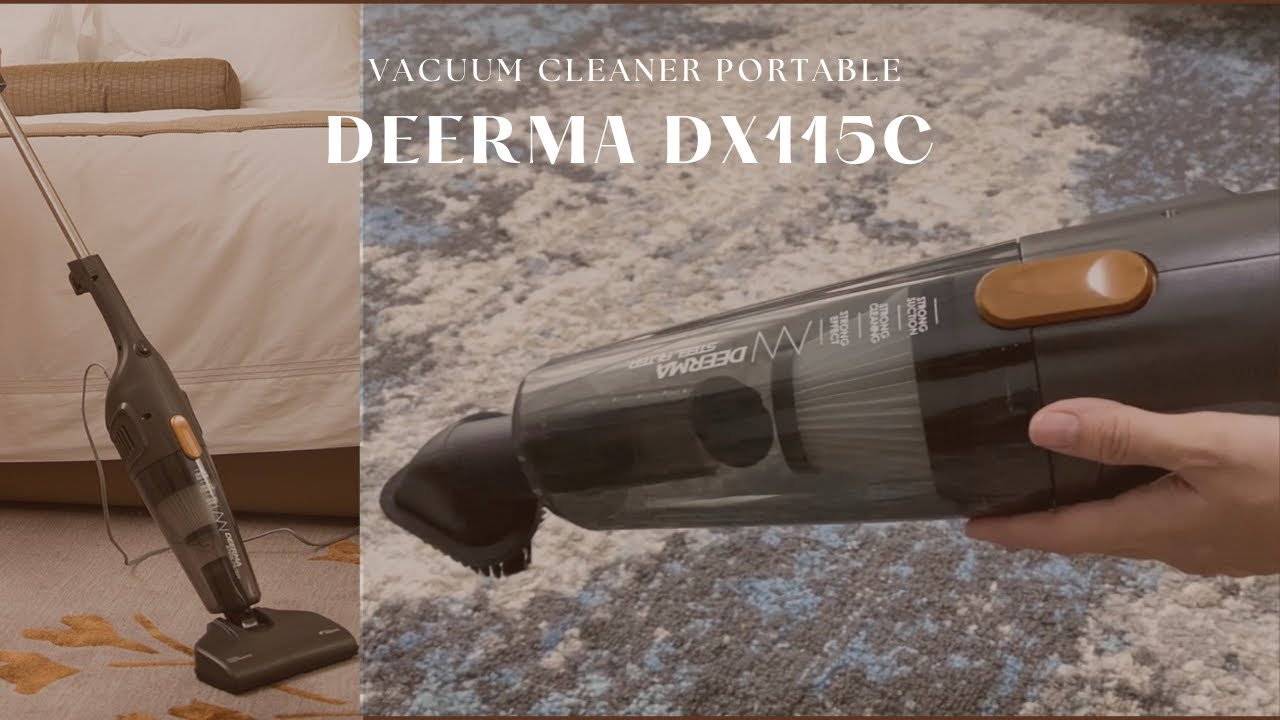
Image source: Google
2. 2018 to present: Multi-brand M&A + globalization stage
In 2018, Deerma acquired Philips' Greater China water purification business assets and obtained the global brand authorization for the water health category.
After that, it successively obtained exclusive authorization for Philips' mobile massage and personal care categories; at the same time, it incubated its own personal care brand Wellskins, forming a combined matrix of own brands + licensed brands.
The division of labor is also very clear. Deerma focuses on high-cost-performance small home appliances, mainly targeting emerging markets such as Southeast Asia and Eastern Europe; Philips relies on its brand credibility to position itself in high-end water health appliances; Wellskins deeply cultivates the domestic beauty and personal care track.
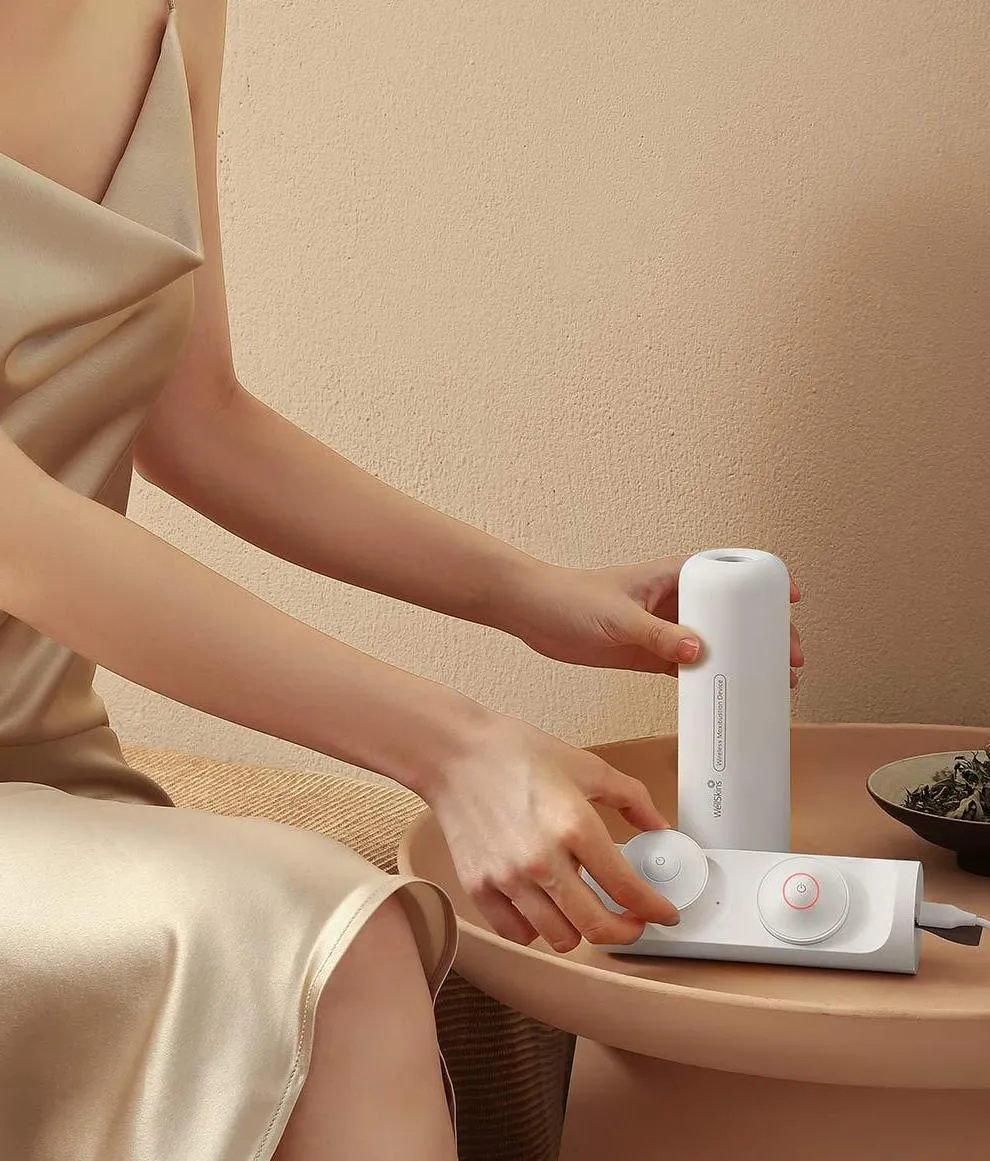
Image source: Google
Under this multi-brand synergy strategy, revenue has steadily increased. In May 2023, Deerma was successfully listed on the ChiNext Board of the Shenzhen Stock Exchange; by 2025, its total annual revenue had exceeded 34.32 hundred million yuan.
Going global: the channel no one can avoid
But going global is not that simple. Having good categories, supply chain, market insights, and data capabilities alone is far from enough; what Deerma also cannot avoid is the operation of online and offline channels.
On the online side, third-party cross-border marketplaces such as Amazon are the main battlegrounds for overseas shipments of Deerma cleaning appliances, Philips water health products, and Wellskins beauty devices.
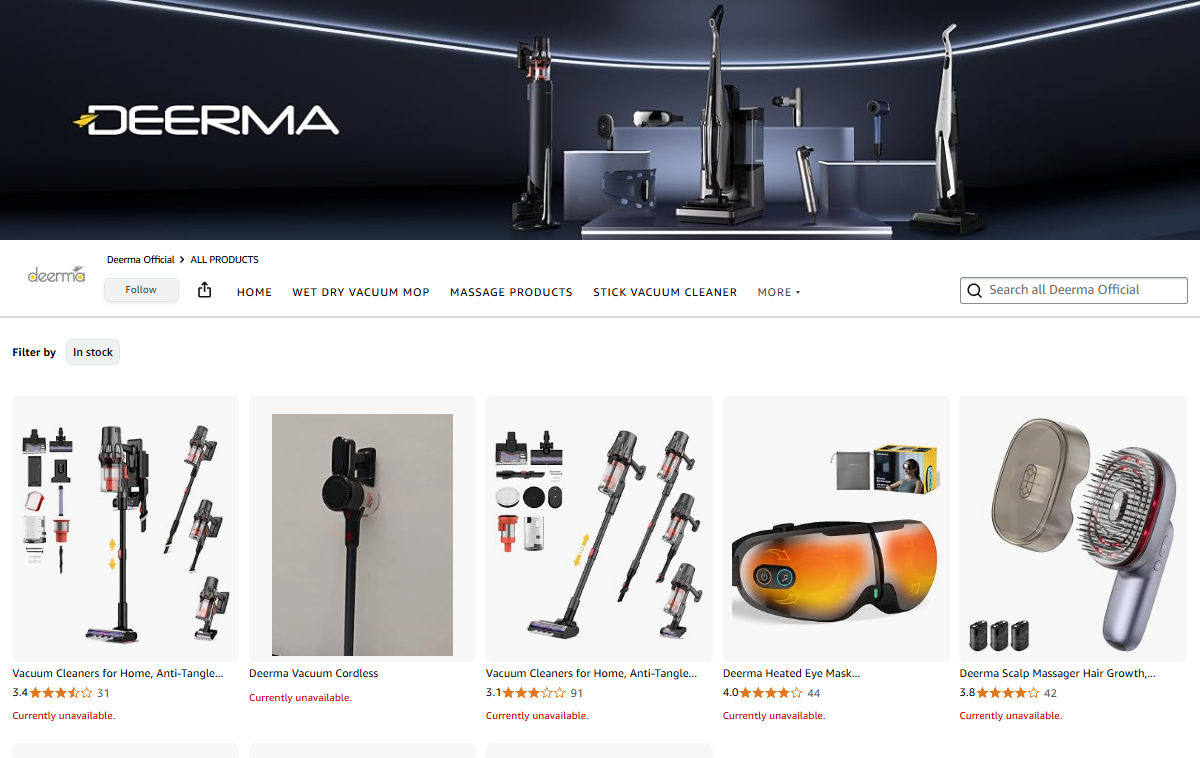
Image source: Amazon
At the same time, the company has also set up independent sites in multiple regions as supplementary DTC channels. These are used to hedge against risks such as platform account bans and traffic fluctuations, accumulate brand assets, and collect first-hand overseas user feedback to feed back into product R&D.
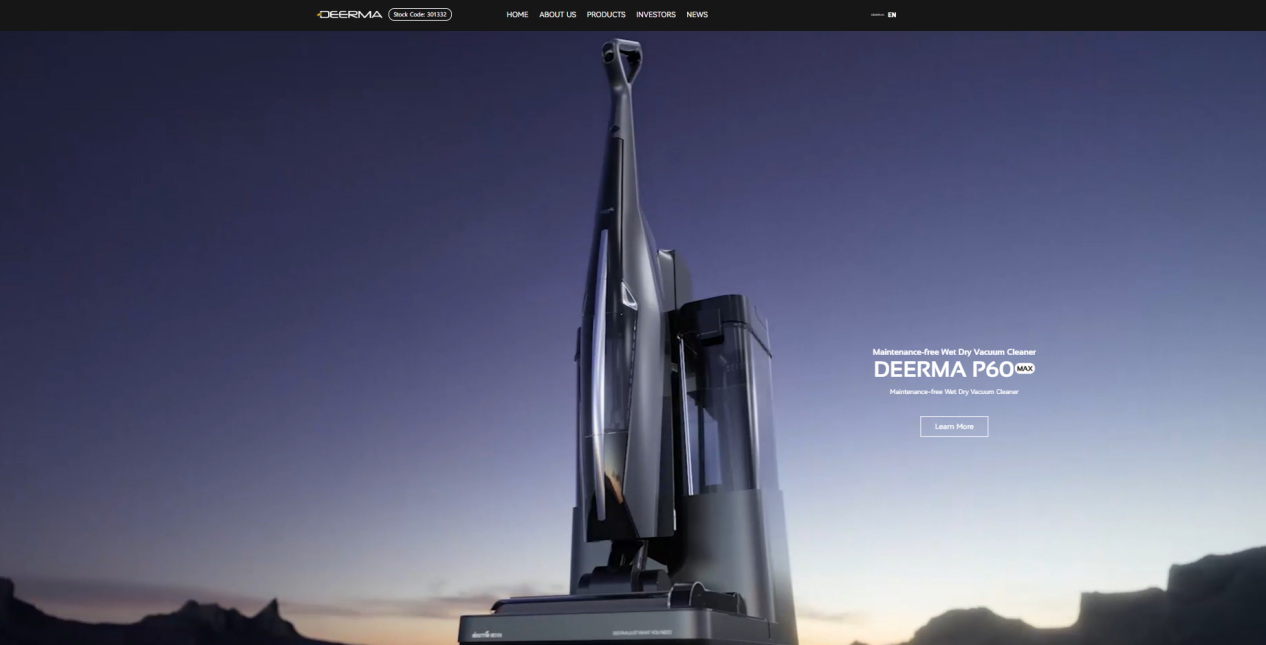
Image source: Deerma
On the offline side, Deerma mainly relies on cooperation with overseas distributors and entry into supermarkets. Combined with its B2B ODM manufacturing business, it supplies overseas brands.
This helps absorb idle capacity and, through OEM/ODM work, get closer to overseas offline markets and understand local consumer preferences.
This layered operating system—linking online and offline, platforms with independent websites, and owned brands with licensed brands—supports its pace of globalization.
Social media operations open up larger overseas markets
In addition, one of Deerma's standout moves in going global is front-loading content seeding and integrating it with its domestic short-video operations experience. It uses localized content and a layered influencer matrix, rather than directly translating and uploading domestic materials.
This is especially evident in its TikTok operations for the Deerma brand.
First, it built local accounts for key target Southeast Asian countries such as the Philippines, Vietnam, Thailand, and Indonesia.
Among them, @Deerma Philippines, created for the Philippine market, has the largest follower base, reaching 162,500.
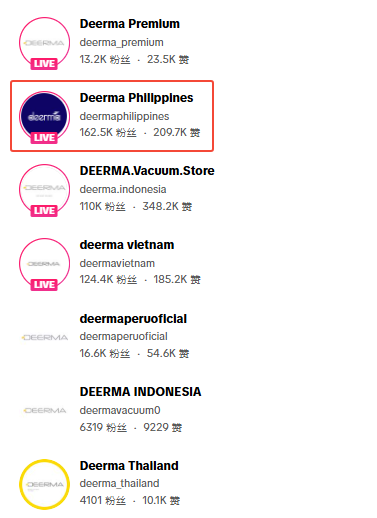
Image source: TikTok
The account content focuses on being intuitive and authentic, mostly using real-shot clips with minimal embellishment and no flashy editing to directly show product cleaning results, so users can quickly understand the product's capabilities when they scroll to a video.
This plain, down-to-earth authenticity is precisely the key to winning over local consumers and driving order conversions.
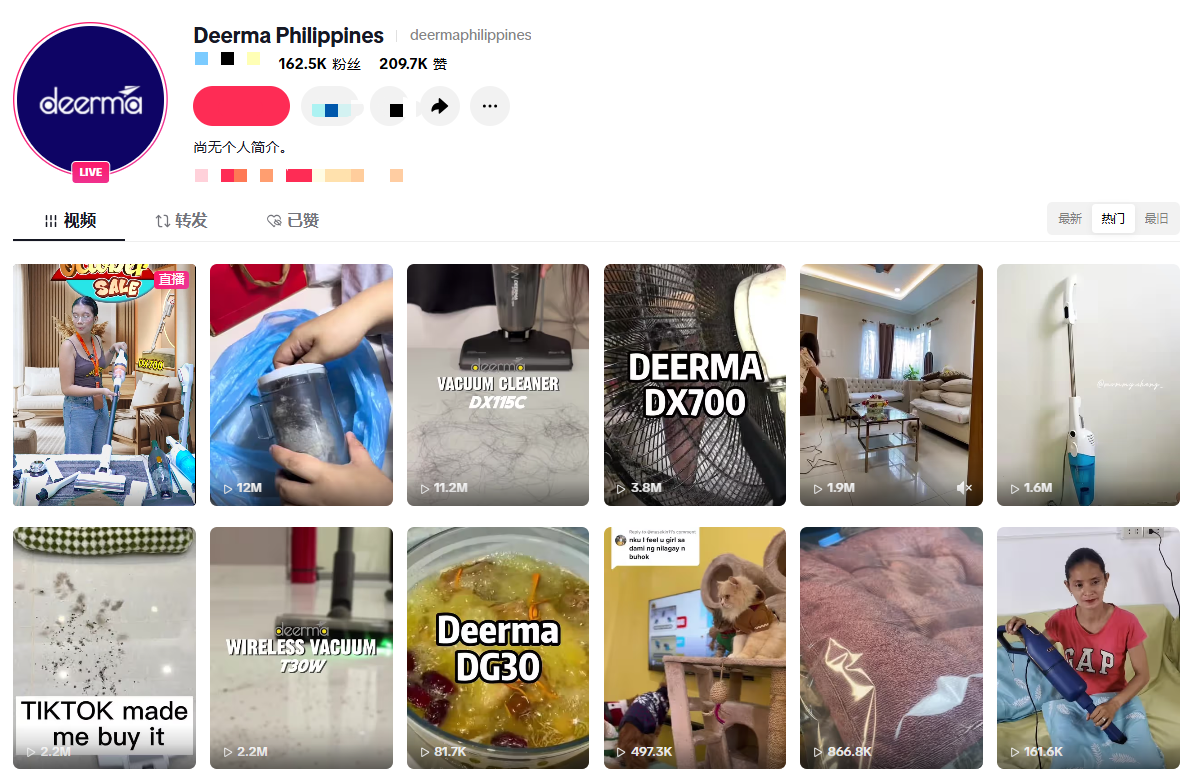
Image source: TikTok
In addition to short videos, livestream selling is also an important conversion channel for it.
For example, during the recent October promotion, @Deerma Philippines has maintained high-frequency, uninterrupted livestreams.
In the livestream room, hosts demonstrate the various functions of small home appliances in real settings and intuitively show usage results; at the same time, they reply one-on-one to questions in the comment section in real time, promptly dispelling users' concerns and driving transactions.

Image source: TikTok
At the same time, collaborating with local home vertical influencers in Southeast Asia is also a core tactic for Deerma on TikTok.
Influencers produce a large number of short videos featuring unboxing and assembly and real home-cleaning tests, seeding interest through real trial scenarios.
This kind of content, in which local influencers personally try the products, is more persuasive and makes it easier to gain the trust of ordinary consumers.
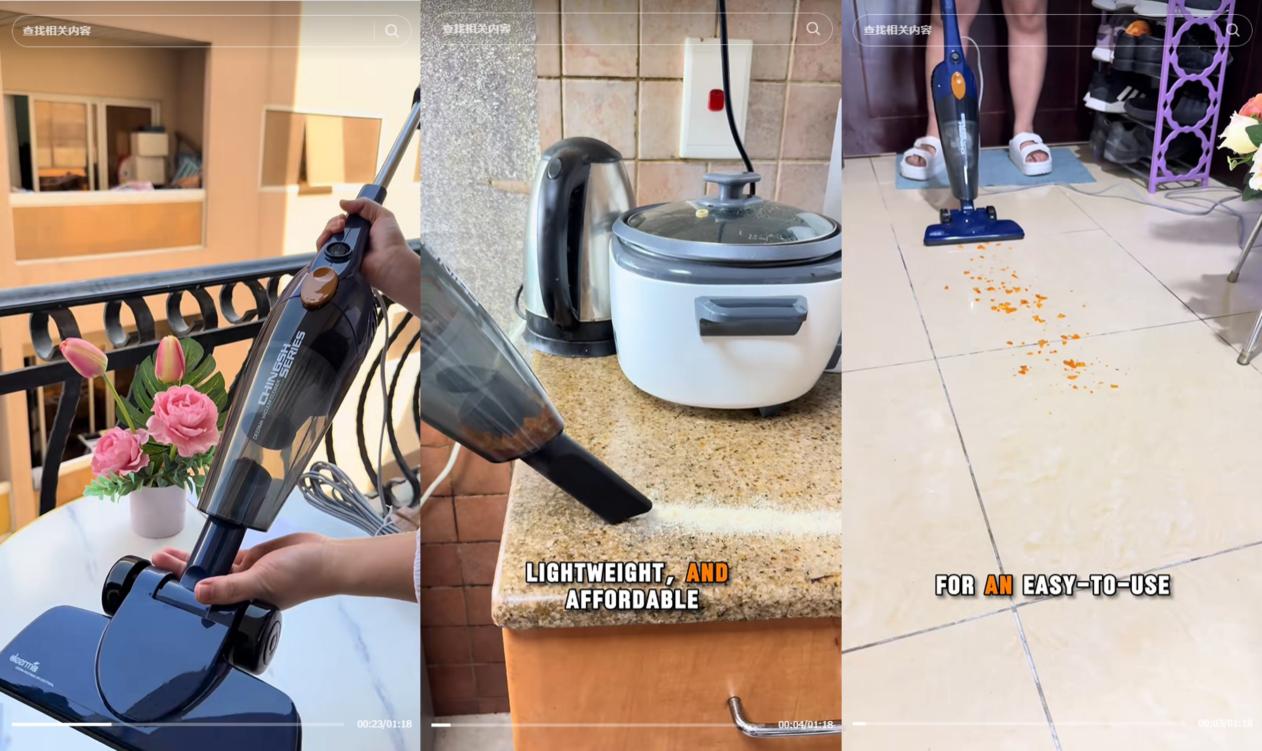
Image source: TikTok
Conclusion
Deerma's uniqueness,is the combination of e-commerce operations capability + Shunde supply chain + multi-brand assets + channel and social media efforts.
It does not belong to the traditional factory-style overseas expansion of home appliance manufacturers, but is a typical cross-border example that is inherently good at relying on content and user feedback to reverse-define small home appliance products.
For domestic companies that plan to enter or are already deeply cultivating the overseas expansion track, they can absolutely refer to this approach,and perhaps they can also carve out a brand path of their own.