 28
28According to survey data jointly released by CNDL, SPC Brasil and Offerwise Pesquisas, among Brazilian consumers who completed purchases directly within social platforms in the past six months, 24% chose TikTok, while Instagram and YouTube had only 17% and 12%, respectively.
Image source: Google
This is the first time TikTok has topped Brazil's social shopping sector, and it also means Instagram's long-held top spot has officially changed hands.
For practitioners following the going-global track, this is not just a ranking change, but a market signal: the focus of social e-commerce competition is shifting from who is better at seeding interest to who is better at closing sales.
From seeding to closing sales, TikTok has flattened the funnel
The core reason TikTok has been able to break out this time is that it has torn down the wall between content and transactions.
Short videos and livestreams are responsible for attracting attention, while the in-app shop is responsible for capturing the purchase action. After users see a desired product, they do not need to leave the app and can complete the order directly in the same interface. This see-it-and-buy-it experience has changed the platform's role from a place to discover products to a place to complete purchases.
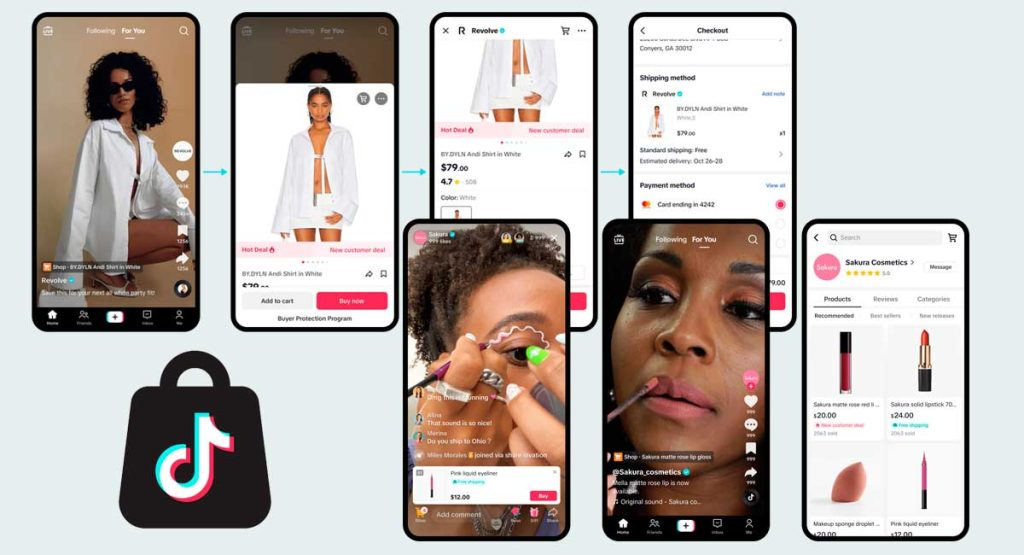
Image source: Google
In the past, social platforms mostly played a seeding role. After users were moved by content, they still had to go to other e-commerce platforms to search, compare prices, and place orders, and the churn rate in between was self-evident. TikTok has compressed this step, so transaction efficiency is naturally different.
The conditions of the Brazilian market itself are also amplifying the advantages of this model. Brazil has about 139 million online shoppers, of whom 49% of consumers completed a transaction directly within social media in the past six months.
This means social e-commerce in Brazil is not a niche play, but a consumption habit that already has considerable scale. TikTok getting its conversion funnel working at this point is equivalent to hitting the market rhythm.
For cross-border sellers, the logic of traffic distribution has changed
The most direct impact of this ranking change on sellers is the rewriting of traffic distribution rules.
In the past, many sellers focused their efforts in the Brazilian market mainly on Instagram, using images and short videos for brand exposure, and then guiding users to external links to complete transactions. But now TikTok has proven that it can not only bring exposure, but also directly bring orders, and with higher efficiency.
If sellers still treat TikTok as merely a traffic-driving channel, and do not operate in-app shops and livestream transactions, they may miss this round of growth window.
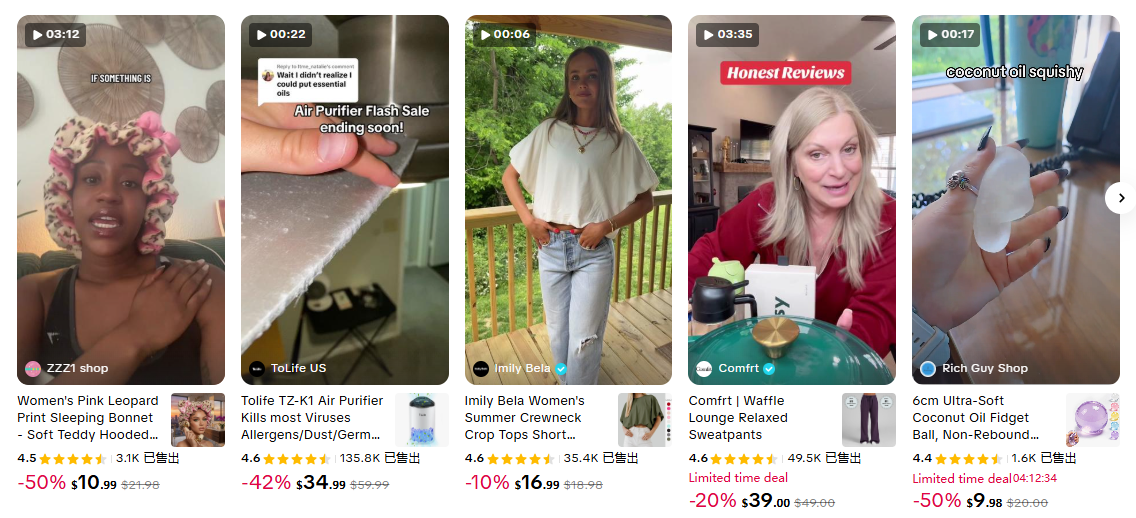
Image source: TikTok Shop
In terms of response strategies, sellers need to re-examine their content layout in the Brazilian market.
First, content formats should be closer to transaction scenarios. Short videos and livestreams should not only pursue views, but also consider whether they can push viewers into the ordering stage.
Second, the operational capabilities of in-app shops will become increasingly important, including product listing, inventory management, logistics fulfillment, and after-sales handling. If these links cannot keep up, traffic will not be captured even when it arrives.
Third, sellers may need to reallocate budgets and manpower, tilting more resources toward TikTok's closed-loop ecosystem, rather than continuing to treat Instagram as the only social e-commerce battlefield.
Where will platform competition go?
For platforms themselves, TikTok's rise to the top means that social e-commerce competition has entered a new stage.
After Instagram gives up the top spot, it will most likely accelerate making up for its own in-app transaction capabilities, such as optimizing shopping features, strengthening livestream e-commerce tools, and shortening the path from seeing to buying.
Although YouTube currently ranks third, it has deep accumulation in video content and creator ecosystem, and it will not easily give up the social e-commerce pie in the future.
It is foreseeable that competition in Brazil's social commerce will gradually shift from who has better-looking content to who has a smoother sales conversion loop.

Image source: Google
Conclusion
TikTok surpassing Instagram for the first time in Brazil's social shopping space is a microcosm of social commerce moving from generating interest to completing transactions.
Brazil has 139 million online shoppers, and nearly half of consumers have already placed orders directly within social media; the foundation of this market is deep enough.
Whoever can connect content into a closed loop that drives transactions will get a ticket to the next round of growth.