 1205
1205
Nếu bạn làm thương mại điện tử ở Indonesia, gần đây chắc hẳn bạn đã nghe những lời phàn nàn như thế này:“Thứ Hai đăng nhập vào back-end, tỷ lệ phí và quy tắc vẫn là công thức quen thuộc; đến thứ Sáu nhìn lại, hóa đơn thanh toán như thể đã đổi sang một nền tảng khác.”
Loại“thay đổi quy tắc lén lút”cách chơi này cuối cùng đã buộc chính phủ Indonesia phải ra tay.
Không phải không cho kiếm tiền, mà là không thể muốn tăng là tăng
Từ giữa tháng 5, hàng loạt tuyên bố công khai của Bộ Doanh nghiệp Siêu nhỏ, Nhỏ và Vừa Indonesia (Kemenkop UKM) đã đưa một vấn đề lên bàn: hành vi thu phí của các nền tảng thương mại điện tử lớn cần phải được quản lý.
Bộ trưởng Maman·Abdurrahman nói rất thẳng thắn: nền tảng và người bán phải ký thỏa thuận hợp tác về phí ít nhất một năm, trong năm đó, nền tảng không thể đơn phương tăng hoa hồng hoặc phí dịch vụ. Thực sự muốn điều chỉnh? Có thể, nhưng phải thông báo trước ít nhất ba tháng, để người bán có thời gian tính toán, ra quyết định và điều chỉnh kinh doanh.
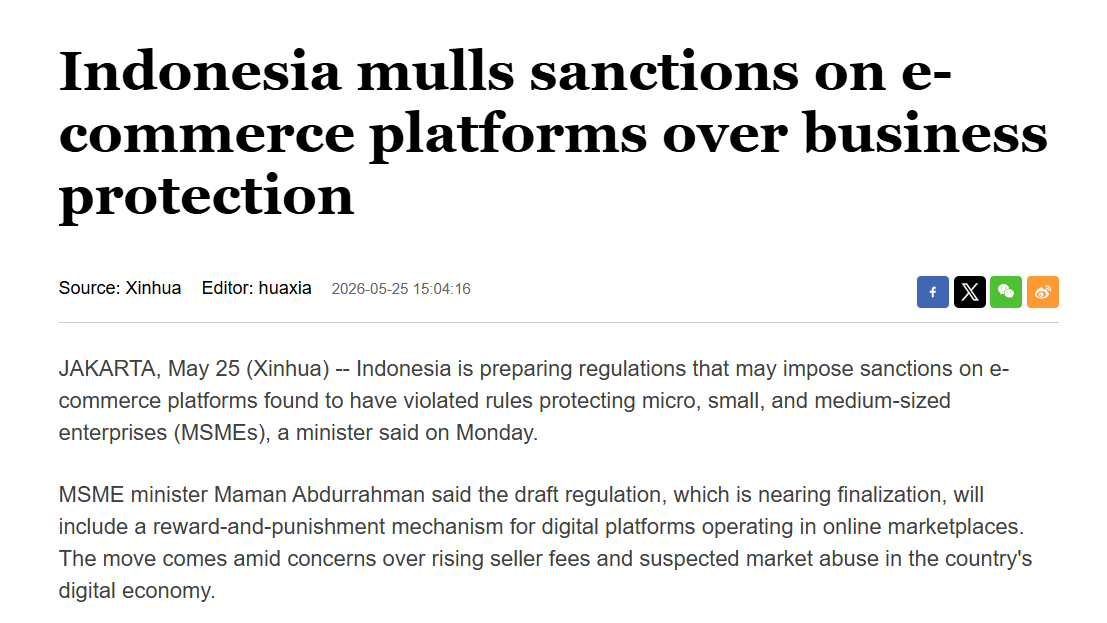
Nguồn ảnh:english.news
“Hoa hồng đã thỏa thuận, sao lại thay đổi?”
Trong vài năm qua, những người bán thương mại điện tử Indonesia thực sự không dễ dàng. Ba nền tảng thương mại điện tử lớn Đông Nam Á,Shopee, Tokopedia, Lazada, đua nhau tăng tỷ lệ hoa hồng, điều chỉnh cơ chế miễn phí vận chuyển và tung ra đủ loại phí mới.
Lấy chuyện gần đây làm ví dụ,TikTok Shop ở Indonesia do Tokopedia vận hành, từ nửa cuối năm 2025 bắt đầu thu phí xử lý đơn hàng 1250 Rupiah Indonesia cho mỗi đơn hàng giao thành công, và bất kể đơn hàng có một món hay mười món, chỉ cần đã giao hàng là thu. Biết rằng, theo khảo sát của Hiệp hội Thương mại điện tử Indonesia, có 65% người bán có giá trị đơn hàng trung bình dưới 50.000 Rupiah Indonesia, khoản phí dịch vụ cơ bản này chiếm tỷ lệ không nhỏ trong giá bán.

Nguồn ảnh:Google
Hoa hồng càng ngày càng tăng cao.Tokopedia vào tháng 10 năm 2025 đã tăng toàn diện hoa hồng cho người bán trên sàn, tỷ lệ phí cho ngành hàng điện tử từ 1%-8.5% ban đầu được điều chỉnh trực tiếp lên 2.5%-10.2%, cao nhất vượt quá 10%. Ngành thời trang, hàng tiêu dùng nhanh cũng tăng theo, cao nhất cũng lên tới 10.2%. Có người bán tính toán, sau khi phí nền tảng tăng, nếu không tăng giá, lợi nhuận gộp của sản phẩm giảm khoảng 30%.
Có người bán phàn nàn trên mạng xã hội, nói rằng nền tảng lần này tăng xong, lần sau lại tìm lý do để tiếp tục tăng, bán hết hàng tồn là chuẩn bị về quê trồng trọt.
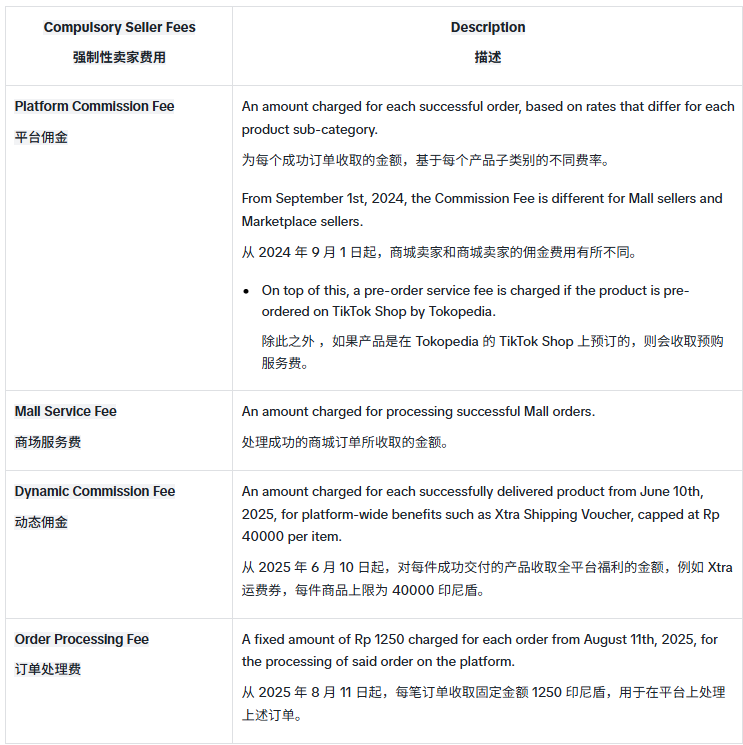
Nguồn ảnh:TikTok Shop by Tokopedia
Chính phủ đem các khoản thu phí“phân loại”
Người bán còn có một nỗi đau: các khoản phí của nền tảng quá lộn xộn và phức tạp.Nền tảng A gọi một tên, nền tảng B lại đổi cách gọi khác, khiến mọi người mơ hồ.
Quy định mới dự định giải quyết vấn đề này cùng lúc. Theo ý tưởng của chính phủ, các nền tảng sẽ không thể tùy tiện thiết lập nhiều loại phí khác nhau nữa, tất cả các khoản phí sẽ được rút gọn thành ba loại chính.—— phí đăng ký, phí dịch vụ và phí quảng cáo. Bộ trưởng Maman giải thích rằng thực chất cốt lõi của việc thu phí chỉ có ba phần này, chỉ là cách gọi khác nhau ở các nền tảng khác nhau, khiến mọi người lầm tưởng có nhiều danh mục.
Ngoài ra, chính phủ cũng khuyến khích các nền tảng giảm phí dịch vụ cho các doanh nghiệp siêu nhỏ, nhỏ và các thương nhân bán hàng nội địa, mức giảm tối đa có thể lên đến 50%, bảo vệ các doanh nghiệp quy mô nhỏ, không để họ ở vị thế hoàn toàn bất bình đẳng khi cạnh tranh với các doanh nghiệp lớn.

Nguồn hình:Internet
Nhìn một cách khách quan, bộ“cú đấm kết hợp” nếu thực sự được thực thi, có thể mang lại một số thay đổi cho cách chơi thương mại điện tử Indonesia. Trước đây, các nền tảng thương mại điện tử hàng đầu do nắm giữ lợi thế về lưu lượng và kênh phân phối, thường chiếm vị thế chủ đạo tuyệt đối trong hợp tác với người bán. Các biện pháp như hợp đồng một năm, thông báo trước khi hết hạn, không được đơn phương điều chỉnh giá do quy định mới đề ra, phần lớn đang thúc đẩy mối quan hệ bình đẳng hơn giữa nền tảng và người bán.
Đối với những người bán hàng hàng ngày phải lo toan tính toán sổ sách trên hậu trường của nền tảng, hành động lần này của chính phủ có lẽ sẽ giúp họ tìm lại được cảm giác an tâm trong kinh doanh. Dù sao, chỉ khi người bán thực sự kiếm được tiền, toàn bộ hệ sinh thái thương mại điện tử mới thực sự hoạt động được.