 2213
2213Ngay vàongày 21 tháng 4, một tin tức trọng đại lan truyền khắp giới thương mại xuyên biên giới Đông Nam Á: Thượng viện Thái Lan chính thức trình một đề án cải cách thuế bao quát rộng, trong đó khiến các nhà bán hàng xuyên biên giới căng thẳng nhất là——TikTok, Alibaba, eBay và các doanh nghiệp số nước ngoài khác, dù không thành lập thực thể tại Thái Lan, nhưng nếu có doanh thu phát sinh tại Thái Lan, thì phải nộp thuế thu nhập doanh nghiệp với mức thuế suất 20%.
Điều này có nghĩa là, thương mại điện tử xuyên biên giới Thái Lanmảnh ghép cuối cùng của 'cổ tức thuế thấp' có thể thực sự biến mất.
Nguồn ảnh: Internet
Chính phủ'nghèo rồi', chế độ thuế không thể không cải cách
Tại sao Thái Lan lại mạo hiểm với rủi ro biến động thị trường, đột nhiên ra tay với các nền tảng thương mại điện tử lớn? Câu trả lời rất đơn giản: chính phủ thực sự không còn tiền.
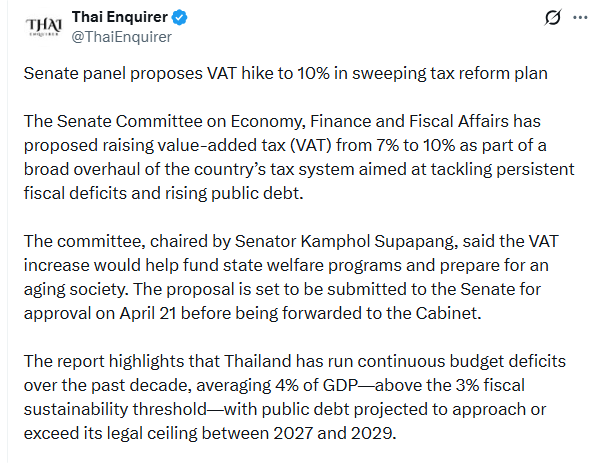
Theo báo cáo khảo sát do Thượng viện Thái Lan công bố, trong mười năm qua, thâm hụt ngân sách của Thái Lan trung bình chiếm khoảng tổng sản phẩm quốc nội (GDP) là 4%, vượt xa mức cảnh báo an toàn 3% do kỷ luật tài khóa quy định. Không chỉ vậy, ủy ban này còn dự đoán, trong giai đoạn 2027-2029, tỷ lệ nợ công so với GDP của Thái Lan rất có thể 'bùng nổ', tiến gần hoặc thậm chí vượt ngưỡng trần pháp định.
Ủy ban Kinh tế và Xã hội Quốc gia Thái Lan cũng công khai cảnh báo rằng, dự kiến đếnnăm 2029, nợ chính phủ Thái Lan có thể tiến gần 69,3% GDP, đồng thời thu nhập từ thuế của chính phủ lâu nay ở mức thấp, cộng với áp lực tài chính to lớn từ già hóa dân số, nếu không tiến hành cải cách thuế, tương lai có lẽ đến phát lương cũng phải vay tiền. Chủ tịch ủy ban Kamphon Suphaphaeng chỉ rõ, các chính sách thuế thiển cận trước đây nhằm lấy lòng cử tri đã khiến ngân khố thu không đủ chi, cần phải tăng thu nhập chính phủ thông qua cải cách thuế cơ cấu kiểu 'gội xương trừ độc'.
Nguồn ảnh:x
TikTok, Alibaba, eBay không thoát được: không có thực thể ở nước ngoài cũng phải nộp 20%
Trong đề án cải cách lần này, điều khiến giới xuyên biên giới rung động nhất, không gì khác ngoài việc nhắm vào các doanh nghiệp số nước ngoài'điều khoản thuế nặng'.
Theo quy định mới, nhưTikTok Shop, eBay, Alibaba (Alibaba) và các nền tảng số nước ngoài khác có lượng người dùng lớn tại Thái Lan nhưng không có tổ chức thực thể chính thức, chỉ cần phát sinh doanh thu thương mại trên lãnh thổ Thái Lan, thì phải ngoan ngoãn nộp 20% thuế thu nhập doanh nghiệp.
Trước đây, các nền tảng này lợi dụngkhoảng trống hoạt động 'không thực thể thì không nộp thuế', đã lâu dài hưởng lợi tức thuế cực kỳ ưu đãi, từ đó có thể thu hút lượng lớn người tiêu dùng Thái Lan với giá cực thấp, khiến các nhà bán hàng bản địa kêu trời. Tuy nhiên, hiện nay chiếc ô bảo vệ này sẽ bị chọc thủng hoàn toàn.
Ngoài thuế thu nhập tại trụ sở chính, đề án cải cách còn yêu cầu các nền tảng thương mại điện tử lớn đóng vai trò'người gác cổng thuế', bắt buộc khấu trừ 2% thuế thu nhập tạm tính đối với thu nhập của người bán. Điều này có nghĩa là, những ngày trước đây người bán kiếm được tiền trên thị trường Thái Lan mà không cần chủ động khai báo, sẽ hoàn toàn kết thúc.
Đợt thao tác này đối với Bộ Tài chính Thái Lan có thể nói là một mũi tên trúng hai đích: vừa trực tiếp khóa thuế từ nguồn, ngăn chặn dòng vốn chảy ra ngoài, lại vừa có thể vớidanh nghĩa “cạnh tranh công bằng” để trấn an các doanh nghiệp vừa và nhỏ trong nước vốn bị đàn áp.
Nguồn ảnh: Internet
Thuế giá trị gia tăng tăng lên10%, chi phí của người bán lại tăng cao
Nếu nóiThuế thu nhập doanh nghiệp 20% và thuế khấu trừ 2% chỉ dừng lại trên sổ sách doanh nghiệp, thì việc tăng thuế GTGT từ 7% lên 10% là một cơn chấn động giá cả toàn diện ảnh hưởng đến toàn bộ người tiêu dùng.
Để hỗ trợ chi tiêu phúc lợi xã hội ngày càng cao, ủy ban nhất trí đề xuất tăng thuế suất GTGT tiêu chuẩn lên3 điểm phần trăm. Để bịt kín hoàn toàn lỗ hổng thuế, Thái Lan sẽ triển khai hệ thống hóa đơn điện tử bắt buộc, và bãi bỏ ngưỡng miễn thuế GTGT cho doanh nghiệp nhỏ. Ủy ban thậm chí đã mở rộng ý tưởng, đưa ra “cơ chế xổ số hóa đơn”, khuyến khích người tiêu dùng chủ động yêu cầu hóa đơn, nhằm nâng cao tỷ lệ tuân thủ thuế.
Mặc dù Nội các lâm thời Thái Lan từ lâu đãvào tháng 9 năm 2025 đã quyết định gia hạn tạm thời mức thuế ưu đãi 7% đến ngày 30 tháng 9 năm 2026, nhằm giảm thiểu tác động trực tiếp đến đời sống dân sinh và sự phục hồi kinh tế mới bắt đầu, nhưng đề án lần này rõ ràng đã chính thức đưa việc tăng thuế suất vào chương trình nghị sự, logic định giá của người bán trong tương lai phải tính toán lại.
Nguồn ảnh:thethaige
Hoặc vận hành tinh gọn, hoặc bị đào thải
Loạt đòn thuế mạnh mẽ này liên tiếp giáng xuống, gửi một tín hiệu cực kỳ rõ ràng tới tất cả các nhà bán hàng xuyên biên giới đang khai thác thị trường Thái Lan: dựa vàothời đại kinh doanh thô sơ “lách kẽ hở” và bán phá giá thấp đã không còn quay lại.
Không có gì nghi ngờ, cùng vớicác nền tảng lớn như TikTok, eBay bắt đầu khấu trừ và nộp thuế hộ, nhiều tiểu thương nhỏ lẻ không tuân thủ sẽ buộc phải tăng giá bán, từ đó mất đi năng lực cạnh tranh cốt lõi. Nghiêm trọng hơn, nếu người bán không thể cung cấp hóa đơn chính thức và được giám sát thuế, hàng hóa của họ rất có thể sẽ bị tịch thu trực tiếp trong hệ thống kiểm tra gắt gao mới.
Là thị trường thương mại điện tử lớn thứ hai Đông Nam Á, động thái này của Thái Lan rất có thể tạo ra hiệu ứng domino giữa các nước láng giềng như Indonesia, Malaysia, đưa đường đua cạnh tranh thương mại điện tử toàn khu vực Đông Nam Á từ“cuộc chiến giá” chuyển sang “cuộc chiến tuân thủ” và “cuộc chiến chất lượng” ở chiều cao hơn.
Đối với người bán, nếu còn muốn tiếp tục kiếm tiền tại thị trường Thái Lan, ngay bây giờ phải hành động ngay: tính toán lại không gian lợi nhuận gộp, điều chỉnh chiến lược định giá sản phẩm, nhanh chóng có đượccác chứng nhận bắt buộc như TISI và FDA. Chỉ có sớm chấp nhận tuân thủ, tính toán rõ ràng, mới có thể giữ được mạng sống trong cơn bão cải cách thuế này của Thái Lan và tìm kiếm cơ hội tăng trưởng mới.