 1518
1518
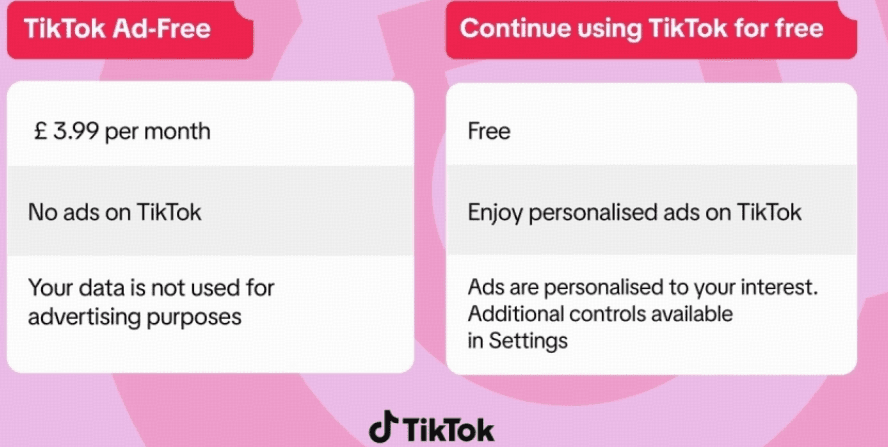
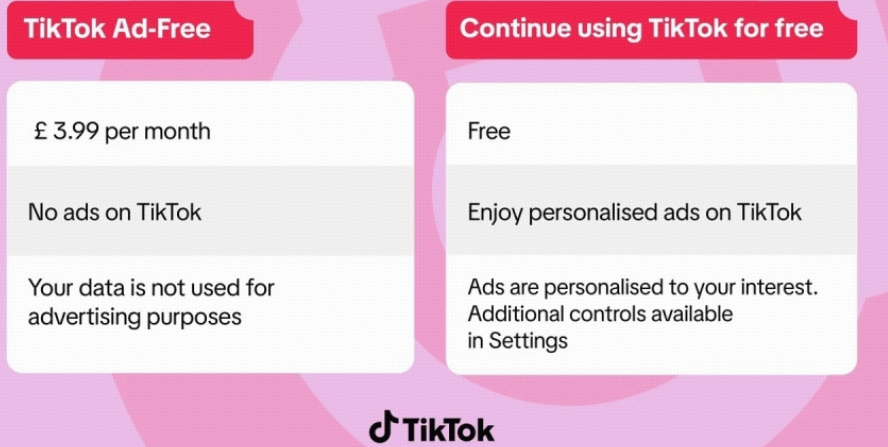
Gần đây, các nền tảng video ngắnTikTok công bố tin tức quan trọng, trong vài tháng tới sẽ triển khai TikTok Ad tại thị trường Anh.-Dịch vụ đăng ký miễn phí không quảng cáo。Sau khi đăng ký, người dùng sẽ không còn thấy quảng cáo trực tiếp từ nền tảng, thông tin cá nhân cũng sẽ không được sử dụng để nhắm mục tiêu quảng cáo; đồng thời, chế độ miễn phí sẽ được giữ nguyên, người dùng chưa trả phí vẫn có thể tiếp tục sử dụng bình thường.TikTok, nhận nội dung quảng cáo được cá nhân hóa, trải nghiệm cốt lõi của nó sẽ không bị ảnh hưởng gì, vẫn có thể truy cập tất cả các tính năng và nội dung.
Nguồn ảnh:TikTok
Thực tế,TikTok đã thử nghiệm nội bộ mô hình đăng ký không quảng cáo từ năm 2023, và việc triển khai đầu tiên tại Anh lần này rõ ràng có liên quan chặt chẽ đến môi trường quản lý dữ liệu nghiêm ngặt tại thị trường châu Âu.
Meta trước đó đã triển khai các gói trả phí không quảng cáo tương tự tại Anh, Pháp, Đức và các quốc gia khác, với giá trên thiết bị di động cũng là 3,99 bảng Anh mỗi tháng. Trước nhu cầu ngày càng tăng của người dùng về trải nghiệm quảng cáo và kiểm soát quyền riêng tư, TikTok lần này đã chọn chủ động theo sau.
Nền tảng cho biết rõ ràng rằng động thái này không nhằm biến toàn bộ nền tảng thành sản phẩm trả phí, mà là cung cấp cho người dùng"Nhiều quyền kiểm soát hơn", đồng thời đảm bảo mô hình hỗ trợ quảng cáo tiếp tục phục vụ cho doanh nghiệp, đặc biệt là doanh nghiệp vừa và nhỏ.
Nguồn ảnh: Internet
Ảnh hưởng đến thương mại điện tử xuyên biên giới: Ai sẽ đón nhận bị người dùng?Lưu lượng truy cập bị “lọc” bỏ?
Sau khi TikTok ra mắt gói đăng ký không quảng cáo, nhiều người bán hàng xuyên biên giới ngay lập tức lo lắng: Liệu có nghĩa là tiền đầu tư sẽ đổ sông đổ bể, không ai xem quảng cáo nữa? Đây là nỗi lo trực tiếp nhất. Nhưng sau khi phân tích một cách bình tĩnh, sẽ thấy thách thức thực sự không nằm ở đây.
Về ngắn hạn, tác động thực sự có hạn. Người dùng chọn trả phí để loại bỏ quảng cáo thường chỉ là một phần rất nhỏ trong cơ sở người dùng khổng lồ của nền tảng, phần lớn người dùng vẫn sẽ tiếp tục sử dụng phiên bản miễn phí và xem quảng cáo. Nền tảng cũng đã nêu rõ sẽ tiếp tục duy trì mô hình hỗ trợ quảng cáo, các doanh nghiệp vừa và nhỏ vẫn có thể dựa vàoTikTok tiếp cận người tiêu dùng mục tiêu, mở rộng quy mô kinh doanh, dịch vụ quảng cáo của TikTok sẽ không suy giảm vì sự xuất hiện của đăng ký không quảng cáo.
Nhưng điều thực sự đáng để các doanh nghiệp thương mại điện tử xuyên biên giới chú ý, chính là những thay đổi mang tính cấu trúc mà mô hình này mang lại cho logic quảng cáo nội bộ dài hạn và thậm chí toàn bộ hệ sinh thái nền tảng. Những người dùng chọn đăng ký không quảng cáo thường là nhóm có mức độ tương tác cao và khả năng chi tiêu cao, họ sẵn sàng trả tiền để có trải nghiệm tốt hơn.
Nếu những người dùng này rời khỏi đối tượng quảng cáo, hiệu quả tiếp cận nhóm tiêu dùng cao cấp của thương hiệu thông qua quảng cáo nguồn cấp dữ liệu sẽ giảm, tỷ suất lợi nhuận đầu tư quảng cáo của nhà quảng cáo có thể vì thế mà suy giảm. Trong tương lai, các nhà quảng cáo cần chú trọng hơn đến các phương thức thu hút khách hàng không phụ thuộc vào quảng cáo cứng như nội dung tự nhiên, hợp tác với người có sức ảnh hưởng, phát trực tiếp bán hàng, về bản chất đây là một cuộc nâng cấp tập thể về năng lực nội dung.
Nguồn ảnh: Internet
Bước ngoặt thực sự: Thương mại điện tử nội dung đón nhậnThời kỳ hoàng kim
Nhìn sâu hơnGói đăng ký không quảng cáo trên TikTok thực chất chỉ loại bỏ quảng cáo cứng do nền tảng phân phối, chứ không phải nội dung tự nhiên từ người sáng tạo, phiên mua sắm trực tiếp hay nội dung từ tài khoản thương hiệu.
Điều này có nghĩa là, ngay cả trong chế độ không quảng cáo, người dùng vẫn có thể thấy các video đánh giá sản phẩm từ người nổi tiếng, video mua sắm theo ngữ cảnh, nội dung thú vị do thương hiệu chính thức phát hành, v.v. Theo logic này, người bán phụ thuộc vào quảng cáo cứng thực sự sẽ bị ảnh hưởng, nhưng người bán dựa vào nội dung để thúc đẩy chuyển đổi lại có thể đón nhận cơ hội mới.
Đối với người bán hàng xuyên biên giới, điều này có nghĩa là phải chuyển trọng tâm tiếp thị từ'bán hàng bằng quảng cáo' sang hoàn toàn 'bán hàng bằng nội dung'. Người dùng ngày càng ít chịu đựng quảng cáo cứng, nhưng luôn có mức độ chấp nhận cao đối với nội dung hữu ích, thú vị và chân thực. Năng lực cạnh tranh cốt lõi của người bán trong tương lai không còn là quy mô ngân sách, mà là sự tổng hợp của khả năng sáng tạo, khả năng thể hiện nội dung và khả năng livestream chuyển đổi.

Nguồn ảnh: Internet
Một xu hướng chậm nhưng không thể đảo ngược
Tất nhiên, người bán hàng xuyên biên giới cũng không cần phải hoảng sợ. Việc ra mắt gói đăng ký không quảng cáo không phải là một bước đột phá ngay lập tức, mà là một quá trình triển khai từ từ, với tác động rất nhỏ đến việc đặt quảng cáo hiện tại.Về phía Tuke cũng chưa công bố liệu gói đăng ký không quảng cáo có mở rộng sang các thị trường khác trong tương lai hay không. Điều người bán cần làm là tối ưu hóa việc phân bổ ngân sách quảng cáo hiện tại một cách phù hợp trong giai đoạn này, đồng thời dần tăng cường năng lực vận hành nội dung và hệ thống hợp tác với người nổi tiếng, để chuẩn bị năng lực cho kỷ nguyên thương mại nội dung.
Nhìn từ xu hướng tổng thể của ngành,Gói đăng ký không quảng cáo của Tuke là một bước thử nghiệm nhỏ trong mô hình kinh doanh, nhưng cũng có thể báo hiệu một sự thay đổi mới trong lĩnh vực thương mại nội dung.