 2539
2539مع ارتفاع الوعي الصحي العالمي وانتشار التنقل الحضري الصغير,وبفضل دفع مفهوم الاستدامة، تتحول ركوب الدراجات من رياضة متخصصة تدريجياً إلى جزء مهم من نمط الحياة الجماهيري.
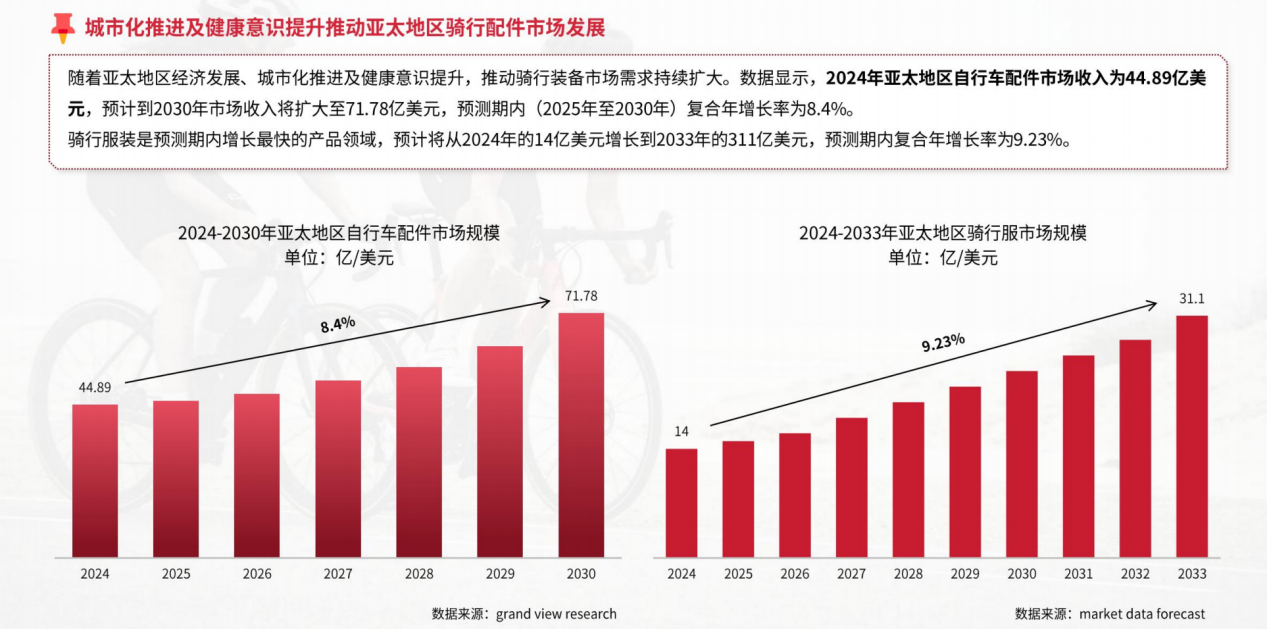
هذا الاتجاه يقود النمو السريع لسوق إكسسوارات ركوب الدراجات العالمي. وفقًا لتقرير «DaShu Kuajing2025 تقرير أبحاث تصدير إكسسوارات ركوب الدراجات»، في عام 2025 من المتوقع أن يصل حجم سوق إكسسوارات ركوب الدراجات العالمي إلى 12.7 مليار دولار أمريكي، وسيتجاوز 29.6 مليار دولار بحلول عام 2034، بمعدل نمو سنوي مركب يبلغ 9.8%.
باعتبارها دولة رائدة في تصنيع واستهلاك إكسسوارات ركوب الدراجات عالميًا، تسارع الشركات الصينية في التوسع في الأسواق الخارجية، ولكنها تواجه أيضًا تحديات متعددة مثل التعرف على العلامة التجارية والاختلافات الثقافية والمنافسة في السوق.
المصدر: الإنترنت

المصدر: «DaShu Kuajing2025 تقرير أبحاث تصدير إكسسوارات ركوب الدراجات》
نظرة عامة على السوق العالمي والاختلافات الإقليمية
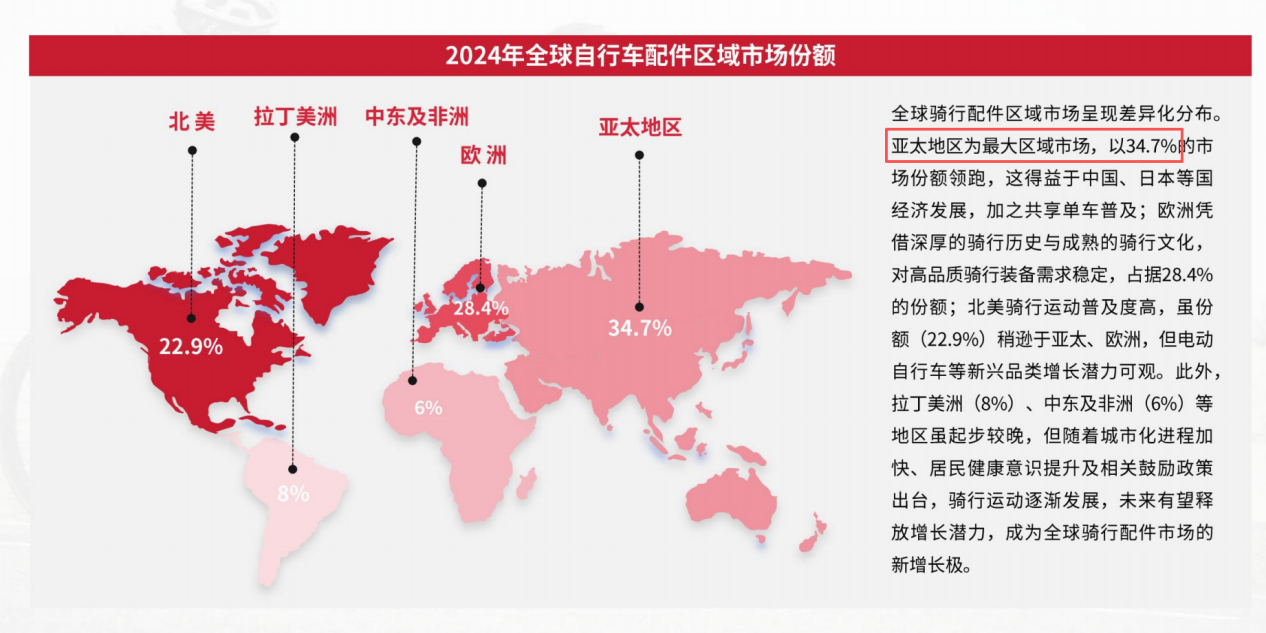
يُظهر سوق إكسسوارات ركوب الدراجات تمايزًا إقليميًا واضحًا على مستوى العالم.
منطقة آسيا والمحيط الهادئ تستحوذ علىحصة سوقية تبلغ 34.7%، وذلك بفضل التنمية الاقتصادية في دول مثل الصين واليابان وانتشار الدراجات المشتركة.
السوق الأوروبي بفضل ثقافة ركوب الدراجات العميقة والطلب الناضج، يستحوذ علىحصة 28.4%، بينما يأتي سوق أمريكا الشمالية في المرتبة التالية بحصة 22.9%، وتبرز إمكانات النمو لفئات جديدة مثل الدراجات الكهربائية.
على الرغم من أن أسواق أمريكا اللاتينية والشرق الأوسط وأفريقيا بدأت متأخرة، إلا أن التحضر وزيادة الوعي الصحي يدفعان هذه المناطق لتصبح أقطاب نمو مستقبلية.
المصدر: «DaShu Kuajing2025 تقرير أبحاث تصدير إكسسوارات ركوب الدراجات》
من منظور المجموعات الاستهلاكية، فإن الطلب على إكسسوارات ركوب الدراجاتوبالتالييظهر خصائص متنوعة.
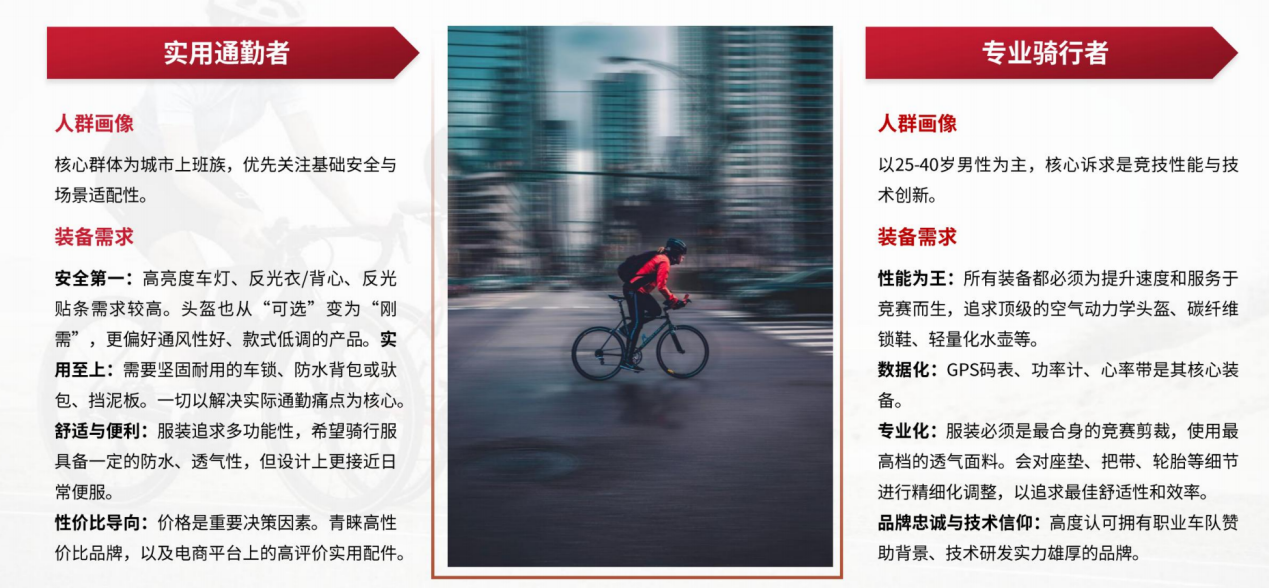
يهتم المتنقلون العمليون بالسلامة والقيمة مقابل المال، ويميلون إلى اختيار منتجات مثل الأضواء عالية السطوع والملابس العاكسة والأقفال المتينة، بينما يسعى الدراجون المحترفون إلى معدات عالية الأداء مثل الخوذات الديناميكية الهوائية وأحذية القفل من ألياف الكربون وعدادات GPS وغيرها.
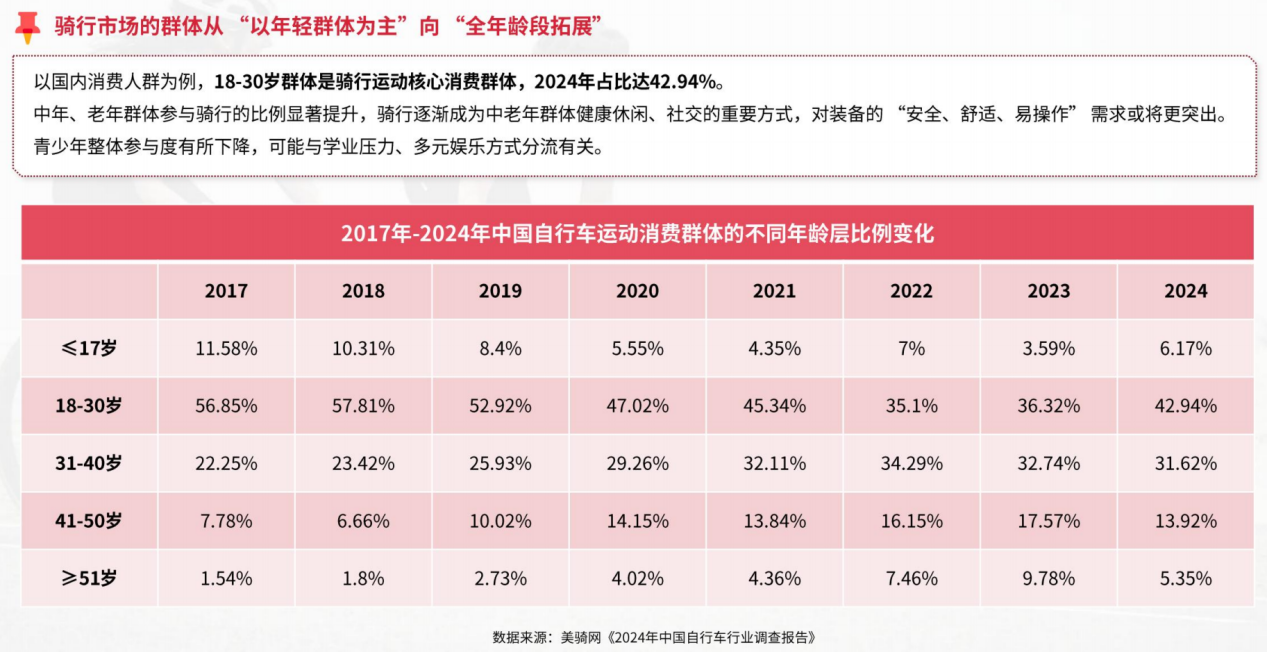
بالإضافة إلى ذلك، فإن قاعدة المستهلكين في سوق ركوب الدراجات تتوسع من الشباب إلى جميع الفئات العمرية، وتزداد حاجة المجموعات المتوسطة والكبيرة من حيث«السلامة والراحة وسهولة الاستخدام» يزداد بشكل ملحوظ.
مصدر الصورة: دا شو كوا جينغ《2025 تقرير بحثي حول تصدير إكسسوارات الدراجات》
مزايا وتحديات الشركات الصينية
تمتلك الشركات الصينية مزايا واضحة في سلسلة التوريد خلال عملية تصدير إكسسوارات الدراجات,سلسلة الصناعة الكاملة وتقنيات التصنيع الناضجة تجعل المنتجات الصينية تنافسية عالمياً من حيث نسبة السعر إلى الأداء وسرعة التسليم.
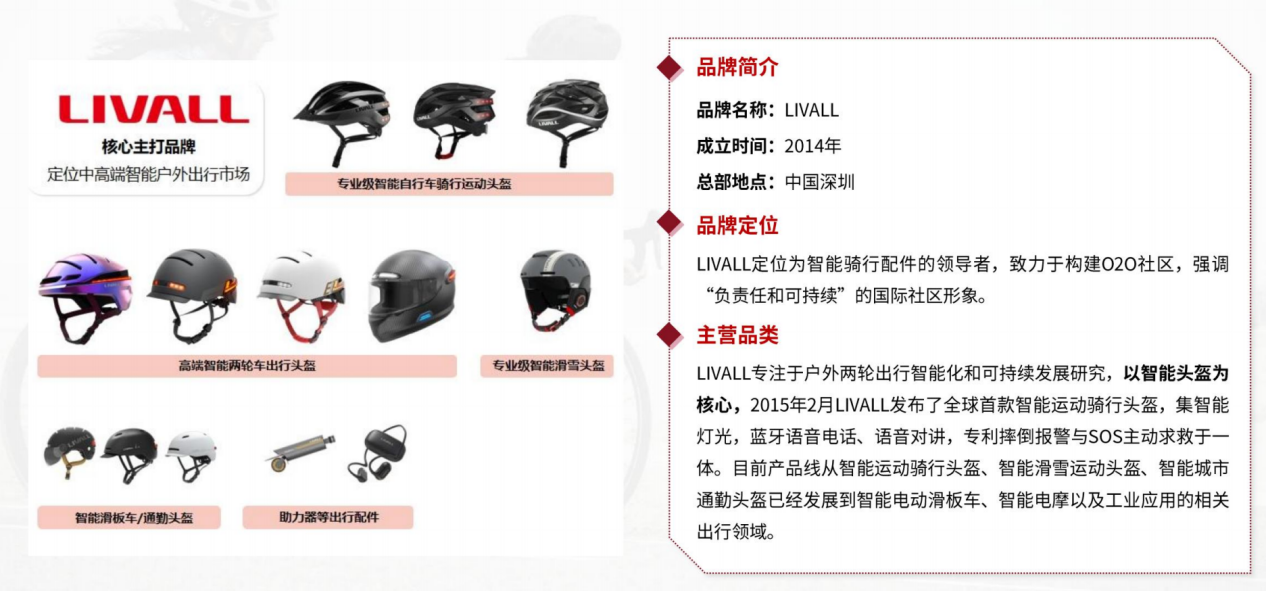
على سبيل المثال، شركة شنتشنLIVALL اختصرت دورة تطوير الخوذ الذكية إلى نصف مدة المنافسين من خلال أكثر من 180 براءة اختراع، وخفضت التكاليف بنسبة 30%.
ومع ذلك، تواجه العلامات التجارية الصينية العديد من التحديات في عملية التصدير,المستهلكون في أسواق أوروبا وأمريكا الشمالية أكثر ولاءً للعلامات التجارية التي تمتلك إرثاً تاريخياً وقصصاً تقنية، وغالباً ما تواجه العلامات التجارية الصينية صعوبة في كسب الثقة بسبب نقص العمق الثقافي.
كما أن الاختلافات في التفضيلات الجمالية وتصميمات المقاسات تؤدي إلى أن نقل المنتجات المحلية مباشرة يسهل“عدم التأقلم”.
علاوة على ذلك، أنشأت الشركات العملاقة الدولية حواجز تنافسية قوية من خلال رعاية الفرق المحترفة، والتحكم في القنوات، وبناء الأنظمة البيئية. ونظراً لأن ركوب الدراجات هو سيناريو استهلاكي قوي يقوده المجتمع، فإن العوائق العالية للتسويق المحلي تزيد من صعوبة التصدير.
مصدر الصورة: دا شو كوا جينغ《2025 تقرير بحثي حول تصدير إكسسوارات الدراجات》
سبل اختراق أسواق التصدير للعلامات التجارية
في مواجهة بيئة السوق الدولية المعقدة، تحتاج الشركات الصينية إلى تحقيق اختراق من ثلاثة أبعاد: ابتكار المنتجات، وتعميق القنوات، وسرد العلامات التجارية.
على مستوى المنتج، يعد التكامل التقني والذكاء الاصطناعي اتجاهات التطوير المستقبلية,المنتجات المبتكرة مثل الخوذ الذكية والملابس المزودة بأجهزة استشعار بيولوجية يمكنها تلبية حاجة الأسواق الأوروبية والأمريكية لـمعدات “مدفوعة بالبيانات”.
التخصيص والتكييف حسب السياق هما أيضاً اتجاهان مهمان، على سبيل المثال، بالنسبة للسوق اليابانيةتفضيل “الحرفية القصوى”، توفير خدمات الطلاء المخصص والتصميم الهندسي البشري.
على مستوى القنوات والتسويق، يعد التوطين أمراً أساسياً. من خلال منصات التمويل الجماعي للتحقق من طلب السوق، والتعاون مع الوكلاء المحليين، والمشاركة في المعارض الدولية، يمكن بناء الوعي بالعلامة التجارية بسرعة.
كما أن استراتيجية التسويق عبر المؤثرين المتدرجة مهمة بشكل خاص: التعاون مع راكبي الدراجات المحترفين لتعزيز المصداقية التقنية، وفي الوقت نفسه جذب مجموعة واسعة من المستخدمين عبر مدوني نمط الحياة. بالإضافة إلى ذلك، بناء مجتمعات محلية (مثلنادي RCC لـ Rapha) يمكن أن يعزز ارتباط المستخدمين والولاء للعلامة التجارية.
وفي سرد العلامة التجارية،يحتاج إلى التركيز علىإخراج القيم والاتصال العاطفي,تأكيد مفاهيم حماية البيئة والاستدامة، بما يتوافق مع السوق الأوروبية“الاستهلاك الأخضر”، ونقل ثقافة العلامة التجارية من خلال قصص ركوب الدراجات والأفلام الوثائقية وغيرها من المحتويات،وبالتاليبناء صدى عاطفي مع المستهلكين.
مصدر الصورة: الإنترنت
نظرة مستقبلية
تصدير إكسسوارات ركوب الدراجات يتحول منمن “تصدير المنتجات” إلى “تصدير العلامة التجارية”.
في المستقبل، سيكون البحث والتطوير التكنولوجي، والقيادة بالبيانات، وتكامل الخدمات عبر الحدود هي القدرات الأساسية للمنافسة المؤسسية. سيكون الابتكار في المنتجات الذكية والمخصصة والقائمة على السياق، بالإضافة إلى القدرة على سرد العلامة التجارية العالمية، هو المفتاح لاختراق سقف النمو للشركات الصينية.
كما جاء في التقرير:“من يستطيع اكتشاف الاحتياجات في السيناريوهات المتخصصة، وكسب الثقة في التعبير عن العلامة التجارية، سيكون هو من يحتل القمة في موجة ركوب الدراجات العالمية الجديدة.”
بالنسبة للشركات الصينية، فإن التوسع الخارجي ليس مجرد توسع في السوق، بل هو ترقية من ميزة التكلفة إلى الاعتراف بالقيمة. في هذه العملية، تعتبر ميزة سلسلة التوريد أساسية، بينما ستصبح القدرة على بناء العلامة التجارية والتكامل الثقافي هو الفاصل الذي يحدد النجاح أو الفشل.