2645
2645
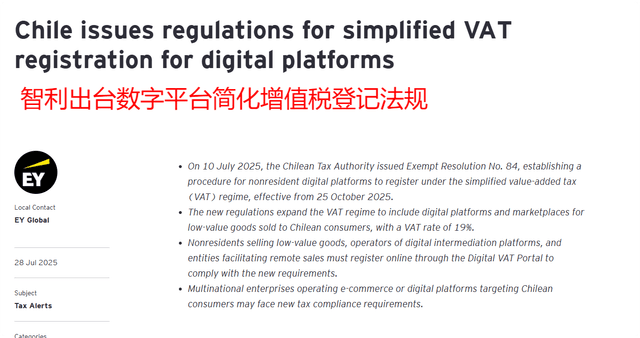
رسالة أخرى عن الإصلاح الضريبي،أعلنت سلطات الضرائب التشيلية أنه اعتبارًا من25 أكتوبر، سيتم إلغاء سياسة الإعفاء الضريبي للطرود الصغيرة عبر الحدود بالكامل، وسيخضع جميع السلع المستوردة بقيمة تتراوح بين 0 و500 دولار لضريبة القيمة المضافة بنسبة 19%.
يمثل هذا الإجراء نهاية عصر النمو الفوضوي للتجارة الإلكترونية عبر الحدود في تشيلي، ويدخل رسميًا مرحلة جديدة من التنظيم الموحد.
بالنظر إلى مستوى أعمق، حقق هذا الإصلاحنقل 'بوابة الضرائب' إلى الأمام. من خلال نقل الالتزام الضريبي من 'الجمارك' إلى 'المنصة'، تهدف الحكومة التشيلية إلى ضمان تحصيل الضرائب من المصدر، وإزالة الاختناقات اللوجستية التي كانت ناتجة عن التفتيش ودفع الضرائب.

مصدر الصورة:ey
محتوى الإصلاح الضريبي: نهاية عصر الإعفاء الضريبي، فرض ضرائب شاملة على الطرود عبر الحدود
جوهر هذا الإصلاح الضريبي التشيلي هو إنهاءتاريخ الإعفاء الضريبي للطرود الصغيرة عبر الحدود التي تقل قيمتها عن 41 دولارًا. اعتبارًا من 25 أكتوبر، سيتم إلغاء هذا الحد، مما يمثل دخول التجارة عبر الحدود التشيلية في عصر 'الضرائب بلا حد أدنى'.
اللوائح الجديدة تحدد بدقة أن جميع الطرود التي تتراوح قيمتهاالتي تقل عن 500 دولار عبر البريد المباشر، يجب أن تدفع ضريبة قيمة مضافة بنسبة 19%، مما يحقق تغطية ضريبية شاملة للمعاملات الصغيرة عبر الحدود.
أما بالنسبة للطرود التي تبلغ قيمتها500 دولار أو أكثر، بالإضافة إلى ضريبة القيمة المضافة بنسبة 19%، يجب دفع رسوم جمركية إضافية بنسبة 6%.
من الجدير بالذكر أن بعض السلاح متوسطة القيمة شهدت بالفعل تخفيفًا للعبء الضريبي. سابقًا، كانت الطرود التي تتراوح قيمتهابين 41 و500 دولار تستورد تحتاج إلى دفع كل من ضريبة القيمة المضافة والرسوم الجمركية، ولكن بعد تطبيق اللوائح الجديدة، يجب دفع ضريبة القيمة المضافة فقط مع إعفاء من رسوم الاستيراد.

مثال على دفع ضريبة القيمة المضافة مقدمًا من قبل المشتري مصدر الصورة: Facebook
خلفية الإصلاح: زيادة هائلة في عدد الطرود، الحكومة تسعى إلى منافسة عادلة
لم يأت هذا الإصلاح الضريبي من فراغ، وراءه نمو هائل في عدد الطرود عبر الحدود التشيلية.
تظهر البيانات أن الطرود الدولية المباشرة المستوردة إلى تشيلي ارتفعت من500 ألف طرد سنويًا في 2020 إلى 20 مليون طرد في 2023، بزيادة قدرها 40 ضعفًا في ثلاث سنوات فقط.
والأكثر إثارة للاهتمام هو أن74% من هذه الطرود كانت قيمتها المعلنة أقل من 41 دولارًا، مستفيدة من سياسة الإعفاء الضريبي آنذاك.
وزارة المالية التشيلية تشير إلى أن كمية كبيرة من السلع منخفضة السعر تغمر السوق بفضل سياسات الإعفاء الضريبي، مما يضع ضغطًا تنافسيًا كبيرًا على تجار التجزئة المحليين ويخلق بيئة سوق غير عادلة.
حكمةأعلنت الحكومة الليبية بوضوح عن ثلاثة مطالب أساسية لهذا الإصلاح: أولاً، سد الثغرات الضريبية بحزم ومكافحة التهرب الضريبي؛ ثانياً، دفع التحديث والتطوير لنظام الخدمات اللوجستية؛ ثالثاً، إعادة بناء بيئة منافسة عادلة بين التجارة الإلكترونية عبر الحدود وتجار التجزئة المحليين.
من المتوقع أن تجلب هذه السياسة الضريبية الجديدة للحكومة التشيلية سنويًا حوالي40 مليون دولار أمريكي من الضرائب الإضافية。

مصدر الصورة:شبكة
أسلوب التحصيل: التحصيل والدفع بواسطة المنصة، تحسين إجراءات التخليص الجمركي
إصلاح الضرائب في تشيلي لا يتعلق فقط بتعديل معدلات الضرائب، بل الأهم من ذلك هو الابتكار في طريقة فرض الضرائب.
وفقًا للوائح الجديدة، سيتم تحصيل ضريبة القيمة المضافة بواسطة منصة التجارة الإلكترونية العابرة للحدود عند تقديم المستهلك للطلب، بدلاً من الطريقة التقليدية التي تتم فيها المراجعة والتحصيل من قبل الجمارك أثناء عملية التخليص الجمركي.
يعني هذا التغيير في نمط الإدارة أنه إذا تم تحصيل ضريبة القيمة المضافة من قبل المنصة أثناء عملية البيع، فلن تكون هناك حاجة لأي إجراءات دفع ضريبية إضافية عند وصول البضائع إلى الجمارك في تشيلي، وستتمتع بالإفراج السريع.
أما بالنسبة للمشتريات العابرة للحدود التي يقوم بها المستهلكون عبر منصات أو تجار غير مسجلين، فلا تزال ضريبة القيمة المضافة مستحقة الدفع عند التخليص الجمركي، وستواجه هذه الطرود وقتًا أطول للإفراج الجمركي.

مصدر الصورة:ey
استجابة المنصة: أطلقت منصات مثل علي إكسبريس العديد من إجراءات الدعم
في مواجهة التغييرات في السياسة الضريبية في تشيلي، استجابت منصات التجارة الإلكترونية عبر الحدود بسرعة، وأطلقت عدة إجراءات لمساعدة التجار على مواجهة التحديات.
استراتيجية الاستجابة لـعلي إكسبريس تظهر فكرًا واضحًا للامتثال والتشغيل.
في جانب الامتثال، قامت المنصة من خلال ترقية النظام بتحصيل ودفع ضريبة القيمة المضافة نيابةً عن التجار، مما وفر لهم برنامج امتثال آلي. وفي جانب التشغيل، تساعد المنصة التجار مباشرة من خلال إعانات خاصة لمواجهة جزء من التكاليف الضريبية الجديدة.
والأكثر أهمية، أن المنصة توجه الموارد الاستراتيجية إلى بائعي المستودعات الخارجية، لـعلامة "الشحن المحلي" والأنشطة التسويقية ذات الأولوية لتحفيز التجار على ترقية نموذج سلسلة التوريد الخاصة بهم.

مصدر الصورة: علي إكسبريس
استجابت منصات مثل AliExpress وMercado Libre بسرعة، وقدمت حزمة إجراءات تشمل الدفع نيابة عن البائعين، والإعانات الخاصة، ودعم حركة المرور للمستودعات الخارجية؛ لمساعدة البائعين على تجاوز فترة تعديل السياسات.
على مستوى أمريكا اللاتينية بأكملها، من زيادة التعريفة الجمركية في المكسيك إلى33.5%، يصل إجمالي الأعباء الضريبية في البرازيل إلى 44.5%، وتجتاح هذه الأرض عاصفة من الامتثال الضريبي تستهدف التجارة الإلكترونية عبر الحدود.
بالنسبة للبائعين الذين يسعون إلى التنمية طويلة المدى، فإن هذا التغيير لا يجلب التحديات فحسب، بل يمثل أيضًا فرصة للتحول من المنافسة السعرية إلى خلق القيمة.