 2091
2091In den letzten Jahren ist die Haustierwirtschaft in den USA rasant gewachsen.
Haustiere haben längst die reine Begleitrolle überschritten und sind zu einem unverzichtbaren Familienmitglied geworden. Aktuelle Studien zeigen, dass die Ausgaben der Amerikaner für Haustiere kontinuierlich steigen und einen Markt mit enormem Potenzial hervorbringen.
Haustiere als Familienmitglieder: Lebensstil der Generation Z und Millennials
Eine Studie von Harris Poll zeigt den Wandel der Rolle von Haustieren in Familien. Die Daten belegen, dass 82 % der Haustierbesitzer ihre Tiere wie eigene Kinder behandeln und genauso über sie sprechen wie über Kinder.
Besonders ausgeprägt ist dieser Trend bei der jüngeren Generation – der Generation Z und den Millennials.
Immer mehr junge Menschen entscheiden sich für ein Haustier anstatt für eigene Kinder. Die Gründe sind nachvollziehbar: Haustiere sind pflegeleichter, finanziell weniger belastend, erfordern weniger Verantwortung und erfüllen gleichzeitig das Bedürfnis nach emotionaler Begleitung. Dieses Phänomen verändert die Zusammensetzung und den Lebensstil amerikanischer Familien und macht Haustiere zum Mittelpunkt emotionaler Zuneigung.
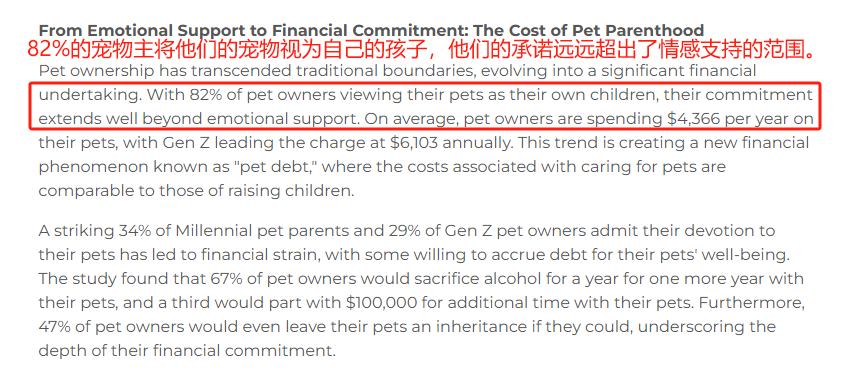
Haustiere werden zu wichtigen Familienmitgliedern. Quelle: ACCESSWIRE
Geld für Haustiere ausgeben, ohne zu zögern
Der gestiegene Stellenwert von Haustieren in der Familie führt direkt zu höheren Konsumausgaben. Daten zeigen, dass amerikanische Haustierbesitzer im Durchschnitt 4.366 US-Dollar pro Jahr für ihre Tiere ausgeben, wobei die Generation Z mit 6.103 US-Dollar die höchsten Ausgaben hat, gefolgt von den Millennials mit 5.150 US-Dollar. Im Vergleich dazu geben die Generation X und die Babyboomer durchschnittlich 3.878 US-Dollar bzw. 2.454 US-Dollar aus.
Diese Ausgaben konzentrieren sich auf Bereiche wie Tierfutter, tierärztliche Versorgung, Versicherungen, Pflege und Spielzeug. In den letzten Jahren sind die Ausgaben jedoch durch die zunehmende Verwöhnung der Haustiere vielfältiger geworden. Haustierbesitzer achten nicht nur auf Grundbedürfnisse, sondern sind auch bereit, für innovative Produkte zu zahlen, die die Lebensqualität ihrer Tiere verbessern.
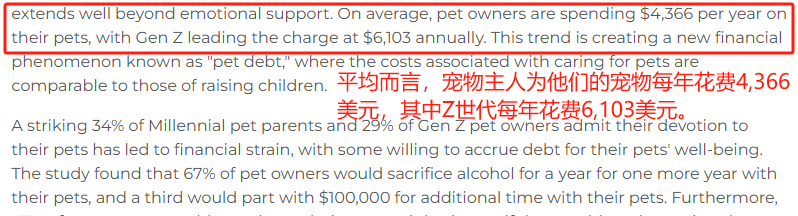
Ausgaben für Haustiere. Quelle: ACCESSWIRE
Neue Produkte als Verkaufsschlager: Intelligenz und Praktikabilität als Verkaufsargumente
Diese Welle der Haustierwirtschaft hat viele erfolgreiche Produkte hervorgebracht.
Zum Beispiel verkaufte sich ein intelligenter Haustier-Trinkbrunnen namens "Smart Pet Water Fountain" aufgrund seiner Funktionen wie Wasserzirkulation, Fernüberwachung und Vierfachfilterung innerhalb eines Monats nach dem Start im TikTok US-Shop 9.000 Mal und erzielte einen Umsatz von über 350.000 US-Dollar.
Ein weiteres Produkt, der von IndigoPetCo eingeführte Fellentfernungsbesen, löste das Problem der Haarentfernung von Haustieren. Dieses Werkzeug kann nicht nur mühelos Haare aus Teppichen und Sofas entfernen, sondern wurde auch aufgrund seines hervorragenden Preis-Leistungs-Verhältnisses schnell populär. Bis Mitte November wurden fast 50.000 Einheiten dieses Produkts verkauft, und der Umsatz steigt weiter.

Positive Resonanz der Nutzer. Quelle: IndigoPetCo Marken-Website
Diese Beispiele zeigen, dass Verbraucher eher Produkte kaufen, die praktische Probleme lösen und die Lebensqualität von Haustieren verbessern. Die Werbung auf sozialen Plattformen wie TikTok hat zudem den schnellen Erfolg dieser Produkte befeuert.
Kapital zielt auf den Haustiersektor: ShuaiKe Pet erhält 1 Milliarde Yuan Finanzierung
Auch der Kapitalmarkt beschleunigt seine Investitionen in diesem Sektor. Die Shandong ShuaiKe Pet Products Co., Ltd. hat kürzlich eine neue Finanzierungsrunde in Höhe von 1 Milliarde Yuan abgeschlossen, an der sich Advent International und Boyu Capital beteiligten.
ShuaiKe Pet hat bereits zuvor mehrfach Kapital angezogen. Diese Finanzierung ist nicht nur eine Anerkennung der eigenen Stärke, sondern auch ein Zeichen des Vertrauens in die Zukunft der gesamten Haustierbranche. Die Kapitalzufuhr wird ShuaiKe helfen, die Lieferkette weiter zu optimieren und die Produktinnovationsfähigkeit zu verbessern, und deutet auf einen noch intensiveren Wettbewerb in der Haustierbranche hin.

Einzelne Finanzierung von 1 Milliarde Yuan. Quelle: Tianyancha
Vom Haustier zum Markt: Zukünftiges Potenzial ist vielversprechend
Mit dem steigenden Stellenwert von Haustieren in der Familie wird die Haustierwirtschaft zu einem neuen Konsum-Hotspot.
Ob technologische Produkte wie intelligente Trinkbrunnen oder praktische Produkte wie Fellentfernungs-Werkzeuge – der Erfolg liegt darin, die wahren Bedürfnisse der Haustierbesitzer zu erkennen.
Für Verkäufer hat sich das Fenster für die Nutzung der Haustierwirtschaft geöffnet. Von der Erfüllung von Grundbedürfnissen bis zur Erschließung des High-End-Marktes, von Produktinnovation bis zu präzisem Marketing – wie man eine tiefere emotionale Verbindung zu den Verbrauchern herstellt, könnte der Schlüssel sein, um sich im zukünftigen Wettbewerb durchzusetzen.