 2274
2274Für europäische Verbraucher ist „Made in China“ bereits leise in ihren Alltag eingezogen.
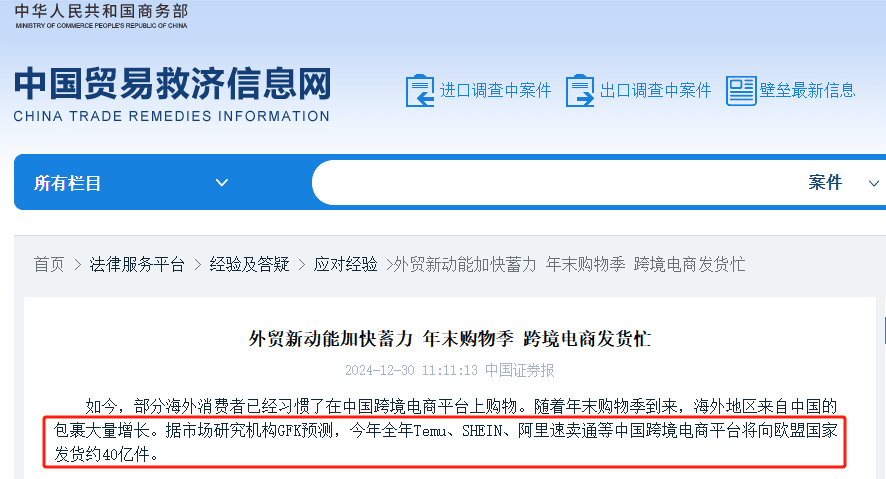
Von Haushaltswaren über Kleidung und Kosmetik bis hin zu Hightech-Produkten und traditionellem Kunsthandwerk – „Made in China“ ist überall präsent. Dieser Einfluss spiegelt sich auch in den Daten wider. Im Jahr 2024 werden chinesische E-Commerce-Plattformen voraussichtlich 4 Milliarden Pakete in die 27 EU-Länder versenden – das entspricht durchschnittlich etwa 150 Millionen chinesischen Paketen pro Land. Diese Pakete erzählen nicht nur die Geschichte des Aufstiegs des chinesischen E-Commerce, sondern zeigen auch den Verbrauchern weltweit das Potenzial von „Made in China“.
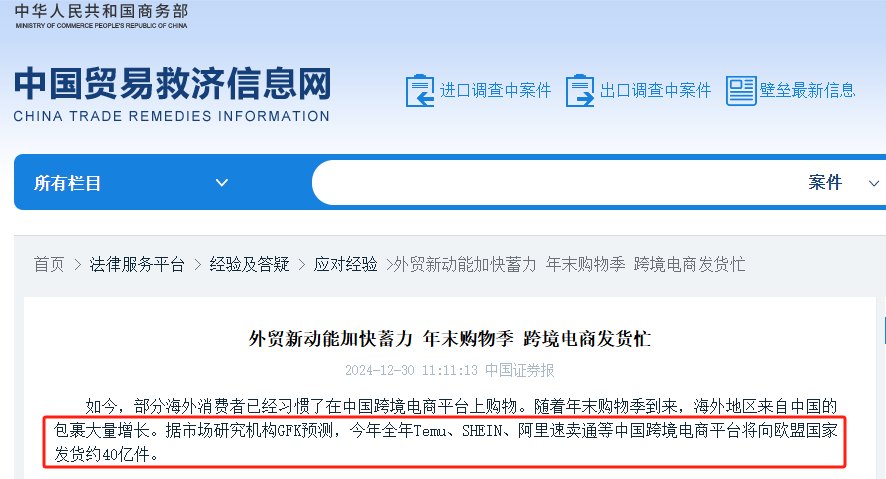
China versendet etwa 4 Milliarden internationale Pakete in die EU. Quelle: Handelsministerium der Volksrepublik China
Wie erobern 4 Milliarden Pakete Europa?
Finnland ist ein typisches Beispiel. Laut Daten des finnischen Zolls stieg die Paketimportmenge des Landes aus Nicht-EU-Ländern im Jahr 2024 um das Sechsfache, von 4 Millionen auf 25 Millionen Stück. Dabei dominieren Waren aus China, insbesondere bei Kleingütern mit einem Wert unter 150 Euro, wo ihr Anteil bei 87 % liegt. Mit anderen Worten: Von 10 Paketen kommen fast 9 aus China.
Dieser Trend ist nicht auf Finnland beschränkt. In Spanien haben die drei großen chinesischen E-Commerce-Plattformen SHEIN, Temu und AliExpress bereits ein Drittel des lokalen E-Commerce-Marktes erobert. Auch in wichtigen Märkten wie Frankreich, Italien und Deutschland wächst ihr Einfluss von Jahr zu Jahr. Von traditionell geflochtenen Tote-Bags über modern interpretierte chinesische Kleidung bis hin zu Reiswasser-Shampoo und Drohnen – chinesische Waren überzeugen europäische Verbraucher durch ihr hervorragendes Preis-Leistungs-Verhältnis und ihre große Vielfalt.
Darüber hinaus spielt auch das Betriebsmodell der E-Commerce-Plattformen eine entscheidende Rolle. Durch interaktive Einkaufserlebnisse, zeitlich begrenzte Rabatte, Gruppenkauf-Angebote und andere „gamifizierte“ Methoden machen diese Plattformen das Einkaufen nicht nur günstiger, sondern auch unterhaltsamer.
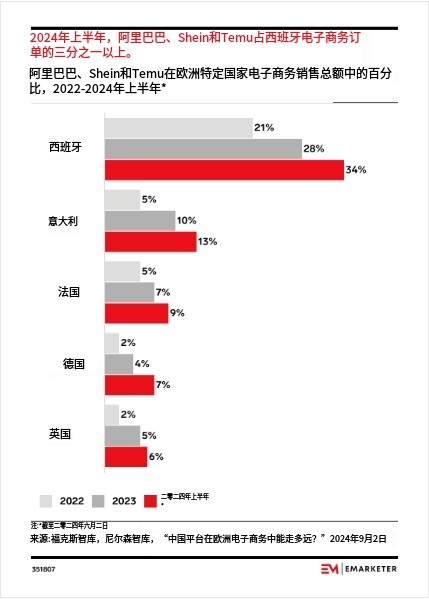
Chinesische E-Commerce-Plattformen etablieren sich auf dem europäischen Markt. Quelle: Emarketer
Der europäische Markt bietet Chancen, birgt aber auch Druck
Obwohl der europäische Markt voller Potenzial steckt, sind die Herausforderungen nicht zu übersehen. In den letzten Jahren hat die EU immer wieder über die Abschaffung der Zollbefreiung für Waren unter 150 Euro diskutiert. Sollte dies umgesetzt werden, könnten chinesische Verkäufer, die hauptsächlich auf günstige Waren setzen, mit höheren Kosten konfrontiert werden. Für Verkäufer, die auf ein Modell mit niedrigen Gewinnspannen und hohen Verkaufsmengen angewiesen sind, wäre dies eine ernsthafte Bewährungsprobe.
Gleichzeitig wird der Bedarf an lokalisierter Logistik und Dienstleistungen immer deutlicher. Europäische Verbraucher stellen höhere Anforderungen an Produktqualität, Logistikeffizienz und Kundendienst, was wiederum höhere Ansprüche an das Lieferkettenmanagement chinesischer Verkäufer stellt. Wenn die Serviceerfahrung nicht ausreicht, könnten sie im Wettbewerb schnell an Vorteilen verlieren.
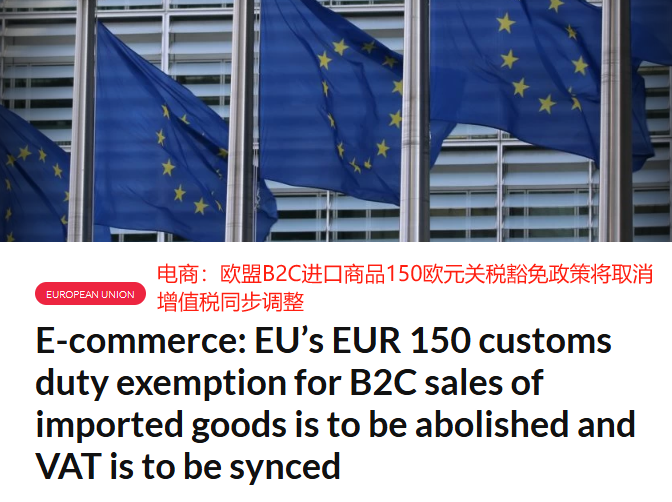
Die EU plant die Abschaffung der Zollbefreiung für günstige Importwaren unter 150 Euro. Quelle: vatupdate
Politische Unterstützung als Rückhalt für Exporteure
Angesichts dieser Herausforderungen bietet auch die chinesische Regierung aktiv Unterstützung für den Weg des grenzüberschreitenden E-Commerce ins Ausland.
In diesem Jahr hat die chinesische Zollverwaltung neue Maßnahmen erlassen, die von der Abschaffung der Registrierungspflicht für Übersee-Lagerunternehmen über die Vereinfachung von Exportverfahren bis hin zur Ausweitung des Pilotprojekts „Prüfung vor Verladung“ reichen und die Exportpolitik in vielerlei Hinsicht optimieren. Die Umsetzung dieser Maßnahmen verringert nicht nur die Betriebslast der Verkäufer, sondern stärkt auch ihre Wettbewerbsfähigkeit auf den Überseemärkten.
Darüber hinaus verbessert die Regierung kontinuierlich die Steuer- und Logistikunterstützungspolitik für den grenzüberschreitenden E-Commerce, um den Verkäufern ein starkes Fundament zu bieten und ihnen zu helfen, das komplexe Umfeld der Überseemärkte zu bewältigen.
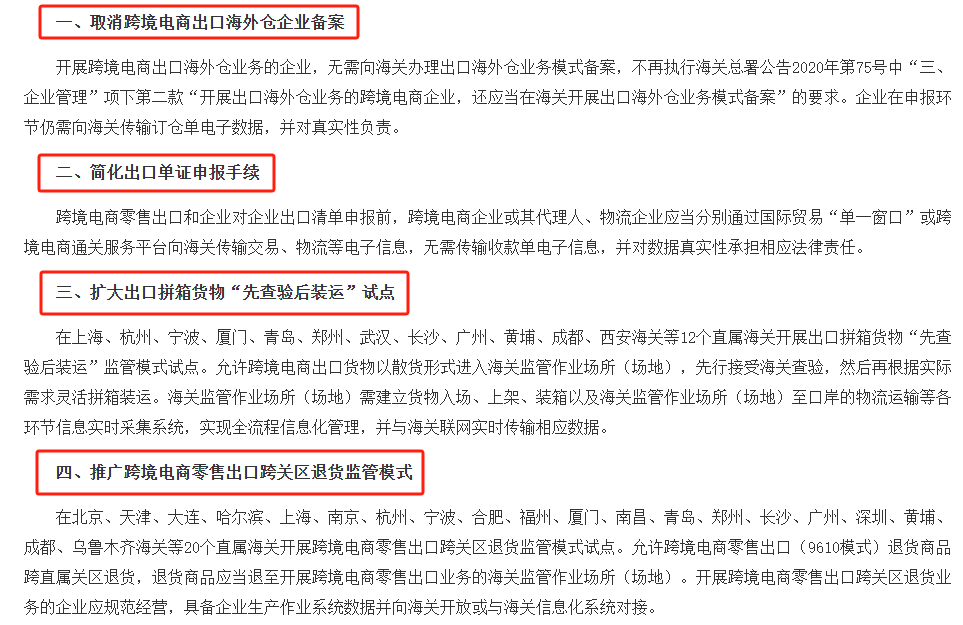
Vier Optimierungsmaßnahmen. Quelle: Zollverwaltung
4 Milliarden Pakete sind erst der Anfang – die Zukunft des chinesischen grenzüberschreitenden E-Commerce ist vielversprechend
Der europäische Markt bietet sowohl Chancen als auch Herausforderungen, und die 4 Milliarden Pakete sind ein Beweis für den tiefgreifenden Einfluss des chinesischen grenzüberschreitenden E-Commerce auf den globalen Markt.
Auch wenn die Zukunft weiterhin Unsicherheiten birgt, ist sicher, dass die chinesischen Verkäufer dank der vielfältigen Vorteile von Waren, Plattformen und Politik nicht aufhören werden. Der europäische Markt ist nur ein Anfang. In Zukunft werden noch mehr chinesische Pakete die Ozeane überqueren und die Geschichte von „Made in China“ in eine noch breitere Welt tragen.