 2601
2601Der Wettbewerb um die Logistik im südkoreanischen E-Commerce-Markt tritt in eine heiße Phase ein.
Der Branchenführer Coupang hat kürzlich angekündigt, 100 Milliarden Won in den Bau eines KI-gestützten Logistikzentrums der nächsten Generation in Jecheon, Provinz Nord-Chungcheong, zu investieren, das im Juni 2026 in Betrieb gehen soll. Dies ist ein weiterer wichtiger Schritt von Coupang im Bereich der Logistikinfrastruktur, nachdem zuvor ein 200-Milliarden-Won-Automatisierungslogistikzentrum in Gimhae, Provinz Süd-Gyeongsang, errichtet wurde.
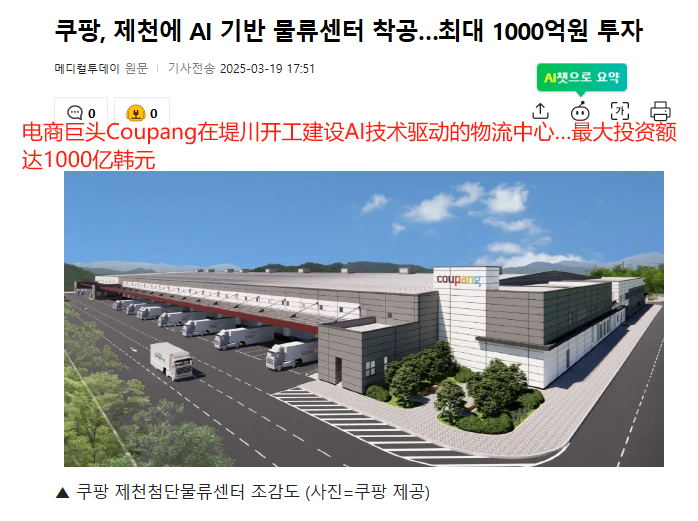
Coupang baut neues KI-Logistikzentrum Quelle: nate
3 Billionen Won Wette auf Logistikinfrastruktur
Als langjähriger Marktführer im südkoreanischen E-Commerce-Markt reichen die Ambitionen von Coupang weit über zwei Logistikzentren hinaus. Im März letzten Jahres gab das Unternehmen einen Investitionsplan in Höhe von insgesamt 3 Billionen Won bekannt, mit dem Ziel, bis Ende 2026 das Logistiknetzwerk auf neun Kernregionen Südkoreas auszudehnen und den "Rocket Delivery"-Service landesweit zu etablieren. Dieser Servicename verdeutlicht den Kernvorteil: Dank des dichten Lagernetzes können über 80 % der südkoreanischen Nutzer Lieferungen am selben oder am nächsten Tag erhalten.
Hinter den massiven Investitionen steht eine klare Geschäftslogik. Laut einer Studie von Statista stufen 24,7 % der südkoreanischen Verbraucher die Liefergeschwindigkeit als drittwichtigsten Faktor für Online-Kaufentscheidungen ein, nach dem Preis-Leistungs-Verhältnis (44,5 %) und dem Einkaufserlebnis (33,1 %). Ergänzende Daten von FedEx sind noch eindrucksvoller: 50 % der Verbraucher ändern ihre Kaufentscheidung direkt aufgrund der Lieferzeit. Offensichtlich ist die Logistikeffizienz zum zentralen Schlachtfeld für E-Commerce-Plattformen im Kampf um Nutzer geworden.
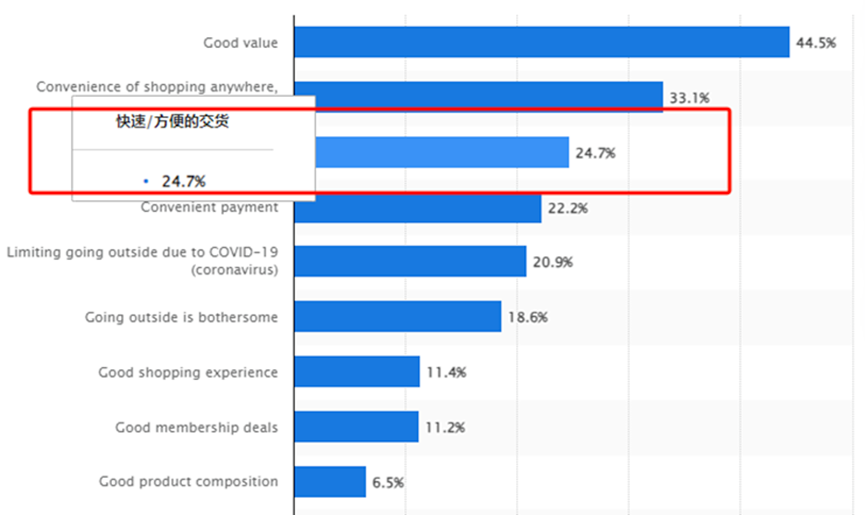
Logistikeffizienz wird zum wichtigsten Faktor beim Online-Einkauf Quelle: Statista
Belagerung durch lokale und internationale Giganten
Die aggressive Expansion von Coupang erfolgt nicht ohne Druck. Der internationale E-Commerce-Riese Alibaba hat angekündigt, 200 Millionen US-Dollar in den Bau eines integrierten Logistikzentrums in Südkorea zu investieren, um sich ein Stück vom Kuchen zu sichern. Der lokale Rivale Naver hat den "Naver Delivery"-Service eingeführt, der die durchschnittliche Lieferzeit durch Algorithmusoptimierung um 2 Stunden verkürzt und bis Ende dieses Jahres vollständig eingeführt werden soll.
Auch kleinere Plattformen bleiben nicht untätig: Gmarket hat in Zusammenarbeit mit CJ Logistics ein ganzjähriges 7-Tage-Liefersystem eingeführt; 11Street bietet für den Großraum Seoul einen "Express-Wochenend-Lieferservice" an, bei dem Kunden, die bis 11 Uhr am Samstag bestellen, ihre Ware noch am selben Tag erhalten. Diese innovativen Dienstleistungen erhöhen ständig die Branchenstandards und zwingen die führenden Unternehmen, ihre Technologieinvestitionen kontinuierlich zu verstärken.
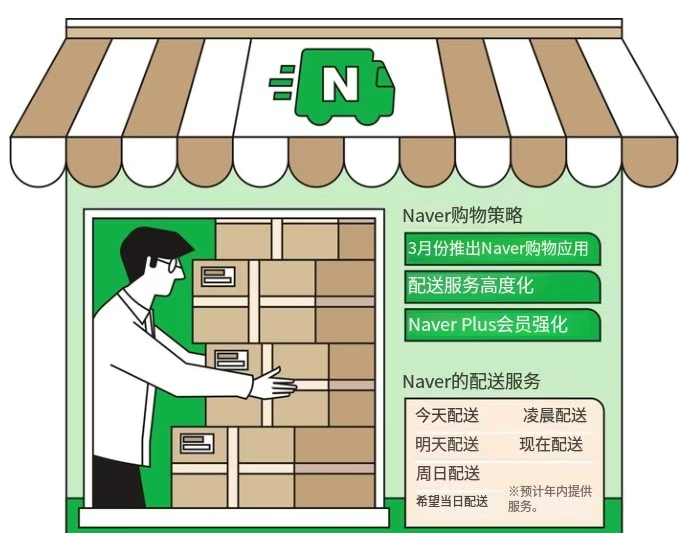
Navers vielfältige Lieferdienste Quelle: Naver
Die strategische Bedeutung des KI-Logistikzentrums
Angesichts des Wettbewerbsdrucks setzt Coupang auf KI-Technologie als Schlüssel zur Lösung. Das neue Logistikzentrum in Jecheon wird vollständig mit intelligenten Sortiersystemen und dynamischen Routenplanungsalgorithmen ausgestattet sein. Schätzungen zufolge wird dies die tägliche Verarbeitungskapazität erheblich steigern und die Fehlerquote senken. In Kombination mit der spezialisierten Lieferkapazität für Alltagsgüter des Logistikzentrums in Gimhae versucht das Unternehmen, eine vollständige Lieferkette von schnelldrehenden Konsumgütern bis hin zu High-End-Produkten aufzubauen.
Bemerkenswert ist, dass Coupang parallel zu den Technologieinvestitionen plant, über 10.000 neue Logistikarbeitsplätze zu schaffen. Diese Strategie, "Maschinen ersetzen Menschen" mit "Personalaufstockung" zu kombinieren, gewährleistet die Servicestabilität während der Automatisierungsumstellung und schafft gleichzeitig personelle Ressourcen für die zukünftige Geschäftsexpansion.
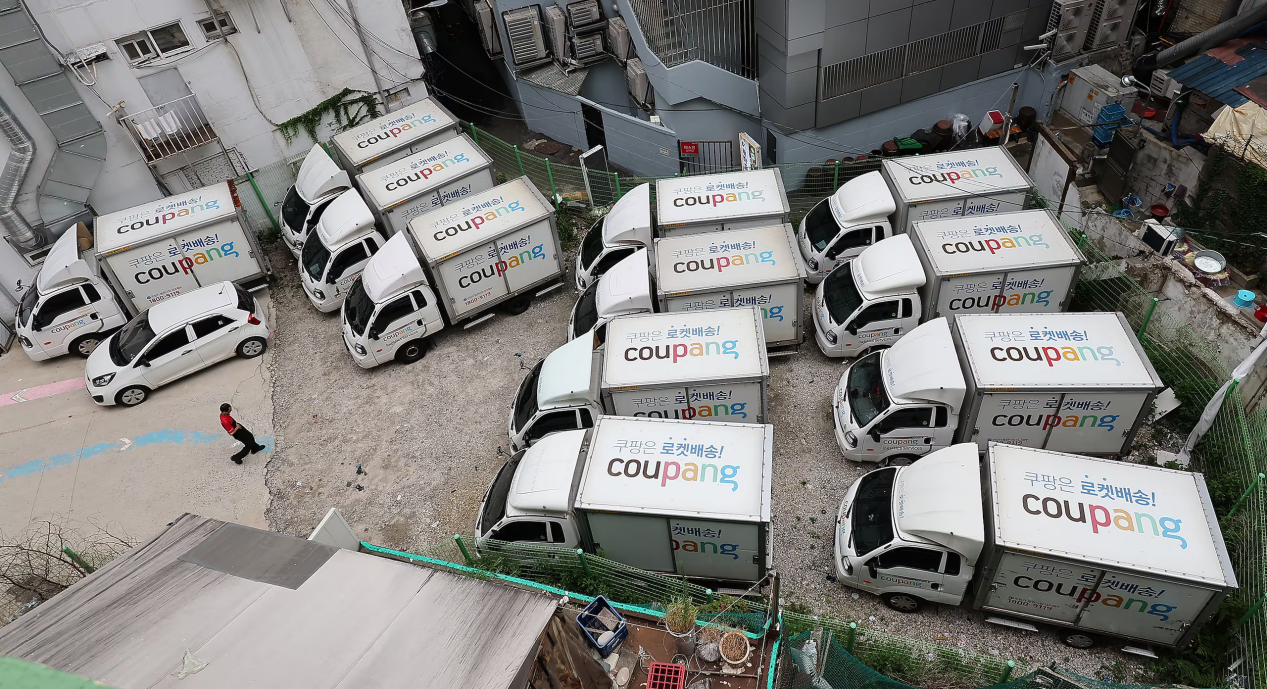
Quelle: Chosun.com
Branchenkonsolidierung hinter dem Logistikwettbewerb
Dieser milliardenschwere Logistikwettbewerb ist im Kern ein Kampf um die Zeit der Verbraucher. Wenn "Lieferung am selben Tag" zum Basisservice wird, entstehen durch Nischenanforderungen wie "pünktliche Lieferung" und "Lieferung nach Terminvereinbarung" neue Markträume. Analysten weisen darauf hin, dass das Investitionsvolumen in die südkoreanische E-Commerce-Logistik in den nächsten drei Jahren die 5-Billionen-Won-Marke überschreiten könnte, wobei Intelligenz, Vernetzung und Spezialisierung die entscheidenden Erfolgsfaktoren sein werden.
Für die normalen Verbraucher sind die durch den Wettbewerb der Giganten verursachten Serviceverbesserungen bereits deutlich spürbar. Von der einstündigen Lieferung frischer Lebensmittel bis zur Lieferung von Mitternachtsbestellungen am nächsten Morgen – die ständig steigenden Zeitstandards verändern die Einkaufsgewohnheiten der Südkoreaner. Aus Branchensicht werden in diesem endlosen Rennen nur die Spieler die Nase vorn haben, die sowohl über technologische Tiefe als auch über finanzielle Stärke verfügen.