 1972
1972
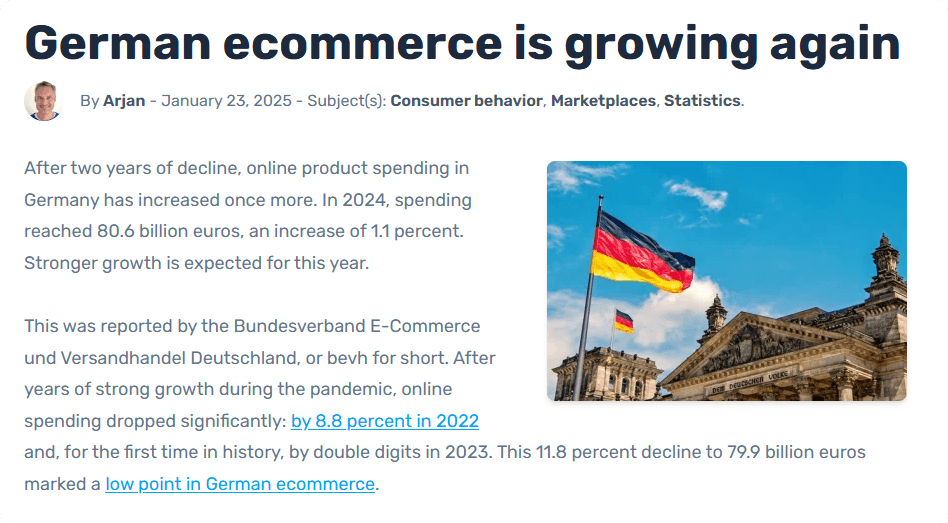
Während sich die europäische Wirtschaft insgesamt noch langsam auf dem Weg der Erholung befindet, hat der deutsche E-Commerce-Markt bereits ein Feuer entfacht.
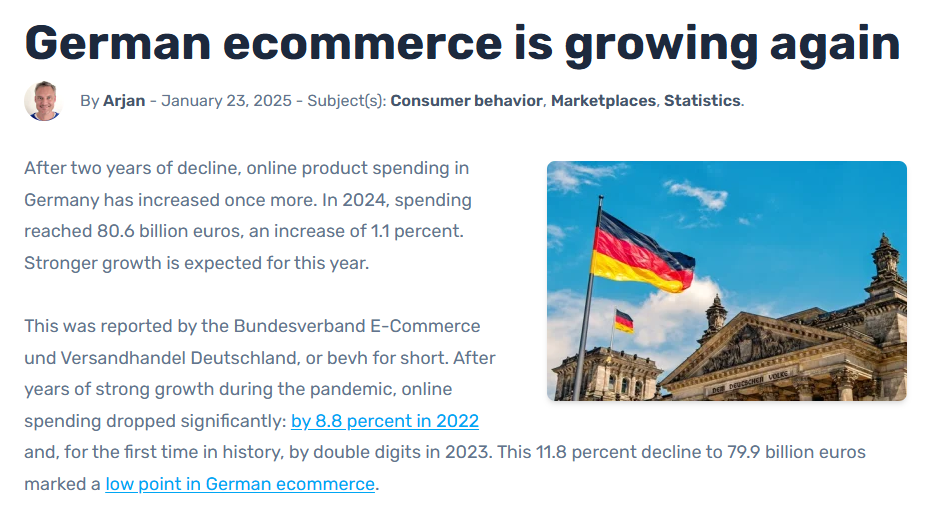
Neueste Branchendaten zeigen,Im Jahr 2025 überstieg der Online-Warenkonsum in Deutschland 83,1 Milliarden Euro, ein Anstieg von 3,2 % im Jahresvergleich. Nicht nur die Größenordnung ist beeindruckend, auch die Wachstumsrate übertraf die allgemeinen Markterwartungen.
Diese starke Leistung wird von lokalen Branchenverbänden als„ein seltener Wachstumslichtblick in der deutschen Wirtschaft“ bezeichnet, und sie prognostizieren, dass sich dieser Schwung bis 2026 fortsetzen wird.
Bildquelle:ecommercenews.
Plattformökonomie treibt Wachstum an, chinesische Kräfte leisten bedeutenden Beitrag
Betrachtet man dieses Wachstum genauer, stellt man fest, dass Plattform-E-Commerce den Großteil der Marktdividenden absorbiert hat.
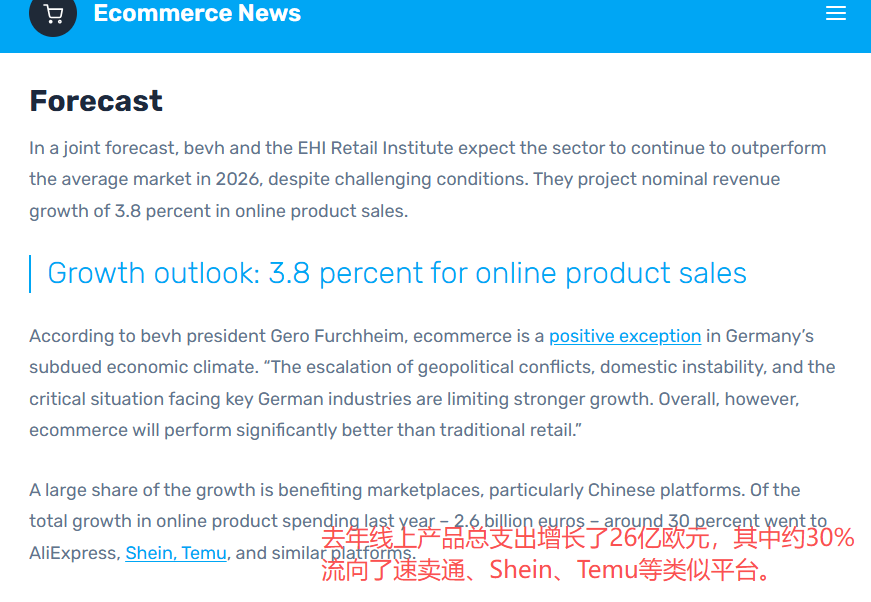
Besonders hervorzuheben sind die grenzüberschreitenden Plattformen aus China. Daten zeigen,Etwa dreißig Prozent des Wachstums des Online-Konsums in Deutschland im Jahr 2025 wurden von Plattformen wie AliExpress, Shein und Temu beigetragen.
Dank ihres breiten Sortiments, wettbewerbsfähiger Preise und flexibler Lieferketten haben sie die Aufmerksamkeit der deutschen Verbraucher, insbesondere der jungen, preisbewussten Zielgruppe, fest im Griff und sind zu einer nicht zu übersehenden Kraft geworden, die das Marktwachstum antreibt.
Das BranchenforschungsinstitutIFH KÖLN prognostiziert, dass der deutsche E-Commerce-Markt bis 2030 weiter wachsen wird, mit einer durchschnittlichen jährlichen Wachstumsrate von etwa 4 %.
Auf dieser sich ständig ausweitenden Landkarte werden die umfassenden Plattformen wie Amazon voraussichtlich weiterhin den größten Anteil an den Wachstumsdividenden ernten.
Bildquelle:ecommercenews
Nicht nur„Niedrigpreise“, „Secondhand“ und „Social“ werden zu neuen Trends
Neben dem traditionellen Einzelhandel mit Waren gewinnen zwei Nischensegmente in Deutschland zunehmend an Bedeutung.
Zum einen der Secondhand-E-Commerce. Laut Schätzungen des britischen Centre for Economics and Business Researchkönnte der Markt für Secondhand-E-Commerce in Deutschland im Jahr 2025 auf 7 Milliarden Euro ansteigen.
Dieser Trend ist zum einen auf den Bedarf der Verbraucher an„Geldsparen“ unter dem Inflationsdruck zurückzuführen, zum anderen hängt es eng mit dem aufkommenden Umwelt- und Kreislaufkonsumgedanken zusammen.
Zum anderen die aufkeimende Social-Commerce-Bewegung. Der deutsche DigitalverbandBitkom hat kürzlich in einer Studie festgestellt, dass immer mehr Nutzer soziale Plattformen wie Instagram, TikTok und Facebook als Einkaufskanäle betrachten. Bei den unter 30-Jährigen gibt fast ein Drittel an, in Zukunft vollständig über soziale Medien einkaufen zu wollen.
Dieser Wandel deutet darauf hin, dass der Anfang und das Ende von Kaufentscheidungen durch soziale Inhalte neu gestaltet werden, was dem Markt völlig neue Traffic- und Conversion-Logiken bringt.

Bildquelle: Internet
Solide Marktbasis, vertiefte Positionierung der Giganten
Deutschland kann zu einer E-Commerce-Hochburg in Europa werden, dank seiner soliden Fundamentaldaten: der größten Volkswirtschaft Europas, hohem Pro-Kopf-Einkommen.Das BIP, das verfügbare Einkommen, die große Anzahl von Internetnutzern und die hohe Internetverbreitung bilden zusammen einen fruchtbaren Boden für die Entwicklung des E-Commerce.
Die Marktstruktur ist auch relativ klar. Laut einer Umfrage betrachten über 70 % der deutschen Verbraucher E-Commerce-Plattformen als den bequemsten Einkaufsort, sodass Amazon einen signifikanten Anteil an der mentalen Präsenz und am Marktanteil erlangt hat.
Um seine Vorteile zu festigen, vertieft Amazon kontinuierlich die lokale Betriebsführung, zum Beispiel inVor der Hochsaison Ende 2025 wurde bekannt gegeben, dass in Deutschland etwa 12.000 zusätzliche Saisonarbeitskräfte eingestellt werden.
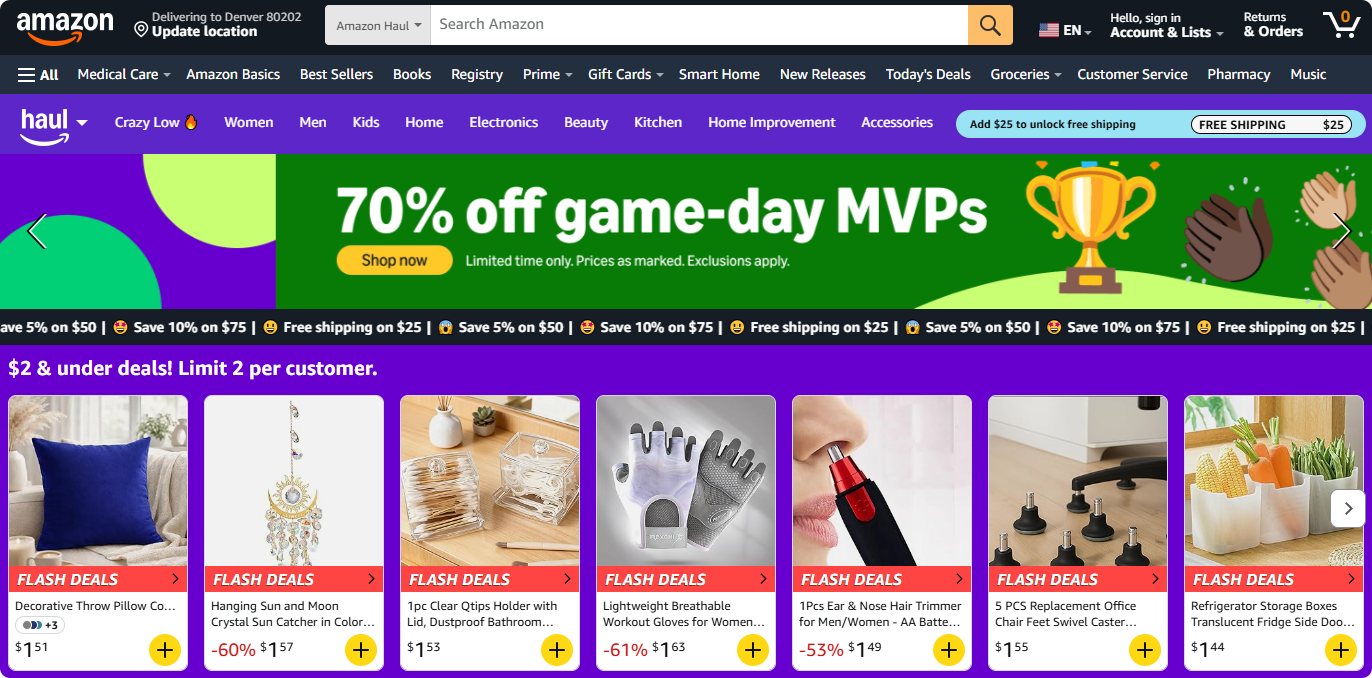
Gleichzeitig, um auf die VerbraucherDie Verfolgung der Trends „niedriger Preis“ und „Second Hand“: Amazon Deutschland hat rechtzeitig die Testversion des Billigbereichs „Amazon Haul“ eingeführt, der sich auf Artikel unter 20 Euro konzentriert und entsprechende Rabatte bietet.
Bildquelle:Amazon
Im Zeitalter des vielfältigen Wettbewerbs eröffnet sich für Verkäufer ein neues Fenster.
Insgesamt ist der deutsche E-Commerce-Markt in eine neue Phase eingetreten, in der sich eine stabile Erholung und strukturelle Aufwertung parallel vollziehen. Seine solide wirtschaftliche und konsumtive Basis ist die grundlegende Stütze für eine langfristig positive Marktentwicklung. Derzeit durchläuft der Markt gleichzeitig drei große Veränderungen: die Zentralisierung der Plattformen, die Segmentierung der Produktkategorien (z. B. Second-Hand) und die Sozialisierung der Vertriebskanäle.
Es ist absehbar, dass der deutsche E-Commerce-Markt der Zukunft nicht länger eine Arena mit nur einem Modell sein wird, sondern ein vielfältiges Ökosystem, das aus Plattformen, eigenständigen Shops, sozialen Ökosystemen und vertikalen Modellen besteht. Wer die Veränderungen der lokalen Konsumtrends präziser erfasst, wer flexibler neue Kanäle und Spielweisen anpassen kann, der hat größere Chancen, in diesem Wettbewerb um den europäischen Kernmarkt seinen eigenen Wachstumsraum zu gewinnen.