 3486
3486When building a brand overseas on TikTok, many people think you have to spend a lot of money to work with top influencers to see results.
But real cases show us that small and medium influencers often deliver even more impressive results.
Compared to top influencers with millions of followers, those small and medium influencers with tens of thousands or hundreds of thousands of followers can actually help brands achieve greater returns with less investment, thanks to their precise reach and authentic content.
Today, let's break down three brand cases to see how they used small and medium influencers to penetrate overseas markets.
Image source: Google
1. Choose the right "vertical field"—follower accuracy is more important than quantity
Many brands focus on follower numbers when looking for influencers, thinking the more followers, the wider the coverage. But TikTok's algorithm is "content matches user." Instead of choosing a general influencer with millions of followers, it's better to pick an influencer with fewer followers but a precise vertical niche. Their followers are often people with clear needs for a certain type of product, resulting in higher conversion rates.
Case: BambuLab breaks out with vertical influencers
3D printer brand BambuLab collaborated with @ellygmr, who has 685,100 followers—not a top influencer on TikTok, but she specializes in 3D printing. Her followers are all 3D printing enthusiasts. In her video, she unboxes and demonstrates printing fun ornaments, focusing entirely on the "3D printing" scenario, clearly explaining the product's features and user experience. As a result, the video surpassed one million views, and the comments were full of people asking "where can I buy it," precisely converting a batch of potential customers. Compared to working with top tech influencers, the followers of these vertical small and medium influencers are more "targeted," making promotion more efficient.

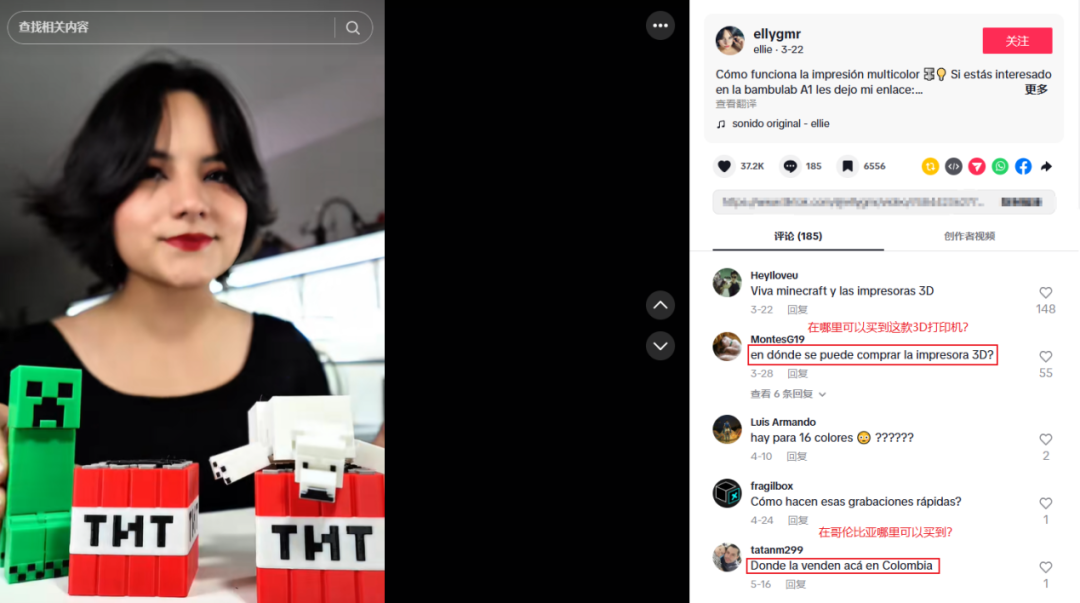
Image source: TikTok
2. Use "everyday scenarios"—more penetrating than hard ads
TikTok users hate stiff advertisements but are willing to pay for authentic life scenarios. The advantage of small and medium influencers is that their content feels more like "a friend sharing" rather than "a celebrity selling," making it easier for users to resonate and think "this is exactly what I need." What brands need to do is let influencers place products in daily scenarios and move users in a subtle, unobtrusive way.
Case: Eufy vacuum cleaner's 16-second viral logic
Eufy collaborated with cleaning influencer @suuuuupoido, who has only 217,200 followers but produced a viral video with 124.8 million views. The video has no complicated explanation, just one scenario: the influencer uses a Eufy vacuum cleaner to clean a dust-covered bedroom in 16 seconds. This real cleaning scene directly hits the user's pain point of "cleaning is troublesome," making the product's advantages of "strong suction and fast speed" obvious at a glance. Compared to the polished ads of top influencers, these short videos with a touch of real life are more convincing to users that "this thing is really useful."
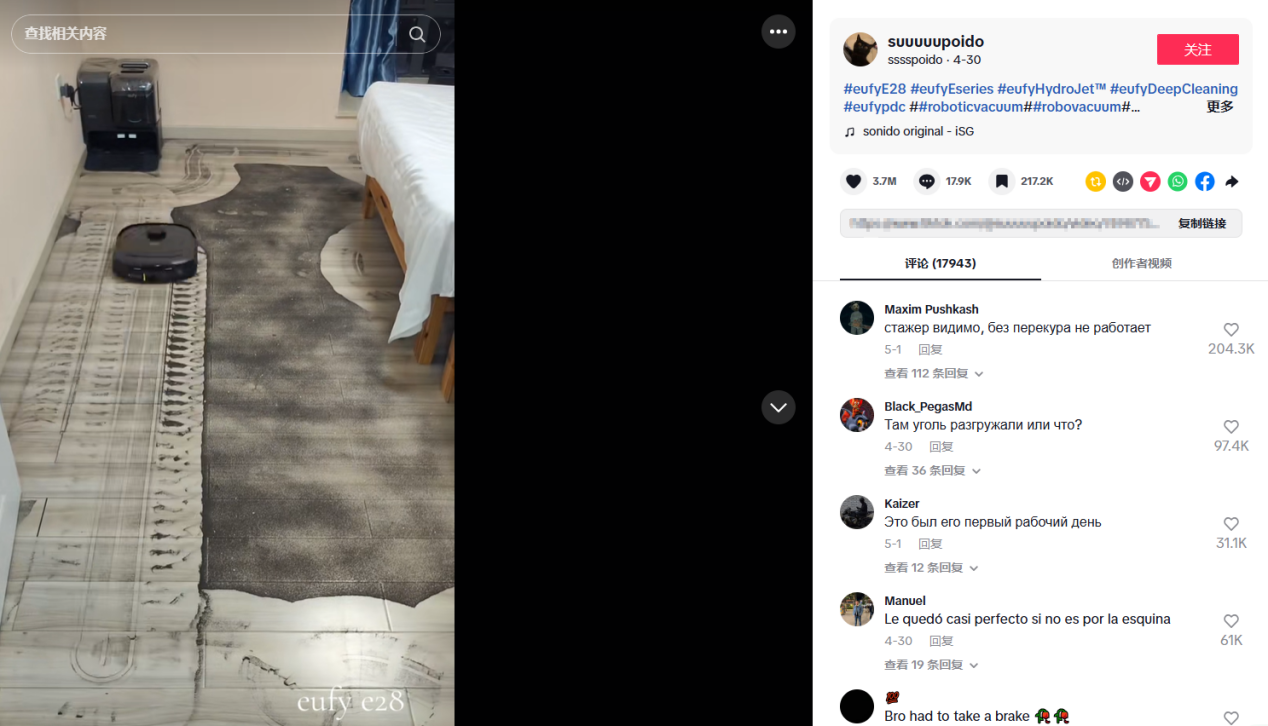
Image source: TikTok
3. Focus on the "core selling point"—let users instantly get the value
Content from small and medium influencers is often more focused and not distracted by irrelevant information. When brands work with them, as long as they capture one core selling point and present it intuitively, it's easy for users to remember the product's value. After all, users have limited attention when scrolling TikTok, and being able to explain "what benefit this product brings me" in 15 seconds is more effective than listing ten advantages.
Case: PITAKA stand's "one case, multiple uses" demonstration
Digital accessory brand PITAKA collaborated with @cha.siuu, who has 255,300 followers. In the video, he does just one thing: demonstrates the flexible use of the iPad stand. He adjusts the stand to landscape mode for watching shows, then to portrait mode for checking messages, clearly showcasing the four adjustable angles. The video doesn't mention any technical specs, only highlighting the core advantage of "one case, multiple uses." As a result, it got 1.8 million views, and some users commented, "I don't even have an iPad but I want to buy it." This kind of focused demonstration precisely hits users' needs for "convenience and practicality," making it much more effective than lengthy ads.
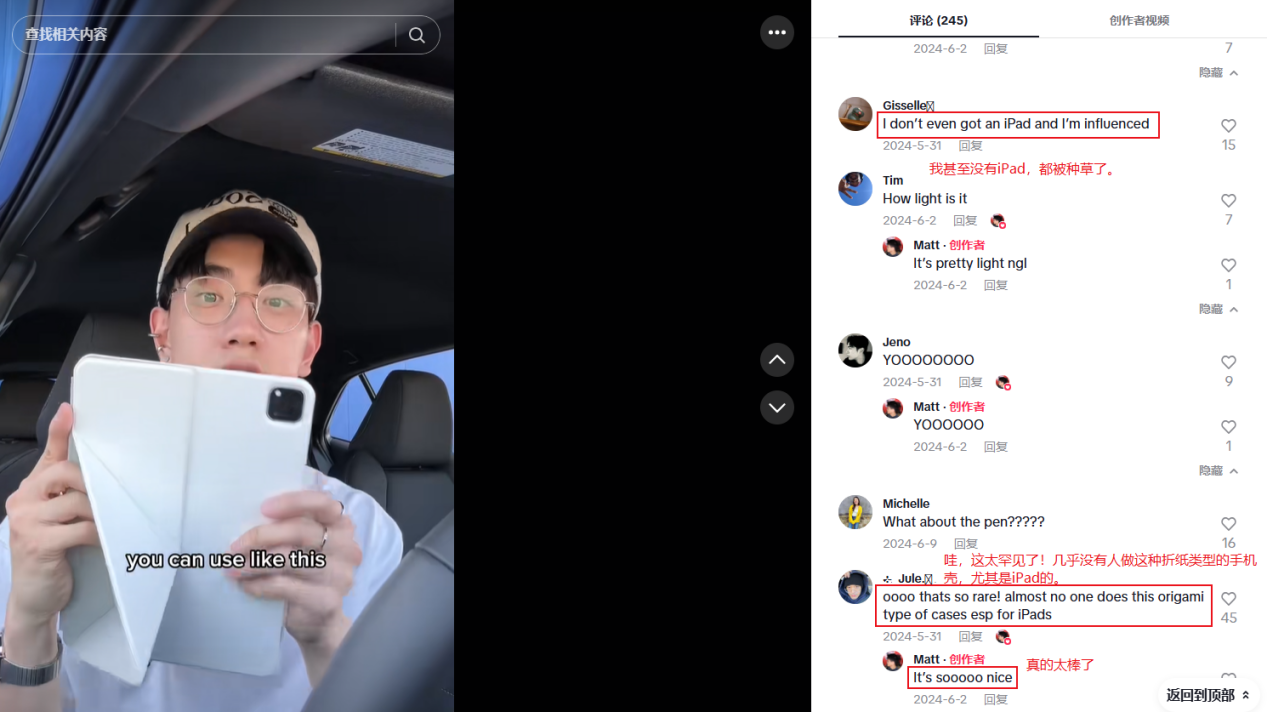
Image source: TikTok
Conclusion: Small and medium influencers are more "cost-effective"
After reading these three cases, you'll find that the key to TikTok influencer collaboration is not "how many followers they have," but "whether they can precisely reach users and tell the product story well."
For brands going overseas, instead of spending big money on top influencers for "show," it's better to carefully select a group of highly matched small and medium influencers. They may not bring billions of exposures, but they can bring real conversions. This is the "cost-effectiveness secret" of influencer marketing.