
 2169
2169
In the globalized business environment, more and more companies are choosing to Tuke, bringing their products to the international market.
However, many Tuke people face a key question:“How should I price my product?”
Pricing too high may scare away potential customers, while pricing too low may squeeze profit margins and even affect brand image. Therefore, a scientific and reasonable pricing strategy is crucial.

Image source:Google
Build your global pricing mindset framework
Before you bring your product to the international market, you must establish a solid pricing foundation. This foundation consists of three core pillars:cost structure, market positioning, and competitive landscape.
Cost calculation is the starting point of pricing, but many Tuke people often only calculate explicit costs. A complete cost structure should include: production costs, logistics fees (first leg, international shipping, last-mile delivery), platform commissions, payment processing fees, tariffs and import taxes, marketing expenses, after-sales service costs, and unpredictable exchange losses.
Take a product with an ex-factory price of 30 RMB as an example. Shipping to the US may incur 15 RMB logistics fee, 8 RMB platform commission, and 5 RMB tariff. These basic costs alone reach 58 RMB, not including marketing and operating costs. This iswhy many seemingly low-priced products are still hard to profit from in the international market.

Image source:Google
Market positioningthendetermines your pricing range. Do you want to be a value-for-money popularizer, a mid-range value provider, or a high-end luxury brand? Different positioning requires different price support.
For example, for Bluetooth headsets, a student basic model and a professional noise-cancelling model,face completely different price sensitivities and profit margins. Before Tuke, be sure to determine through market research how much premium your target customers are willing to pay for what kind of value.

Image source: Amazon
In addition,competitive analysis is the calibrator of pricing. You need to understand the price range of direct competitors, indirect substitutes, and potential new entrants in the target market.
But remember, competitive analysis is not for simple benchmarking, but to find differentiated pricing opportunities. Maybe competitors are weak in a certain function, and your product happens to make up for this shortcoming, then an appropriate premium becomes possible.
Regionally adaptiveregional pricing strategies
The global market is by no means monolithic. Consumers in different regions have significantly different perceptions, acceptance, and willingness to pay for prices. Successful Tuke peopleshouldunderstand the subtlety of a country-specific strategy.
Take the North American market, especially the United States, where consumers focus more on value rather than absolute low prices. The popular strategy here is mid-range pricing,neither the cheapest nor the most expensive, but the most cost-effective. American consumersarewilling to pay a premium for quality service, fast delivery, and reliable after-sales.
It is worth noting that there are sales tax differences between different states in the US, which need to be considered in pricing. The Canadian market is similar to the US, but is more sensitive to fair pricing, and large price fluctuations may trigger negative reactions.

Image source:Google
The European market, on the other hand, is diverse. Western European countries such as Germany, France, and the UK have consumers who demand high product quality and environmental standards and are willing to pay higher prices for this. In contrast, Eastern European countries such as Poland and the Czech Republic are much more price-sensitive.
In addition, the European VAT system is complex, with tax rates ranging from 17% to 27% in different countries, which must be calculated in advance in pricing. A practical strategy is: adopt premium pricing in affluent Northern and Western European markets, and penetration pricing in Southern and Eastern Europe to quickly gain market share.

Image source:Google
Now let's talk aboutthe Southeast Asian market, which has become a Tuke hotspot in recent years. The pricing logic here is completely different. Except for Singapore and Malaysia, which are relatively developed, most Southeast Asian consumers are extremely price-sensitive. Small and frequent consumption patterns are prevalent, so pricing needs to consider splitting into smaller units or offering flexible payment options (such as installment payments).
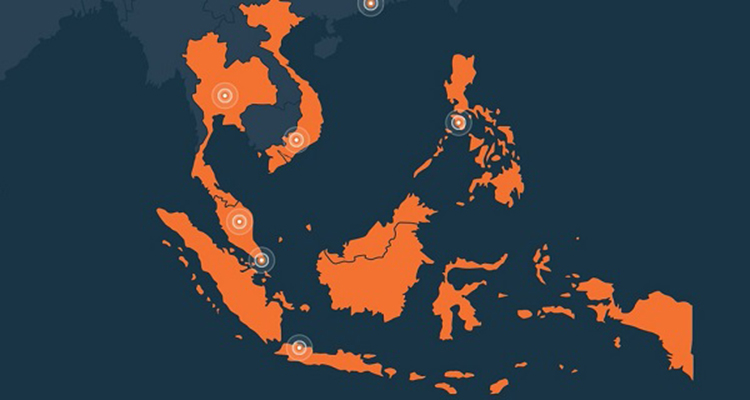
Image source:Google
Finally, let's talk aboutemerging markets,such as Latin America, the Middle East, and Africa. These regions may face high inflation, large exchange rate fluctuations, and underdeveloped payment infrastructure.
In these markets, it is recommended to adopt a cost-plus+exchange rate bufferstrategy.Calculate costs in stable currencies such as the US dollar, add reasonable profit, convert to local currency based on real-time exchange rates, and set up a regular adjustment mechanism.
At the same time, considering the multiple distribution levels that may exist in these regions, it is also crucial to leave enough profit margin for distributors.

Image source:Google
Conclusion
Pricing for Tuke products is by no means a simple numbers game, but the result of balancing multiple factors.
In the future,Tuke competition will become more intense. Enterprises need to adjust pricing strategies more flexibly, combining data analysis and localized insights to find the optimal price point.
Remember:Only by truly understanding the economic environment, consumer psychology, and industry landscape of your target market can you achieve steady growth and long-term profitability in the global market.