 2513
2513How far can a small knife go?
When a market is awakened by new consumer demands for "lightweight" and "scenario-based" products, those classic tools sleeping deep in the toolbox are ushering in their own moment in the spotlight.
According to Gongyan Industry Research Institute,by 2025, the global hiking and camping equipment market size has stabilized at about $1.76 billion, and is rapidly penetrating into daily consumption scenarios that focus on experience.
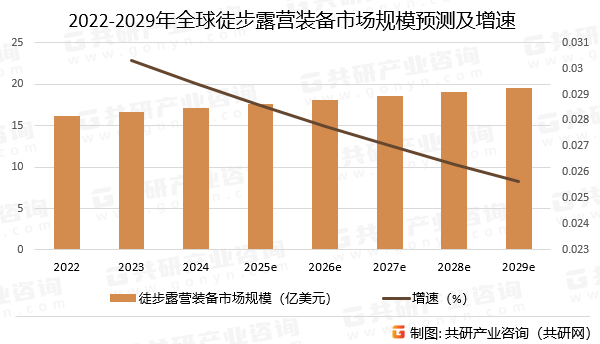
Image source: Gongyan Industry Research Institute
In this fiercely competitive track, the American brand Gerber, founded in1939, relies on its military-grade product quality to sell knives and outdoor tools to multiple markets worldwide,and still maintains annual revenue of over$130 million.
Today, Tuke will show everyone what exactly this knife has done right.
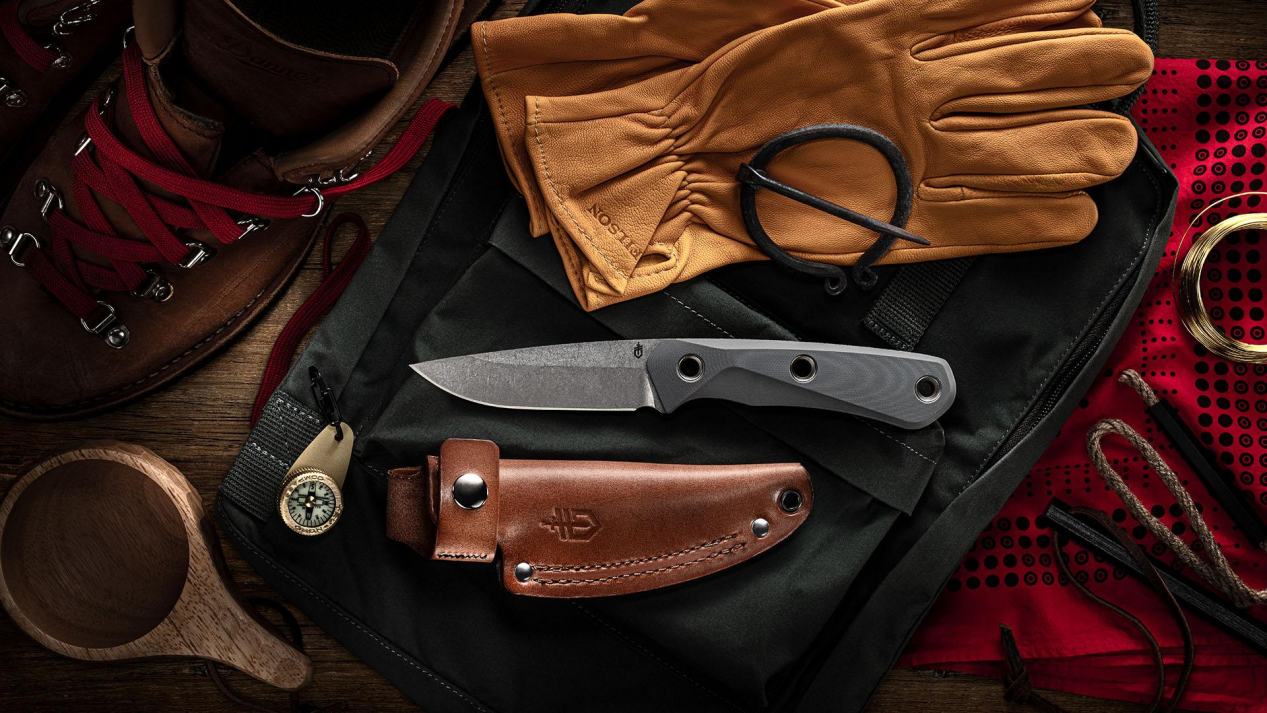
Image source:google
From Christmas Gift Box to Military Quality: A History of Trust Forged
According to official brand information,the story of Gerber began with a special Christmas gesture.
On the eve of Christmas 1938, a young man named Joseph Gerber carefully packed several knives hand-forged by his blacksmith friend into walnut gift boxes and gave them to his close friends. The exquisite craftsmanship and practical design of the knives earned generous praise from his friends.
This "original feedback" from the market ignited Joseph's entrepreneurial ambition. The following year, in 1939, he founded the legendary Gerber knife company in Portland, Oregon, USA, naming it after his surname.
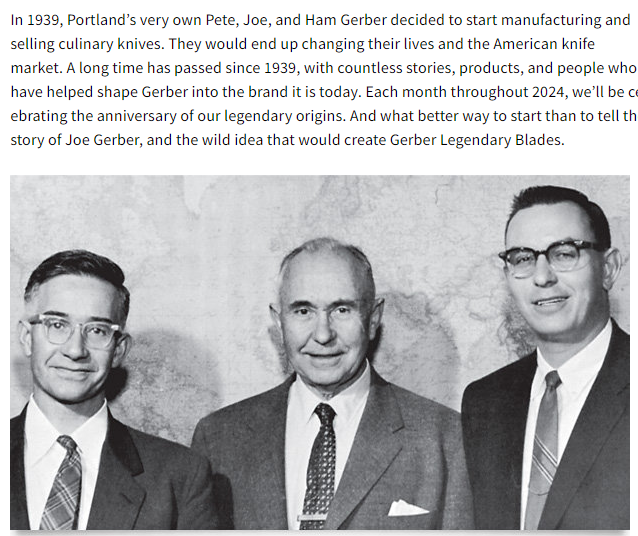
Image source:gerber gear
Through more than eighty years of ups and downs,Gerber has always adhered to the mission of "committed to creating tools that solve problems".
Its product line has expanded from a single knife to an ecosystem covering all outdoor living scenarios, including rescue knives, multi-function pliers, stainless steel cookware, flashlights, axes, headlamps, and more.
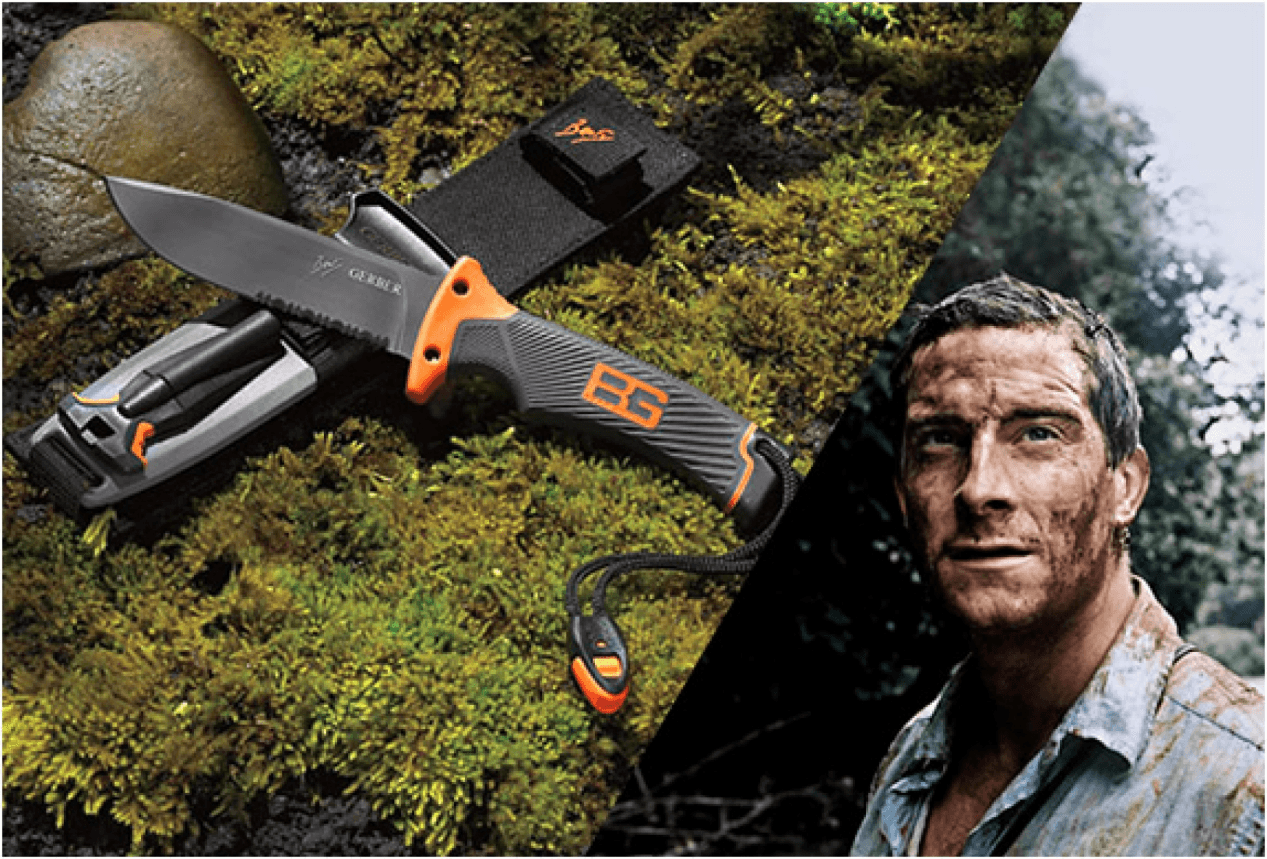
Entering the21st century, they made two highly visionary strategic decisions: first, they launched the "Bear Grylls Series" in collaboration with survival expert Bear Grylls, leveraging his personal IP as the "ultimate survival expert" to inject strong professional endorsement into the brand; second, in 2024, they keenly captured the growth in outdoor picnic demand and launched a full-size stainless steel cookware series, extending years of metal processing expertise into new lifestyle scenarios.
It is precisely this ability to actively embrace changes of the times that constitutesthe core competitiveness of the Gerber brand through long economic cycles.
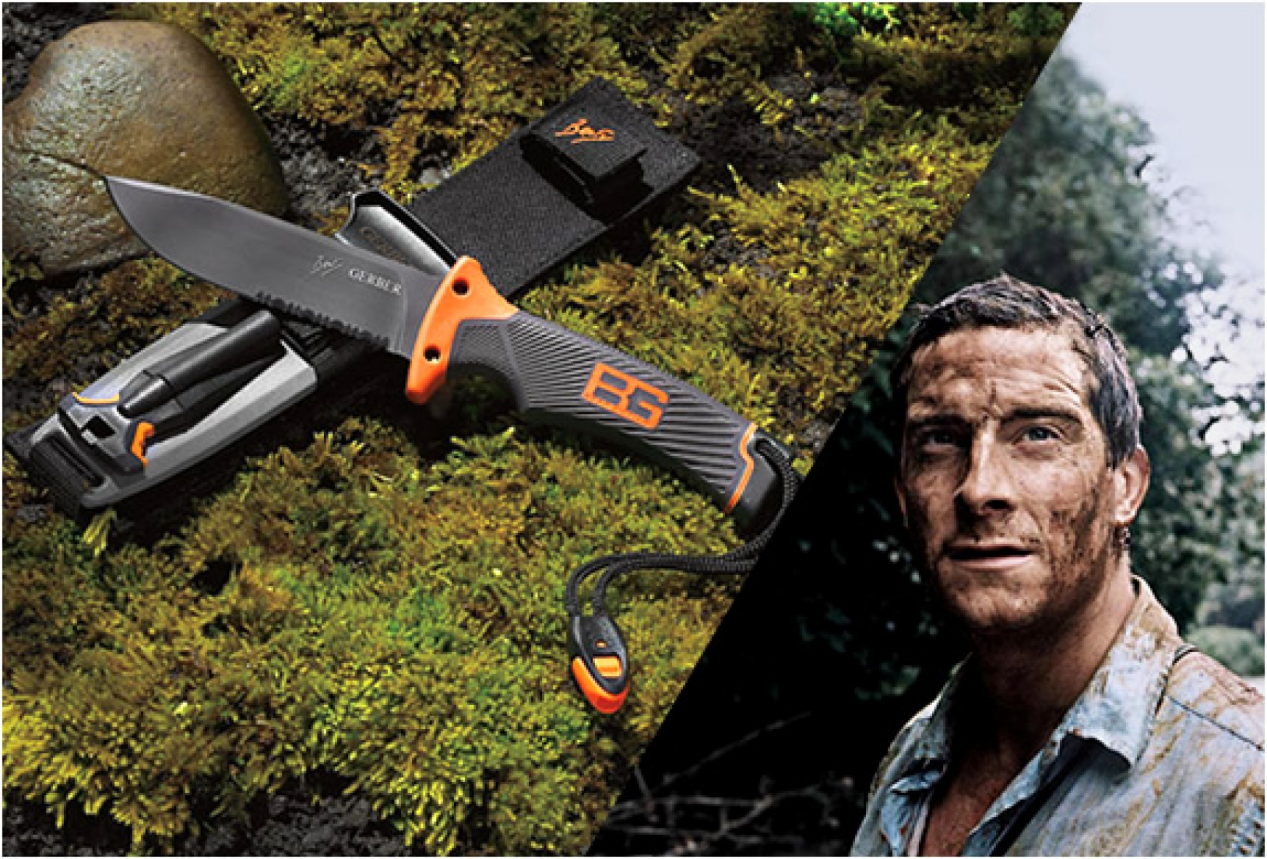
Image source:google
Not a Stagnant "Old Antique"
Facing industry changes and shifts in user habits, as an established company,Gerber did not remain stagnant, but instead built a modern channel system integrating online and offline, with brand and sales synergy, in an active and enterprising manner.
1. TikTok
Currently, the brand's officialTikTok account @gerbergear has gained 42,300 followers and about 272,800 likes. In the official profile, they directly emphasize "85 years of honing outdoor gear that solves problems," reinforcing historical accumulation and professional identity.
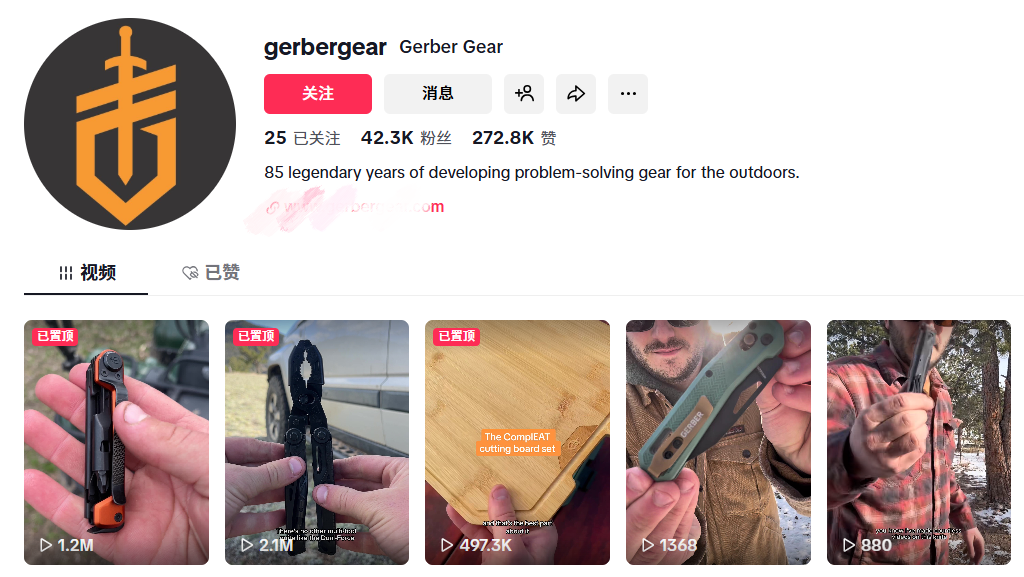
Image source:TikTok
In terms of content format, they use real outdoor scenarios (camping, mountain cooking, wilderness camp setup, hunting and fishing, etc.) to showcase the use of knives, cookware, and multi-functional tools, such as opening cans outdoors, handling ingredients, setting up camps, repairing equipment, etc., making the product's"durability, multifunctionality, portability" visible through specific actions.
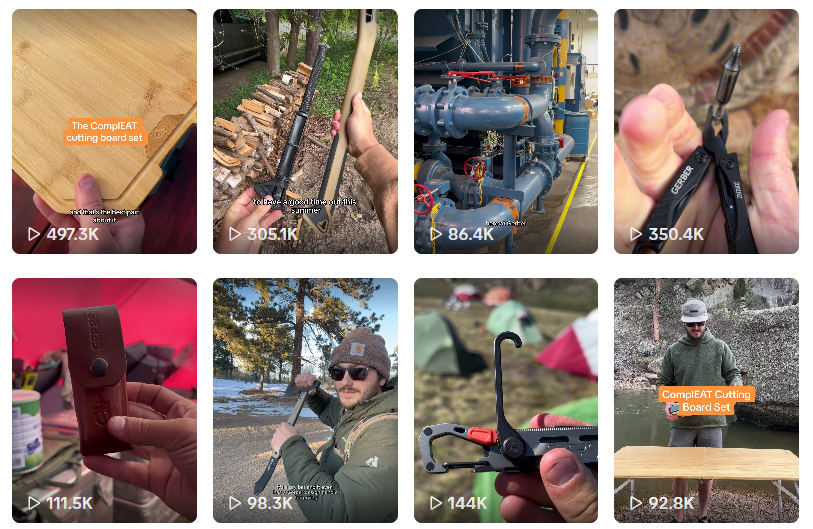
Image source:TikTok
At the same time,theyalso frequently post short content focused on atmosphere, such as mountain dates, outdoor dinners, wilderness coffee, and other light outdoor scenarios, using life-like copywriting to lower the professional threshold and attract entry-level or lifestyle-oriented users.
For example, in2024, they posted a video making cheese steak in strong winds, with no extra product explanation, only the process of overcoming difficulties with various tools.
As the copy says,"We like to do our best to solve those problems." This conveys the brand's attitude of facing the outdoors side by side with users, making it easier for users to accept these products.
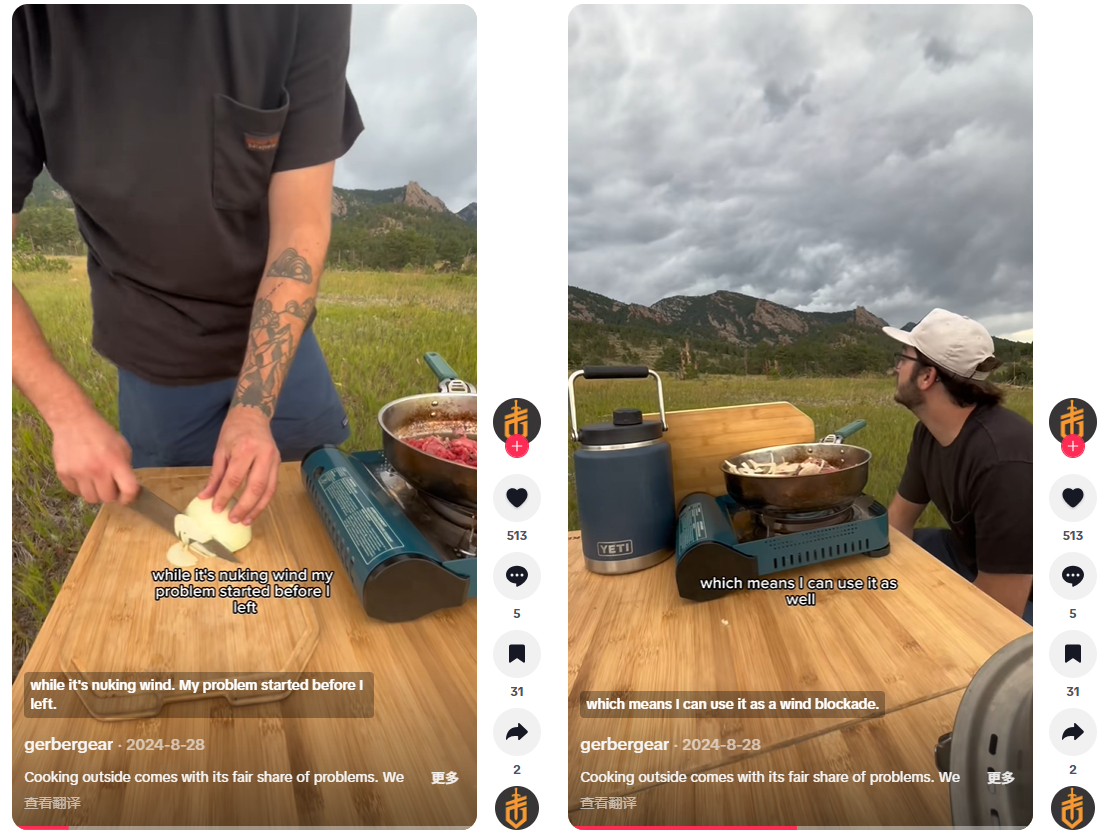
Image source:TikTok
In addition to operating their own account,Gerber began selling on TikTok Shop last August, fully responding to the current "content + e-commerce" closed-loop trend, allowing users to place orders directly after watching videos, shortening the path from planting interest to conversion.
According to platform data, the brand has achieved$51,400 in the past three months, which is quite good.
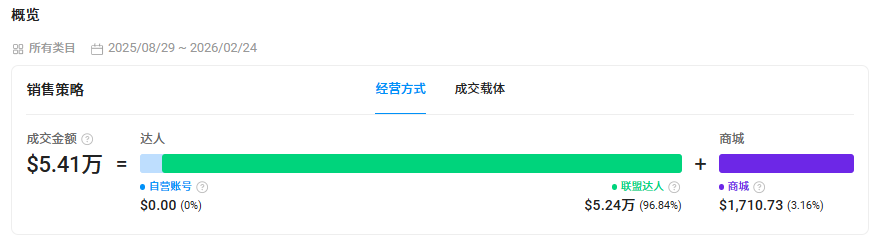
Image source:kalodata
From the data structure, we can see thatthe main source of Gerber's TikTok revenue is influencer collaboration.
Perhaps fully considering that the technical attributes and durability of the product need to be verified in real scenarios,most of Gerber's TikTok collaborators are review bloggers.
These influencers are good at violent testing, comparative reviews, and extreme usage, intuitively demonstrating the practicality of the product, which is more effective than the brand saying it a thousand times.
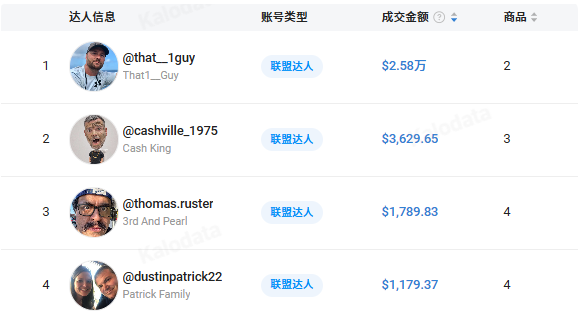
Image source:kalodata
TikTok influencer @cashville_1975 is a good example. In a video in collaboration with the brand, he repeatedly throws a Gerber tactical knife at a tree trunk to test the toughness of the blade.
Although it looks simple and rough, the effect is immediate. Since its release inDecember last year, the video has received 766,800 views, verifying the product's reliability in the most direct way.
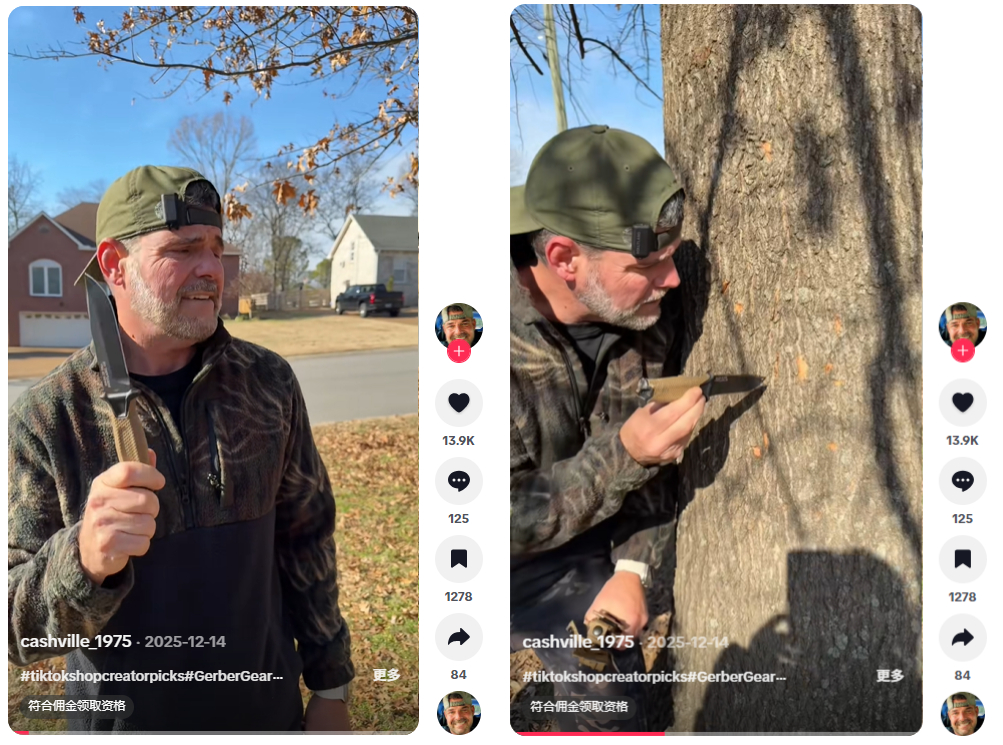
Image source:TikTok
2. Instagram
OnInstagram, Gerber's official account @gerbergear has about 399,000 followers, with over 2,800 posts, forming a large-scale library of graphic and video content assets.
Compared toTikTok's style, which is more rhythmic and short-video oriented,the content here is more focused on extreme testing and texture presentation. For example, through tests of chopping, splitting, and cutting in rainstorms, mud, and extreme cold, the reliability of the product in extreme environments is highlighted.
This approach complementsTikTok's scenario videos—onecreatesa sense of daily life immersion, the othershowsprofessionalism in extreme environments, together piecing together a complete picture of product trust.
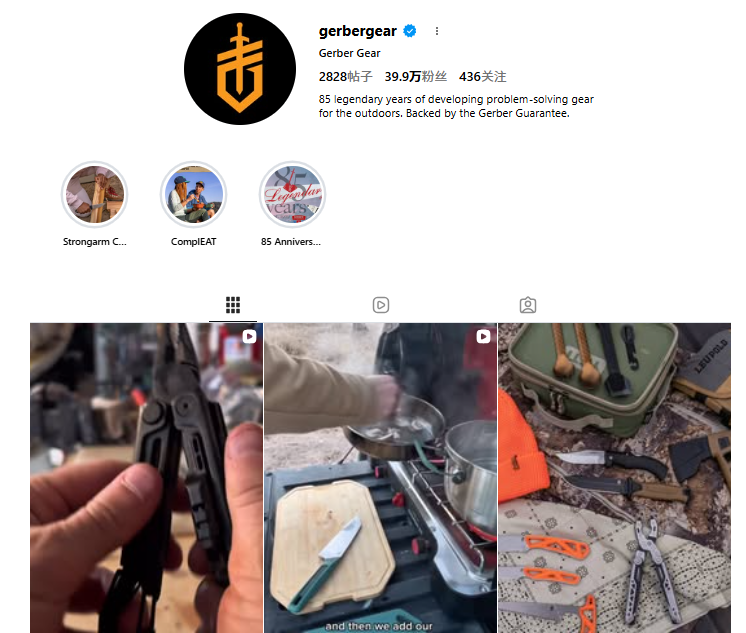
Image source:Instagram
Independent Site+ Third-Party Platform: Dual-Track Channel Strategy
In channel building,Gerber follows atypical"independent site + third-party platform" dual-track model.
On one hand, they use their official website and independent site to shape brand image, capture search traffic, and provide in-depth product information; on the other hand, they achieve sales coverage and scale expansion through large third-party platforms like Amazon..
At the independent site level,they use refined blog marketing, dividing content into outdoor adventure stories, gear guides, tutorials, recipes, etc., and embedding product links.
This high-quality content update significantly increases the site's keyword density and inclusion in search engines.
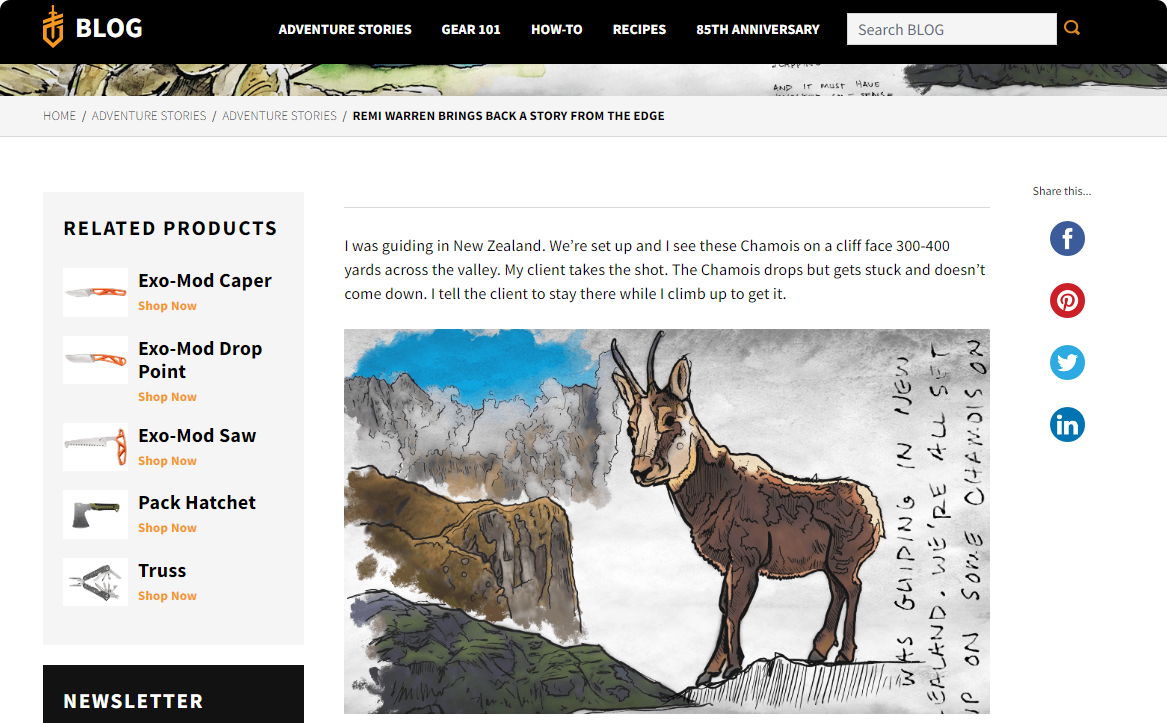
Image source:gerber gear
According to data, the independent site receives hundreds of thousands of monthly visits, with direct access and organic search accounting for a very high proportion of overall traffic,which meansa large number of users arrive at the site by directly entering the URL or searching for brand and product keywords.
This"actively sought out" traffic reflects the brand's strong memorability in users' minds and the long-term accumulation of SEO operations.

Image source:similarweb
Meanwhile, the layout on platforms like Amazon mainly solves the"easy to buy, buy on impulse" problem: after users are attracted by social media contentorlearn about the product through search, they can place orders directly on familiar shopping platforms.
This"brand self-operated base + platform sales" combination allows the brand to continuously accumulate brand assets without losing channel coverage and conversion efficiency.
Conclusion
This brief review of the Gerber brand case is not meant for everyone to copy its path to success, but rather to extract valuable insights for more Chinese companies eager to go global.
Today, competition in overseas markets is no longer simply a price war or a distribution war. In fact, it tells us: true globalization is not about moving products, but about resonating values.
For Chinese Tuke companies, we have the world's most complete supply chain and the most exquisite manufacturing process, which determines that our product capability floor is not low. But what determines the brand ceiling is often"content power"—whether we can tell a story that overseas users can understand, remember, and evenare willing to actively share?
Although this path requires patient cultivation, it is undoubtedly the necessary road to higher brand value and a more stable market position.