 1740
1740Can a trader without a factory grow a real brand?
Twenty years ago, the answer might have been no. But today, Yaheetech has given a resounding response.
Yaheetech's operating entity, Shenzhen Qianhai Yaxun E-commerce Co., Ltd., was founded in Shenzhen in 2003. Starting out in trading with no factory of their own, the founder and team managed to build a global brand in heavyweight categories like furniture, pet supplies, outdoor gardening, and sports equipment.
Image source: Yaheetech
In 2018, Yaheetech joined Amazon, quickly established itself in the home category on the North America site, entered the Top 10, and achieved monthly sales exceeding $500,000.
On the new battlefield of TikTok, its performance is even more striking. As of now, Yaheetech's US store has sold over 292,500 units, with total sales reaching $25,308,300 and $1,273,900 in the last 30 days.
How can a trader with no factory background stand out in the asset-heavy cross-border home furnishing track?
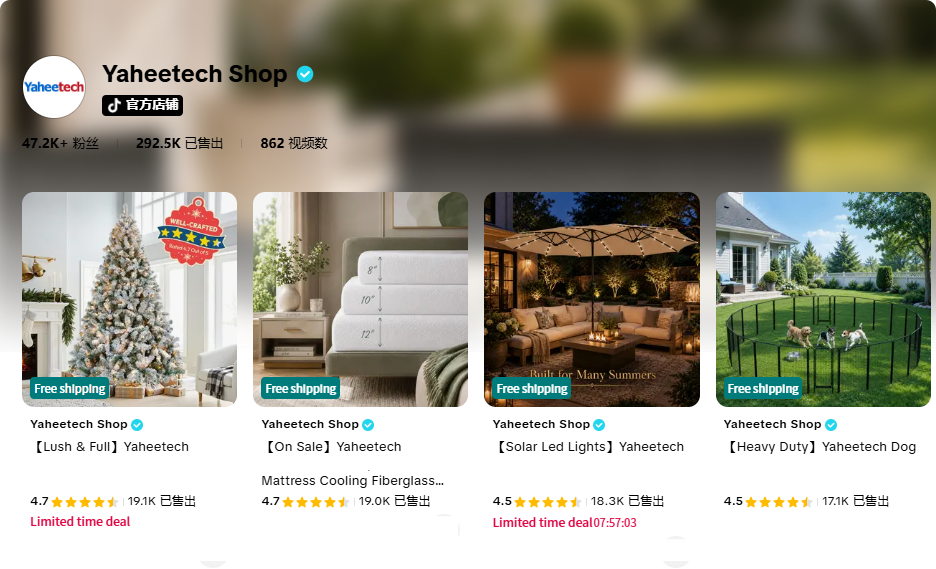
Image source: TikTok Shop
From trader to brand, Yaheetech took twenty years
According to data, when the founder started the company in Shenzhen in 2003, they were doing the most traditional cross-border trading business. At that time, cross-border e-commerce was far from mature, and most Chinese sellers were still doing OEM and low-cost reselling.
The real turning point came in 2018. That year, Yaheetech officially joined Amazon and began to consciously build the Yaheetech own brand. In the following years, the brand rapidly expanded its presence in European and American markets, establishing overseas logistics warehouses covering over 180,000 square meters and localized operation teams in 10 countries including the US, UK, Germany, and Italy. Meanwhile, the company set up the Xi'an Operations Center and Yiwu Storage and Transport Center in China, with over 700 employees worldwide.
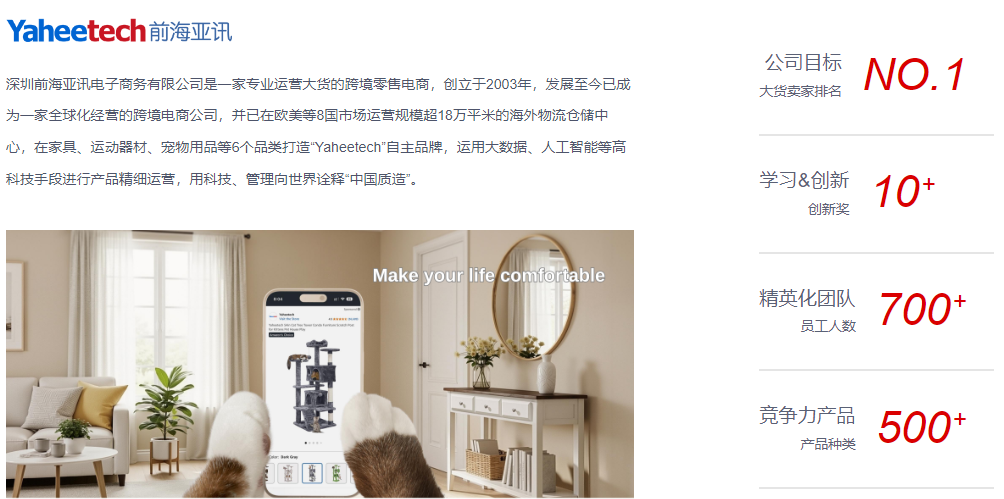
Image source: Yaheetech
Product line expansion was also rapid. Starting from furniture, Yaheetech gradually expanded into 6 categories including pet supplies, outdoor gardening, sports equipment, and health.
Among them, the cat tree in pet supplies became the most explosive item. A 54-inch dark gray cat tree topped the cat tree subcategory on Amazon, priced at $29.99, with sales of 11,500 units in the last 30 days and revenue of approximately $350,000. In the Amazon BSR TOP 20 list, Yaheetech had three cat trees on the list.
In terms of sales channels, besides major platforms like Amazon and Walmart, Yaheetech also built its own brand official website, forming a multi-platform plus independent site composite channel structure.

Image source: Yaheetech
TikTok Breakthrough: How to Do Interest E-commerce for Large Items?
Many people think that large home products are not suitable for TikTok. High average order value, long decision cycle, and high logistics costs seem to contradict the "impulse buying" logic of short videos. But Yaheetech has managed to make it work.
As of now, Yaheetech's US TikTok store has sold over 292,500 units. Its signature solar LED garden umbrella, multi-level cat tree, and metal pet fence have repeatedly sold tens of thousands of units on TikTok Shop, becoming Best Sellers in their categories.
How did they do it? There are three key aspects.
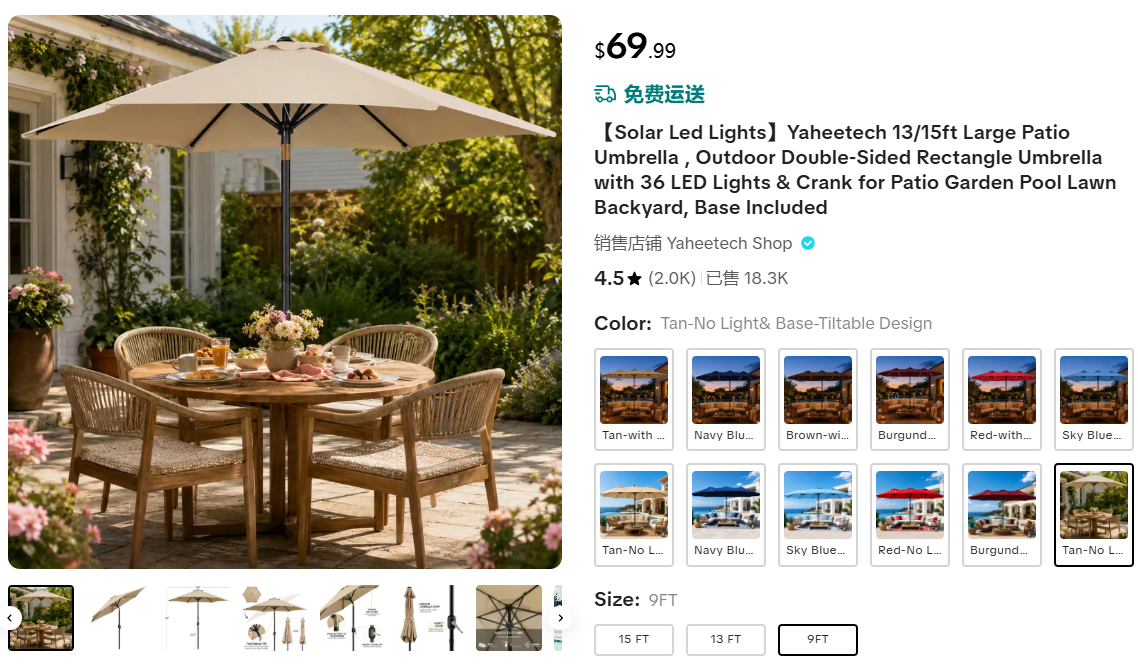
Image source: TikTok Shop
1. Account Matrix + Content Adaptation
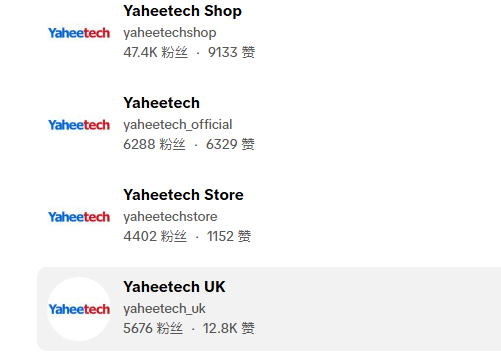
Yaheetech has deployed a multi-language, multi-region official account matrix on TikTok, including @yaheetech_official and @yaheetechshop for the US market, and @yaheetechstore for the UK market...
The content strategy for each account is tailored to the local market, rather than simply dubbing the same video into different languages.
Source: TikTok
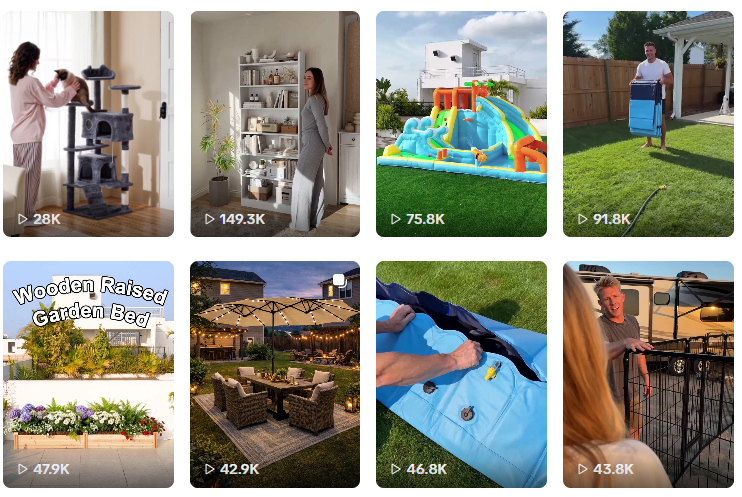
In content creation, Yaheetech understands the rhythm of short videos very well. On a fast-paced platform like TikTok, if you don't grab attention in the first two or three seconds, even solid content later gets easily swiped away.
So their videos often get straight to the point, either starting with the soothing visuals of 'immersive assembly,' directly showing the space contrast before and after furniture is placed, or opening with a funny moment of a pet bouncing on a cat tree.
Source: TikTok
Additionally, the development of AI is changing how brands create content. Yaheetech started experimenting with AIGC (AI-generated content) videos very early on.
In the past, a brand video from script to filming to editing had a long cycle and high cost. But now, AI video generation tools are significantly lowering that barrier. More importantly, with AI videos, the same product can quickly generate multiple versions that suit the aesthetic of different markets in Europe and America, achieving 'globalization in minutes.'
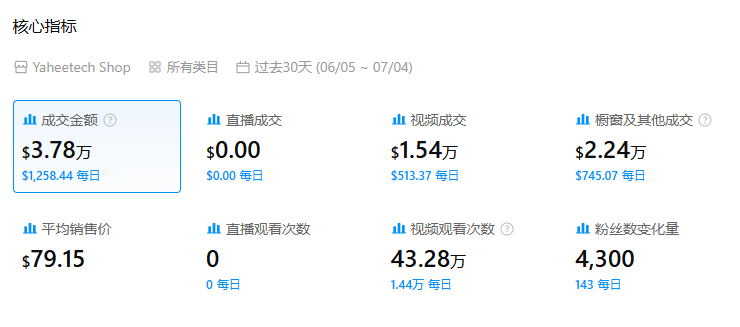
For a brand like Yaheetech that needs to operate simultaneously in markets such as the US and UK, the efficiency and cost advantages brought by AI videos are real. According to third-party platform data, its TikTok account @yaheetechshop generated sales of $37,800 in the last 30 days.
Source: kalodata
2. Affiliate Marketing + Influencer Matrix
For furniture with a higher average order value, consumers typically need strong trust endorsement.
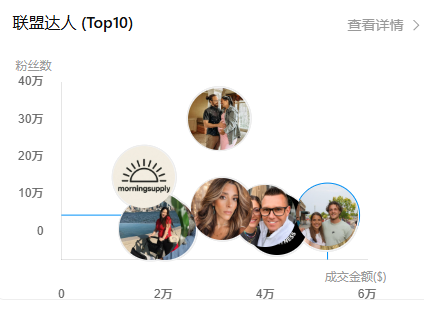
The brand extensively contacts mid-tier and small creators (KOCs) in home improvement, pet, and product review niches. By sending free samples, they allow creators to assemble and review products in real home settings.
Source: kalodata
For example, having a pet influencer film a scene of 'a puppy happily playing inside a metal fence that can't be knocked over,' or a home blogger showing 'how one person can easily assemble a memory foam mattress' – each piece of content precisely targets the pain points of potential consumers.
Combined with the attractive commission mechanism provided by TikTok's creator backend, a large number of lifestyle bloggers actively promote their products.
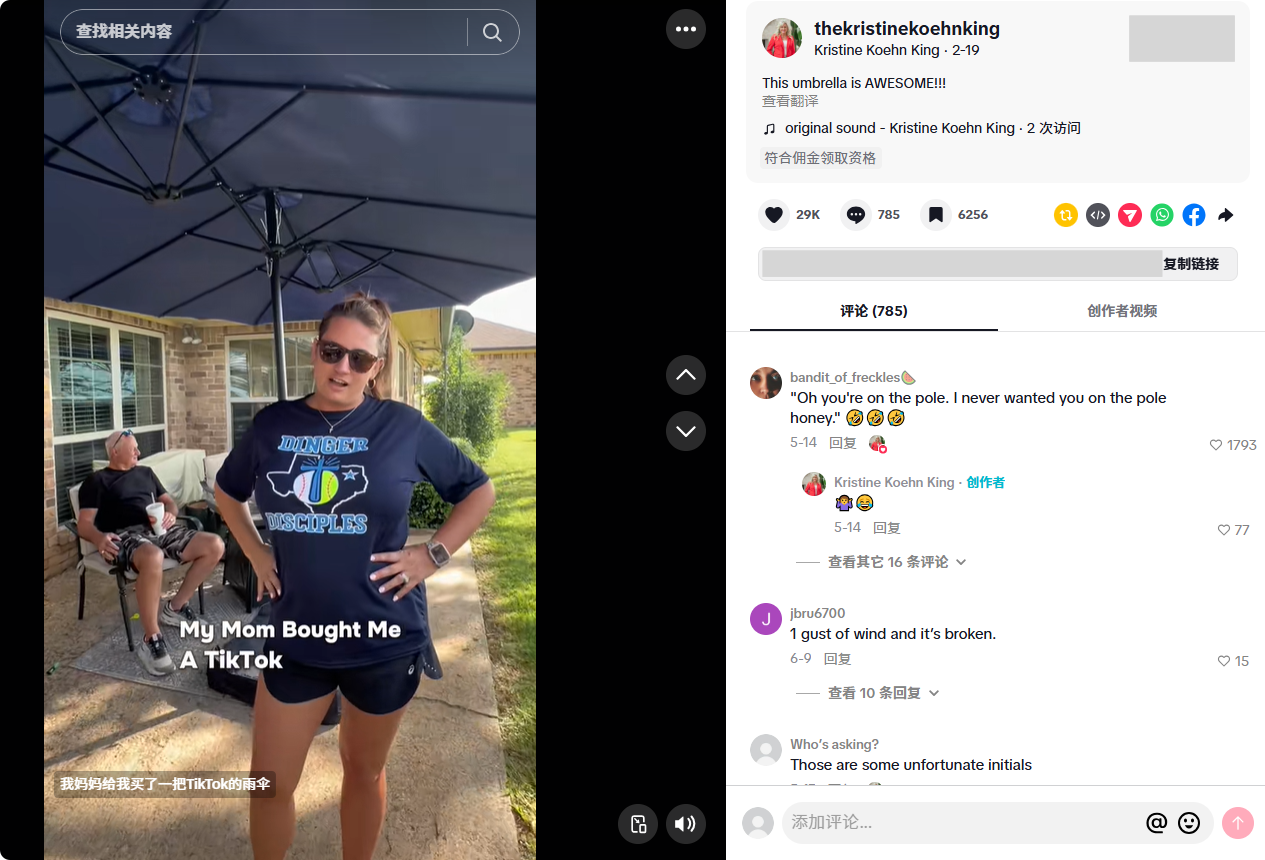
For instance, TikTok creator @thekristinekoehnking once posted a promotional video for Yaheetech's giant patio umbrella. She used a very life-like home video perspective, holding the camera while walking around the terrace, and emphasized in very straightforward, plain language that 'this umbrella looks twice as big as a normal one.'
This kind of natural, trust-filled genuine recommendation quickly garnered 5.6 million views on that video and directly drove $57,000 in sales.
Source: TikTok
3. The Hidden Assist of Overseas Warehouses
This point is easy to overlook but is precisely the key.
The biggest obstacle for large items on TikTok is not content but fulfillment – users see a video, make an impulse purchase, then have to wait a week for delivery, or the return process is extremely cumbersome, greatly diminishing the experience.
Yaheetech relies on its own well-established overseas warehouse network in Europe and America to bring delivery speed and return/exchange experiences to a level comparable with local brands. This infrastructure is the underlying guarantee for it to turn large items into bestsellers on TikTok.

Source: Yaheetech
Conclusion
From its founding in 2003 to now over 20 years, Yaheetech has walked a path that many Chinese cross-border companies are walking or will soon walk: starting with no factory, they began with trading; starting with no brand recognition, they built reputation bit by bit through products and services; not being good at content, they built an influencer network to let those who are good at content do it for them.
The story of Yaheetech is worth reading, not because it did something earth-shattering, but because it broke down the complex task of going global into actionable steps. For any Chinese company looking to enter overseas markets, the real barrier has never been whether they have a factory, but whether they are willing to put in the hard work on every detail.