 1640
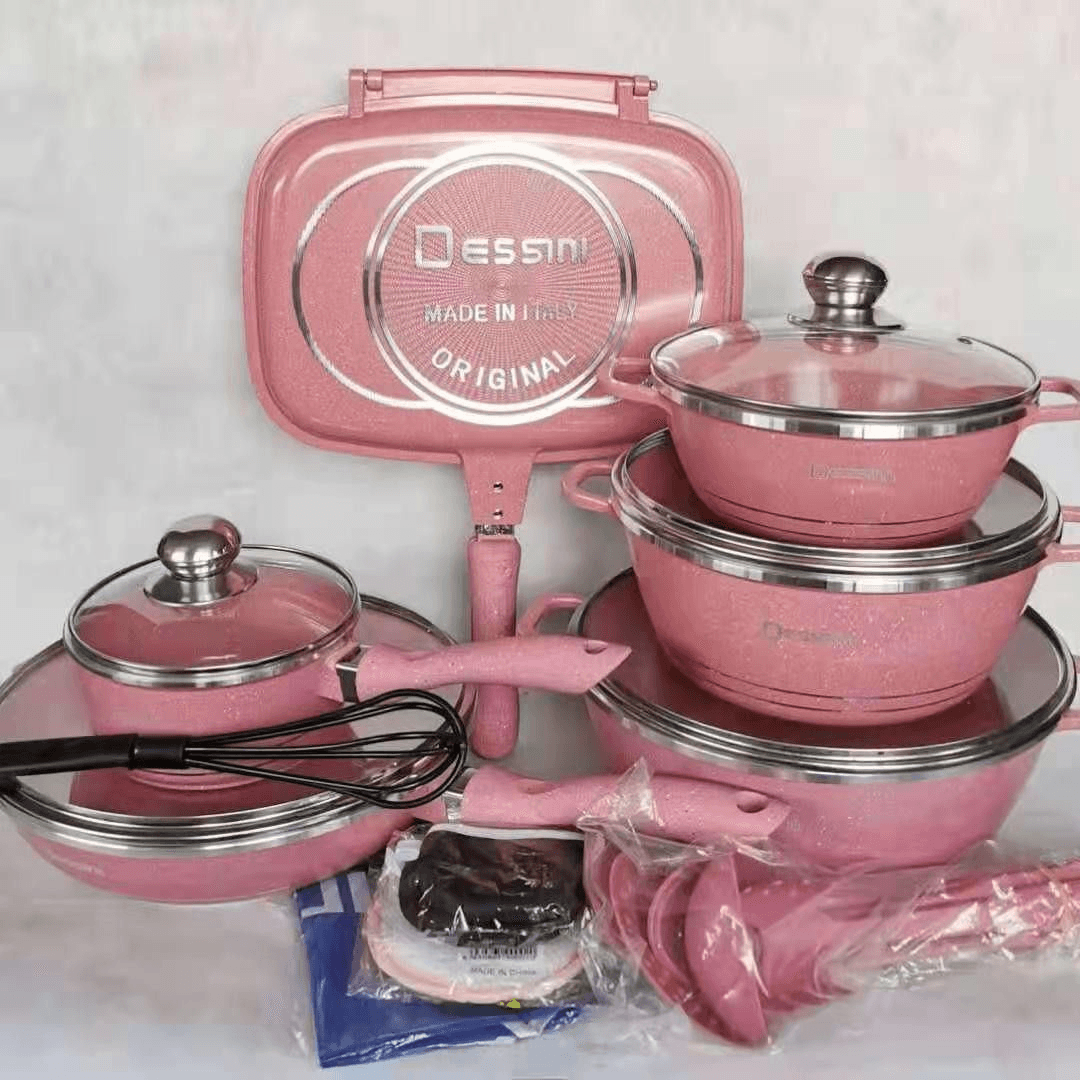
1640In the kitchenware sector, which seems as traditional as it gets, DESSINI, a brand from Malaysia, managed to carve out a place in the Southeast Asian market with a single pot.
In November 2025, DESSINI officially received ASEAN Records certification and was awarded the honor of "Highest Annual Kitchenware Sales." From September 2024 to August 2025, the brand sold 1,919,980 kitchenware products, covering 2,030 product variants, with 327,297 sets sold in kitchenware sets alone.

Image source: malaymail
On TikTok, DESSINI also performed impressively. According to third-party data platforms, DESSINI Malaysia's annual sales on TikTok have exceeded $15.6 million, with sales in the past 30 days surpassing $1.05 million.
How can a kitchenware brand achieve such scale in the Southeast Asian market?
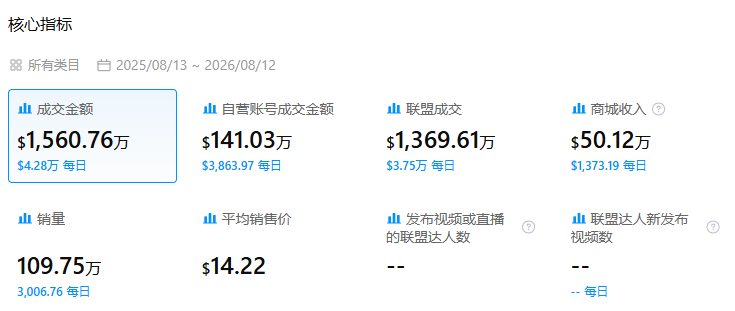
Image source: kalodata
From an "Italian label" to a leading Southeast Asian kitchenware brand
The story of DESSINI is not complicated.
The brand initially used "Dessini Italy" as its brand identity, hoping to create higher-quality kitchenware through Italian design concepts. Compared with traditional kitchenware brands that focus more on functionality itself, DESSINI incorporated more visual elements at the product design stage, such as smooth exterior lines, simple color schemes, and product structures that better align with modern household aesthetics.
However, DESSINI did not choose to fully build its own production system. Instead, it relied on China's mature kitchenware industry chain and completed product manufacturing through OEM and ODM models.
This model allows the brand to quickly respond to market demand, while leveraging the advantages of Chinese manufacturing in cost control, production efficiency, and supply chain integration to promote high-quality kitchenware products to overseas markets.
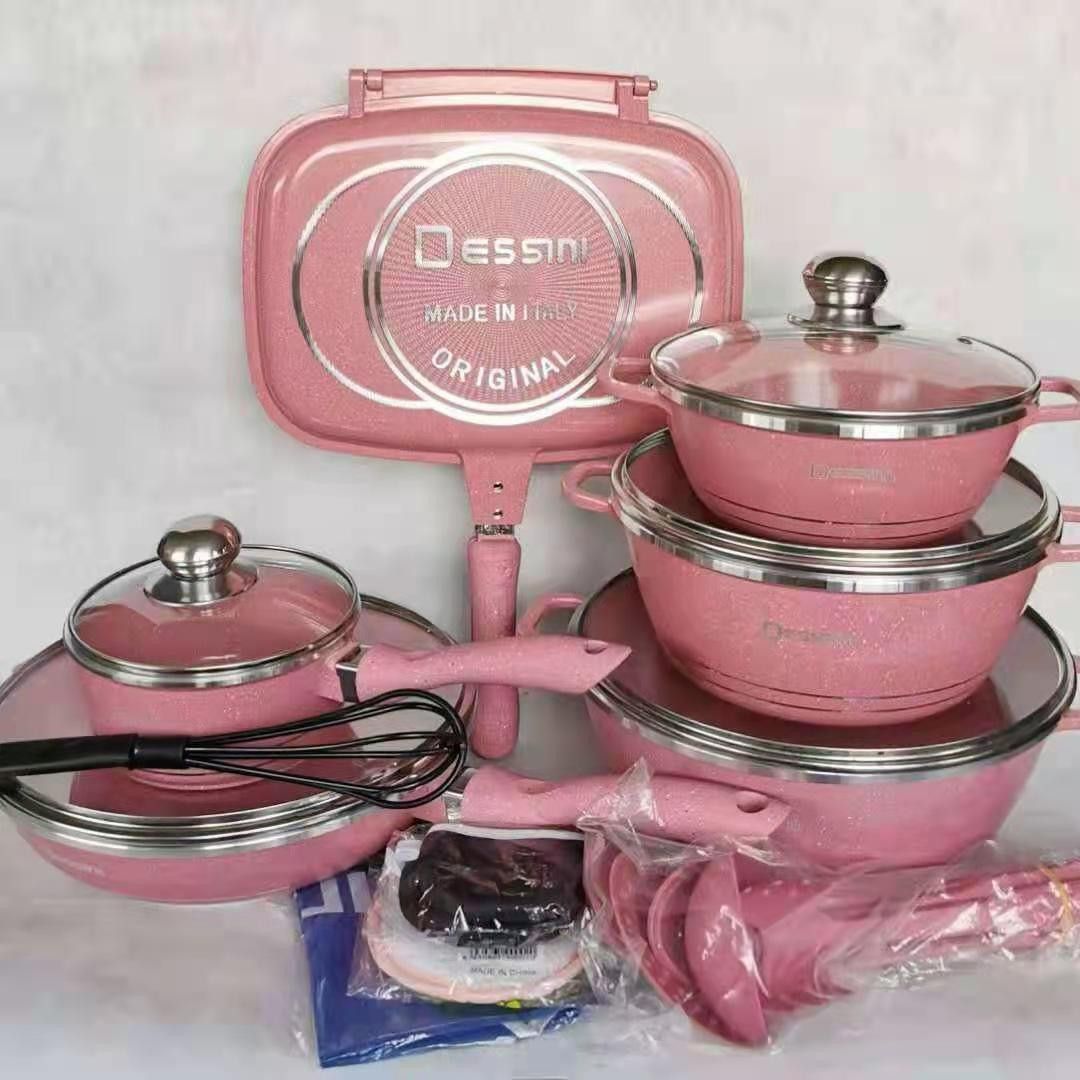
Image source: Google
As the market continued to expand, DESSINI's product lineup gradually diversified.
Starting from non-stick cookware, it expanded to silicone kitchenware, knives, and other kitchen items, while also branching out into kitchen small appliances such as air fryers, electric cookers, juicers, and portable kettles, forming a product matrix covering multiple kitchen consumption scenarios.
In terms of sales channels, DESSINI was an early mover on major Southeast Asian e-commerce platforms, including Shopee, Lazada, and TikTok Shop. Especially after the rise of TikTok Shop, the brand seized the development opportunities of short video and live-streaming e-commerce, allowing consumers to quickly understand product advantages through more intuitive content display.
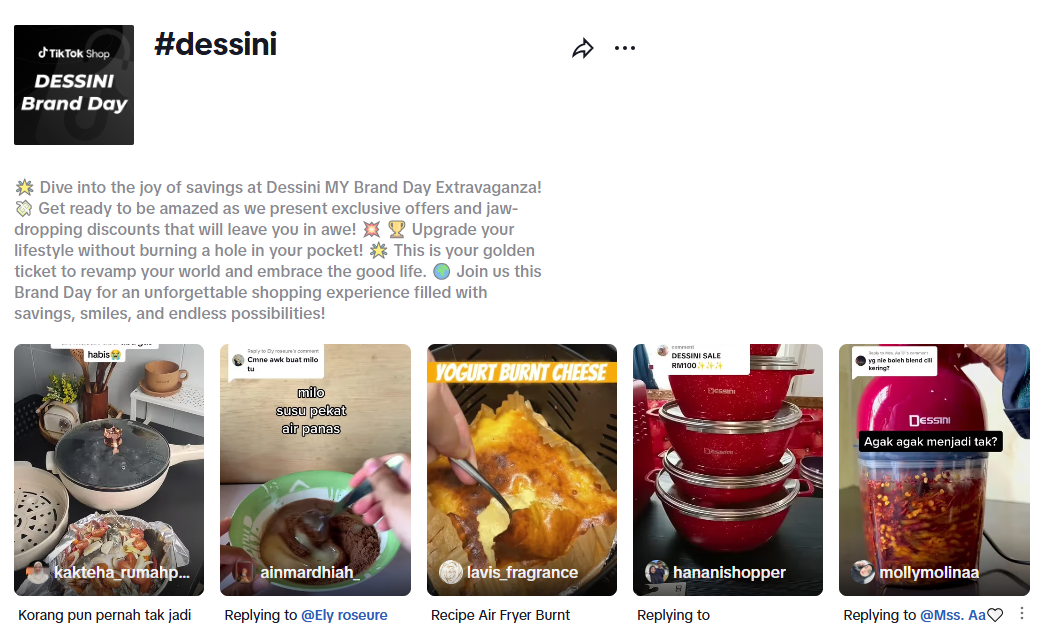
Image source: TikTok
Why is the kitchenware business becoming increasingly suitable for e-commerce in Southeast Asia?
DESSINI's growth is certainly inseparable from the brand's own operations, but the market environment it operates in is equally important.
First, Southeast Asia's overall digital economy is still in an expansion phase.
Looking back at 2025 data, Southeast Asia's e-commerce GMV has climbed to $185 billion. Looking ahead from 2026, the region's digital economy remains strong, with e-commerce GMV projected to approach $360 billion by 2030, maintaining a compound annual growth rate of around 14% during the period.
This is especially important for products like kitchenware. Traditional kitchenware requires consumers to "see, touch, and try" before forming a purchase decision, but short videos can compress this process.
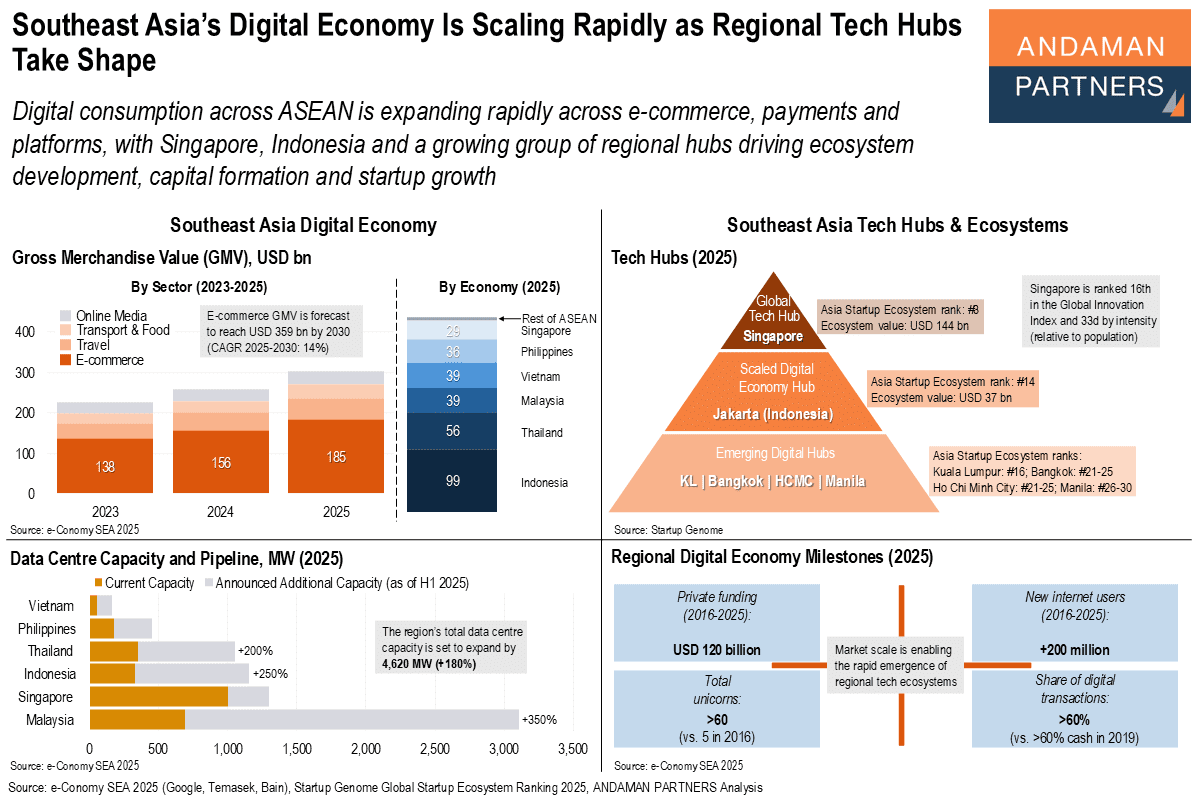
Image source: Google
Malaysia itself is also a very suitable market for observing this trend.
According to Ipsos' 2025 Malaysia E-commerce Report, Malaysia's e-commerce and ICT-related activities contributed RM451.3 billion in 2024, accounting for 23.4% of GDP. Meanwhile, e-commerce user growth is no longer limited to young consumers; growth is especially notable among the 25-35 age group, while users aged 45 and above are also steadily increasing.
By 2025, TikTok Shop's daily product search volume in Malaysia has exceeded 100 million times.
This means consumers open TikTok not just for entertainment. "Scrolling videos—seeing a product—searching for the product—entering the product page—placing an order" is becoming an increasingly complete consumption path.
For DESSINI, this change precisely turns the product attributes of cookware into a content advantage.
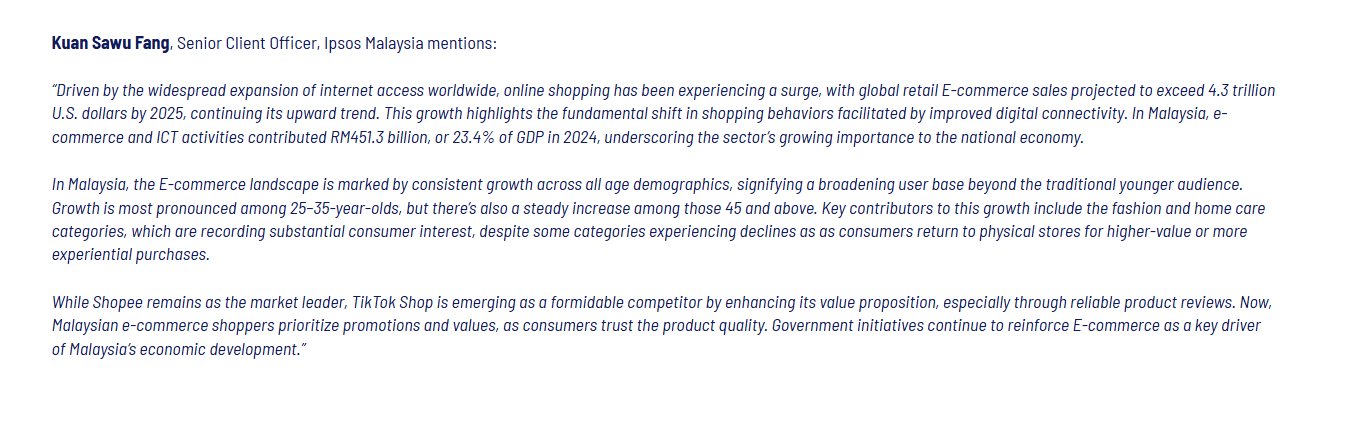
Image source: ipsos
TikTok tactics: no gimmicks, just hardcore moves.
The hardest thing about cookware is that consumers cannot directly feel the material through the screen.
So DESSINI's content focus is not on lengthy introductions to product parameters, but on visualizing the functions as much as possible.
For example, non-stick pans can directly show the process of frying eggs and fish; cookware sets can be displayed all at once through unboxing; electric cooking pots and blenders are shown through actual cooking processes to demonstrate usage.
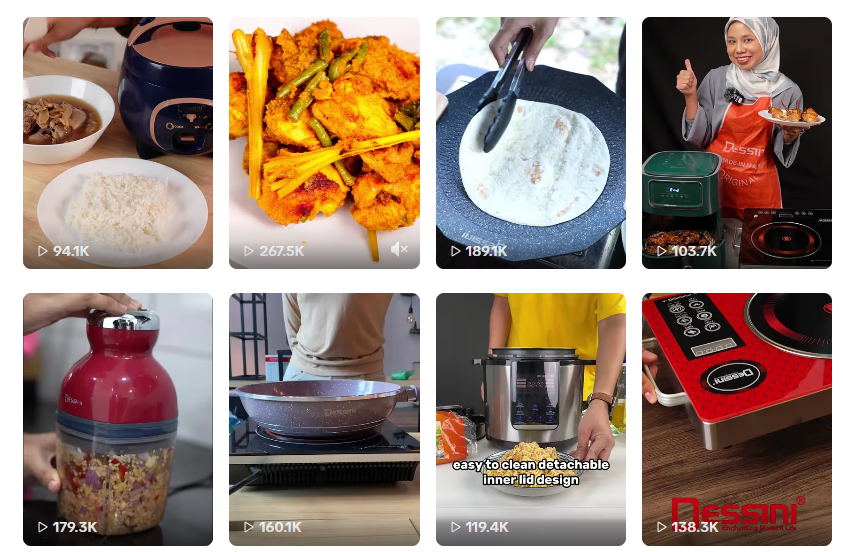
Image source: TikTok
For example, DESSINI's official account @dessini_malaysia posted a real-shot video of an air fryer, with over 310,000 views.
The video doesn't have complex product introductions, but directly shows from putting in a whole chicken and seasoning to the result after the air fryer finishes cooking, highlighting the color of the finished product and the usage process, allowing consumers to intuitively see the product's actual application scenario.
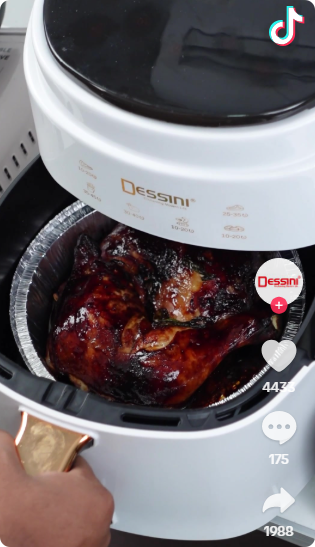
Image source: TikTok
Video source: echotik
This content logic is not complicated, but it is very important for TikTok—users are not obliged to stop and listen to the brand talk about the product, but they are easily attracted by an obvious visual result to watch a few more seconds.
In addition, DESSINI's official store currently still maintains a fairly clear product matrix, from a single pot to a 23-piece set, as well as small appliances such as electric pressure cookers and blenders.
The richer the products, the more scenarios are available for content testing.
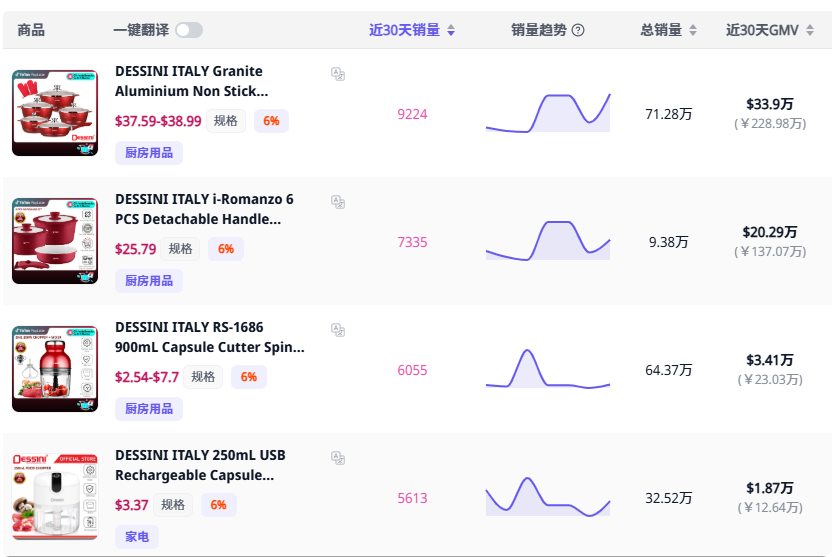
Image source: echotik
Besides short videos, live streaming is also an important way for DESSINI to capture traffic.
Based on data from the past 30 days (July 14 to August 12), DESSINI Malaysia's cumulative transaction amount reached US$95,900, with live streaming transactions reaching US$93,000 and live streaming views reaching 448,000 times.
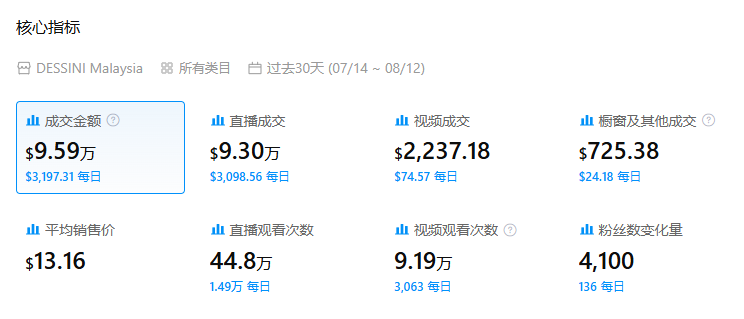
Image source: kalodata
In terms of live streaming content, the brand mainly focuses on cookware and kitchen small appliances. It uses real people on camera for product display and explanation, directly presenting the product's appearance, functions, and usage in front of the lens, while combining promotional activities in the live room to encourage users to place orders.
This kind of live streaming does not pursue complex content packaging, but rather emphasizes "show, explain, and convert simultaneously".
For DESSINI, short videos let consumers see the product first, while live streaming further explains product details, prices, and usage scenarios, allowing users who are already interested to complete their purchases smoothly.
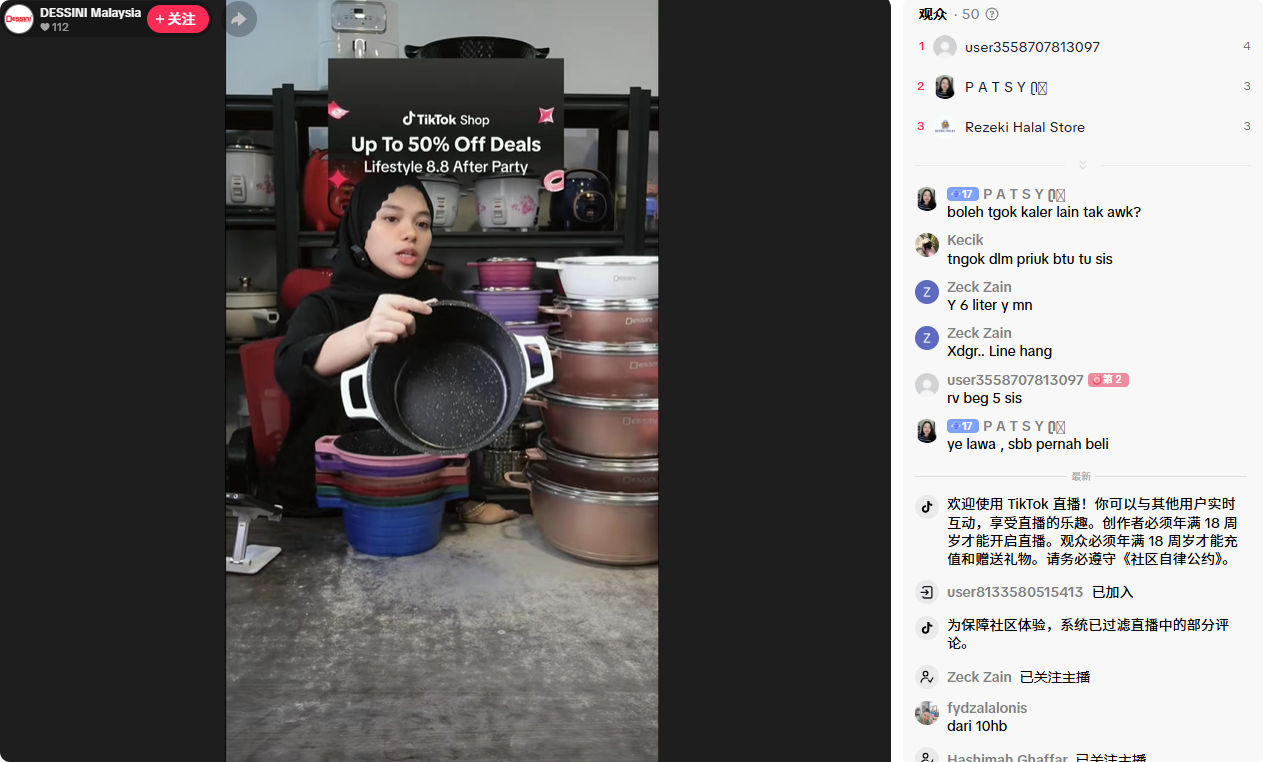
Image source: TikTok
Beyond brand self-broadcasting, DESSINI also attributes a significant portion of its sales growth to affiliate creators on TikTok.
Data from the past 30 days shows that the brand's total transaction value reached US$1,052,000, of which affiliate transactions reached US$917,400, accounting for more than 80% of the total transaction value; during the same period, 5,076 product-promotion videos or live streams were generated, and affiliate creators published 13,200 new videos.
Compared with relying solely on sustained output from the brand account, this approach with many creators participating makes it easier for products to appear in different life scenarios.
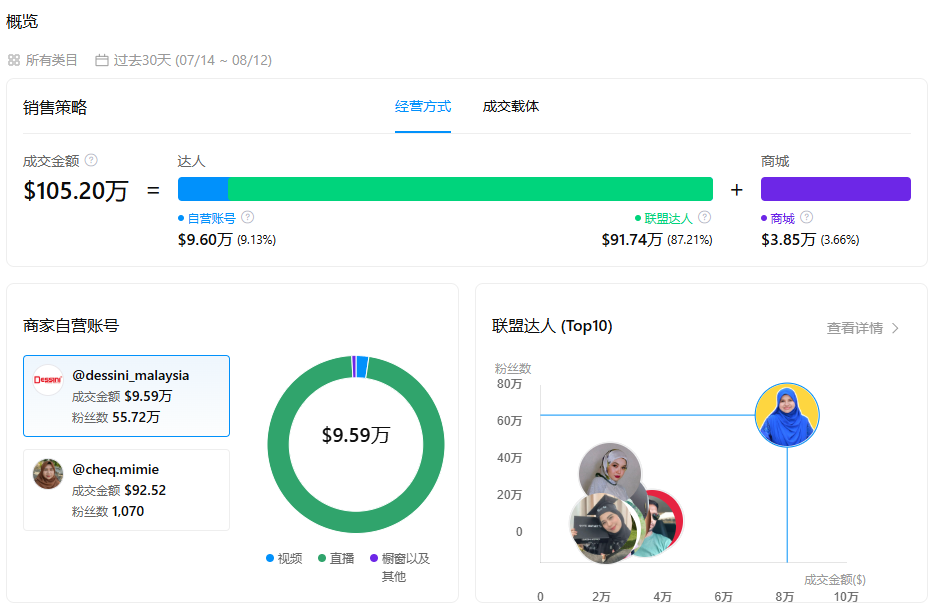
Image source: kalodata
In terms of creator types, DESSINI collaborates with more than just food bloggers, covering content areas such as kitchen supplies and home living.
For example, food-sharing creator @almiyaaz.my generated a GMV of US$80,800 from product promotion over the past 30 days, with 70 products promoted; good-product recommendation creator @homeplusasia generated US$36,700 in GMV; and @hazwanchehamid, who focuses on home daily content, brought in US$34,300 in GMV.
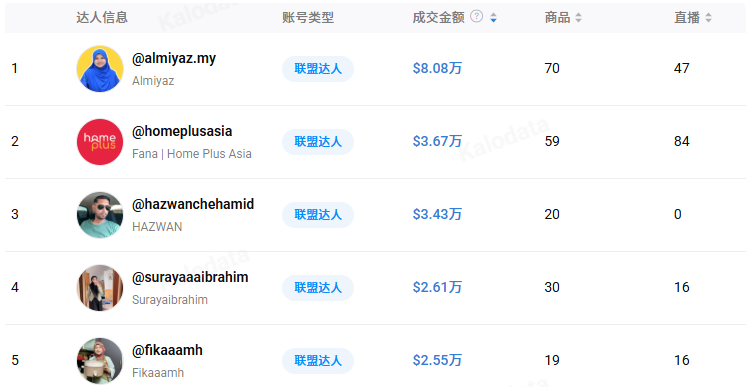
Image source: kalodata
These creators do not need to introduce products in exactly the same way. Some prefer sharing kitchen goodies, while others place products into daily home content.
For DESSINI, this differentiated creator content is equivalent to continuously showing the same product to consumers in different ways, and also makes cookware and small appliances more naturally integrated into local consumers' daily lives.
What truly deserves attention is not just a cookware brand
Looking at DESSINI's development, the market it operates in is not a brand-new market that emerged from nowhere.
E-commerce in Southeast Asia is gradually shifting from platform shopping to content shopping, and the growing share of video e-commerce has also given many products that originally relied on offline experiences new sales opportunities.
For more and more domestic enterprises, overseas markets are no longer just a matter of "selling to one more country," but require rebuilding a product and marketing system oriented toward local consumers.
As competition in the domestic market becomes increasingly intense, turning attention to the larger overseas consumer market is itself a growth path worth serious consideration. What truly matters is not chasing short-term explosive volume, but finding a market that suits you and connecting the brand with consumers in a more long-term way.