 3556
3556
In the past one or two years, people doing TikTok e-commerce have gradually felt: the days when you could casually post a video and get explosive orders are over.
The latest industry data shows that TikTok e-commerce achieved a global GMV of $62.305 billion in 2025, up 95% from last year. But more worth watching than these numbers are the structural changes behind the numbers.
According to the latest "2026 TikTok E-commerce White Paper" released by kalodata, this article today will not list numbers, but will talk about three fundamental changes that are happening, and three questions you need to rethink in 2026.
Change 1: Market segmentation, no more "one-size-fits-all"
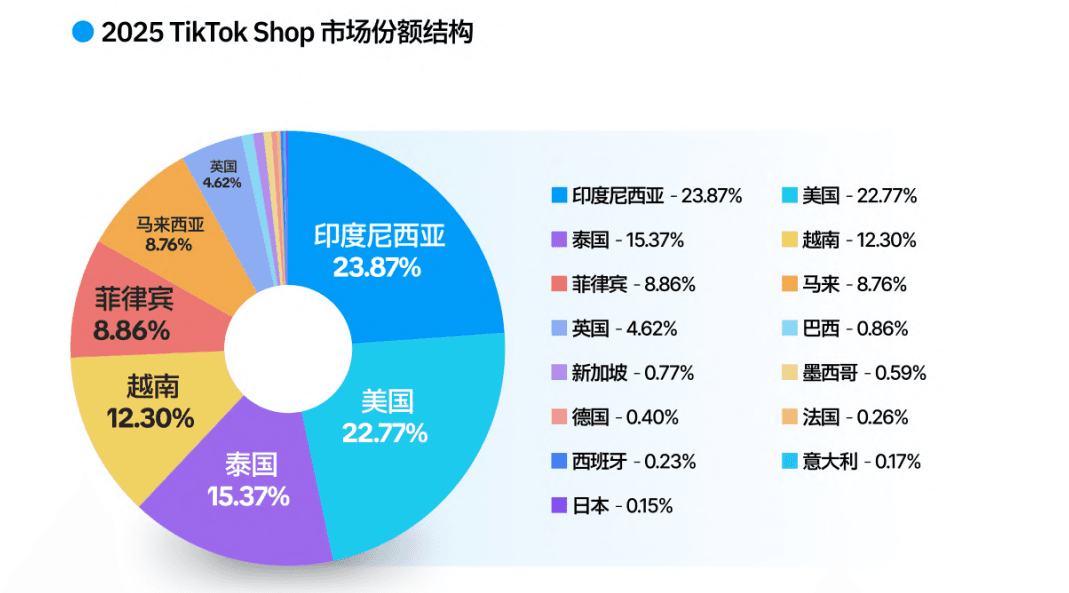
First, let's talk about something that's easy to overlook: the 17 TikTok e-commerce sites are no longer at the same stage of development.
Just the Indonesian market alone achieved $14.875 billion in GMV, and the US $14.186 billion—together, they account for nearly half. Southeast Asia as a whole accounts for over 45%, still the basic foundation. The real variables are in Europe and Latin America: the UK $2.877 billion, doubling from last year; Brazil $533 million, Mexico $369 million, and the growth rate of new sites is faster than expected.
What does this mean?
Before 2025, most cross-border sellers used one method for everything. By 2026, this approach no longer works. The US market already has high requirements for compliance and localization; Southeast Asia needs deep cultivation; Europe is just entering the supply expansion phase; Latin America is still seizing the window of opportunity.
The first question for 2026:Which stage of the market are your team, supply chain, and content resources best suited for?
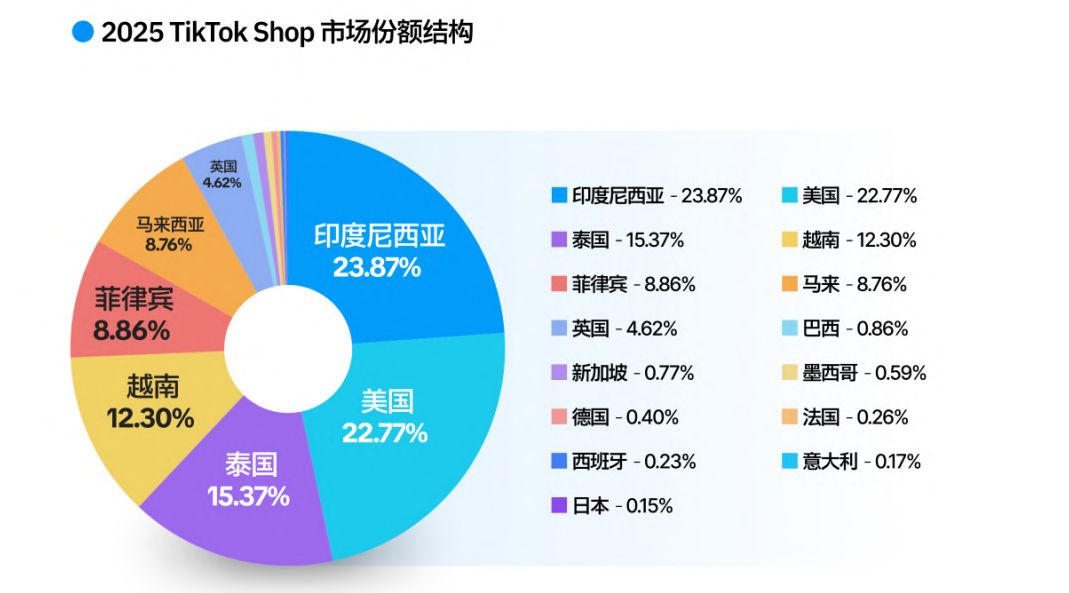
Image source: "Kalodata 2026 TikTok E-commerce White Paper"
Change 2: The logic of products has changed, "Can it be filmed" is more important than "Is it easy to use"
There is a set of data worth a closer look: beauty & personal care, women's clothing, and mobile digital categories together account for more than one-third of the platform's GMV. Beauty & personal care, on an already large base, still maintains over 80% growth.
Why these three?
It's not that their functions are the best, but that they are the "easiest to film." TikTok e-commerce transactions are moving toward "content-friendly" categories. The "content expressiveness" of a product—that is, how many selling points can be turned into videos—is becoming a more critical factor for transactions than functional innovation.
A top operator who made 1 billion said: "Whether a product can enter the top tier doesn't depend on how much better its function is, but whether it has a high enough content expressiveness."
The founder of the US local brand Pumpums put it more directly: "To make a product a long-term brand rather than a short-term hit, the key is to build a sense of community and emotional identity around it."
The second question for 2026:Can your product be made into more than 20 different short videos?
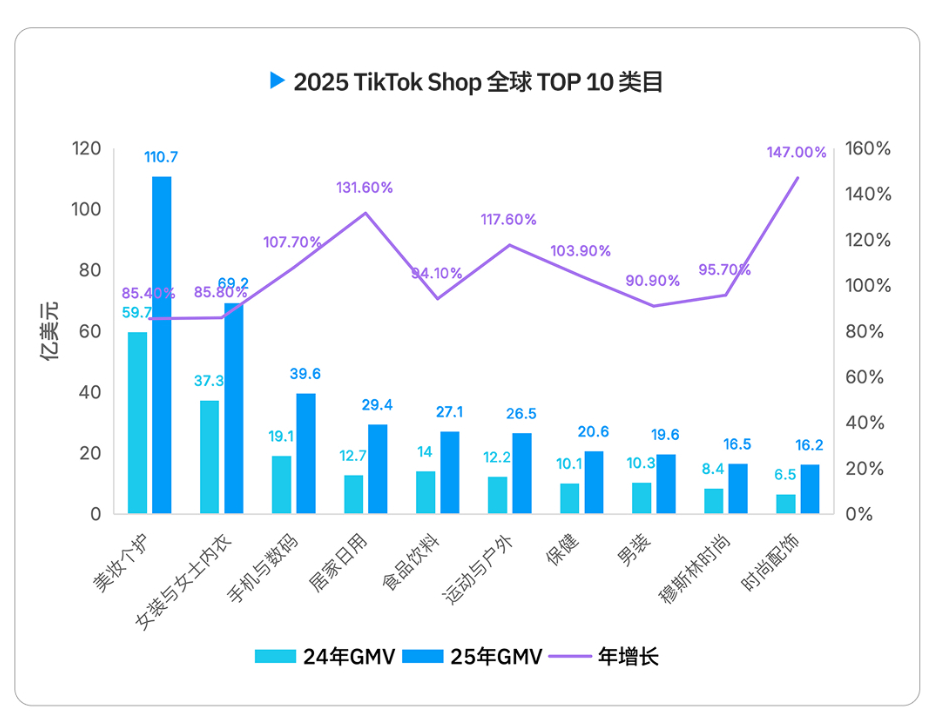
Image source: "Kalodata 2026 TikTok E-commerce White Paper"
Change 3: The influencer ecosystem is being segmented, short videos are still the foundation
Last year, there were 9.25 million affiliate influencers worldwide, who posted 579 million short videos, hosted 116 million live streams, and contributed $32.998 billion in GMV—accounting for 53% of the platform's total GMV.
This is the full picture of the influencer ecosystem.
But what really matters is the structure: among the GMV contributed by influencers, short videos account for 63.47%, and live streaming for 36.53%. Take the US as an example: influencer short video GMV is $8.185 billion, much higher than live streaming's $1.88 billion.
Why is the proportion of short videos higher?
Users buy things step by step: "awareness—interest—order." High-view videos are responsible for making people aware of the product and remember the scenario. Only after repeated viewing do they develop the idea to buy. "Sales videos" are just the last step; they succeed because enough content has been accumulated beforehand.
Indonesia's top influencer for sales, Kohcun, has a noteworthy understanding of influencers: "Influencers don't just live on commissions. They must truly understand users, have the ability to sell, the ability to tell stories, and the ability to amplify product value."
The third question for 2026:Are you "buying traffic," or are you "creating content together"?
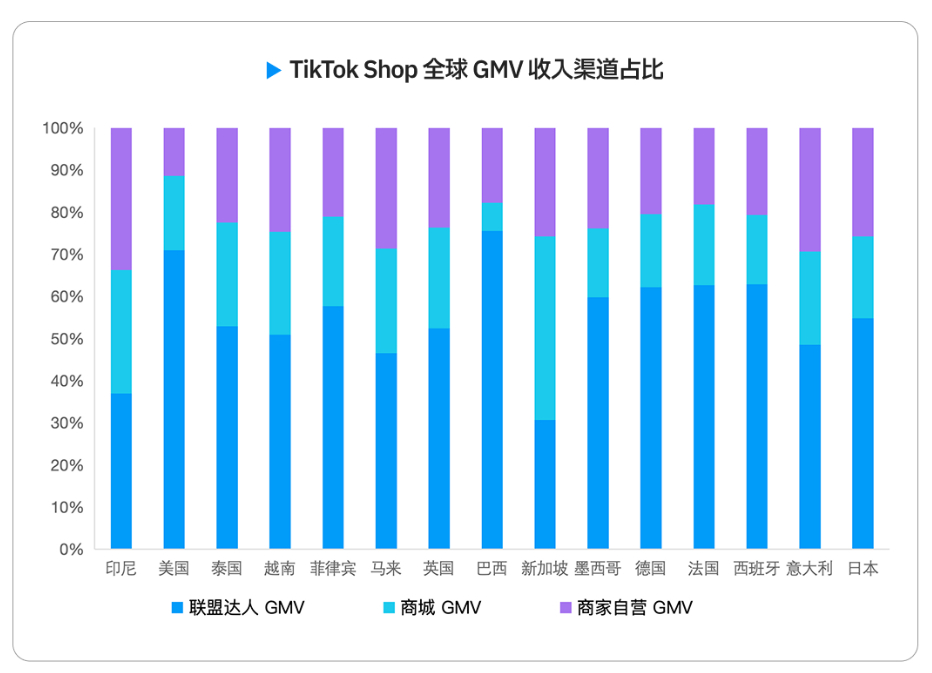
Image source: "Kalodata 2026 TikTok E-commerce White Paper"
A supplement: What has AI really changed?
Regarding the application of AI, the current data is quite solid:
AI makes scriptwriting and video editing 3-10 times faster, and costs drop by 30%-40%—efficiency has indeed improved. But on the GMV side, the direct contribution of pure AIGC content is still less than 5%. Even for teams with nearly 90% AI usage, the GMV directly brought by AI is only about 17%.
What does this mean? AI has leveled the efficiency of content production, but competition has instead returned to people themselves—the grasp of content structure, understanding of audience needs, and judgment on how to present products.
In other words, AI is a useful tool, but not a personal skill.
The core proposition for 2026: From "hit-driven" to "system-driven"
Looking at these changes together, the keyword for TikTok e-commerce in 2026 can be summed up in one: systematic capability.
It's no longer about betting on a viral video, a top influencer, or a wave of traffic dividends. It's about building a complete system that can stably and replicably generate volume:
Clear product structure + continuous content supply + stable live streaming volume + shelf conversion + local fulfillment guarantee
Before 2025, the question was "Can you scale up?"
In 2026, the question is "Can you scale up sustainably?"
As the media support unit for the "2026 TikTok E-commerce White Paper," Tuke will continue to follow up with practical interpretations of this report.
The full version of the white paper can be obtained by scanning the code, or by directly clicking [Read Full Text] to unlock the complete report and all data.