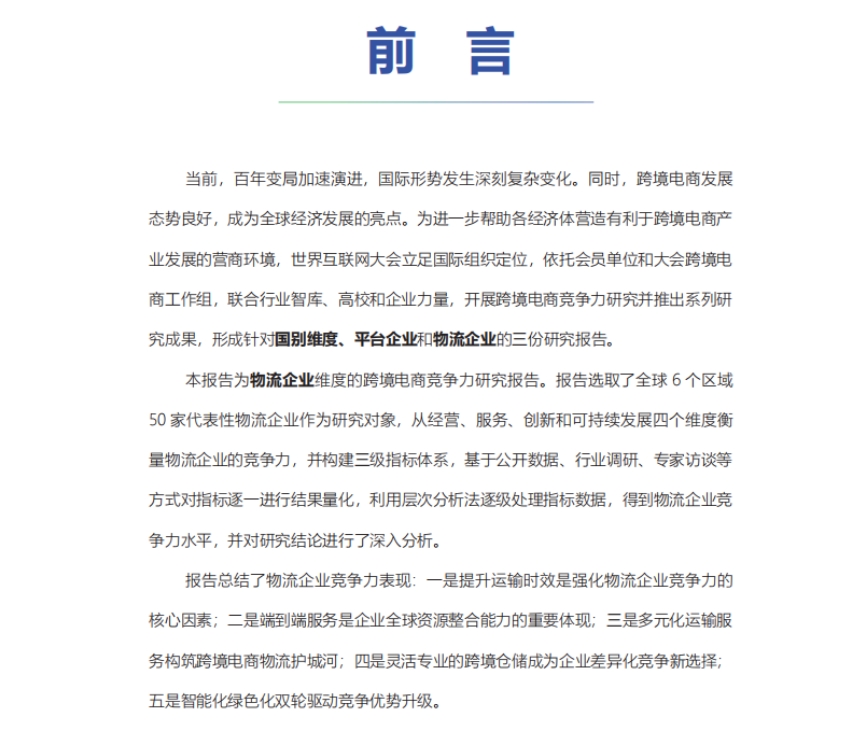
Il "Rapporto di Ricerca sulla Competitività del Commercio Elettronico Transfrontaliero 2024 — Imprese Logistiche" è stato pubblicato dal World Internet Conference. Esso conduce uno studio approfondito sulla competitività delle imprese logistiche nel commercio elettronico transfrontaliero, con conclusioni chiave, un sistema di ricerca e un'analisi dei risultati dettagliati, fornendo indicazioni cruciali e riferimenti pratici per lo sviluppo della logistica nel commercio elettronico transfrontaliero.
1. Conclusioni chiave
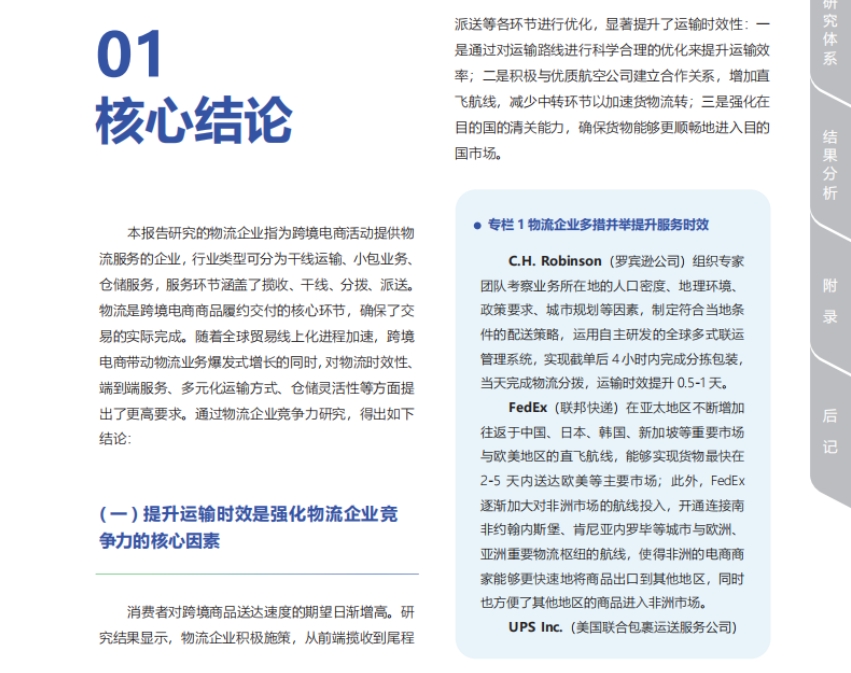
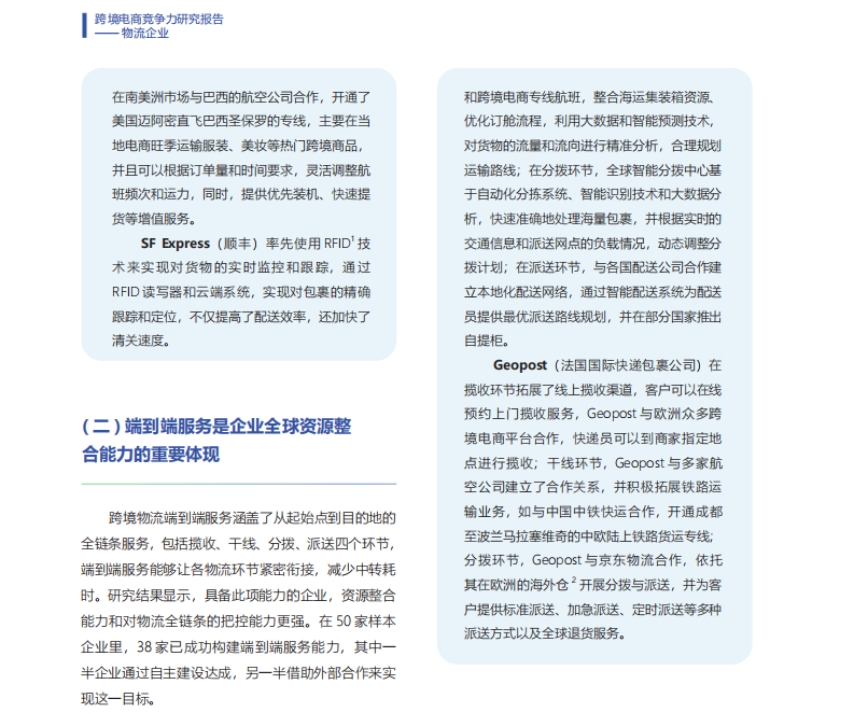
- La velocità di trasporto è un fattore chiave per rafforzare la competitività: i consumatori richiedono tempi di consegna sempre più rapidi per i prodotti transfrontalieri, e le imprese logistiche adottano molteplici strategie per ottimizzare i tempi di trasporto. Ad esempio, Robinson sviluppa piani di consegna basati su fattori geografici e utilizza sistemi proprietari per migliorare l'efficienza; FedEx aumenta i voli diretti per espandere il mercato; United Parcel Service collabora con Emirates per aprire rotte dedicate, adeguare la capacità e lanciare servizi a valore aggiunto; SF Express utilizza la tecnologia RFID per il monitoraggio in tempo reale delle merci, migliorando la velocità di consegna e sdoganamento.
- I servizi end-to-end evidenziano la capacità di integrazione delle risorse globali: i servizi logistici end-to-end nel commercio transfrontaliero includono ritiro, trasporto principale, smistamento e consegna, consentendo un collegamento stretto tra le fasi logistiche e riducendo i tempi di transito. La maggior parte delle imprese campione possiede questa capacità, alcune attraverso costruzione interna, altre tramite collaborazioni. Cainiao integra le risorse dei partner globali, ottimizzando intelligentemente ogni fase; la società francese di spedizioni internazionali di pacchi espande il ritiro online e collabora con più parti per costruire un flusso di servizio completo.
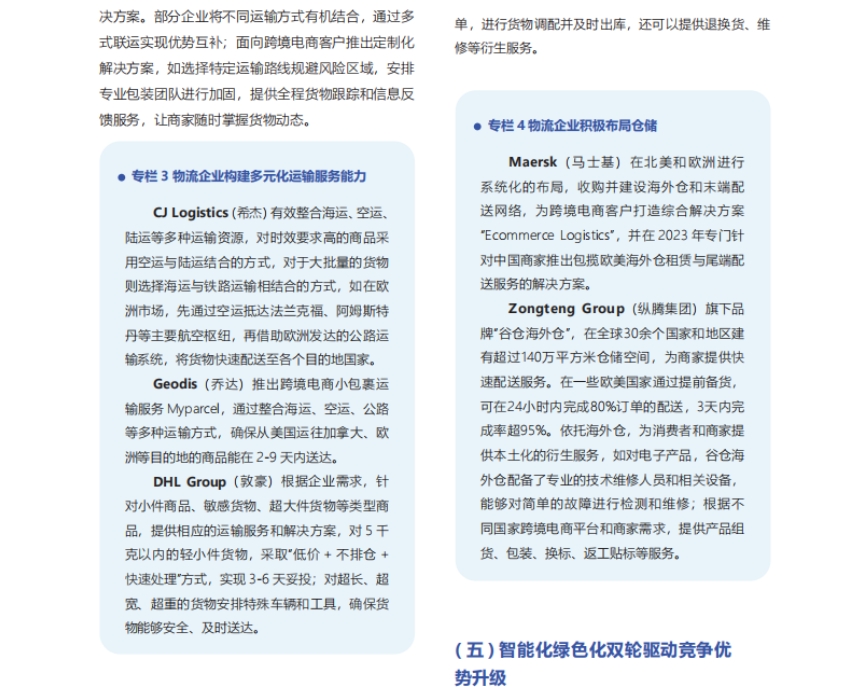
- I servizi di trasporto diversificati rafforzano il fossato logistico: la domanda di flusso di merci nel commercio elettronico transfrontaliero è varia, e le imprese costruiscono reti che coprono molteplici modalità di trasporto e soluzioni personalizzate, combinando i vantaggi del trasporto intermodale. CJ Logistics integra le risorse e seleziona combinazioni di trasporto in base ai tempi e alla quantità delle merci; Geodis lancia servizi di pacchi transfrontalieri per garantire consegne puntuali; DHL fornisce servizi di trasporto corrispondenti in base alle caratteristiche delle merci.
- La flessibilità e la specializzazione dei magazzini diventano una nuova via per la differenziazione competitiva: le imprese logistiche internazionali di fama utilizzano sistemi avanzati di gestione del magazzino, con layout intelligente e gestione precisa delle scorte basata su molteplici fattori delle merci. Alcune imprese cinesi si distinguono per i servizi di "magazzino all'estero", aiutando i commercianti a rispondere rapidamente agli ordini, allocare le merci e gestire resi, cambi e riparazioni. Maersk posiziona magazzini e reti di consegna all'estero negli Stati Uniti e in Europa, lanciando soluzioni integrate; Zongteng Group con il suo "Gucang Overseas Warehouse" ha una copertura globale ampia, consegne rapide e servizi completi.
- L'intelligenza e la sostenibilità guidano l'aggiornamento del vantaggio competitivo: la logistica intelligente utilizza tecnologie all'avanguardia per analizzare e prevedere con precisione le fasi logistiche, ottimizzare l'allocazione delle risorse e migliorare l'efficienza di magazzino e trasporto, nonché la trasparenza, la controllabilità e la qualità del servizio. La logistica verde aiuta le imprese a adempiere alle responsabilità e ridurre i costi, stabilizzando i prezzi logistici e guadagnando il favore e la fiducia dei consumatori. Ocean Network Express digitalizza la prenotazione per migliorare l'efficienza, sposta i sistemi sul cloud per aumentare velocità e precisione, e costruisce navi a metanolo a doppia alimentazione per ridurre le emissioni; Hapag-Lloyd crea sistemi energetici per i terminal, utilizza l'energia solare per migliorare le prestazioni ambientali; Kerry Logistics costruisce sistemi di raccolta dell'acqua piovana e promuove il trasporto ferroviario e fluviale per ridurre le emissioni di carbonio.
2. Sistema di ricerca
- Selezione del campione: considerando molteplici fattori, sono state selezionate a livello globale 50 imprese logistiche rappresentative, inclusi tipi come trasporto principale, servizi di pacchi e servizi di magazzino.
- Quadro degli indicatori: sono stati stabiliti indicatori di primo livello da quattro dimensioni: operatività, servizio, sostenibilità e innovazione, con scomposizione e ponderazione per costruire un sistema di indicatori di competitività per le imprese logistiche del commercio elettronico transfrontaliero, inclusi indicatori dettagliati come performance operativa, scala di business e servizi di trasporto.
3. Analisi dei risultati
- Per dimensione degli indicatori: capacità operativa, alcune imprese hanno servizi globali eccellenti, reti estese e forte integrazione delle risorse, con buone performance operative, spesso note come corrieri espressi o con servizi di pacchi prominenti; capacità di servizio, oltre la metà delle imprese ha una forte capacità di servizio, con servizi end-to-end di trasporto e magazzino eccellenti, mentre poche hanno margini di miglioramento; capacità di sostenibilità, la maggior parte delle imprese è forte, poche sono carenti, e molte affrontano attivamente sfide ambientali e sociali costruendo sistemi di gestione del rischio; capacità di innovazione, oltre il 70% delle imprese ha un alto livello di innovazione, utilizzando attivamente tecnologie all'avanguardia e promuovendo soluzioni logistiche personalizzate.
- Imprese tipiche: ad esempio, Cainiao distribuisce a livello globale una rete logistica intelligente, lanciando servizi innovativi per assistere i commercianti e ottimizzando la logistica inversa; Geodis fornisce soluzioni logistiche globali, collabora nel trasporto intermodale e pratica la sostenibilità; DHL ha una rete logistica ampia, forti capacità operative, risorse di trasporto sufficienti e servizi affidabili.
- Per attività principale: imprese di trasporto principale, la maggior parte delle imprese campione è coinvolta, con aziende forti che hanno rotte e capacità di trasporto ottimali, attrezzature standardizzate, team professionali e collaborazioni estese per garantire il trasporto; imprese di servizi di pacchi, alcune imprese si concentrano su questo, con aziende forti che offrono ritiro e consegna flessibili, posizionamento preciso, servizi efficienti, reti dense e buona cooperazione; imprese di servizi di magazzino, poche imprese sono specializzate, con aziende forti che hanno tecnologia e gestione eccellenti, attrezzature intelligenti, sistemi di inventario robusti e servizi diversificati.