If you know a little about outdoor sports, you must not be unfamiliar with the brand "Camel". In many people's impression, it used to be synonymous with middle-aged men's shoes, the steady and even a bit old-fashioned counter in shopping malls.
But you may not know that this brand with strong Chinese genes is now sweeping the domestic and overseas outdoor markets with an extremely fierce posture.
In 2025, supported by a hardcore performance of about 5.6 billion yuan in annual retail sales and being the global No.1 in jacket category sales for six consecutive years, the Chinese brand "Camel" made history by topping the list of the world's top ten outdoor brands rated by international authoritative institutions.
Today, Tuke will take everyone to have an in-depth look at Camel's overseas journey.

Image source: Camel brand official website
It's better to build your own brand than to do OEM
" Only brands are powerful weapons to support price, sales, and resist risks."
This sentence comes from Wan Jingang, the helmsman of the Camel brand. In the 1990s, when he found that the shoes produced by his factory could be sold in shopping malls at dozens of times the ex-factory price after being labeled with foreign brands, this OEM factory owner truly felt the value gap of brands for the first time.
Wan Jingang realized that only by building his own brand could he master pricing power and vitality.
In 2003, he acquired the "Camel" brand under the old Tianjin shoe factory "Shachuan", officially starting the road of brand operation.
In just seven years, they transformed a small OEM factory, opened 3,000 stores in China, and for many years held the top spot in e-commerce fields such as jackets, tents, and men's shoes. (Source: Camel brand official website).

Image source: Camel brand official website
After gaining a firm foothold in China, Camel set its sights on the broader overseas market.
Since 2018, Camel has officially launched its globalization strategy, successively entering mainstream cross-border e-commerce platforms such as Amazon, AliExpress, and Lazada, with business covering more than 50 countries and regions worldwide.
Its performance has also been booming: in 2023, growth in the European and American markets exceeded 50%, and in the Southeast Asian market, growth exceeded 100% for two consecutive years; by 2024, overseas sales surged by more than 80% year-on-year, and in major promotions on Lazada Vietnam and other sites, sales even reached 430% of the same period last year.

Image source: Camel brand official website
Riding the wave of "outdoor fever", the light outdoor track is just in time
Camel's globalization path is not blind expansion, but precisely steps on the wave of the rise of outdoor lifestyles globally, especially in emerging markets.This wave of "outdoor fever" is not limited to professional extreme sports, but more widely integrates with "light outdoor" scenarios such as urban commuting, suburban camping, and weekend hiking.
This is particularly prominent in the Southeast Asian market. Reports show that the online sales of outdoor equipment in major Southeast Asian markets are expected to reach $200 million in 2025, and will maintain steady growth in the coming years.
Young consumers here (aged 25-44 as the core group) not only pursue the functionality of products in real outdoor scenarios, but also attach great importance to fashion and comfort in daily wear. This just provides an excellent opportunity window for Camel, which already has deep accumulation in products and cost performance.

Image source: Camel brand official website
Multi-channel layout of the "Camel Art of War"
If in the domestic e-commerce era, Camel mainly opened the market with "price + big promotions" and channel breadth, then in the Tuke stage, multi-platform layout has become the key for the brand to break the circle.
In overseas marketing, they mainly focus on TikTok and Facebook, building a "social media + e-commerce + independent site" trinity matrix.
-TikTok: A benchmark for localized operations
In terms of TikTok layout,Camel brandhas demonstrated a very strong localized operation capability.
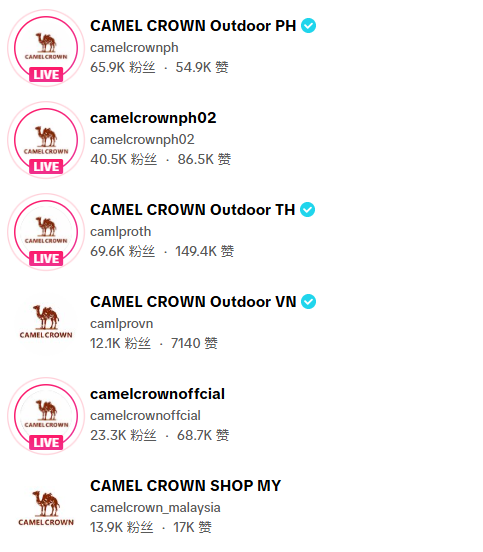
They adopt a matrix strategy, opening local accounts for markets such as the Philippines, Malaysia, Thailand, and Vietnam, achieving independent operation in content, audience, and product strategy for different regions.

Image source:TikTok
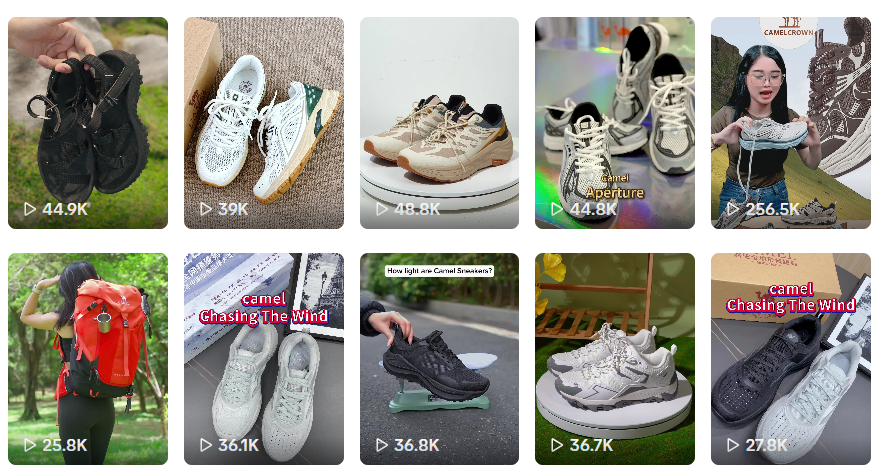
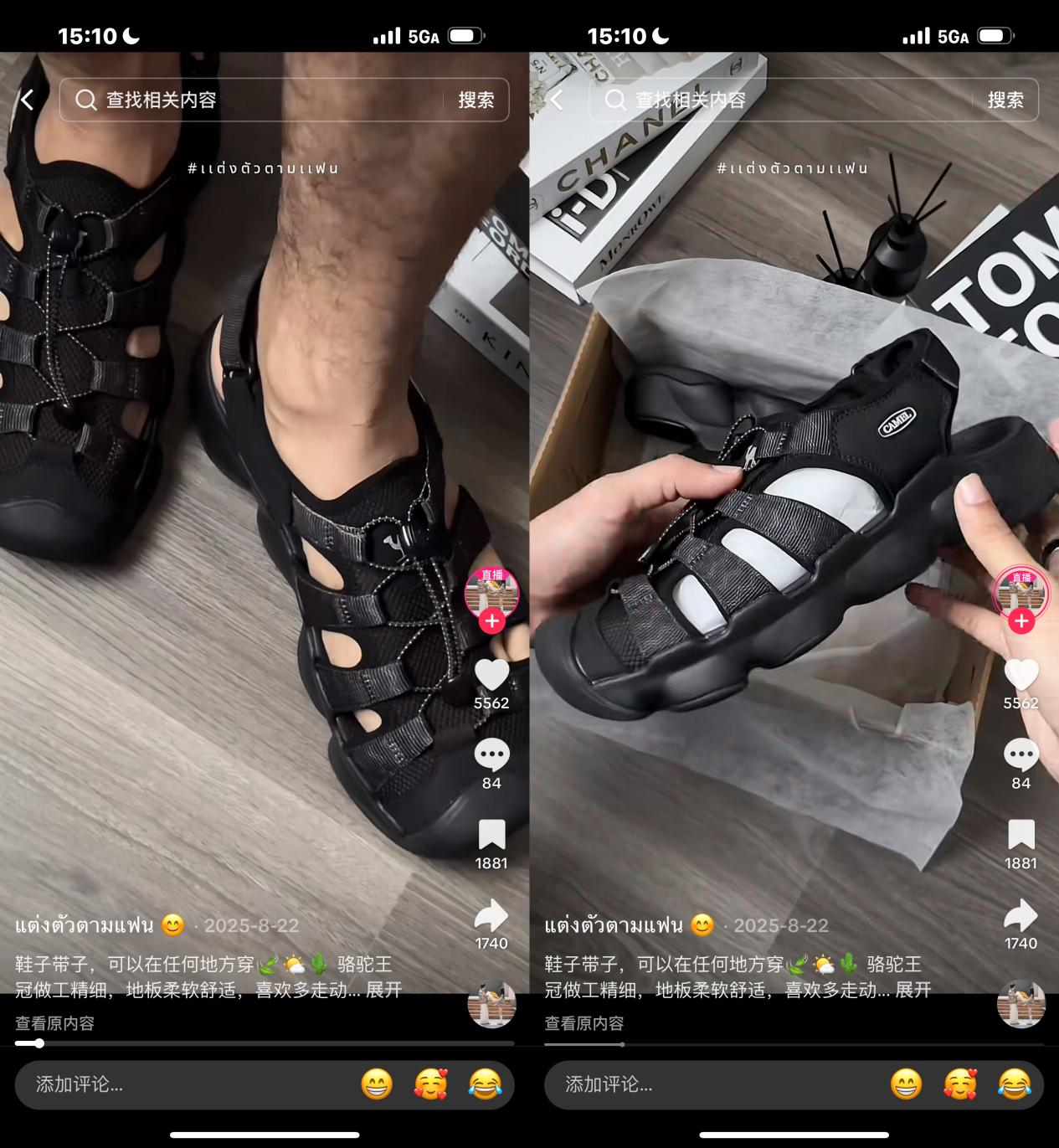
In terms of specific content creation, Camel has refined and layered according to the climate and consumption scenarios of different markets.
For example, in tropical regions, they focus on anti-slip wading sandals, lightweight rain jackets, sun-protective quick-drying clothes, etc., emphasizing usage scenarios such as "traveling in the rainy season" and "suburban camping".
In urban areas, the brand focuses more on emphasizing comfort and wear resistance in commuting scenarios.

Image source:TikTok
In addition to short video content distribution, Camel also attaches great importance to regular live streaming on its own accounts.
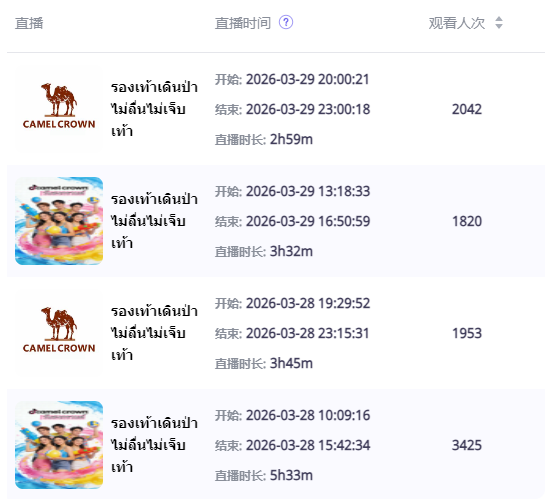
For example, their Thai account @camlproth goes live almost every day, with each live session lasting basically three to five hours. According to recent data, the number of viewers per session is stable between 1,500 and 3,400. Although not a big hit, it is continuous and stable, belonging to the "steady stream" type of conversion channel.

Image source:Echotik
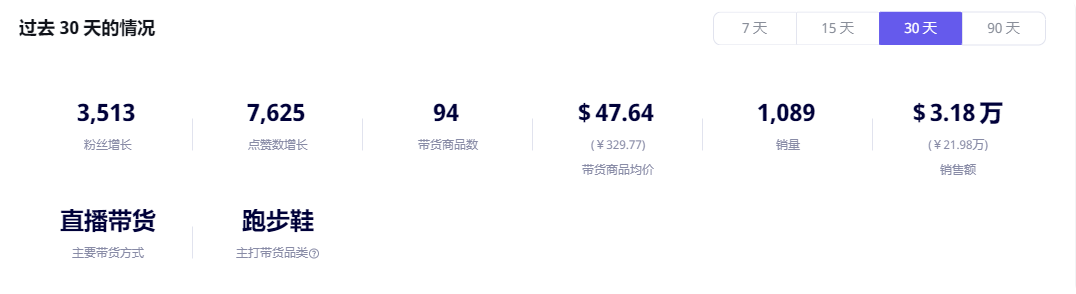
Looking at the overall performance of the account, @camlproth has now accumulated 69,600 followers, and in the past 30 days, followers have increased by more than 3,500, with sales of about $31,800 just through its own account.
The biggest advantage of this high-frequency live streaming approach is that it can pull users from passively swiping videos to actively interacting and placing orders on the spot, greatly shortening the conversion path.

Image source:Echotik
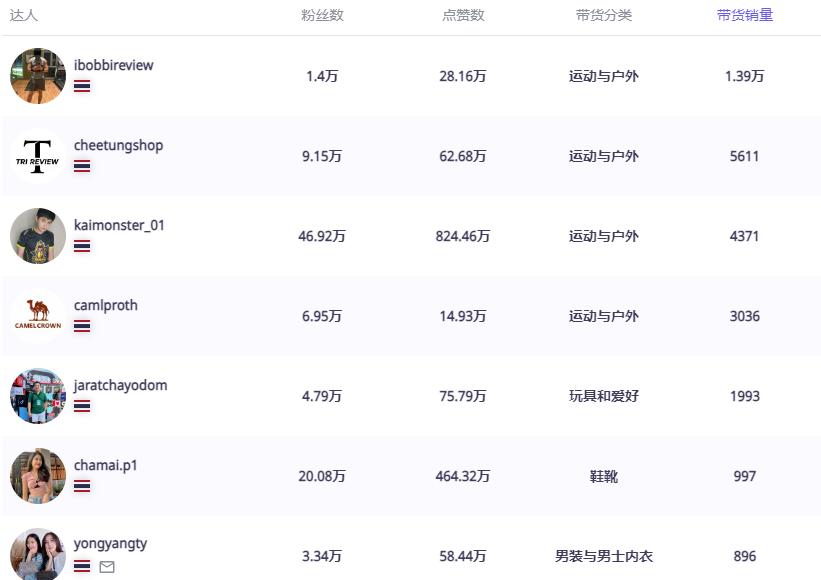
In addition to its own accounts, Camel has also put a lot of effort into influencer cooperation.
Take the Thai shop CAMEL CROWN Outdoor TH as an example, they obviously have their own logic in influencer selection, with most of the influencers they cooperate with being in vertical categories, and the content style highly matches the brand. The number of followers ranges from tens of thousands to hundreds of thousands, covering different levels of users.

Image source:Echotik
TikTok influencer @fasibo_ok is a good example. Although he has only 46,800 followers, because of his high verticality, the fan base is relatively more precise. In the cooperation video with the brand, the number of views easily exceeded 873,900, and the estimated sales exceeded $15,600.
This vertical and layered influencer combination not only ensures the accuracy of content direction but also takes into account conversion efficiency, making it a relatively stable approach.

Image source:TikTok
From the data, Camel's operation strategy in the TikTok Southeast Asia region is currently very effective.
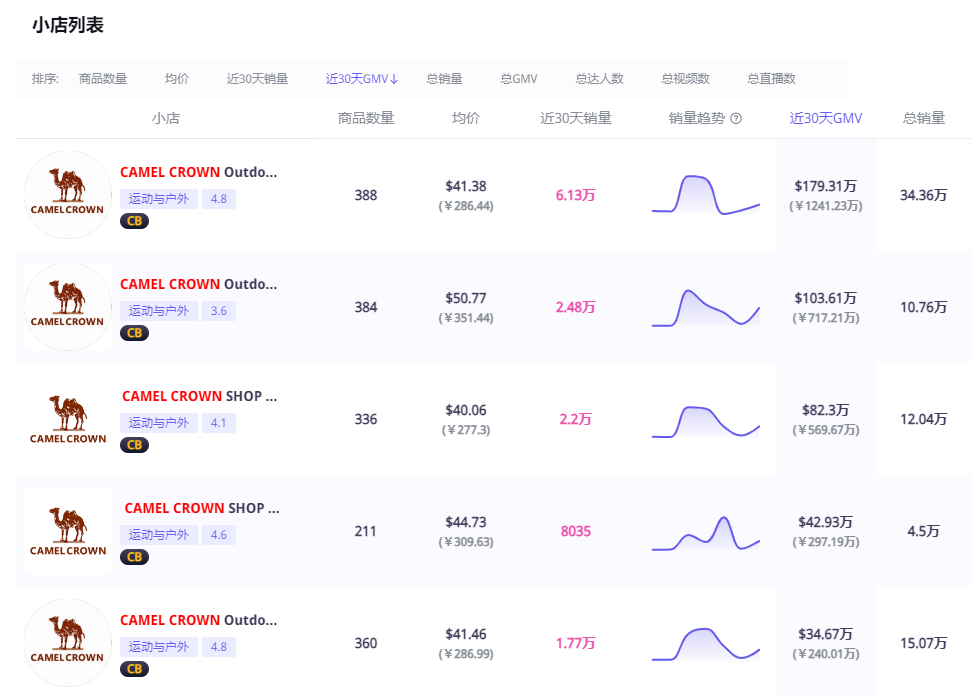
Recent 30-day data shows,the brand'smultiple TikTok cross-border stores, the top five stores have an estimated sales of about $4.4282 million. Among them, the Thai store performed best, with estimated sales of $2.2224 million (this data is calculated by a third-party platform, actual situation may vary).

Image source:Echotik
-Facebook: Accumulating public domain, cross-platform traffic diversion
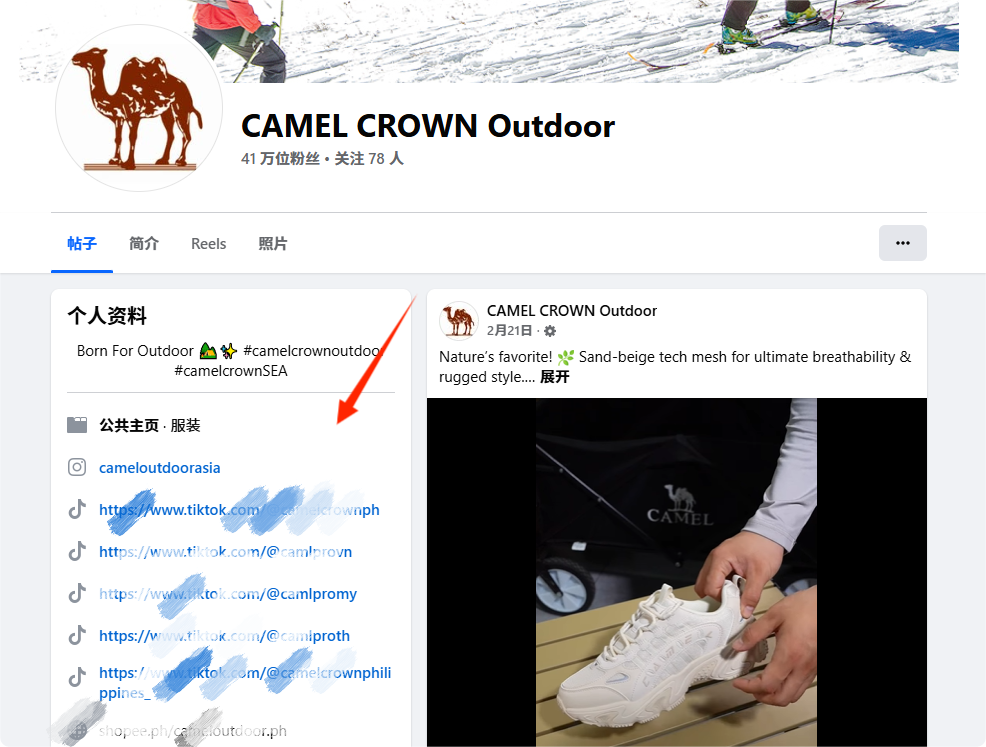
As an established overseas social platform, Camel's Facebook official account has now accumulated 410,000 followers, becoming the brand's official content hub overseas.
It is worth noting that the brand has placed links to independent TikTok accounts for each regional market such as the Philippines, Vietnam, and Malaysia in the homepage profile area, diverting public domain fans accumulated on Facebook to the corresponding market's TikTok content base and store, realizing a closed loop from content seeding to transaction conversion.
In addition, in daily operations, they also continuously update content such as single product seeding, scenario matching, and new product previews, which complement TikTok's fast live streaming sales, consolidating brand awareness among different user circles.

Image source:Echotik
-Independent site: The closed loop of traffic and brand
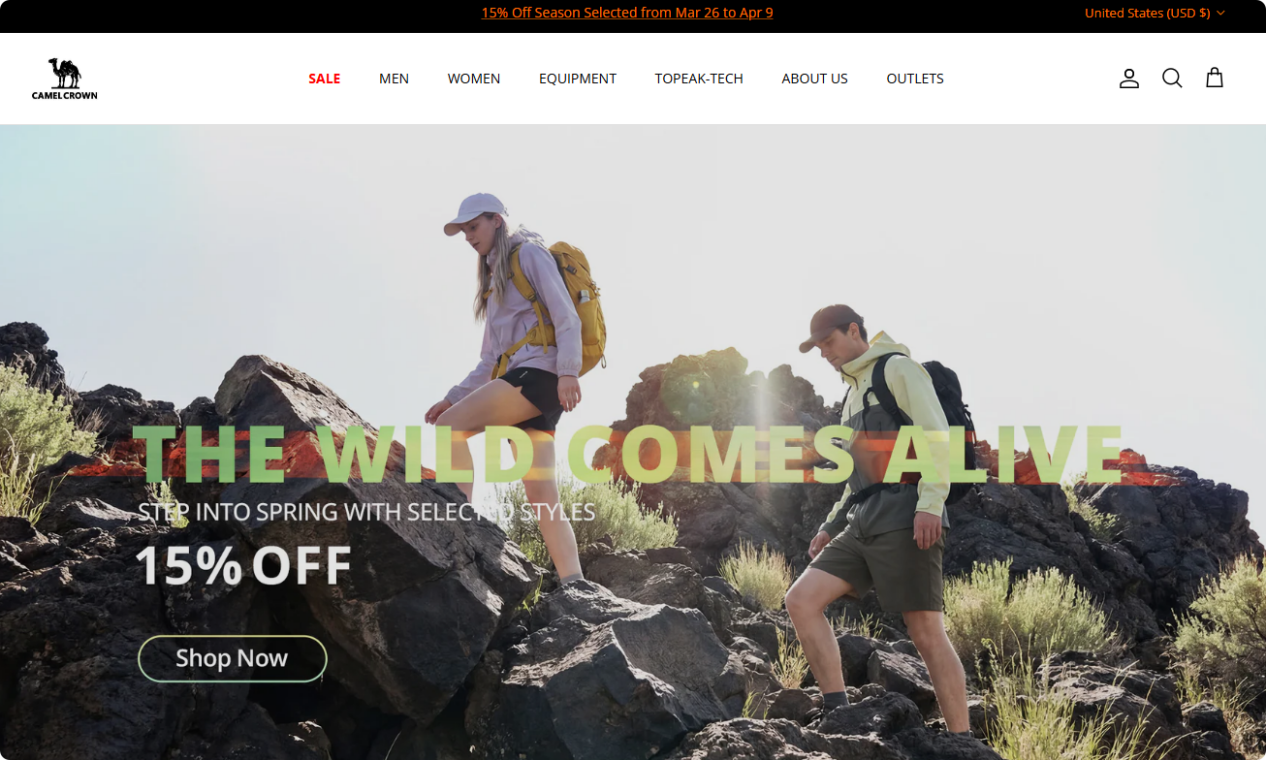
At the same time, Camel also operates its own independent site, receiving traffic from external channels such as TikTok and Facebook, realizing a closed loop of "social media traffic—independent site conversion—member system accumulation".
The independent site not only facilitates unified pricing and image for the brand, but also enables more refined user operations through email subscriptions, member points, viral activities, etc., creating conditions for subsequent rounds of marketing and repurchase.

Image source: Camel overseas independent site
Today's case sharing is not to let everyone copy a fixed "Tuke template", because every brand and every market's approach can never be exactly the same. What we really want everyone to understand is actually the way of thinking Camel uses when doing overseas markets.
As the saying goes, "The stone from another mountain can polish jade." Other people's experience is certainly worth referring to, but more importantly, you should combine your own product characteristics and target market to explore an approach that suits you.
There is no standard answer on the road to Tuke, but by looking at the paths others have taken, you can always avoid a few more pitfalls.