The "2024 Southeast Asia E-commerce Market Insight Report," produced by DataCross Border, mainly includes the following sections:

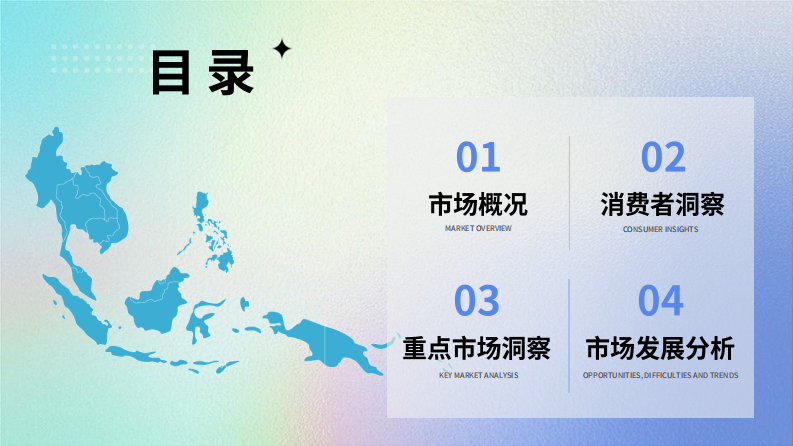
1. Market Overview:

- Regional Introduction: Southeast Asia is an important hub connecting East and West, with major economies including Indonesia, Thailand, Singapore, the Philippines, Vietnam, and Malaysia. The region features diverse languages, a high proportion of young population, and great potential for e-commerce market development.

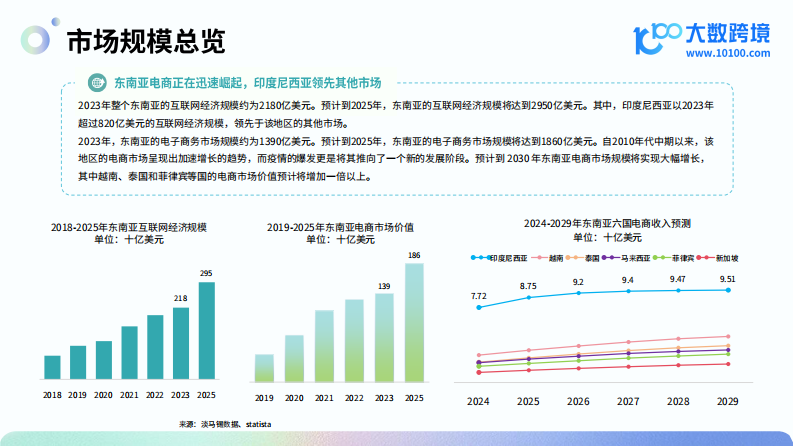
- Market Size Overview: In 2023, the Southeast Asian internet economy was valued at approximately $218 billion, with the e-commerce market size around $139 billion. By 2025, these figures are expected to reach $295 billion and $186 billion respectively, with Indonesia leading in internet economy scale.

- Internet Penetration Rate: By 2029, Southeast Asia's internet penetration rate is expected to reach 91.97%, already surpassing the global average. Malaysia leads in penetration rate, while Indonesia has the largest number of internet users.

- E-commerce User Profile: From 2024 to 2029, the internet user base in Southeast Asia will grow significantly, with the number of netizens expected to reach 662 million by 2029. Indonesia's total e-commerce users will reach 99.1 million, ranking first in the region.

- E-commerce Payment Methods: Credit cards and bank transfers are popular in the Southeast Asian market. Cash on delivery is also commonly used in Vietnam and the Philippines. Offline POS payments and digital wallets are gradually increasing in use.

- E-commerce Landscape: In 2023, Shopee had 342.8 million monthly visits, the highest among Southeast Asian online marketplaces, followed by Indonesia's Tokopedia. In Southeast Asian countries, Shopee and Lazada have won local consumers' favor with their wide range of products, convenient shopping experience, and efficient logistics services.

2. Consumer Insights:

- Consumer Demographics: The gender ratio in Southeast Asia is generally balanced, with the population mainly concentrated in the 18 to 64 age group. Singapore and Vietnam have a slightly higher proportion of females, while other countries have a slightly higher proportion of males.

- Shopping Habits: Consumers tend to buy directly online or research online before purchasing offline, preferring convenient shopping processes and flexible return options.

- Purchase Behavior: 81% of consumers prefer online shopping platforms during holidays and other peak shopping periods, with Indonesian consumers more inclined to shop online.

- Views on Online Shopping: Consumers believe reviews are crucial to purchase decisions. Most conduct online product research before buying. Courier delivery service is one of the key drivers for online shopping. Consumers have certain requirements for delivery timeliness and prefer using mobile devices for online shopping.

- Frequently Purchased Categories: Electronics led e-commerce sales in Southeast Asia in 2023, followed by beauty and personal care products. Online sales of essentials such as food and groceries are also growing.

- Preferred Shopping Experience: Consumers value a smooth shopping process and good delivery experience. Transparent delivery processes and timely, accurate delivery notifications are crucial for enhancing customer experience.

- Enthusiasm for Social Media: The social media market in Southeast Asia is extremely active. Consumers use social media across platforms to obtain information and complete purchases on e-commerce sites. Social media is a key channel for discovering new products, considering brands, and conducting product research.

- Common Marketing Nodes: These include Ramadan and Eid al-Fitr, Songkran (Water Festival), Lunar New Year, Mega Sales, etc. These festivals are key moments for e-commerce sellers to promote and boost sales.

3. Key Market Insights:

- Regional Market Overview: Indonesia, Vietnam, and Thailand form the main body of the Southeast Asian e-commerce market. The market size and growth momentum of these three countries jointly drive the overall prosperity of the Southeast Asian e-commerce industry.

- Major E-commerce Market - Indonesia: Indonesia is an archipelago nation with a large economy and a young population structure. The increase in smartphone and internet users has driven e-commerce development. Whatsapp is the most popular social app. Consumers love clothing and fashion products, are price-sensitive, have diverse online shopping frequencies, and Ramadan is an important consumption node.

- Major E-commerce Market - Thailand: Thailand ranked second in Southeast Asia's internet economy scale in 2023. High internet penetration and a maturing population age structure promote e-commerce development. Facebook is the most used social app. Fashion products are most popular. Social commerce scenarios are rapidly emerging, and shopping platforms are diversified.

- Major E-commerce Market - Vietnam: Vietnam's e-commerce market is expected to be worth $60 billion by 2030, ranking second in Southeast Asia. Shopee, TikTok Shop, and Lazada are the most popular e-commerce platforms. Social commerce is gradually becoming the mainstream online shopping choice. Free shipping, product discounts, and other buyers' reviews are key drivers for online shopping.

4. Market Development Analysis:

- Development Opportunities: The Southeast Asian cross-border e-commerce market is developing rapidly. Singapore is one of the leading cross-border e-commerce hubs in Southeast Asia. Factors such as the growth of high-income population, mobile internet penetration, increased social media penetration, and changes in consumer shopping habits due to the pandemic have created favorable conditions for cross-border e-commerce growth.

- Overseas Opportunities: In 2022, ASEAN's total imports from China reached $431.34 billion, making China ASEAN's largest trading partner. From January to July 2024, China's total exports to ASEAN reached $331.88 billion, up 10.8% year-on-year, with significant growth in exports to Vietnam, Malaysia, and Indonesia.

- Overseas Challenges: Some countries have cross-border trade policy restrictions. For example, Indonesia and Thailand have implemented a series of policies to protect local merchants' interests, including safeguard tariffs and the cancellation of tax exemption policies. In addition, the Southeast Asian market is highly competitive, including external competition (such as the development of Vietnam's manufacturing industry) and internal competition (such as low-price competition), while also facing political changes and strict regulatory requirements.

- Overseas Difficulties: The geographical environment in Southeast Asia is complex, logistics costs are high, package loss and damage rates are high, customs clearance is uncertain, consumer shopping habits differ from those in China, with a preference for cash on delivery, fragmented payment methods, limited bank card penetration, underdeveloped online payment, and frequent financial fraud, all affecting consumer trust in e-commerce.

- Development Trends: The influence of social media marketing and influencers is increasing. Live-streaming e-commerce is rapidly developing in Southeast Asia. High-value consumers are becoming the main force of digital consumption. The Southeast Asian e-commerce market presents diverse business models, including conversational commerce and social commerce.

This report provides an in-depth exploration of the potential and future trends of the Southeast Asian e-commerce market, offering valuable insights and decision-making references for sellers and enterprises engaged in cross-border e-commerce business.

2024 Southeast Asia E-commerce Market Insight Report-12024 Southeast Asia E-commerce Market Insight Report-22024 Southeast Asia E-commerce Market Insight Report-32024 Southeast Asia E-commerce Market Insight Report-42024 Southeast Asia E-commerce Market Insight Report-5