هذا التقرير هو تقرير رؤى سوق منتجات الأم والطفل العالمية لعام 2024 الصادر عن شركة "داشو كروس بورد"، ويحلل بشكل أساسي الوضع الحالي والاتجاهات ورؤى المستهلكين والتحليل الصناعي ودراسات الحالات التجارية لسوق منتجات الأم والطفل العالمية، مما يوفر معلومات سوقية شاملة وتوجيهات استراتيجية للصناعة.
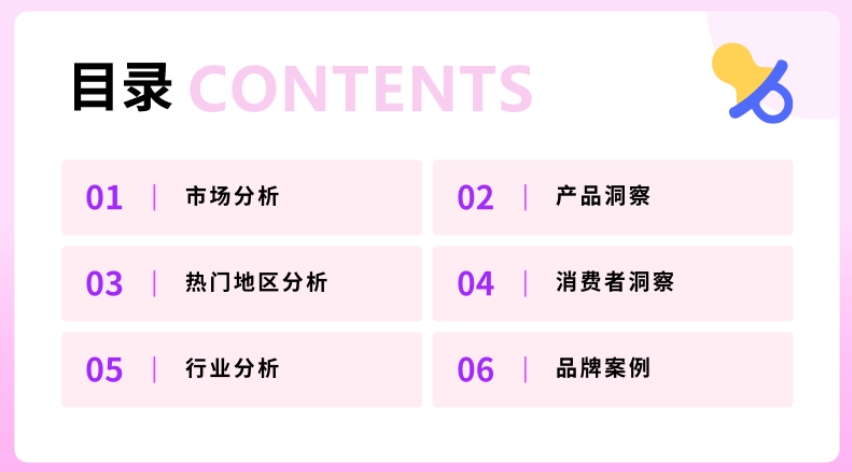
1. تحليل السوق
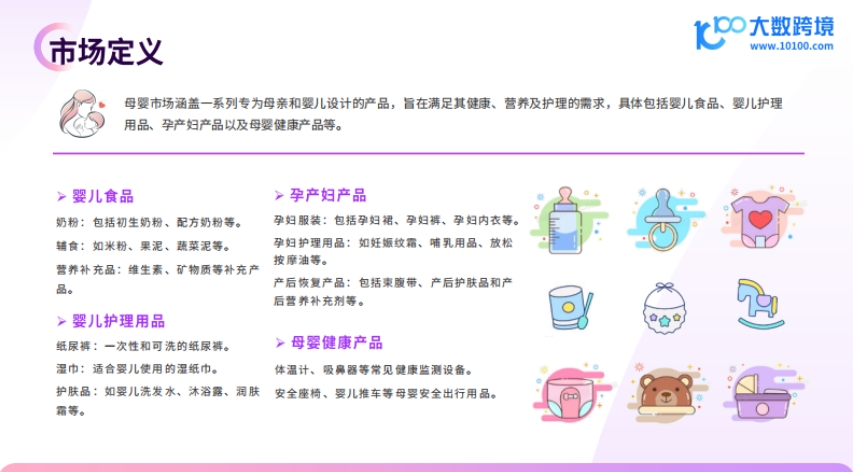
- تعريف السوق وتصنيفه: يشمل سوق الأم والطفل أغذية الأطفال ومنتجات العناية ومنتجات الأمهات ومنتجات صحة الأم والطفل، بما في ذلك الحليب المجفف وملابس الحوامل والحفاضات ومنتجات العناية ببشرة الأطفال وغيرها من الفئات الفرعية المتنوعة.
- حجم السوق
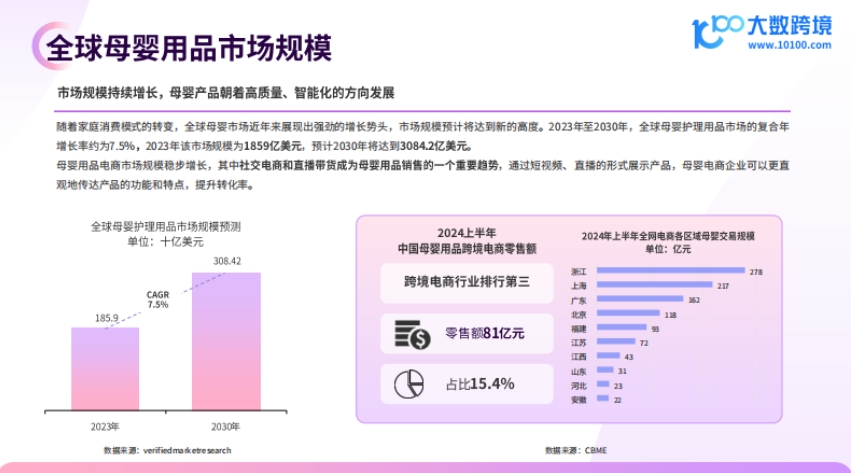
- من المتوقع أن ينمو حجم سوق منتجات العناية بالأم والطفل العالمية من 185.9 مليار دولار في عام 2023 إلى 308.42 مليار دولار بحلول عام 2030، بمعدل نمو سنوي مركب يبلغ حوالي 7.5%، مع نمو ثابت في حجم سوق التجارة الإلكترونية. في عام 2023، نما حجم سوق منتجات الأم والطفل في الصين إلى 384.29 مليار يوان، مع أكبر إنفاق على الملابس والأحذية.
- المشهد التنافسي: تهيمن العلامات التجارية العالمية الكبرى مثل Johnson & Johnson وKimberly-Clark، بينما تبرز العلامات التجارية المحلية مثل Babycare، وتتوسع حصتها السوقية باستمرار.
- قنوات التوزيع: تعتبر السوبر ماركت/الهايبر ماركت القناة الرئيسية بنسبة حوالي 46%، بينما تشكل منصات التجارة الإلكترونية 17% وتنمو بسرعة، وتختلف تفضيلات المستهلكين للشراء عبر الإنترنت وغير المتصل حسب فئة المنتج.
2. رؤى المنتجات
- تحليل الفئات
- فئة العناية بالأطفال: يشهد سوق المنتجات ارتفاعًا، ومن المتوقع أن يستمر حجم السوق في النمو من 2023 إلى 2033، مع أعلى حصة إيرادات لمنتجات العناية بالشعر والاستحمام، وأسرع نمو لمنتجات العناية بالبشرة.
- فئة أغذية الأطفال: ينمو السوق بشكل ثابت، وتعتبر آسيا أكبر سوق وأسرعها نموًا، والصين هي الدولة الأعلى إيراداتًا، ويدفع الارتقاء الاستهلاكي نمو الطلب.
- فئة العناية بالأمهات: ينمو حجم السوق بشكل قوي، بمعدلات نمو سنوي مركبة تبلغ 5.88% لسوق منتجات العناية بالحوامل من 2024 إلى 2029 و5.72% لسوق منتجات دعم الحمل من 2024 إلى 2031.
- تحليل المنتجات الشائعة
- حفاضات الأطفال: الطلب في السوق مستقر، مع أعلى إيرادات في آسيا وأسرع نمو، وحجم سوق كبير في الصين، ومن المتوقع أن ينمو السوق العالمي سنويًا من 2024 إلى 2027.
- حليب الأطفال المجفف: يتوسع حجم السوق، وتقود الصين النمو، بمعدل نمو سنوي مركب يبلغ 5.61% من 2024 إلى 2029، مع زيادة استهلاك الفرد.
- ملابس الحوامل: يشهد السوق رواجًا، بمعدل نمو سنوي مركب متوقع يبلغ 6.9% من 2023 إلى 2033، والقمصان القطنية هي الأكثر شعبية.
3. تحليل المناطق الشائعة
- نظرة عامة إقليمية: تقود منطقة آسيا والمحيط الهادئ السوق، مع نمو سريع في الصين والولايات المتحدة والهند وكوريا الجنوبية، وإمكانات كبيرة في الأسواق الناشئة. في عام 2023، تصدرت الصين إيرادات سوق العناية ببشرة الأطفال والرضع، وتحتل السوق الأوروبية مكانة مهمة بمنتجات عالية الجودة.
- منطقة آسيا والمحيط الهادئ: يدفع العائد الديموغرافي نمو السوق، مع حصة سوقية كبيرة، ويتوسع السوق الهندي بسرعة، وينمو الطلب على المنتجات الراقية في الدول المتقدمة، بمعدل نمو سنوي مركب يبلغ 6.1% لسوق منتجات العناية بالأطفال من 2024 إلى 2033.
- منطقة أمريكا الشمالية: ينمو السوق بشكل ثابت، وتحتل الولايات المتحدة حصة مهمة، بمعدل نمو سنوي مركب يبلغ 5.4% من 2024 إلى 2031، وآفاق واسعة لصناعة العناية ببشرة الأطفال في الولايات المتحدة.
- منطقة أوروبا: ينمو السوق بشكل قوي، وتتصدر ألمانيا، مع تفضيل المنتجات العضوية والصديقة للبيئة، بمعدل نمو سنوي مركب يبلغ 5.1% من 2024 إلى 2031، ومن المتوقع أن تنمو إيرادات سوق أغذية الأطفال.
- الشرق الأوسط وأفريقيا: ينمو سوق العناية بالأطفال في جنوب أفريقيا بشكل ثابت، وتهيمن التجارة التجزئة غير المتصلة في الشرق الأوسط، مع ارتفاع تدريجي في التسوق عبر الإنترنت.
4. رؤى المستهلكين
- صورة المستهلك: تشمل الأمهات الحوامل والأمهات الجدد وأفراد أسرهن، مع زيادة مشاركة الذكور، وتتراوح الأعمار بشكل رئيسي بين 26 و35 عامًا.
- مفاهيم الاستهلاك: تنوع الاحتياجات، مع التركيز على التربية العلمية وجودة المنتج وسلامته، واتجاه واضح للارتقاء الاستهلاكي، مع اهتمام أكبر بمكونات المنتج وسمعة العلامة التجارية.
- مصفوفة الاستهلاك: تختلف احتياجات المستهلكين في المراحل المختلفة، وتشمل منتجات وخدمات متنوعة لمراحل ما قبل الحمل وأوائل الحمل والمواليد الجدد والأطفال الصغار ومرحلة ما قبل المدرسة.
- التفضيلات السلوكية: التركيز على الجودة والتخصيص، مع عادة الشراء عبر الإنترنت والمشاركة والتقييم، وتنوع قنوات الحصول على المعلومات.
5. التحليل الصناعي
- سلسلة القيمة: تشمل المراحل الأولية المواد الخام الكيميائية والزراعة والثروة الحيوانية، وتشمل المرحلة الوسطى منتجات وخدمات الأطفال والأمهات، وتشمل المرحلة النهائية قنوات متعددة عبر الإنترنت وغير متصل.
- آفاق الصناعة: يدفع الطبقة المتوسطة الارتقاء الاستهلاكي، مما يعزز تطور منتجات الأم والطفل نحو الجودة العالية، ويوفر النمو السكاني العالمي وتوسع الطبقة المتوسطة قاعدة استهلاكية مستدامة.
- فرص التوسع الدولي: زيادة الدخل المتاح للآباء، وارتفاع الطلب الاستهلاكي العالمي، ودعم السياسات الحكومية الصينية، وسلاسل التوريد الناضجة، وقدرات الابتكار والبحث والتطوير القوية.
- تحديات التوسع الدولي: تختلف بيئات السوق وعادات الاستهلاك، ويفضل المستهلكون في الخارج المنتجات من المناطق ذات التنظيم الجيد، وتحتاج العلامات التجارية الصينية إلى بناء الثقة.
- اتجاهات التطور: تطور مفاهيم الاستهلاك لدى النساء والآباء، والسعي إلى مكونات طبيعية وغير مهيجة في المنتجات، وظهور قنوات بيع جديدة.
6. دراسات الحالات التجارية
- Yoboo: تركز على سوق الأم والطفل، وتوفر منتجات وحلول الرضاعة الطبيعية، مع صورة علامة تجارية جيدة، وتحقق مبيعات رائدة بعد دخول Shopee، مع ضمان الجودة والسلامة، وتستخدم التسويق عبر TikTok وقنوات أخرى، وتتبنى استراتيجية تحديد موقع المنتج المتدرج.
- Babycare: تأسست في عام 2016، وتغطي جميع الفئات، وتتعاون مع شركات معروفة، وحصلت على العديد من الجوائز، وتوسعت إلى أكثر من 30 دولة حول العالم. يركز التسويق على تصميم المنتج والتواجد على منصات متعددة والمحتوى المتنوع وتسويق الموضوعات الشائعة وإدارة حركة المرور الخاصة، مع مجموعة منتجات غنية واحتكار سوقي مرتفع لبعض المنتجات.