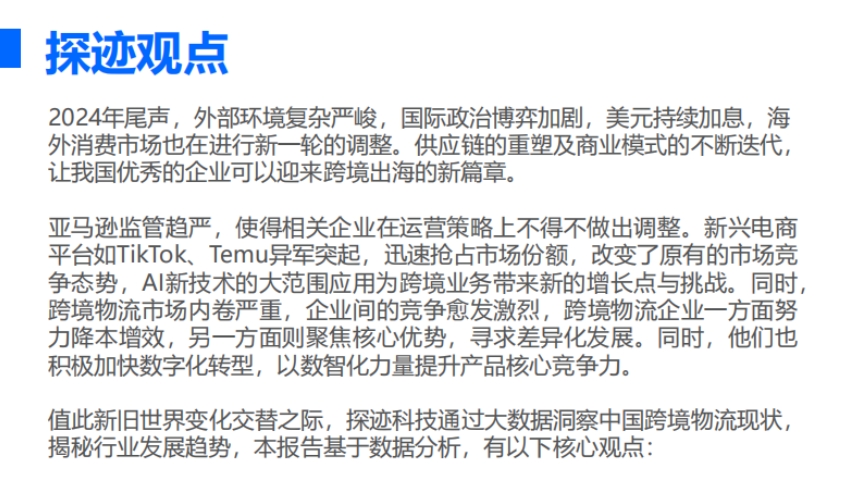
تقرير اتجاهات تطوير صناعة الخدمات اللوجستية عبر الحدود لعام 2024، الصادر عن معهد تانجيو لأبحاث البيانات الضخمة، يناقش بشكل أساسي حالة تطور صناعة الخدمات اللوجستية عبر الحدود، والتحديات التي تواجهها، وخصائص مجموعات العملاء، واتجاهات التطور، والحالات ذات الصلة.
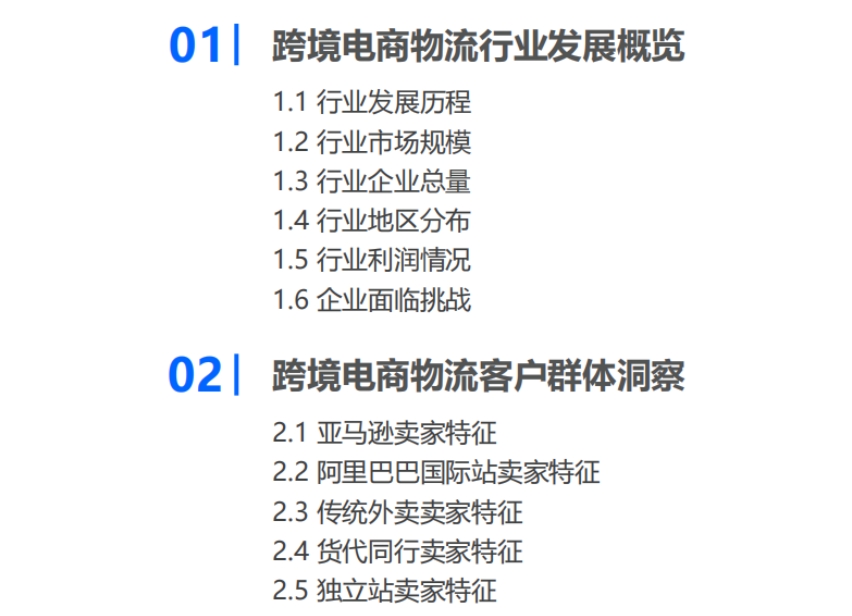
1. نظرة عامة على تطور الصناعة
- حالة التطور: في ظل التغيرات في سلسلة الإنتاج والتوريد العالمية، ومرونة التجارة الخارجية، وفرص التعاون الدولي، تحتاج الخدمات اللوجستية عبر الحدود الصينية إلى مواجهة تحديات جديدة ومواءمة الأنشطة التجارية الجديدة لتعزيز القدرة التنافسية. تظهر التجارة الخارجية مرونة، وتتطور التجارة الإلكترونية عبر الحدود بسرعة، لكن إعادة هيكلة سلسلة التوريد العالمية وتغيرات الوضع التجاري تفرض اختبارات.
- حجم السوق: تقود التجارة الإلكترونية عبر الحدود ازدهار الخدمات اللوجستية عبر الحدود، ومن المتوقع أن يصل حجم سوق الخدمات اللوجستية عبر الحدود في عام 2024 إلى 2.66 تريليون يوان. ينمو التجارة الإلكترونية عبر الحدود بشكل جيد، لكن صناعة الخدمات اللوجستية تواجه تحديات مثل تقلب أسعار الشحن البحري.
- إجمالي عدد الشركات والتوزيع الجغرافي: يصل نمو شركات الخدمات اللوجستية للتجارة الإلكترونية عبر الحدود في عام 2024 إلى ذروته، ويتباطأ نمو إجمالي عدد الشركات، ويدخل القطاع مرحلة إعادة التنظيم. تتصدر مقاطعات قوانغدونغ وشنغهاي وتشجيانغ في عدد الشركات، وتشكل الصناعة تجمعات صناعية.
- حالة الأرباح: يتباطأ تركيز الصناعة، ويظهر تأثير الجذب الواضح، ويرتفع حجم الإيرادات بشكل ثابت، لكن شركات الخدمات اللوجستية الصغيرة والمتوسطة تواجه ضغوطًا عديدة، وسيتجه القطاع نحو تكامل الموارد وتعزيز القدرة على التشغيل الذاتي.
- التحديات: تشمل متطلبات الامتثال المتزايدة الصرامة، وارتفاع تكاليف الخدمات اللوجستية وتقلبها الكبير، وانخفاض مستوى الرقمنة، وتنوع احتياجات العملاء وصعوبة فهمها بدقة.
2. رؤى حول مجموعات العملاء
- بائعي أمازون: السوقان الأوروبي والأمريكي مستقران، والأسواق الناشئة تصعد، والمنافسة في الخدمات اللوجستية FBA شديدة، والسلع الكبيرة الخاصة هي سوق أزرق. يتركز البائعون في فئات تحسين جودة الحياة، ويتركزون في المناطق الساحلية، وضعفاء في القوة المالية، ويميلون إلى حروب الأسعار.
- بائعي منصة علي بابا الدولية: لا تزال الأسواق الأوروبية والأمريكية هي الأسواق الرئيسية، وتحظى أسواق جنوب شرق آسيا والشرق الأوسط بالاهتمام. يتركز البائعون في المناطق الساحلية، ومعظمهم من الشركات الصغيرة والمتوسطة، وفئات السلع التي تسعى إلى جودة الحياة شائعة، وتتأثر بعض الفئات بالمنصات الناشئة.
- بائعي التجارة الخارجية التقليديين: يستفيدون من مبادرة "الحزام والطريق"، وتزدهر التجارة في شرق آسيا، ومعظم الشركات تأسست منذ أكثر من 5 سنوات، وهي مفتاح توسيع السوق لشركات الخدمات اللوجستية عبر الحدود. تتركز الشركات في المناطق الساحلية، والشركات الصغيرة والمتوسطة نشطة، والنقل البحري والجوي مفضلان.
- بائعي وكلاء الشحن: يتركزون في مناطق مثل قوانغدونغ وشنغهاي، والشركات المنشأة حديثًا والتي ليس لديها موقع إلكتروني هي أهداف للتوسع، ويمكن لشركات الخدمات اللوجستية عبر الحدود دمج الموارد.
- بائعي المتاجر المستقلة: تحتل كندا المرتبة الأولى من حيث العدد، وحجم شحنات شركات التجارة الخارجية مستقر وكبير، والبائعون الصينيون لديهم العديد من وسائل الاتصال، والبائعون غير الصينيين لديهم احتياجات للمستودعات الخارجية والتوصيل النهائي.
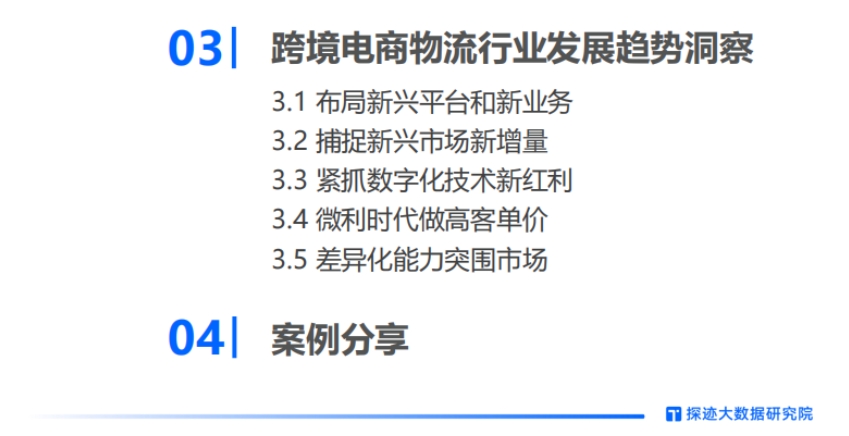
3. رؤى حول اتجاهات التطور
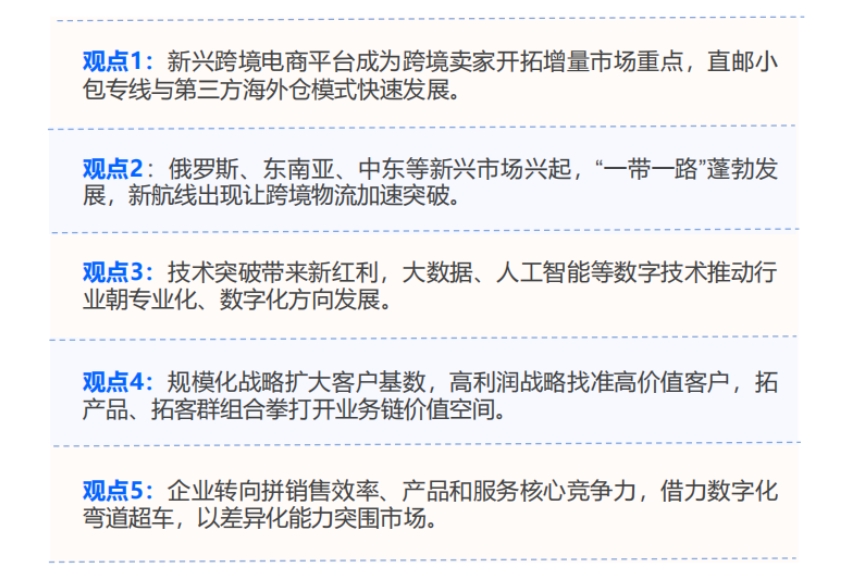
- التوسع في المنصات والأنشطة التجارية الجديدة: تصبح المنصات الناشئة محورًا لبائعي التجارة عبر الحدود لتوسيع السوق الإضافية، وتتطور خدمات الشحن المباشر للطرود الصغيرة والخطوط المتخصصة ونماذج المستودعات الخارجية التابعة لجهات ثالثة بسرعة، ومن المتوقع أن يرتفع تركيز الصناعة.
- استغلال الإضافات الجديدة في الأسواق الناشئة: تظهر أسواق ناشئة مثل روسيا وجنوب شرق آسيا والشرق الأوسط، وتزدهر مبادرة "الحزام والطريق"، وتظهر خطوط شحن جديدة، ويمكن لشركات الخدمات اللوجستية عبر الحدود اغتنام الفرص من خلال تحسين الخدمات وتقديم خدمات متخصصة وحل مشكلات التوصيل النهائي.
- الاستفادة من المكاسب الجديدة لتقنيات الرقمنة: تدفع احتياجات بائعي التجارة عبر الحدود تخصص ورقمنة الخدمات اللوجستية، وتساعد تقنيات مثل البيانات الضخمة والذكاء الاصطناعي الشركات على تعزيز قدرتها التنافسية، وتحقيق التتبع الكامل لعناصر الخدمات اللوجستية، وخفض التكاليف وزيادة الكفاءة في التسويق وجذب العملاء، والابتكار في إدارة التنظيم لتحسين الجودة، والنمو عالي الجودة في القدرات التشغيلية، والتحسين الشامل لخدمة العملاء.
- تحقيق قيمة عالية للعميل في عصر الأرباح المنخفضة: ترفع شركات الخدمات اللوجستية عبر الحدود قيمة العميل من خلال استراتيجيات مثل توسيع المنتجات وقاعدة العملاء، وبناء الثقة، واستقرار العلاقات مع العملاء، واستكشاف الاحتياجات، وتوسيع نطاق قيمة سلسلة الأعمال.
- التميز بالقدرات التفاضلية لاختراق السوق: يتحول التنافس في السوق إلى المنتج والخدمة وكفاءة المبيعات، وتحتاج الشركات إلى فهم احتياجات العملاء، والاستفادة من الرقمنة لتعزيز القدرة التنافسية، والتميز بالقدرات التفاضلية لاختراق السوق.
4. مشاركة الحالات: تم تقديم مسار التحول الرقمي ونتائج شركة شنتشن للتجارة الإلكترونية اللوجستية المحدودة، ومجموعة شنتشن اللوجستية المحدودة، وشركة شنغهاي الدولية للخدمات اللوجستية المحدودة في مجالات مثل التوسع الدقيق في العملاء، والوصول الفعال، وإدارة التعاون الداخلي.