الوثيقة هي "تقرير استراتيجية التوسع الدولي لسلسلة صناعة الأدوية لعام 2025" الذي نشرته شركة شنغهاي شينشياو لتكنولوجيا المعلومات ومركز لينغهوي للفكر، ويركز بشكل أساسي على التوسع الدولي لسلسلة صناعة الأدوية، ومحتواه كالتالي:
- تحليل الاقتصاد العالمي وسوق الأدوية:
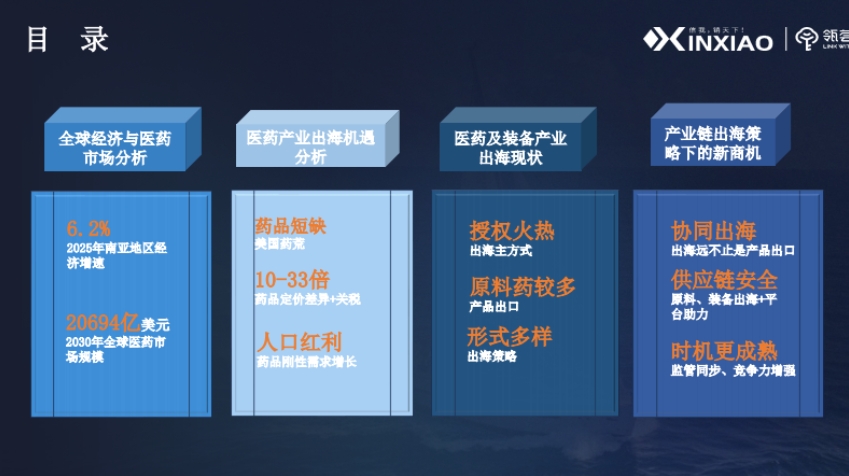
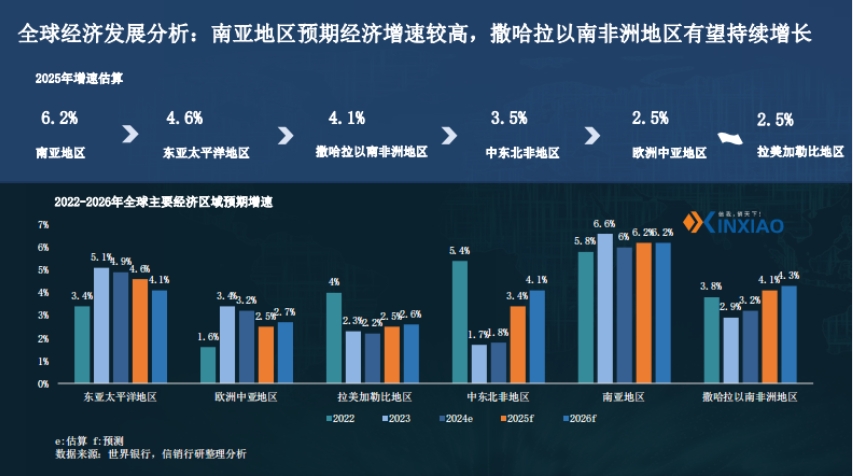
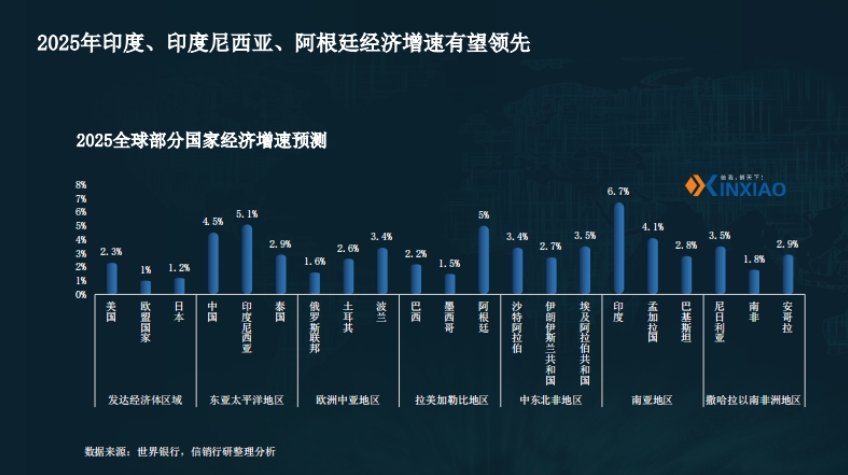
- معدل النمو الاقتصادي: من المتوقع أن يصل معدل النمو الاقتصادي في منطقة جنوب آسيا إلى 6.2% في عام 2025، وهو الأعلى بين المناطق، بينما من المتوقع أن تشهد منطقة أفريقيا جنوب الصحراء الكبرى نموًا مستمرًا. قد تتصدر دول مثل الهند وإندونيسيا والأرجنتين في معدلات النمو الاقتصادي في عام 2025.
- الإنفاق الصحي: تبلغ حصة الإنفاق الصحي للفرد في المناطق ذات الدخل المرتفع نسبة أعلى، حيث بلغ الإنفاق الصحي للفرد في المناطق ذات الدخل المرتفع 2741 دولارًا أمريكيًا في عام 2022، بنسبة 14.4%؛ بينما بلغ الإنفاق الصحي للفرد في المناطق ذات الدخل المنخفض 5.3 دولارًا أمريكيًا فقط، بنسبة 5.3%.
- حجم السوق: من المتوقع أن يصل حجم سوق الأدوية العالمي إلى 20694 مليار دولار أمريكي بحلول عام 2030، مع حجم سوق خارج الصين يتجاوز 4 أضعاف حجم السوق الصيني. الولايات المتحدة والاتحاد الأوروبي هما الأسواق الرئيسية، بينما تتمتع الأسواق الناشئة مثل الشرق الأوسط وأفريقيا وأمريكا اللاتينية بإمكانيات كبيرة، حيث من المتوقع أن يصل حجم مبيعات الأدوية في الشرق الأوسط وأفريقيا إلى 64 مليار دولار أمريكي بحلول عام 2027، ومن المتوقع أن يصل حجم سوق الأدوية في أمريكا اللاتينية إلى 54.4 مليار دولار أمريكي بحلول عام 2028.
- تحليل فرص التوسع الدولي لصناعة الأدوية:
- اختلافات التسعير والرسوم الجمركية: توجد اختلافات كبيرة في تسعير بعض الأدوية بين الصين والولايات المتحدة، مثل تسعير بيفاسيزوماب في الولايات المتحدة الذي يبلغ حوالي 4 أضعاف السعر في الصين، وأداليموماب 19 ضعفًا، وتوريباليماب 33 ضعفًا. في أبريل 2025، فرضت الولايات المتحدة رسومًا جمركية إضافية على الأدوية، مما يتطلب من الشركات عند التوسع الدولي مراعاة تأثير بلد المنشأ على الرسوم الجمركية.
- نقص الأدوية: تعاني الولايات المتحدة من نقص مزمن في الأدوية، حيث بلغ عدد الأدوية المبلغ عنها من قبل CDER وCBER في عام 2023 33 و48 على التوالي. في إنتاج المستحضرات الدوائية المفقودة، تمثل الولايات المتحدة 49% من مواقع الإنتاج، بينما تمثل 28% من مواقع إنتاج المواد الخام، وتمثل الصين 4% من مواقع إنتاج المواد الخام.
- السكان والطلب: تتمتع بعض المناطق الأقل تطورًا بمكاسب ديموغرافية، حيث تشهد مناطق مثل الشرق الأوسط وشمال أفريقيا وأمريكا اللاتينية ومنطقة البحر الكاريبي نموًا سكانيًا سريعًا، مما يؤدي إلى زيادة الطلب الصارم على الأدوية؛ بينما تعاني بعض المناطق المتقدمة من شيخوخة السكان، مما يخلق طلبًا مستمرًا على المنتجات الصيدلانية.
- الوضع الحالي للتوسع الدولي لصناعة الأدوية والمعدات:
- صادرات المنتجات: في عام 2024، زادت قيمة صادرات الأدوية الصينية بنسبة 9.8% على أساس سنوي، مع كون الاتحاد الأوروبي أحد الأسواق الرئيسية لصادرات المواد الخام الصيدلانية، حيث تمثل الشركات المصدرة للمواد الخام الصيدلانية من مقاطعة تشجيانغ إلى الاتحاد الأوروبي 17.45%. استمرت صادرات الطب الصيني التقليدي في النمو، حيث بلغت قيمة صادرات الأدوية الصينية الجاهزة في عام 2024 246411 مليون يوان. تتزايد إنجازات تصدير المستحضرات الدوائية، حيث تمت الموافقة على منتجات العديد من شركات الأدوية في الأسواق الخارجية في الربع الأول من عام 2025.
- القدرة الابتكارية: زاد عدد الأدوية المبتكرة المعتمدة في الصين، حيث بلغ عدد الأدوية الكيميائية والطب الصيني التقليدي والأدوية البيولوجية المعتمدة في عام 2024 23 و7 و24 على التوالي. تمثل خطوط تطوير الأدوية في الصين 26.7% من الإجمالي العالمي، في المرتبة الثانية بعد الولايات المتحدة.
- المحركات الداخلية والخارجية: تشمل المحركات الداخلية ضغط أرباح الأدوية الجنيسة، وبدء المشتريات الجماعية للأدوية البيولوجية، وزيادة القدرة الابتكارية الصيدلانية؛ بينما تشمل المحركات الخارجية السوق الدولية الكبيرة والاختلافات الإقليمية الكبيرة.
- استراتيجيات التوسع الدولي وإدارة المخاطر:
- استراتيجيات التوسع الدولي: تشمل التوسع الذاتي (مثل بناء فريق تجاري وإنتاج محلي من قبل شركة باييجين شينتشو، حيث بلغت مبيعات زيبوتينيب العالمية 18.859 مليار يوان في عام 2024)، والترخيص الدولي (حيث وصلت قيمة صفقات "license-out" إلى مستويات قياسية جديدة، مع 33 حدث ترخيص خارجي في الربع الأول من عام 2025)، ونموذج NewCo (الذي يجمع بين ميزات تطوير الأعمال وصفقات حقوق الملكية، حيث أجرت شركة كونوا أربع صفقات من هذا النوع في غضون نصف عام)، والاستحواذ الخارجي (مثل استحواذ شركة ناوي للتكنولوجيا على شركة RILAS الأمريكية).
- إدارة المخاطر: يجب الانتباه إلى الاختلافات في اللوائح التنظيمية، والاختلافات الجيوسياسية والثقافية، وقضايا الموارد البشرية، والمنافسة في السوق، ومخاطر سلسلة التوريد، وضغوط التكلفة. على سبيل المثال، تختلف متطلبات تسجيل الأدوية من بلد لآخر، حيث تسيطر الشركات الأوروبية والأمريكية على سوق الأدوية الأصلية في جنوب شرق آسيا، بينما تهيمن شركات الأدوية الهندية على سوق الأدوية الجنيسة.
- التوسع الدولي المنسق لسلسلة الصناعة والفرص التجارية الجديدة:
- التوسع المنسق: تتعاون صناعة الأدوية وسلسلة التوريد والمنصات معًا في التوسع الدولي، مثل تحالف التوسع الدولي لصناعة الأدوية الصينية الذي يمكنه التحكم في التكاليف وتقليل المخاطر وزيادة الكفاءة. تعاونت شركة جونشي بيولوجي مع شركة Excellmab لتطوير توريباليماب، وأبرمت شركة بايتشنغ للأدوية وشركة كيه شينغ للأدوية شراكة استراتيجية للتوسع الدولي.
- فرص تجارية جديدة: تحسنت جودة الأدوية الجنيسة، واشتدت المنافسة المحلية، وأصبحت السوق الخارجية قادرة على منافسة الهند، مما يدفع إلى التوسع الدولي المنسق للمستحضرات والمواد الخام والمواد المساعدة. يمكن اختيار طرق التوسع مثل نقل المنتج، ونقل التكنولوجيا، ونقل المنتجات شبه المصنعة.